
Are Hostels Safe? Honest Experiences from a Decade of Travel + 10 Takeaways
This site contains affiliate links and is a member of the Amazon Associates Program. At no additional cost to you, I may receive a commission from these links. I only make recommendations based on my experience. See my Disclosure Policy for more info.

Trying to stay on a budget or meet new people while traveling, and wondering, “Are hostels safe?”
Maybe a well-meaning friend or family member has filled your head with horror stories, or maybe you’ve seen one too many movies where hostels are portrayed as terrifying places. I get it, I didn’t exactly know what I was in for when I started staying in hostels either.
As someone who’s stayed in 15+ hostels across Europe and North America over the past decade, from a fantastic first stay at the Generator Hostel in Dublin to a nightmare experience at the YHA Stow-on-the-Wold, I’ve seen the full spectrum.
I’ve shared dorm rooms with strangers who became lifelong friends, and I’ve been locked out of a hostel at 2 a.m. in the English countryside in a dress and heels.
So, are hostels safe? Yes, most are—but just like hotels, some are better than others. The key is knowing what to look for, what to avoid, and how to protect yourself regardless of where you stay.
This guide will give you my honest take on hostel safety, real stories from my own travels, and practical tips so you can book with confidence.
Are hostels safe to stay in?
Yes, most hostels are safe for travelers, including solo female travelers. The key is choosing hostels with lockers, secure access, good reviews, helpful staff, and safe locations while following basic travel safety practices.
What Makes a Hostel Safe (or Not)
Not all hostels are created equal.
I’ve slept in mixed dorms, female-only dorms, private rooms, and at major hostel chains.
Some have top-notch security, like Astor Oxford Street, which I’d honestly give an A+. Key card access, attentive staff, and a well-lit building in a prime central location.
And then I’ve stayed in places where the walls were paper-thin, the bathrooms were filthy, and nobody seemed to be managing things at all.
When you’re evaluating whether a hostel is safe, here are the key security features to look for:
| Question | Answer |
|---|---|
| Are hostels safe? | Generally, yes |
| Best for solo travelers? | Yes |
| Biggest risk | Theft and noise |
| Should valuables be locked up? | Yes |
| Female-only dorms available? | Often |
| Best booking platform | Hostelworld |
| Recommended for first-timers? | Yes, with research |

Key Hostel Security Features to Look For
- Lockers: This is non-negotiable. A good hostel will have lockers in the rooms or nearby where you can store your valuables. Some provide padlocks, others expect you to bring your own or are digital and will ask you to select a code.
- Key card or code access: The building and your room should not be accessible to just anyone walking in off the street. Look for hostels that use key cards or entry codes for the front door, floors, and rooms.
- 24-hour reception or emergency contact: This is a big one I’ll get into shortly, but for now know that there needs to either be 24-hour reception or emergency info available. Hotels almost always have 24-hour reception, and good hostels should have something comparable.
- Security cameras: Common areas should ideally be monitored for an extra layer of safety.
- Female-only dorm options: Many hostels offer female-only rooms. These can give you extra peace of mind, especially if you’re a solo female traveler.


Red Flags to Watch For
- No lockers or broken locks: If there’s nowhere secure to put your stuff, that’s an immediate concern. If it’s broken, request it be fixed. I had this at Comics Guesthouse in Rome and they repaired it same day.
- Absent or indifferent staff: A hostel where nobody seems to care about guest safety is a hostel you should avoid. Staff should be present, engaged, and proactive.
- Poor lighting: Dark hallways and poorly lit entrances aren’t just creepy; they’re a genuine safety issue.
- Sketchy neighborhood: Don’t just research the hostel; research the area. When I was researching Paris neighborhoods, a friend warned me about feeling unsafe near the red light district, so I made sure to stay clear of it. Always look into the surrounding neighborhood before you book.
- No emergency procedures: I know we all kind of ignore fire escape plans and emergency numbers, but it is something to at least clock. The fire alarm went off at the Young and Happy Hostel in Paris, and while there was no fire, just a false alarm, it made me aware of the potential.
Are Hostels Safe for Solo Female Travelers?
As a solo female traveler myself, safety is always top of mind when I’m choosing where to stay.
I’ve had incredible experiences in hostels as a solo woman. My first-ever hostel stay was at the Generator Hostel in Dublin, where I shared a room with some amazing women. We became friends, and I still talk to some of them more than ten years later.
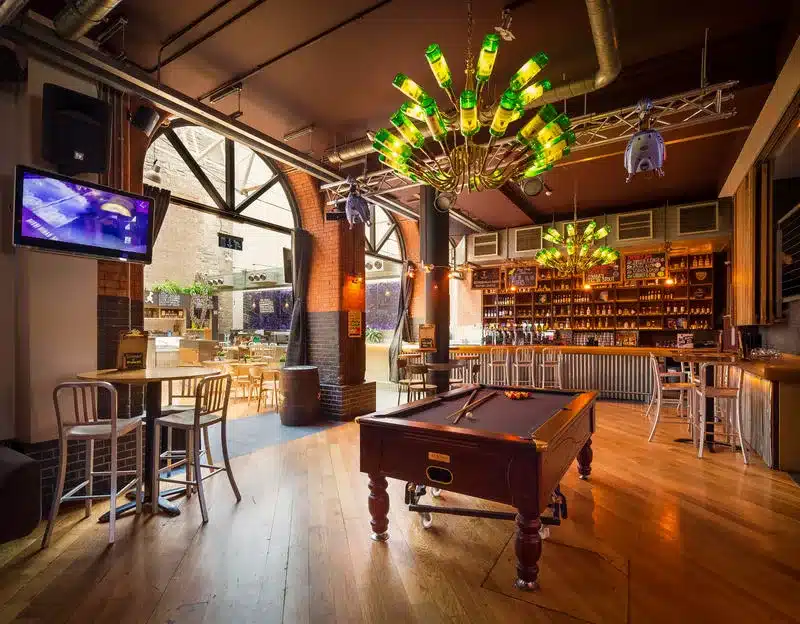
The social aspect of hostels can actually make them feel safer than a hotel in some ways. You’re surrounded by other travelers who are often looking out for each other. There’s a communal energy that can be really reassuring when you’re traveling alone.
That said, I typically book a female-only dorm when it’s available. It adds a layer of comfort, especially if it’s your first hostel experience or your first time traveling solo.
Additionally, I’ve found other travelers, especially in female dorms, to be genuinely looking out for each other, whether that’s walking back from dinner together or just knowing someone will notice if you don’t show up.
I’ll get into more things to look out for later in the post, such as late-night arrivals and nighttime walking tips, but know that I’ve never had any issues as a solo female traveler that I felt were because I am a woman or solo.
Hostel Safety Statistics and Facts
The Growth of Solo Travel
Solo travel isn’t a niche trend anymore, it’s one of the fastest-growing segments in tourism.
The global solo travel market was valued at roughly $550 billion in 2024 and is projected to reach $1,624 billion by 2033, according to Grandview Research.
Hostelworld’s own 2025 State of Solo Travel report backs this up from the booking side: women made up 60% of solo travelers on their platform, and 51% of first-time solo travelers said they plan to travel solo again, suggesting that initial safety fears tend to ease once people actually try it.
Hostel Popularity
The hostel industry itself is growing alongside solo travel.
The global hostel market was valued at around $8 billion in 2025 and is projected to reach $14.3 billion by 2033 (Grandview Research).
Backpackers and solo travelers account for the majority of that market, at 55.7% of bookings by guest type, with dormitory-style rooms remaining the most popular accommodation type at 64.1% of bookings.
Hostelworld Booking Trends
As the dominant platform in this space, Hostelworld’s own data offers a useful window into who’s actually staying in hostels.
The platform reports over 3 million members, and more than 4 million annual trips were booked by solo travelers through it in the most recent reporting period.
Thailand, Spain, and Italy remain the top three destinations for solo hostel-goers, with Southeast Asia (particularly Sri Lanka, Vietnam, and the Philippines) showing the fastest growth.
Safety Comparison With Hotels
Apples-to-apples crime data comparing hostels and hotels essentially doesn’t exist.
Police agencies don’t separately track crime by accommodation type, so I can’t provide any specific percentage; however, theft is the most common safety issue at both hostels and hotels, and it tends to be opportunistic rather than targeted, meaning it’s more about whether you locked up your valuables than which type of accommodation you chose.
The bigger predictor of safety at either place isn’t “hostel vs. hotel”; it’s the specific property’s security features and the safety of its neighborhood, which is exactly why I focus this guide on what to look for.
Common Traveler Concerns
Safety consistently ranks as the top hesitation for would-be solo travelers, and the gender gap here is significant: Hostelworld’s 2025 survey found that 55% of women cited safety as a barrier to solo travel, compared to just 18% of men.
Separately, industry surveys on solo travelers more broadly found that around 41% cite general safety worries as a top concern, with mugging, scams, and road accidents named as the most common specific fears.
Despite these pre-trip worries, actual negative experiences (including my own) remain relatively rare, and the same surveys consistently show that the vast majority of solo travelers, including first-timers, say they’d do it again.
My Disastrous Hostel Experiences
Not every hostel experience I’ve had has been great, and I think it’s important to share the bad along with the good so you know what’s possible and how to avoid it.
Before you’re scared off, both of these experiences happened a decade ago, and I feel like hostels have improved a heck of a lot since then.
Young & Happy Paris
The Young & Happy Hostel in Paris was a nightmare compared to my other hostel experiences. Unlike its name, it was anything but.
I booked it because it sounded like a halfway decent place at a good price and in a suitable location. None of the places I researched looked like winners, so it was a choice of convenience.
We stayed in a private room since my Aunt requested it.
The walls were paper-thin; you could hear everything. Hopefully, you’ll be lucky enough to have quiet neighbors, unlike me.
The showers have one button—ON —so if it’s hot, it’s hot; if it’s cold, it’s cold.
There was a night that they ran out of toilet paper, not fun.
The bathrooms and showers were filthy from everyone tracking in dirt, and nobody seemed to be cleaning them regularly.
Our room faced the street, which was nice for the view, but terrible for noise as the glass didn’t stifle any of the sounds.

On my last night, the fire alarm went off at 12:15 am. Thankfully, there wasn’t a fire, but it did really shock me awake.
On a small, good note, the staff was courteous, and they included free breakfast—the only hostel I stayed at during this trip that did.
YHA Stow-on-the-Wold
I went to England for a friend’s wedding, which took place in a gorgeous little town called Stow-on-the-Wold in the Cotswolds.
I chose YHA Stow-on-the-Wold as my accommodation because I had adored its London location, and I still do. So, what I’m about to say is solely about the service at the YHA Stow location.
I had checked in the night before the wedding. My friend, the bride, had even dropped off a welcome bag for me that was waiting at the front desk, so the lady at the front desk knew full well I was there for a wedding.
Having checked in with no issues, I received a room key, my room number, and a front door code. I even filled out a card with all my contact info that’s required at YHA hostels.
Then, I went out for dinner and returned to the hostel later that night. I punched in the front door code, went to my room on the top floor, and slept well.
The next day, I got dressed for the wedding. Getting ready a little too quickly, I sat downstairs in the lobby to connect to the Wi-Fi before I headed out. I even said goodbye to the front desk lady on my way out.

After a long night of celebrating the bride and groom, I got back to the hostel around 2 a.m. And here is where the trouble begins.
I punched in the front door code—red light.
I tried again, figuring I punched it in incorrectly—red light.
Again, I tried. It was dark; maybe I hit the wrong number? Red light.
After a few more tries, I checked around the door for an emergency contact number. Nothing.
I checked my phone for a voicemail or email with a new code. Nothing.
I had filled out the card. If the code had changed, I should have gotten a message, right? Wrong.
Luckily, I had a friend staying down the street who was nice enough to let me sleep on their couch. Thank goodness!
Had I not known someone in town, I would have been sleeping against the hostel door in a dress and heels in the wet and cold.
The next morning, I went to talk to someone at YHA Stow-on-the-Wold about the situation. I went in with a cool head, though honestly, I was incredibly frustrated and upset.
The same front desk lady that had checked me in was there. I told her the situation to which she replied that the code changes on Friday and Sunday nights. The wedding was on Friday.
I had not been informed of this. I understand the need to change the code for safety, but to not notify your guests is careless. She said that they have a sign on the back of the door.
I checked this sign after my conversation with her. It is a small sign that anyone could have easily missed, so why wasn’t I told this when I checked in?
She said, “They could not keep up with that.”
Can’t keep up with letting your guests know that the front door to the hostel they paid to stay in will change its code?! Ridiculous!
She said she tried to call me, but it didn’t go through.
I also listed my email address on the card I filled out when I checked in, so there was another way to reach me. I know they have access to email because I asked them to print my boarding card, and they told me to email it to them.
To put a cherry on top of all that, the front desk lady even mentioned that when she saw me leaving, she thought to herself, “Oh, I hope she has the code.” Well, say something, lady!
After this incident, I informed an employee at YHA whom I had been in contact with about my stay in London and Stratford-Upon-Avon (which were lovely, by the way).
She was understanding, spoke with the Stow manager, and got my night refunded.
I believe this was all a case of mismanagement on the part of YHA Stow-on-the-Wold. So I still highly recommend YHA, just not this location, which has since closed.
Common Hostel Safety Concerns
1. Sleeping in a Room with People You Don’t Know
The idea of sleeping in a room full of strangers sounds intimidating, and I completely understand that hesitation when wondering, “Are hostels safe?”
But, in my 10+ years of hostel stays, the vast majority of my roommates have been perfectly pleasant, respectful people who are just as tired from a day of sightseeing as I am.
When it’s a good match, or you at least get along amicably, it can be genuinely great. I’ve gotten to talk to people from all over the world this way. I’m still friends with a women I met at a hostel in San Diego during Comic Con!
If sharing a room isn’t for you, many hostels offer private rooms that give you the social atmosphere of a hostel with the privacy of a hotel. I stayed in a private room several times, and having my own space was nice; however, it is more pricey than a shared dorm.
2. Having Something Stolen
Theft is probably the most realistic “are hostels safe” concern, but in all my years of hostel stays, I’ve only once heard someone say they had something missing—and honestly, I think she found it, because once we all said we didn’t take it, she quickly dropped it.
The risk is very manageable if you take basic precautions.
Most reputable hostels have lockers specifically for this reason. Use them.

I’ll cover this more in the safety tips section, but the golden rule is: if it’s valuable, lock it up.
3. Personal Privacy
Privacy in a dorm room is limited; there’s no way around that.
You’re sleeping and living in close quarters with other people.
I typically change in the bathroom and keep personal items organized in my own space.
If privacy is a major concern, book a private room at a hostel or consider a budget hotel instead. There’s no shame in knowing what you need to feel comfortable.
Even in hostels with private rooms, the communal areas still give you opportunities to socialize if that’s what you’re after.
4. Noise Level
Noise is a real factor in hostels.
Between early risers packing their bags at 5 a.m., late-night returners from a night out, and the general sounds of multiple people in one room or music from events downstairs, it’s rarely silent.
Even in a private room, noise can be an issue.
At the Generator Hostel in Dublin, I could hear music from the bar downstairs late at night, though it wasn’t enough to seriously disrupt my sleep.
The solution? Bring earplugs or sleep aids. And if you’re a very light sleeper, factor this into your decision about whether a hostel is the right choice for you on any given trip.
5. Safety of the Hostel and Its Area
I’ve addressed some of the red flags to look out for above, but remember that the safety of the surrounding area matters just as much as the hostel itself.
A centrally located hostel near public transport and well-trafficked areas is almost always a safer bet than a cheaper option tucked away in an isolated part of the city.
When I stayed at YHA London Central, its central location made a huge difference in how safe I felt coming and going at all hours.
6. Quality of the Hostel and Cleanliness
Cleanliness varies wildly from hostel to hostel.
I’ve stayed in places that were spotless, like the YHA Stratford-upon-Avon, and places that were decidedly not, like the Young & Happy Hostel in Paris with its dirty bathrooms and random toilet paper shortages.
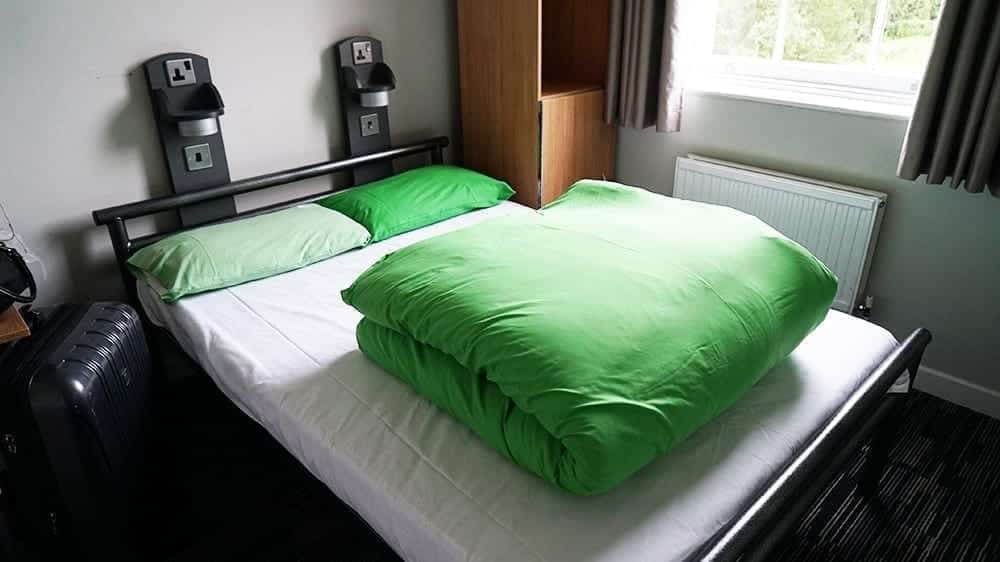
A clean hostel isn’t just about comfort; it’s a safety issue too.
Dirty bathrooms, questionable bedding, and poor hygiene can lead to health problems.
Always check recent reviews for mentions of cleanliness before you book, and bring flip-flops for the showers regardless.
7. Getting On with the Other Guests
One thing I’ve found over my years of hostel stays is that people in hostels tend to be warmer and more open to conversations with strangers than I’ve experienced in hotels.
So if you’re worried that solo travel is lonely, fear not!
There’s a built-in sense of community that comes from shared spaces and experiences.

That said, it’s the luck of the draw with whom you end up.
Most of the time, it’s great.
Occasionally, you’ll share a room with someone who snores like a chainsaw, doesn’t use headphones while FaceTiming, or lets their alarm blare at random hours.
The good news is that hostel stays are typically short, so even a less-than-ideal roommate situation is temporary.
My Honest Hostel Safety Tips
After years of hostel stays, these are the hostel tips I swear by.
Some are common sense, some I learned the hard way, and all of them will make your hostel experience significantly safer and more enjoyable.
1. Don’t Pack Anything You Fear Losing
This might sound obvious, but leave the expensive jewelry, the designer bag, and the irreplaceable family heirloom at home.
Travel with things you’d be bummed about losing but not devastated.
This’ll make your hostel experience so much more relaxed.
2. Get Travel Insurance
This applies to all travel, not just hostel stays.
If something goes wrong—whether it’s theft, a medical issue, or a trip cancellation—travel insurance is your safety net.
3. Write Down or Photograph Emergency Numbers
If it wasn’t clear from my experience at YHA Stow-on-the-Wold, make sure you have the hostel’s emergency contact either on paper or on your phone.
You don’t want to be scrambling for this information when you actually need it!
4. Bring Sleep Aids
If you have trouble sleeping, make sure you pack earplugs, a sleep mask, noise-canceling headphones, or melatonin may be of help.
Between roommates rustling around, street noise, and the general sounds of a shared space, you’ll sleep so much better with them.
5. Sleep with Valuables Near You
If there’s anything you can’t lock up—like your phone charging overnight—keep it close.
I typically place things like this under my pillow or body.
6. If You’re Arriving Late
Be mindful of arriving late at night at your hostel.
Always confirm entry procedures, especially if your flight is landing late or gets delayed.
You don’t want to show up at 1 am, just to find out they don’t have a 24/7 reception and can’t get in.
7. Walking Around at Night
The walk to and from your hostel matters as much as the building itself.
I always research the surrounding area before booking, not just the property, since a great hostel in a poorly lit or isolated area can undermine much of that security.
I’ve found more often than not, hostels are in good areas, but it’s always worth the time to research.
8. Trust Your Instincts
This is the most important tip on this “Are hostels safe?” list.
If something feels off about a hostel, a room, or a person, listen to that feeling.
Don’t talk yourself into staying somewhere that makes you uncomfortable just because you already paid for it.
Switch rooms, switch hostels, or leave entirely.
Your safety is worth more than a booking fee.
Hostel Essentials for Safety
Below is my short packing list for safety, but it certainly is not exhaustive.
Take a read through my hostel packing list for a comprehensive guide, or check out my female travel essentials list, which generally covers travel.
1. Use the Hostel Lockers
Valuables go in the locker.
Passport, phone, wallet, electronics—lock them up.
A good hostel will have lockers in the room or nearby. If yours doesn’t, that’s a red flag.
2. Buy a Lock
I’ve been to hostels that provide locks and others that don’t.
Typically, if they don’t offer one, they will sell you one.
In 2026, I bought one at the Highroad Hostel in Washington, D.C., from a vending machine in the lobby for $5.
3. Get an Anti-Theft Purse or Money Belt
An anti-theft crossbody bag or a money belt makes you a much harder target for pickpockets.


I typically will put my bag next to me while sleeping if I don’t have access to a locker for some reason.
4. Use the TSA-Approved Locks on Your Suitcase
A solid lock on your suitcase adds another layer of security.
TSA-approved locks are great because they’re sturdy and airport-friendly.


Occassionally the lockers won’t be big enough for my Delsey Paris suitcase, so locking at least the TSA lock gives me some reassurance.
5. Pack Flip-Flops
Never, ever walk barefoot in a hostel bathroom. Just trust me on this one.
Shared bathrooms see a lot of foot traffic, and cleanliness varies.

A cheap pair of flip-flops is a small investment in your health and sanity.
6. Get a Pair of Earplugs or Noise-Cancelling Headphones
Earplugs tend to fall out for me, so I use noise-canceling headphones like AirPods instead.
Use what works best for you.
7. Pack a Universal Travel Adapter
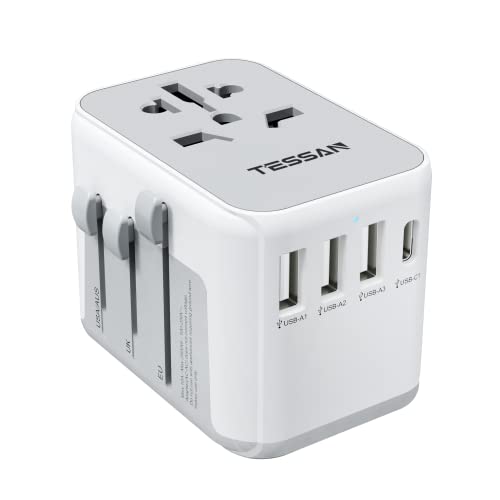
If you’re going abroad, you’ll likely need an international plug adapter.