

My Experience Staying in a Hostel as a Solo Female Over 35: Honest Insights
This site contains affiliate links and is a member of the Amazon Associates Program. At no additional cost to you, I may receive a commission from these links. I only make recommendations based on my experience. See my Disclosure Policy for more info.
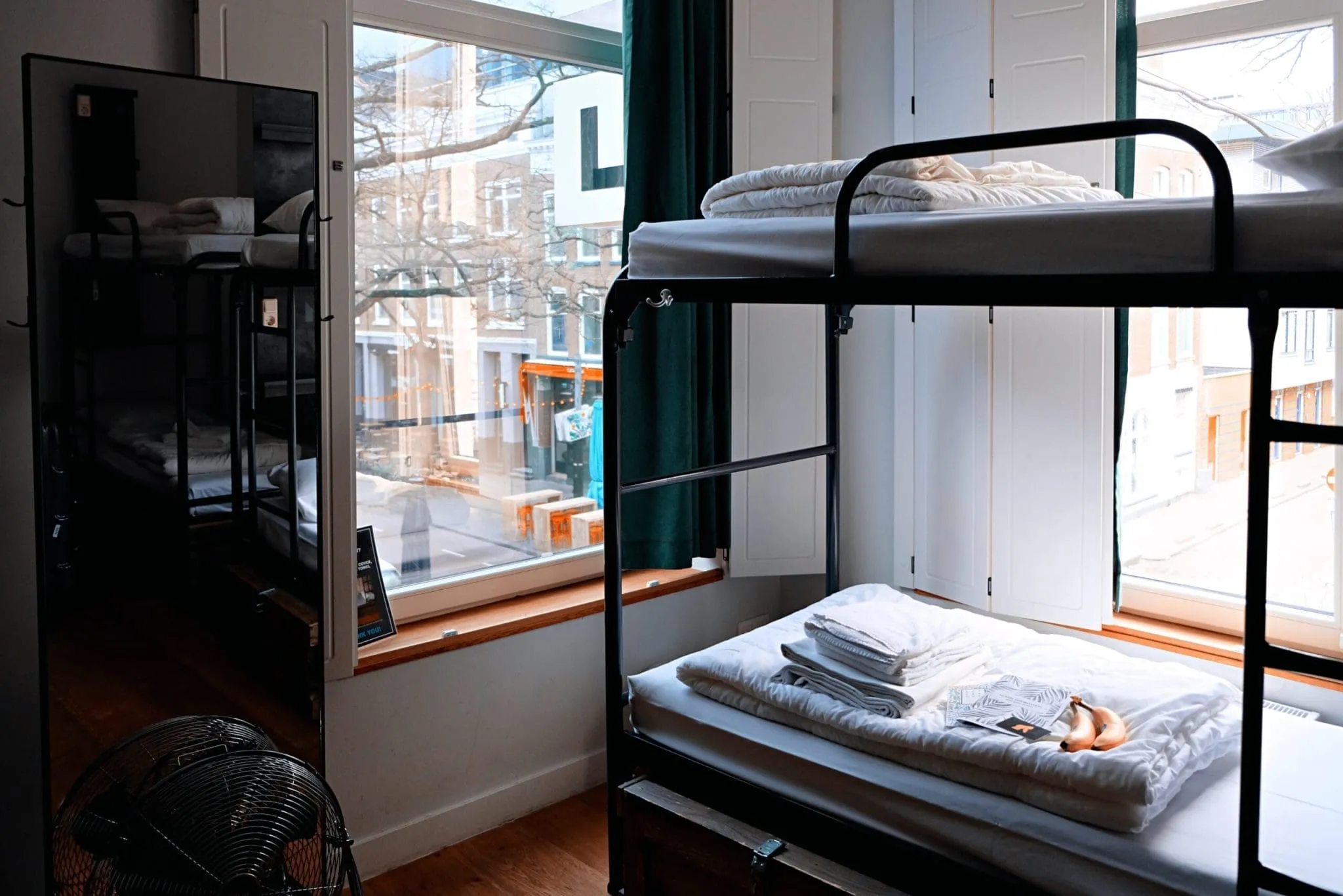
Let me address the question you’re probably too polite to ask out loud: “Am I too old for hostels?”
I get it. The mental image of staying in a hostel is of gap-year students chugging beers at 2 a.m., 18-bed dorms that smell questionable, and communal spaces where everyone’s discussing which backpacking route through Southeast Asia they’re taking next.
As someone who’s stayed in 15+ hostels across Europe and North America over the past decade, and who recently spent 4.5 months trekking across Europe while turning 35, I was worried I’d aged out of the demographic, even though I needed the budget accommodations.
While some hostels do have age limits, I’m here to tell you that hostels can absolutely work for travelers over 35—you just need to know what’s different at this age, which hostels don’t cater to 20-year-old travelers, and how to navigate hostel culture when you’re past the backpacker stage of life.
What is a Hostel?
A hostel is typically described as budget-friendly accommodation that focuses on shared social experiences, including pub crawls, group visits to local attractions, walking tours, and movie nights.
They can even be region-specific, such as surfing classes or pasta-making. It depends on which hostel you stay in.
If you’re traveling solo, this is a lovely way to meet others who may be in the same boat.

They also usually offer discounts on attractions, so it’s a great way to save a few bucks!
At hostels, you may be sharing a room, depending on whether you’re in a dorm room or a private one.
I’ve had great experiences sharing a room and not-so-great ones (only once, during San Diego Comic Con, when one of my hostel mates’ alarms kept going off). It’s really the luck of the draw with whom you wind up.
However, when it’s a good match, or you at least get along amicably, it can be great. I’ve gotten to talk to people from all over the world this way!
What’s it Like Staying in a Hostel?
Experiences staying in a hostel can vary, but typically, if you choose a dorm, it’ll be a large communal sleeping room that has an assortment of bunk beds (more common) or singles.
Sometimes you get to choose which bunk you want; other times, it’s whatever is left available.
Usually, the hostel already has sheets on the bed, but sometimes you have to make it yourself, as at Hostel Oslofjord in Norway.
(I got a private in Oslo as I was about to go on a road trip with family and wanted every bit of alone time I could before that 😅)
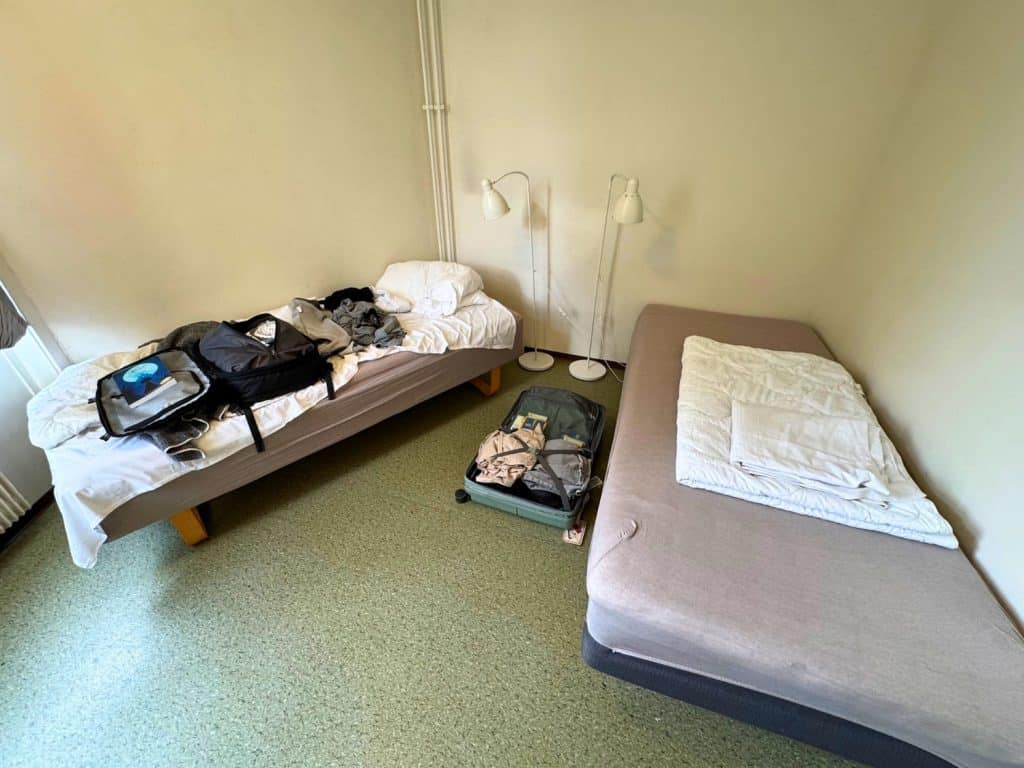
They also often have you strip the bed and place the linens somewhere when you depart.
Sometimes there is a material partition; sometimes there isn’t.
I find them most helpful for blocking out light when someone’s coming in super late, so they don’t wake me.
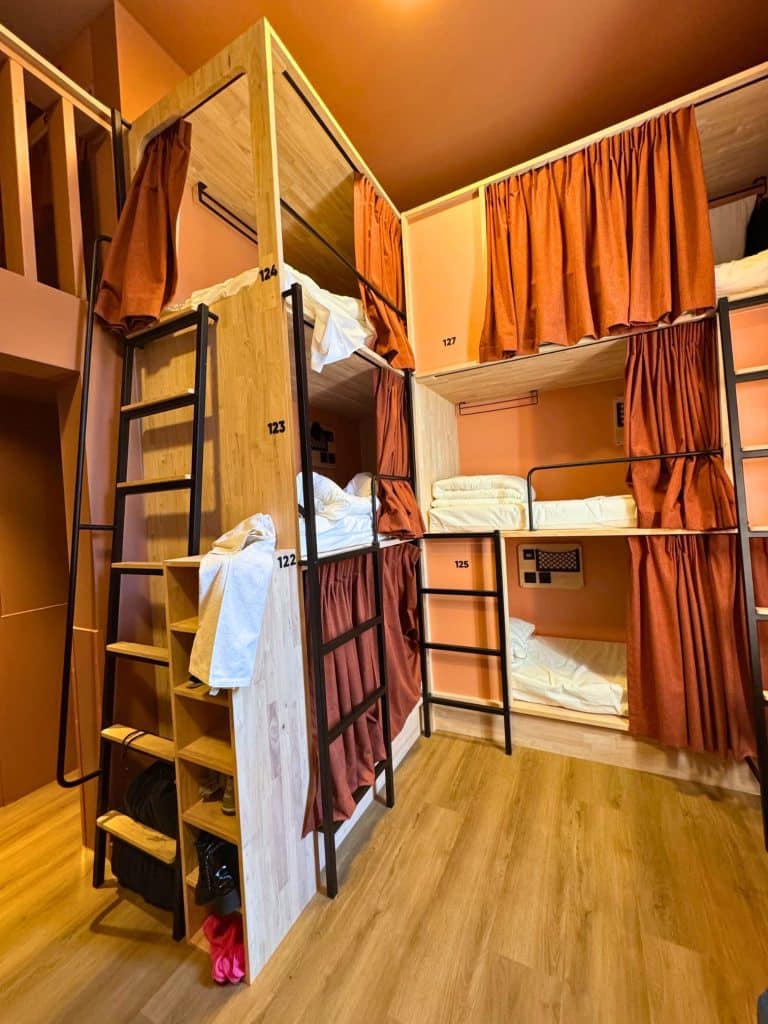
Most hostel guests follow hostel etiquette: don’t be loud at night, turn off the lights, don’t stomp around (though there was a woman I nicknamed Godzilla in Amsterdam), and so on.
There may or may not be breakfast; I find it less and less common these days.
If they do offer it, it’ll likely be very basic, think toast, eggs, yogurt, oatmeal, etc., from a buffet.

Guests typically hang out in the common areas in the evenings or for hostel-hosted events.
Those choosing a private room will find it’s much like a hotel, except the bathroom may not be en suite.
What to Expect During Your First Hostel Stay
If you’ve never stayed in a hostel before, here’s a practical walkthrough of what actually happens, from the moment you arrive to lights-out.
Check-In Process
Check-in works a lot like a hotel: you’ll show ID, sometimes a passport specifically, and get a key, key card, or door code.
The difference is that you’ll often also be assigned a specific bed, and staff may walk you through hostel-specific logistics, quiet hours, breakfast times (if offered), locker locations, and common area rules.
This is also your moment to ask questions. Confirm the emergency contact info, ask if the door code changes (learn from my mistake), and any other essential details you may want to know.
Dorm Etiquette
Hostel etiquette is mostly common sense, but it’s worth knowing upfront:
- Keep noise down at night
- Use your phone flashlight instead of the overhead light if you’re coming in late
- Pack your bag the night before if you’re leaving early
- Keep your belongings contained to your own bunk and locker rather than spreading out across the room
Most guests follow this without being asked. You’ll occasionally get an outlier (looking at you, my self-nicknamed “Godzilla” roommate in Amsterdam), but the vast majority of people sharing a dorm are just as tired and considerate as you are.
Shared Bathrooms
Shared bathrooms are one of the bigger adjustments for first-timers.
Expect multiple stalls and showers down the hall rather than en suite, and expect some wait times during peak morning hours.
Pack flip-flops, always, since shared shower floors see a lot of foot traffic, and cleanliness varies from hostel to hostel.
Private rooms sometimes still have shared bathrooms too, so don’t assume “private room” automatically means “private bathroom”; check the listing details before you book if that matters to you.
Lockers
Lockers are typically located inside the dorm room itself, and they’re where your passport, wallet, and other valuables should live whenever you’re not using them.
Some hostels include a padlock, some expect you to bring your own, and some sell one on-site if you forget (I’ve bought one out of a lobby vending machine before).
Not every locker fits everything, which is part of why I also travel with a TSA-approved lock for my actual luggage as backup.
Quiet Hours
Many hostels post official quiet hours, often somewhere between 10 or 11 p.m. and 7 or 8 a.m., though this varies a lot by property and by vibe (a party hostel’s “quiet hours” and a family-friendly hostel’s “quiet hours” are not the same experience).
Even without official hours, the general expectation is the same: keep noise to a minimum once people are sleeping.
If you’re a light sleeper, earplugs or noise-canceling headphones are essential, since quiet hours don’t guarantee silence, just a reasonable effort.
Common Rooms
Common rooms are where most of the hostel’s social life happens: lounges, kitchens, sometimes a bar or co-working space.
This is where you’ll find other travelers, hostel-hosted events, and the easiest opportunities to strike up a conversation if that’s what you’re after.
Late-evening common rooms tend to skew younger and louder; afternoon common rooms tend to have people quietly having coffee and chatting, which can be a much easier entry point if big-group energy isn’t your thing.
My First Over-35 Hostel Experience
I spent 4.5 months in Europe last year, and in the early part of that trip, I turned 35.
As someone who’s been transitioning to making blogging my full-time gig, I knew I didn’t have much money to spend on accommodations, so I picked hostels in expensive cities or ones recommended by a friend, like in Budapest.
However, I didn’t know if being in the latter half of my 30s would put me on the outs with other hostel-goers.
In honesty, I don’t always meet other people while staying in a hostel (even when I was in my 20s) since I’m usually out all day exploring and then working or crashing into bed, so this wasn’t something that was going to keep me from booking hostels; it was just a concern, as 4.5 months solo is a while, and I was keen to chat with people at least occasionally.
On this trip, I found that some hostels are much more family-friendly these days, so I didn’t feel awkward about my age. However, I didn’t find many people to chat with in those hostels, as they were in their family groups, particularly in Switzerland (despite the name “Montreux Youth Hostel“) and Norway.
In the non-family-oriented hostels, I found people much more willing to chat, since they were typically solo and seeking the same connection.
In Budapest, at an independent hostel called The Loft, nearly the minute I put my bags down, I was invited out to hang with my hostel mates at Szimpla Kert, a ruin bar. I was also invited to other events and even invited some of them out when I was exploring.

Prime Backpackers Angel hostel in London was more of a 20-something community, lots of people wanting to go to clubs and such, which isn’t my vibe, so I wasn’t as keen on doing that, but I could have if I wanted to.
I will say that in Budapest and London, I was one of the oldest guests, but no one made me feel weird about that. If anything, they were all more fascinated by how I could afford to travel for that long.
The Elephant Hostel in Amsterdam was more of a younger vibe, and I did see some people hanging out, but since it was my first country on this trip, I was suffering from a bit of jet lag and a bad back (more on that later), so I didn’t really open the door to hanging out much on my end.
Where You’ll Find Fellow 30s/40s+ Travelers:
- Cities with high accommodation costs (London, Paris, Copenhagen)
- Boutique or design-focused hostels (Generator)
- Hostels with co-working spaces or that have “digital nomad” in the description
- YHA/HI locations that attract families and mature travelers
- Eco-hostels or sustainability-focused properties
Where You’ll Definitely Be the Oldest:
- Party hostels advertising pub crawls every night
- Beach town hostels in summer
- Hostels with “18-30s social vibe” in descriptions
- If every review is written by 18-22-year-olds, that’s the crowd you’re getting
What’s Different About Hosteling in Your 30s/40s?
I’m not going to pretend that staying in a hostel at 35 feels identical to staying in one at 25.
Your body knows the difference. And your wallet can handle it a bit better.
- Financial Flexibility: You can now choose the 6-bed dorm instead of the 16-bed dorm. You can book a private room. You can opt for the hostel that costs €5 more per night that has consistently excellent reviews over the dirt-poor one.
- Your Body Doesn’t Bounce Back Like It Used To: When I stayed in the Elephant Hostel in Amsterdam, it was because hotels were twice the cost, and I just could not afford that. However, my back paid the price as even though it felt like a decent bed, my back was killing me, which honestly scared me until I got to my next destination, and within a night’s sleep, I was fine. I also slipped on the ladder to my bunk, and that screwed up my foot for a few days. I now book only lower bunks, even if it costs slightly more or means waiting for availability, because I know I don’t want to risk it any longer.
- Recovery and Work Time: At 25, I could sleep 4 hours on a lumpy hostel mattress and rally for a full day of sightseeing. Now I need quality sleep, or I’m useless. I now stay in higher-quality properties and book private rooms when I’m exhausted. The same goes for work. If I need to get stuff done without interruptions, it’s either a private room or a hotel room.
What’s Too Old for Hostels?
You’re only too old for staying in a hostel if it explicitly states it doesn’t accept people over a certain age, which varies by hostel.
You can find this information on the Hostelworld website in each hostel’s “About” section.

Private Room vs. Dorm: When to Splurge
When I Choose Private Rooms Now:
- After Long Travel Days: If I’ve taken a red-eye flight or spent 8 hours on trains, I’m booking a private room. My body needs actual rest. However, if it’s cost-prohibitive, such as with Amsterdam, I don’t.
- When I’m Genuinely Exhausted: Traveling hard for multiple weeks drains you differently at 35+ than at 25. When I can feel my energy depleting, a private room isn’t a luxury—it’s necessary as I like quiet time to just veg occasionally.
- When I Need to Work: Taking calls, having focused work time, filming content, spreading out my laptop—none of this works well in a dorm. Private rooms give me the space to be productive.
- If I’m Feeling Unwell: Being sick in a dorm is miserable for everyone, so it’s best to switch to a private room. It costs more, but you can then actually rest properly without worrying about disturbing or infecting others.
- When the Price Difference is Minimal: In some cities, private rooms at hostels cost only €10-15 more than dorm beds. For that small difference, I’ll take the privacy every single time.
When I Still Book Dorms:
- Short 1-2 Night Stays: If I’m just passing through and won’t spend much time in the room anyway, a clean 4-6-bed dorm works fine. It’s not worth paying double for a private room I’ll barely use.
- When I Specifically Want to Meet People: Sometimes I’m in a social mood and actively want the hostel community experience. Female-only 4-6-bed dorms in well-reviewed hostels can facilitate great conversations, as can events the hostel hosts.
- Budget-Savvy Trips: If I’m trying to save money, I’ll dorm it. I stayed in dorms for parts of my trip to Switzerland just because everything is SO expensive there.
- Female-Only Dorms in Quality Hostels: I’ll book female-only dorms at hostels such as Generator or YHA, where reviews consistently mention respectful roommates and good sleep quality.
- When the Hostel is the Experience: Some hostels are destinations themselves with vibrant communities, places to hang out, and loads of events to attend. The Prime Backpackers Angel hostel in London was not much to look at, but the sense of community made the experience worthwhile as I got to join family dinner which not only got me a cheap meal but some company to eat with.

Navigating Social Dynamics as an “Older” Guest
Making friends beyond college is difficult anywhere, but here are some tips I’ve found for meeting others along the journey.
- Co-Working Spaces: Fellow laptop users tend to be older, working remotely, or on career breaks. These spaces attract people with similar life stages, even if ages vary.
- Organized Activities (The Right Ones): Skip the pub crawl or club outing. Join the walking tour, cooking class, or museum visit. These attract people interested in cultural experiences rather than just drinking, which naturally includes more mature travelers.
- Common Areas During Off-Peak Hours: The 11 p.m. common room is full of 20-somethings pre-gaming. The afternoon common room has people actually having coffee and conversation.
If you’re nervous and worried about how safe hostels are, these are also great starter areas to meet others.
When You Feel Out of Place (And How to Handle It):
- The Organized Pub Crawl Invitation: It’s completely fine to say, “That’s not really my thing, but have fun!” You don’t need to explain or justify. Many times, events are by sign-up only, so don’t worry about being pressured into joining.
- When Everyone Seems So Young: Remember, they’re probably not judging you. You’re judging yourself. Most young travelers are too focused on their own experiences to care about your age. And if they do care, that says more about them than you.
- The Generational Disconnect: Sometimes references don’t land, cultural touchpoints differ, and life stages create natural gaps. That’s normal. You don’t need to be best friends with everyone—just respectful roommates.
Practical Tips I’ve Learned the Hard Way
I’ve got a whole post dedicated to my ultimate hostel tips, but here’s the quick rundown for older travelers.
- Always Book Lower Bunks: I will pay extra, I will wait for availability, I will specifically request it—whatever it takes. Climbing down from a top bunk in the middle of the night and worrying if you’re going to fall to your death is not worth the savings. Additionally, lower bunks provide more storage space underneath.
- Bring Melatonin and Use It Strategically: If I’m having trouble sleeping, I take melatonin. It’s one of my must-haves on my hostel packing list. It helps me fall asleep faster, even in an unfamiliar environment, and makes it easier to sleep through minor disturbances.
- Choose Rooms Away from Common Areas: When booking, specifically request this if possible. Rooms above or next to bars, kitchens, or social spaces will be noisier. I learned this the hard way at Generator Dublin—loved the hostel, but the bar noise was noticeable.
- Pack Noise-Canceling Headphones: For both sleeping and daytime use. Being able to create your own quiet space in a shared environment is essential, especially if you need to work or just decompress. I’m one of those who need library-level quiet, so I cannot travel without my AirPods.
When Hostels Aren’t the Right Choice
Sometimes staying in a hostel just doesn’t make sense, and knowing when to skip them is part of being a realistic traveler.
- Destinations with Affordable Alternatives: In places like Prague or Lisbon, hotels and guesthouses are cheap enough that the hostel savings don’t justify the trade-offs. I’d rather pay €50 for a private hotel room than €35 for a hostel dorm in these cities.
- If All Available Hostels Have Terrible Reviews: Sometimes, you research, and everything looks mediocre or is way too far away. This happened to me in Luxembourg, when all I could find was a single hostel in the whole country! It had mixed reviews, so I just didn’t chance it and instead found an affordable hotel.
- When I Need Guaranteed Good Sleep: Before long travel days, important or taxing activities (e.g., the ATM Cave), or when I’m fighting off a cold, I book a hotel. A quiet hotel room where I control the environment beats the cheapest hostel.

Is Staying in a Hostel Worth It?
Can you stay in a hostel as a solo female over 35? Absolutely.
Should you force yourself to if it makes you genuinely uncomfortable? Absolutely not.
Hostels work for me in specific contexts: when hotels are out of my budget range, when I’m feeling social and want to meet other travelers, or when the hostel itself is part of the experience.
In expensive cities like London or Paris, hostels make financial sense. In places like Lisbon or Prague, where hotels are affordable, the price difference doesn’t justify hostel trade-offs unless you specifically want the social atmosphere.
As a 36-year-old, I now specifically look for hostels that have both social spaces AND quiet zones, such as co-working spaces, so I can get balance whenever needed.
The bottom line? Choose what serves your trip goals and makes you happy. Some trips that’s hostels. Some trips that’s hotels. Some trips it’s a strategic mix of both.
And anyone who judges you for being “too old” for hostels—can mind their own business. You’re traveling on your terms, with your money, using your vacation time. Do what works for you.
Related Hostel Guides
- Are Hostels Safe? My Nightmare Experience + 10 Key Takeaways
- Hostel Items List for Women: 44 Must-Haves + 7 Non-Essentials
- 30+ Hostel Travel Tips I Wish I Had Known Before My First Solo Trip as a Woman
- My Experience Staying in a Hostel as a Solo Female Over 35: Honest Insights
Want to remember this? Pin this Candid Take on Staying in a Hostel as a Solo Female Over 35 article to your favorite Pinterest board!

