

Guide to Visiting Tolkien’s Talking Tree at the Avebury Stone Circle in Wiltshire, England
This site contains affiliate links and is a member of the Amazon Associates Program. At no additional cost to you, I may receive a commission from these links. I only make recommendations based on my experience. See my Disclosure Policy for more info.

You’ve likely heard of England’s famous Stonehenge, but fewer travelers know about Avebury Stone Circle.
It’s Europe’s largest stone circle that offers something its famous cousin simply can’t: the freedom to walk among 5,000-year-old stones without barriers, entry fees, or tour groups breathing down your neck.
As someone who’s explored both Stonehenge and Avebury during my travels through England, I’ve learned exactly what makes Avebury special—from its standing stones and haunted pub to the ancient beeches that may have inspired Tolkien’s talking trees (which was the main reason I visited, as a literary travel nerd).
In this guide, I’ll show you how to get there, where to find the ghost stories, and how to track down Tolkien’s Ents.
Whether you’re a history buff seeking authentic archaeological experiences, a literature fan chasing Lord of the Rings connections, or simply someone who prefers hidden gems, this guide will help you uncover why Avebury deserves a prime spot on your England itinerary.
Is Avebury Better than Stonehenge?
Avebury Stone Circle is worth visiting, especially if you want unmediated access to 5,000-year-old stones without Stonehenge’s crowds, timed entry, or barriers. It’s Europe’s largest stone circle, and unlike Stonehenge, it’s completely free with no ticket required. Based on my visit, budget 1-2 hours to walk among the stones, see the Tolkien-inspiring trees, and stop at the haunted Red Lion pub. It’s best for history buffs and Tolkien fans seeking a quieter alternative to Stonehenge.
Quick Guide to the Avebury Stone Circle in England
| Detail | Info |
|---|---|
| Distance from London | ~1 hr 40 min by car |
| Cost | Free |
| Recommended Visit Length | 1-2 hours |
| Ticket Required? | No |
| Best For | History buffs, JRR Tolkien fans, those looking for hidden gems, quieter alternative to Stonehenge |
| Nearby | Red Lion Pub, Stonehenge (~30 min drive) |
What is the History of the Avebury Stone Circle?
Avebury was constructed over several hundred years in the 3rd millennium BC in Wiltshire, England (during the Neolithic, or New Stone Age).
It’s a large henge (a bank and a ditch) with a large outer stone circle and two separate, smaller stone circles situated inside the center.
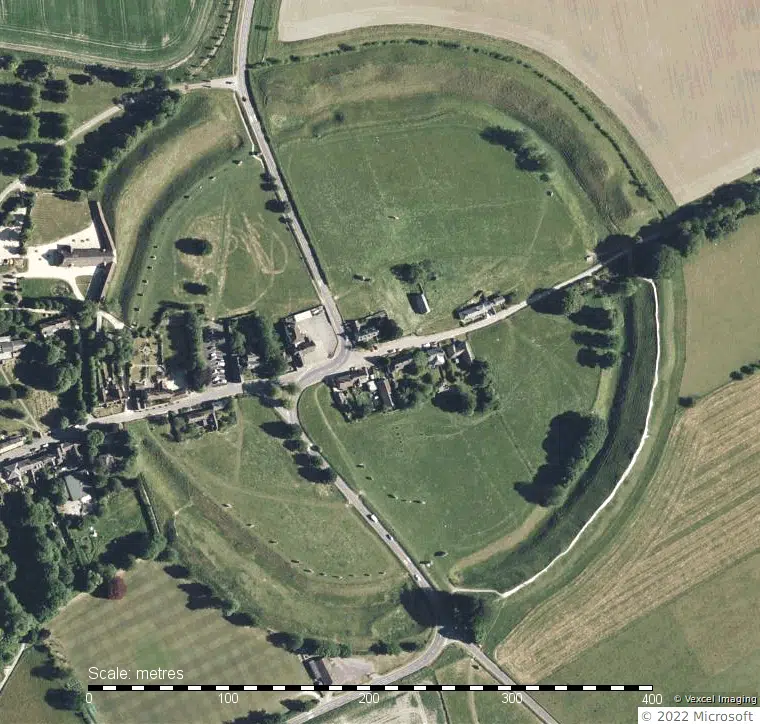
The Avebury Stone Circle initially comprised 100 stones.
As with Stonehenge, its original purpose remains unknown.
Archaeologists believe it most likely was used for rituals or ceremonies.
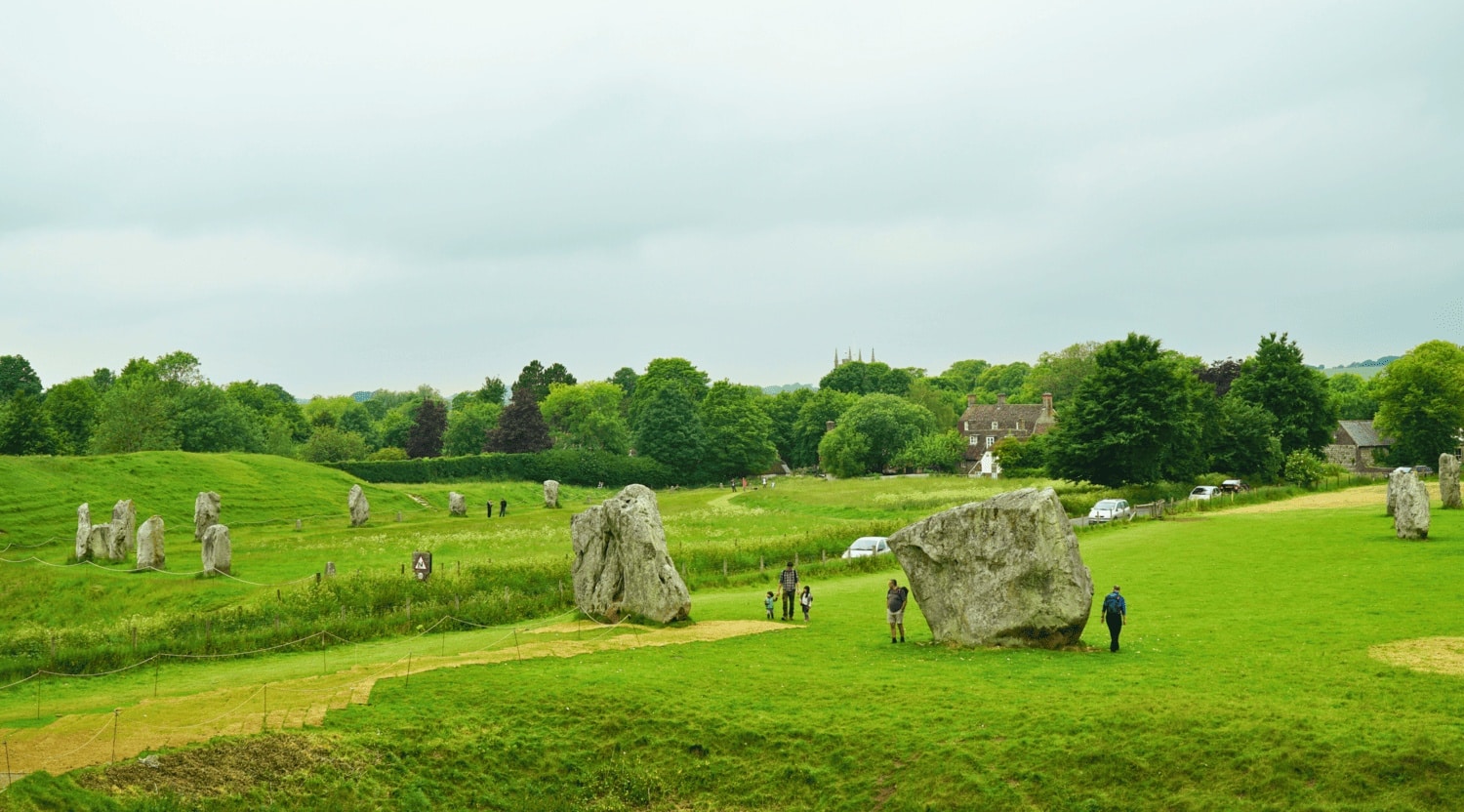
By the time the Iron Age arrived, the site had been mostly abandoned.
During the Early Middle Ages, a village first sprung up around the Stones and eventually extended into them.
In the Late Medieval and Early Modern periods, local people sadly destroyed many of the standing stones around the henge for religious and practical reasons.
Getting to Avebury, Wiltshire, UK
When I visited in June 2015, I rode a coach bus from Stow-on-the-Wold in the South of England to Stonehenge and Avebury, and back.
It was private because it was hired for the guests at my friend’s wedding, so that’s unlikely to be how you’ll be getting to Avebury.
Here are some great options:
🚗 By Car: Self-driving is the most flexible option since Avebury is in a rural area with limited public transport. It’s about a 1-hour 40-minute drive from London.
🚆 By Train + Bus (Public Transport): This is the typical car-free route:
- Train to Swindon:
- From London Paddington (or other major cities), take a Great Western Railway train to Swindon — about 1 hour.
- Bus from Swindon to Avebury:
- From Swindon bus station (a short walk from the train station), take Stagecoach Bus 49 to Avebury (about 30–45 minutes).
- Buses run roughly hourly on weekdays but check the schedule (especially on weekends).
👉 Note: There’s no train station in Avebury itself, so either way, you need to stop in Swindon, whether you take the bus the whole way or switch to a bus at the train station.
🚌 Long-Distance Coach (Bus): You can take a coach (e.g., National Express or FlixBus) from London to Swindon or nearby towns, then catch a local bus on to Avebury. This is often cheaper but slower than the train + local bus route.
🚴 Bike or On Foot: If you’re already nearby, National Cycle Routes NCN 403 and NCN 45 pass through Avebury. The Ridgeway National Trail is also a long-distance walking route that runs near Avebury if you’re hiking from other parts of southern England.
📍 Organized Tours: Some day trips from London or other cities include Avebury (often coupled with Stonehenge—two birds, one stone—or two Stonehenges in this case!). It’s a simple door-to-door option if you don’t want to handle transport yourself. I book tours through GetYourGuide because the cancellation policy is extremely flexible.
Lunch at the Haunted Red Lion Pub
After arriving from Stonehenge, we headed to the local Red Lion Avebury Pub for lunch!
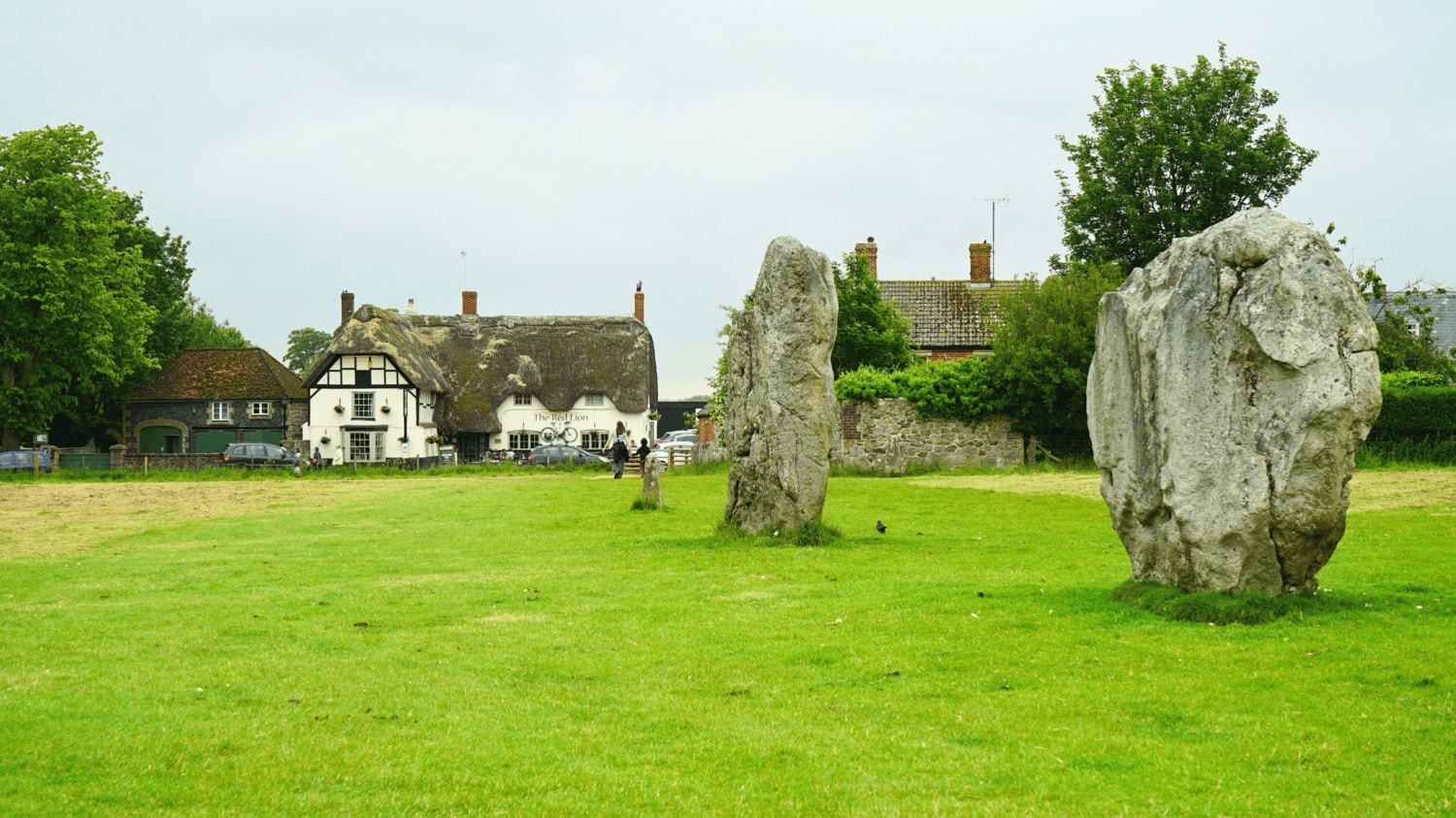
I enjoyed an excellent Guinness as well as fish and chips!
The pub is built around an old well that may or may not have been the final resting place of an unfortunate Avebury villager.
“The Red Lion was first licensed in 1802 and is famous for its 86ft deep well which dates back to the 1600’s.”
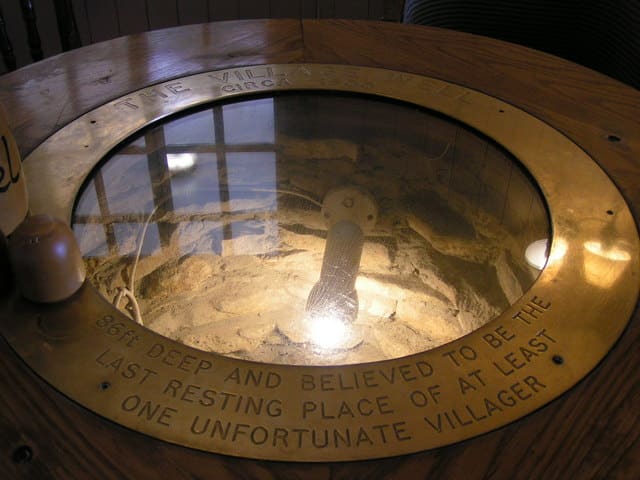
Some of it’s famous hauntings include:
- Phantom Carriage: A phantom carriage, drawn by ghostly horses, has been seen crossing the inn’s courtyard. Locally, this is known as a harbinger of tragedy, meaning a close relative is about to die.
- Florrie: The Red Lion’s female phantom, Florrie, was caught with another man by her husband. He shot her lover and slit her throat. Then he dragged her body to the well, threw her down it, and sealed it with a boulder. Florrie’s ghost has remained at the Red Lion ever since.
- The Avenue Bedroom: The ghosts of two children and a woman haunt the Avenue bedroom.
While I didn’t know about the hauntings at the time, I’m somewhat glad it didn’t, since I sat at that well!
🇬🇧 For an adventure that’ll almost rival the path to Mordor, see my 2-day London itinerary for first-timers
What to Expect When Visiting Avebury Henge and Stone Circle
Since we had limited time, I only got to visit some of the Avebury Stone Circle, but what I did see was beautiful.
Unlike Stonehenge, Avebury isn’t commercialized.
No visitor center, no tram up to the site, no audioguide.
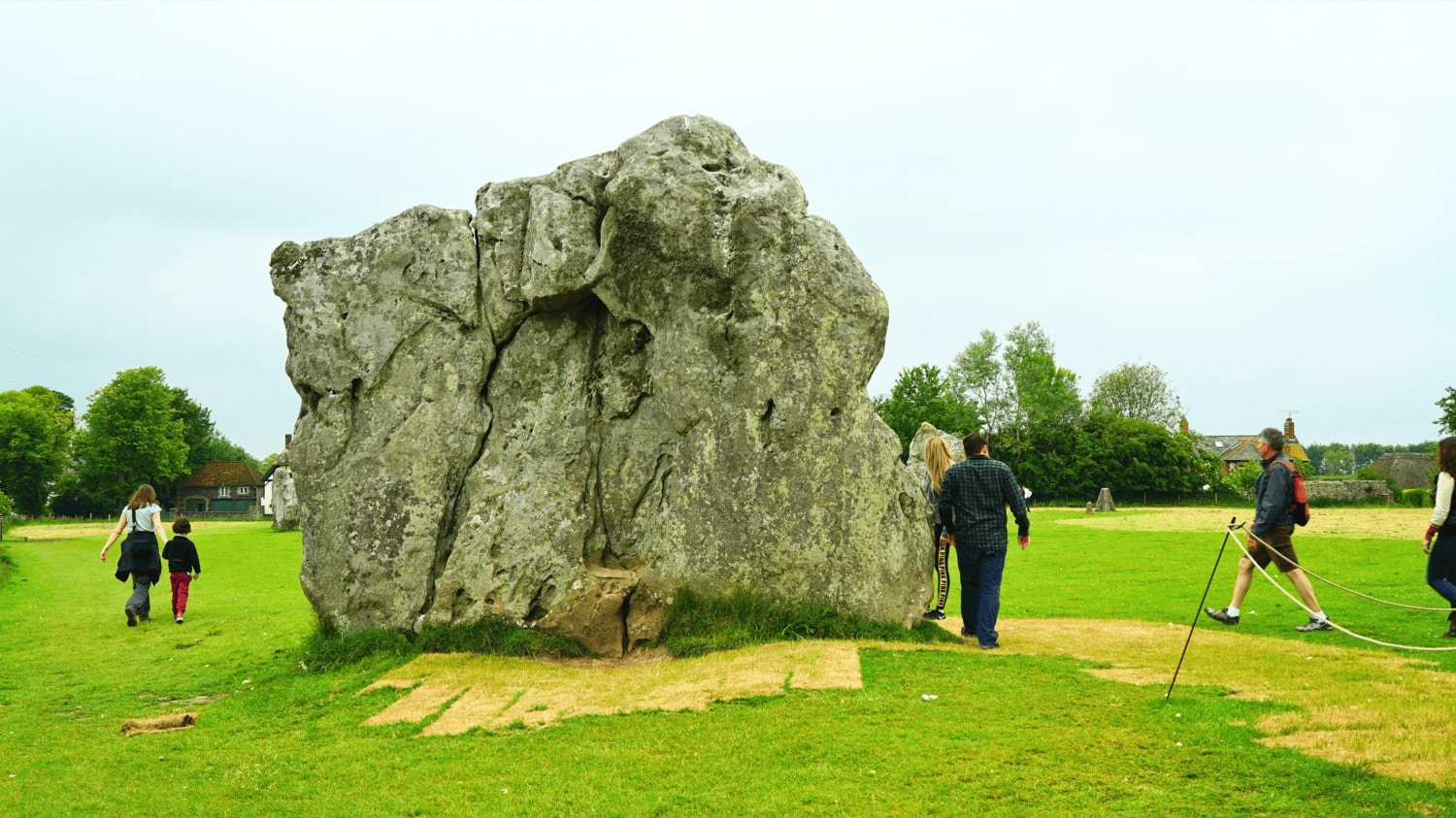
There weren’t many other people there, which was a welcome change after Stonehenge.
It was lovely to enjoy the place without any pressure.
It also felt much more natural as you can walk right up to the stones! Though I wouldn’t recommend touching them—be respectful.
JRR Tolkien’s Talking Tree
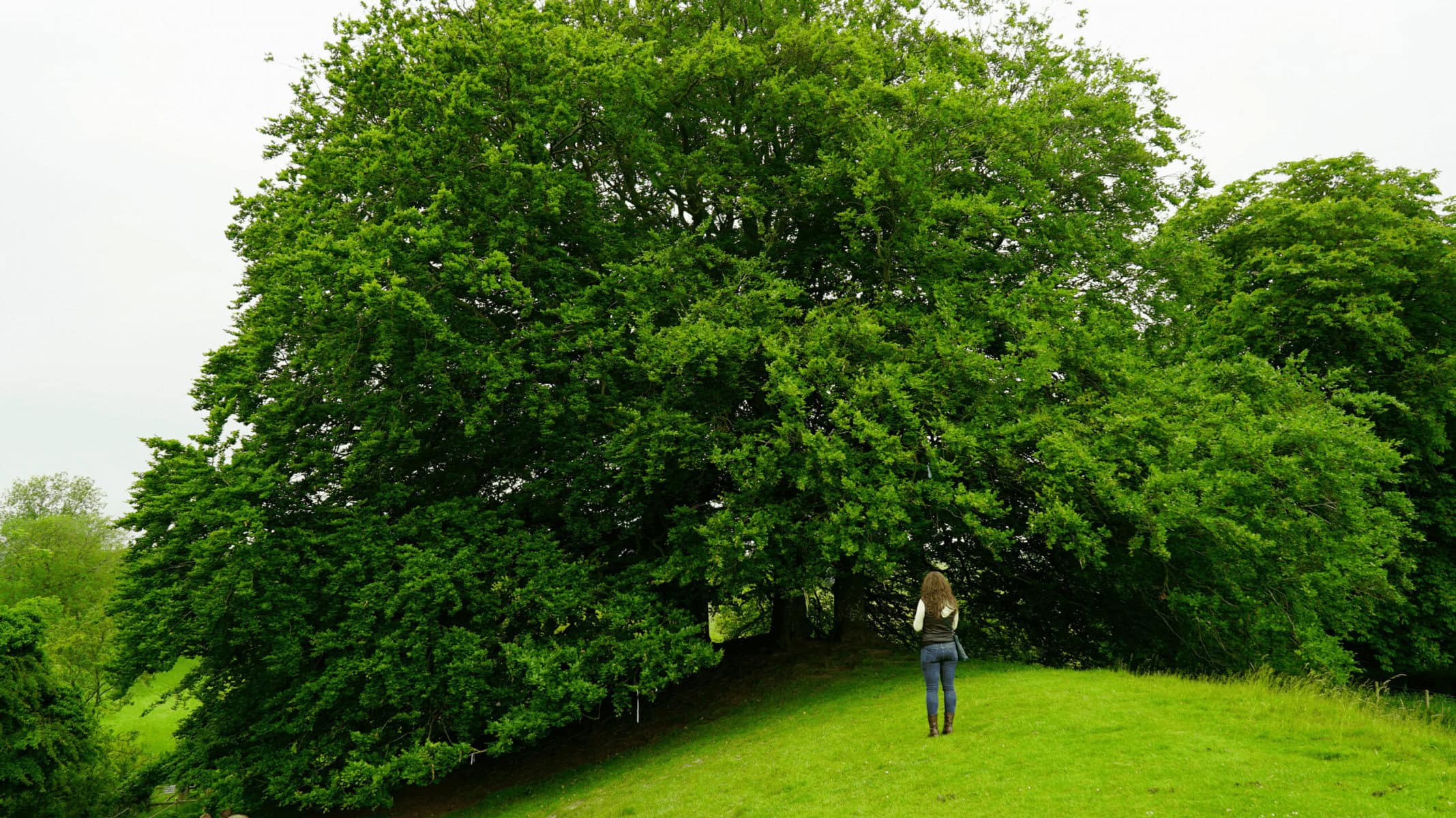
Just a little way down the road from the Red Lion Avebury Pub, you’ll happen upon some enormous trees.
My friend, who had been there before, told me these four massive copper beech trees are rumored to have inspired JRR Tolkien to create the Ents in The Lord of the Rings.
In Tolkien’s work, the “talking tree” I’m referring to is Treebeard, also known as Fangorn in Sindarin.
He is an Ent, a tree-like humanoid, and the oldest living being in Middle-earth.
You may recall him carrying the hobbits on his shoulders in the film.

Treebeard resides in the Forest of Fangorn, which is named after him, and is described as being about 14 feet tall, resembling a beech or oak tree.
Their name is derived from the Old English word for ‘giant.’
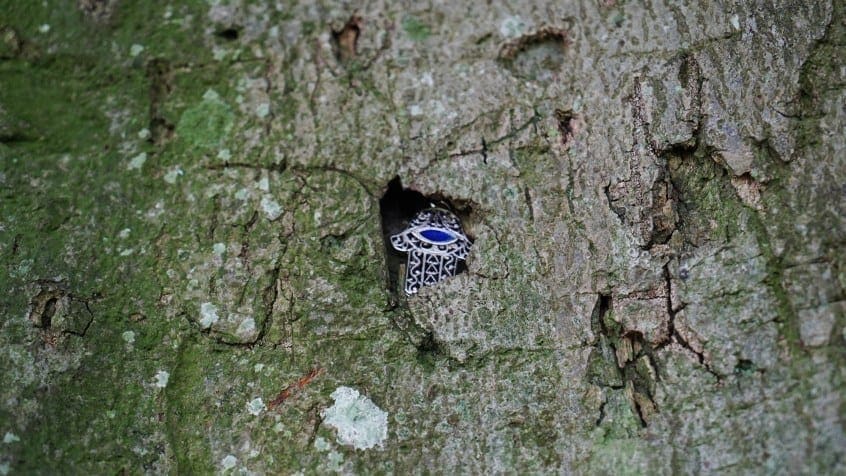
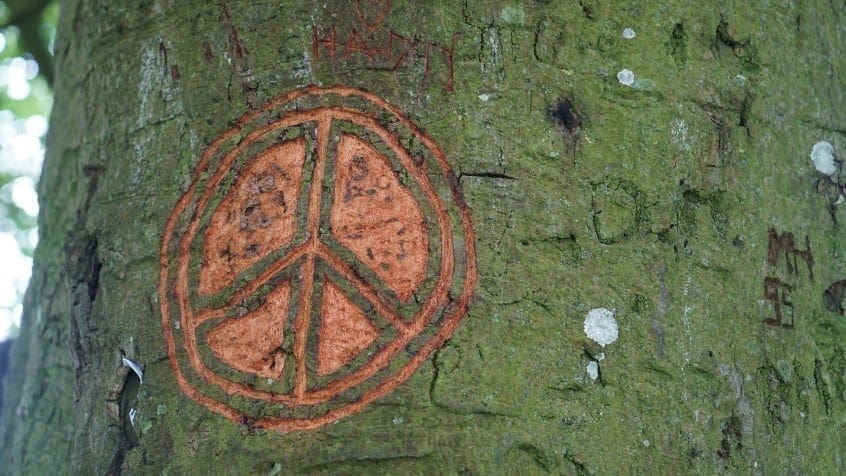
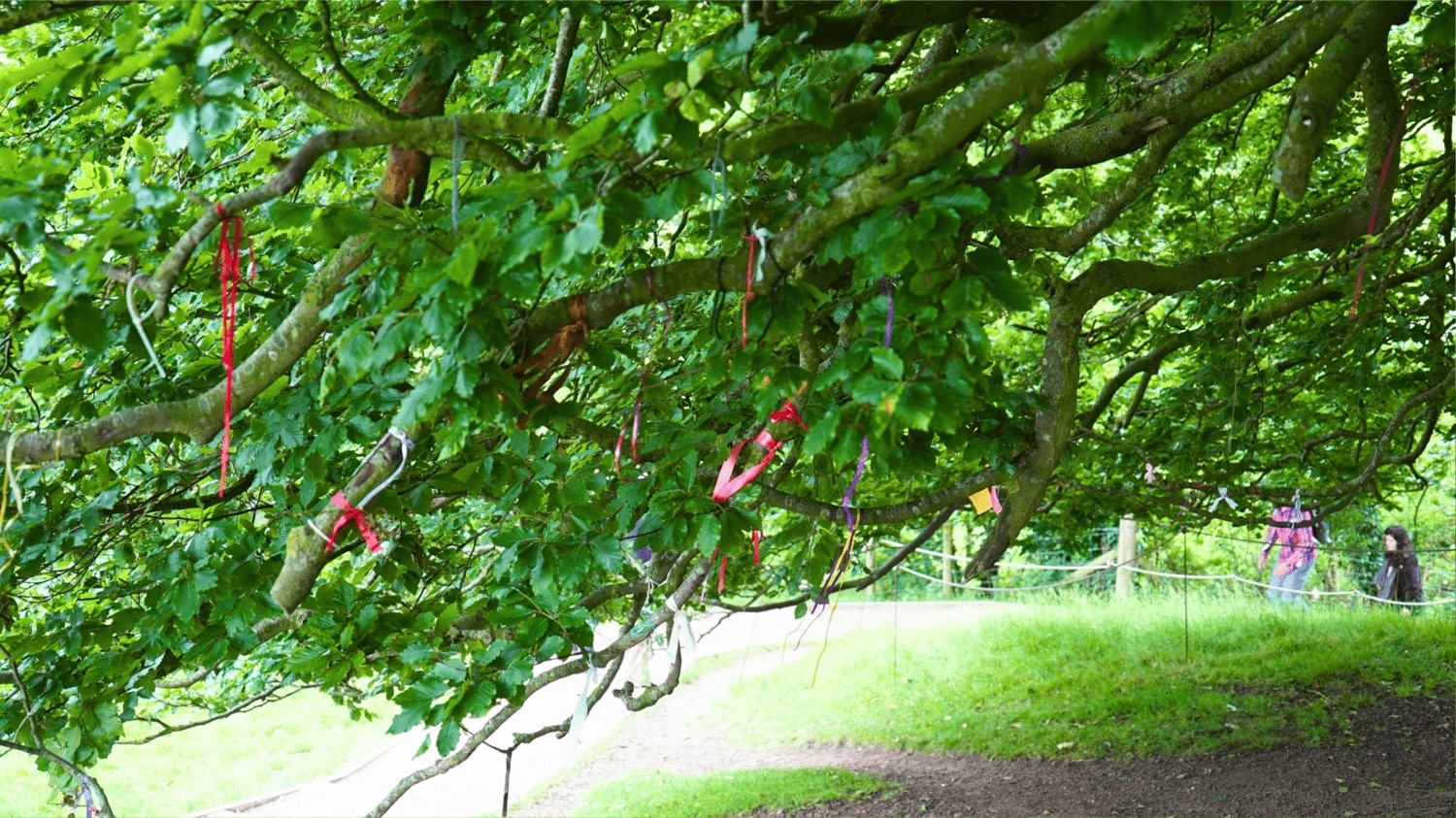
Whether or not these massive, gorgeous trees inspired JRR Tolkien, they are truly amazing.
While you’re visiting Avebury, it’s worth the five-minute walk to see them.
When I visited, people had tied ribbons to Tolkien’s talking tree branches with wishes written on them.
At the time, I was told it was common practice; however, a commenter on this post recently informed me that leaving tokens and tying ribbons to the trees is now frowned upon.
Book Recommendation

Read The Hobbit—I was entralled by the audiobook! It’s much shorter than the trilogy, so it’s a great entry point for those just getting into Tolkien or for little ones who may not be ready for the whole series yet.
I get my audiobooks from Libro.fm—they split the profits with an independent bookstore of your choice.
Avebury vs. Stonehenge
| Avebury | Stonehenge | |
|---|---|---|
| Cost | Free | Ticketed, advance booking required |
| Access | Walk directly among the stones | Roped off, viewed from a distance |
| Crowds | Light, even on weekends | Heavy, especially in peak season |
| Size | Europe’s largest stone circle | Smaller, more famous |
| Visitor Center | None | Yes |
| Best For | A quieter, hands-on experience | The iconic, must-see landmark |
Final Thoughts
I’d recommend spending at least 1-2 hours touring the stones, the trees, and stepping into the pub for a pint and a bite.
If you’re a Tolkien fan and plan on visiting the Netherlands soon, I highly recommend checking out the town of Geldrop.
It’s been nicknamed the Dutch Tolkien town because its streets are named after people, places, and things from JRR Tolkien’s works.
Of course, you can also visit the filming location of the epic films at Hobbiton, one of New Zealand’s quirky attractions!
If you’re looking for another day trip from London, Stratford-upon-Avon, Shakespeare’s birthplace, is conveniently accessible by train. I highly recommend taking the Stratford Town Walk to quickly see the highlights.
Or if you’re looking for something in London, visit the Sherlock Holmes Museum.
FAQs
When to Visit the Avebury Henge?
Avebury Stone Circle is accessible year-round during daylight hours, and unlike Stonehenge, there are no ticketing windows or opening times to worry about—you simply arrive and walk among the stones.
That said, the experience varies by season.
Spring (April–May) and early autumn (September–October) offer the best combination of pleasant weather, long daylight hours, and manageable visitor numbers.
Summer weekends bring more people, though Avebury never gets as crowded as Stonehenge.
Winter visits have a quiet, atmospheric quality, with the stones emerging from morning mist that can be genuinely cinematic, and you may have the site nearly to yourself.
The summer solstice (around June 21) draws a modest crowd of pagans and history enthusiasts, much smaller and more relaxed than the famous Stonehenge celebrations.
Is it Free to visit Avebury Stone Circle?
Yes, visiting the Avebury Stone Circle is completely free.
Unlike Stonehenge, which requires advance tickets and charges an admission fee, Avebury has no entry gates, no ticket required, and no timed entry system.
You simply arrive, park (there is a National Trust car park in the village—free for NT members, a small fee for non-members), and walk straight to the stones.
The stones sit within the village of Avebury itself, which means public footpaths and roads run directly through the henge. There’s no barrier between you and 5,000-year-old Neolithic history.
Budget at least 1–2 hours to walk the full circuit of stones and visit the nearby copper beech trees rumored to have inspired Tolkien’s Ents.
Is Avebury Better than Stonehenge?
Avebury and Stonehenge offer very different experiences, and for many visitors, Avebury is the better of the two.
I’ve been to both, and what Avebury gives you that Stonehenge can’t is direct, unmediated access to the stones. You can walk right up to them, stand beside them, and experience the site at your own pace without timed entry, tour groups, or the rope barriers that keep Stonehenge visitors at a distance.
Stonehenge has the iconic silhouette, the visitor center, and a well-documented history known worldwide.
But the experience can feel managed and slightly anticlimactic, given how far you’re kept from the stones.
Avebury is quieter, more atmospheric, and arguably more historically significant as it’s the largest stone circle in Europe, predating parts of Stonehenge, and yet far fewer people make the trip.
If you only have time for one, Stonehenge is the more famous landmark.
If you have time for both, Avebury is the more memorable experience.
Who Built Avebury Stone Circle?
Avebury was built by Neolithic people in the 3rd millennium BC, though exactly who constructed it and why remains unknown, much like Stonehenge.
Archaeologists believe it was most likely used for rituals or ceremonies, based on the scale of the henge and stone circles, but no written records survive from that era to confirm its purpose or builders.
How Old is Avebury Stone Circle?
Avebury Stone Circle is roughly 4,500-5,000 years old, constructed over several hundred years during the 3rd millennium BC in the Neolithic period. That makes it contemporary with, and in some respects older than, parts of Stonehenge, which was built in phases over a similar era.
Related Literary Travel Guides
- Sherlock Holmes Tour of London: Free Self-Guided Literary Walk + Downloadable Map
- Is the Sherlock Holmes Museum in London Worth Visiting? Review from a Fan
- Reviewing the Outlander Tour of Tryon Palace in New Bern, North Carolina
- Birthplace of William Shakespeare: How to Get Discount Tickets + Tour Overview
- Is the Stratford Town Walk Worth It? Reviewing the Guided Tour of Shakespeare’s Hometown
- Guide to Visiting Tolkien’s Talking Tree at the Avebury Stone Circle
Want to remember this? Pin this Guide to Visiting Tolkien’s Talking Tree at the Avebury Stone Circle article to your favorite Pinterest board!

Leaving tokens and tieing ribbons on the trees at Avebury is actually frowned upon and seen as litter at the very least and to others rather disrespectful. Wardens collect them almost daily and bin them. The beauty of these trees IS their beauty.
That’s good to know! I visited almost 10 years ago, so I was told it was common practice at the time.
this article is very useful, thank you for making a good article
You’re welcome!