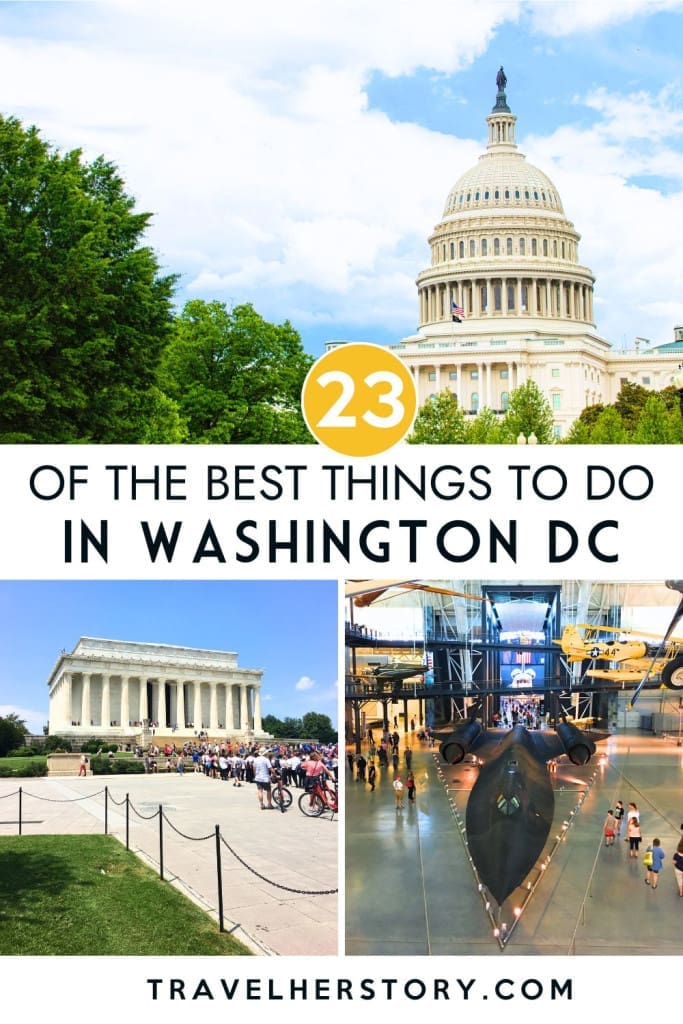

Free Attractions in Washington, DC: 32 Top Things to Do for First-Time Visitors
This site contains affiliate links and is a member of the Amazon Associates Program. At no additional cost to you, I may receive a commission from these links. I only make recommendations based on my experience. See my Disclosure Policy for more info.
See more Travel HerStory in Google
Add me as a preferred source in Top Stories and AI Mode.


I visited DC as a kid, and then I took a solo trip in May 2019 after being laid off. Luckily, the city is relatively affordable, with many free things to do in Washington, DC!
I returned in June 2026, and even after two decades of travel, it’s still one of the best places in the United States for budget travelers, with free attractions like the Washington Monument and the Thomas Jefferson Memorial, plus world-class Smithsonian museums, the Library of Congress, and the Capitol Building.
Over three trips, I discovered which Smithsonian museums are worth visiting, explored off-the-beaten-path gems like the Folger Shakespeare Library and the Udvar-Hazy Center (just outside the city), and even took a ghost tour!
This list of 32 of the top things to do in DC is organized by free and paid attractions, then by type, and includes tips on getting around and where to stay.
Whether you’re a history enthusiast hoping to visit George Washington’s home, a budget traveler looking to make the most of free attractions, or a first-time visitor feeling overwhelmed by DC’s seemingly endless options, this guide is designed to help you plan your days without spending money unnecessarily.
The best things to do in Washington, DC, start with the sites that need reservations — the Library of Congress, National Air and Space Museum, and US Capitol — then the free memorials along the National Mall, from the Lincoln Memorial to the MLK Memorial. Save your money for top attractions like the International Spy Museum and Mount Vernon. Across three visits, most recently in June 2026, nearly everything I loved was free. Best for first-timers planning 1–3 days.
Tips for First-Time Visitors to Washington, D.C.
Start with the free things to do in DC that are timed-entry attractions, as they fill up fastest.
The Library of Congress, the National Air and Space Museum, and the White House all require advance reservations, so lock those in before you book anything else.
And don’t underestimate the heat if you’re visiting in the summer.
I learned the hard way that DC humidity is no joke, and I ended up planning my afternoons around finding air conditioning as much as I did attractions.
Best Attractions for First-Time Visitors
- Library of Congress — Book timed-entry tickets in advance; the architecture alone is worth the visit.
- US Capitol Building — Free guided tours of the Crypt, Rotunda, and National Statuary Hall.
- Lincoln Memorial — A quick 15-minute stop, but unmissable on any first DC trip.
- National Air and Space Museum — The most engaging Smithsonian for visitors of any age or interest level.
- Washington Monument — Even if you don’t luck out with tickets to the top, it’s the central point of the Mall, so a great stop to take in the view.
Best Free Attractions in Washington DC
- Smithsonian Museums — All of them, including Air and Space, American History, and the National Portrait Gallery.
- National Mall Memorials — Lincoln Memorial, WWII Memorial, Korean War Veterans Memorial, and more.
- MLK Memorial — Pairs naturally with a Lincoln Memorial visit since they’re connected in sightline and history.
- Library of Congress — Free entry, just requires a timed-entry reservation.
- US Capitol Tour — Free, though reservations are recommended.
Skip If You’re Short on Time
- Steven F. Udvar-Hazy Center — 30–45-minute drive outside the city; worth it only for dedicated aviation fans. Difficult to reach by public transport.
- Mount Vernon — Nearly 2 hours via public transport; needs a half or full day of its own.
- Old Town Alexandria — At 45 minutes by public transport, that alone can eat up a key part of your itinerary.
Free Things to Do in Washington DC
Government Buildings
1. Library of Congress
The Library of Congress is a research library that serves Congress and functions as the de facto national library of the United States.
Founded in 1800, it is the United States’ oldest federal cultural institution.
Don’t let the word ‘library’ fool you—this isn’t your local library back home.
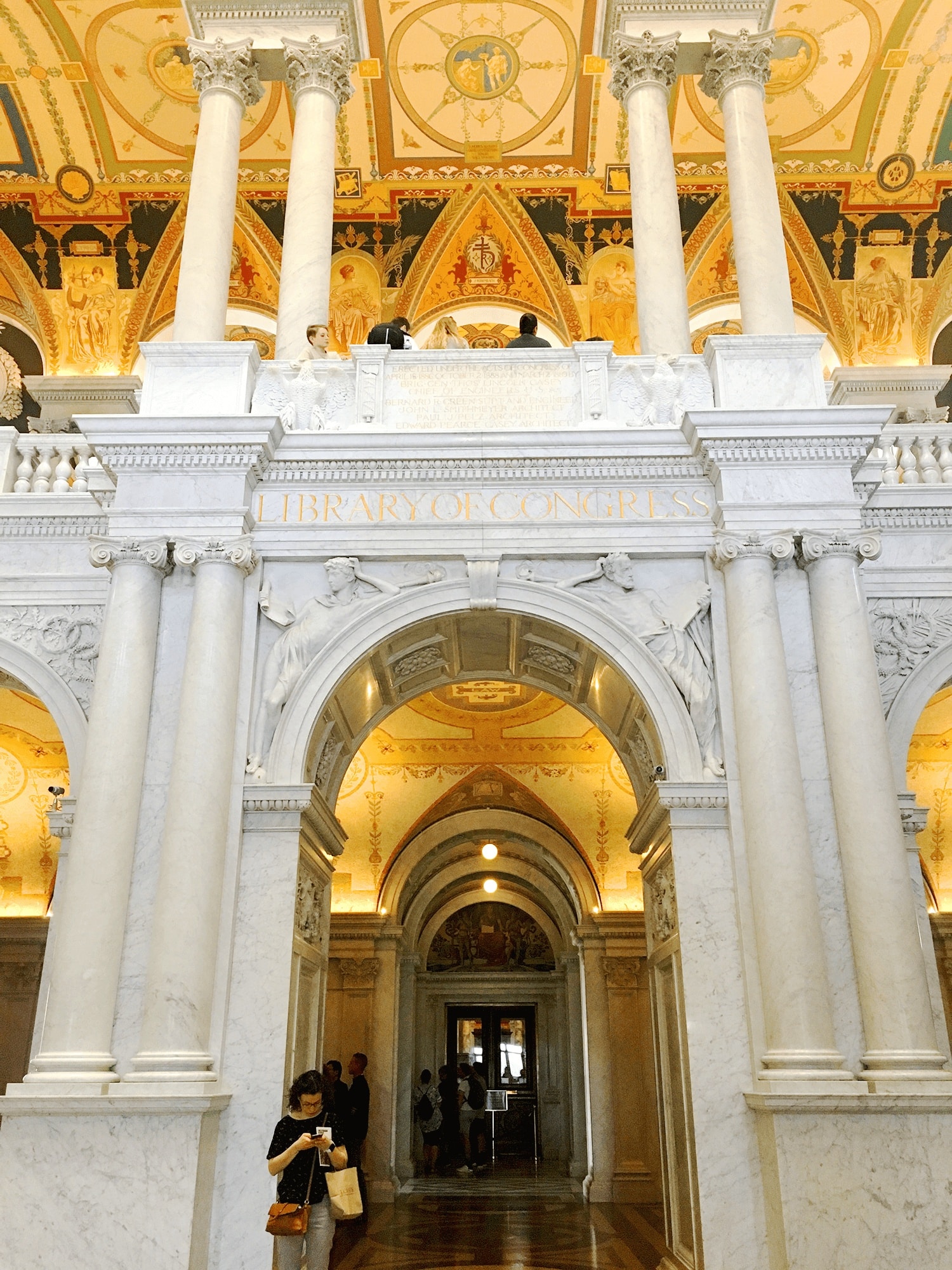
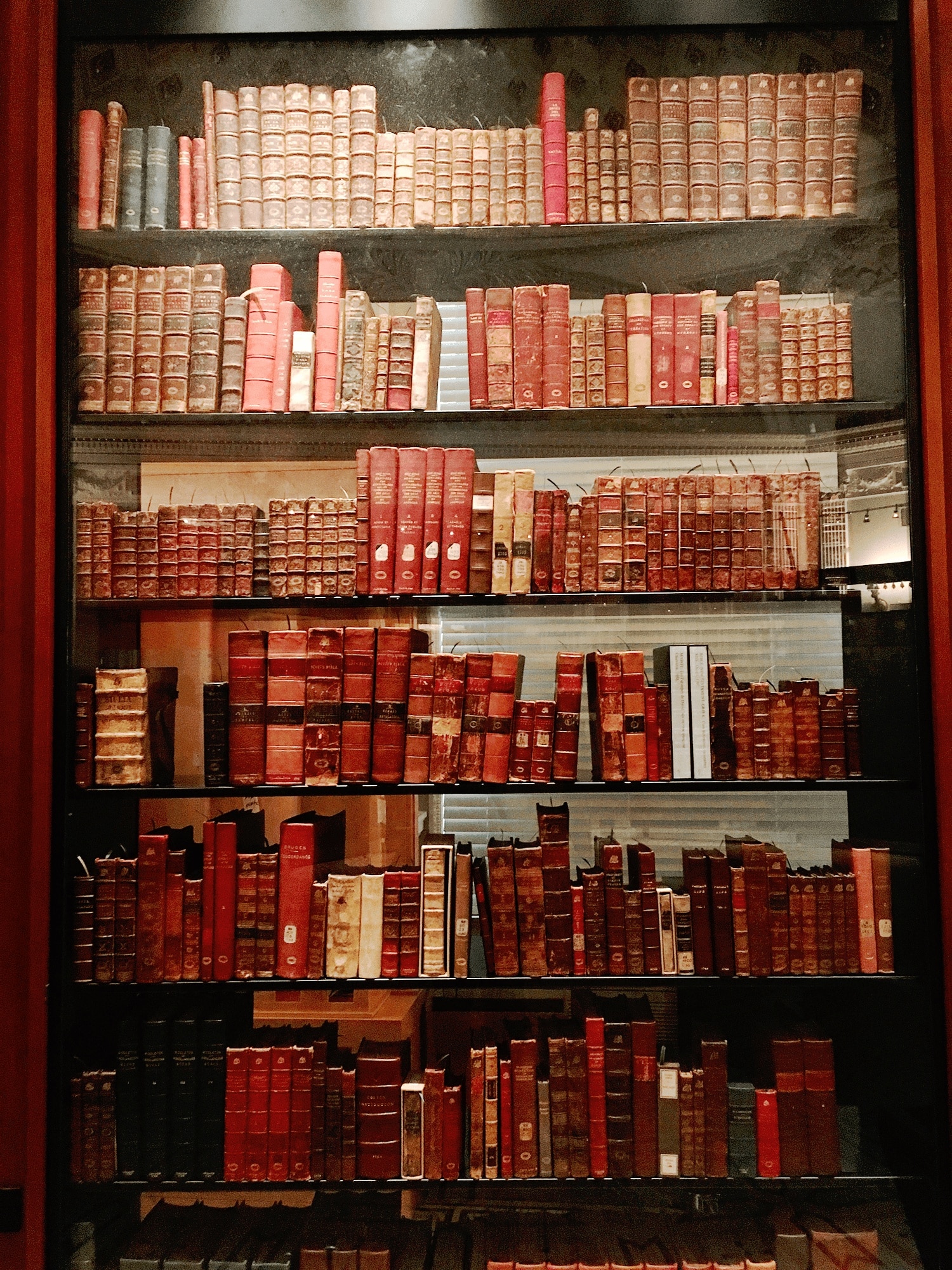
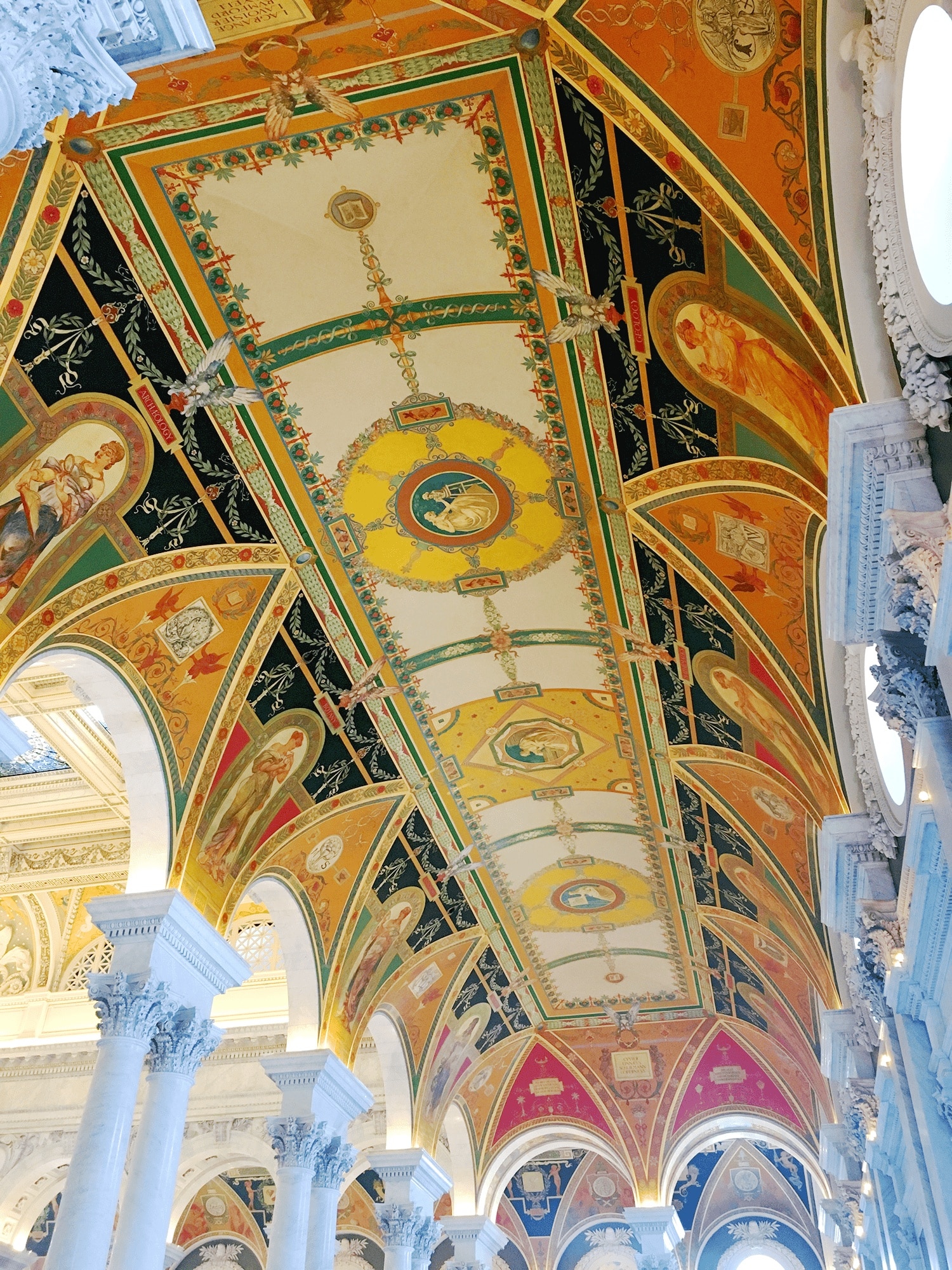
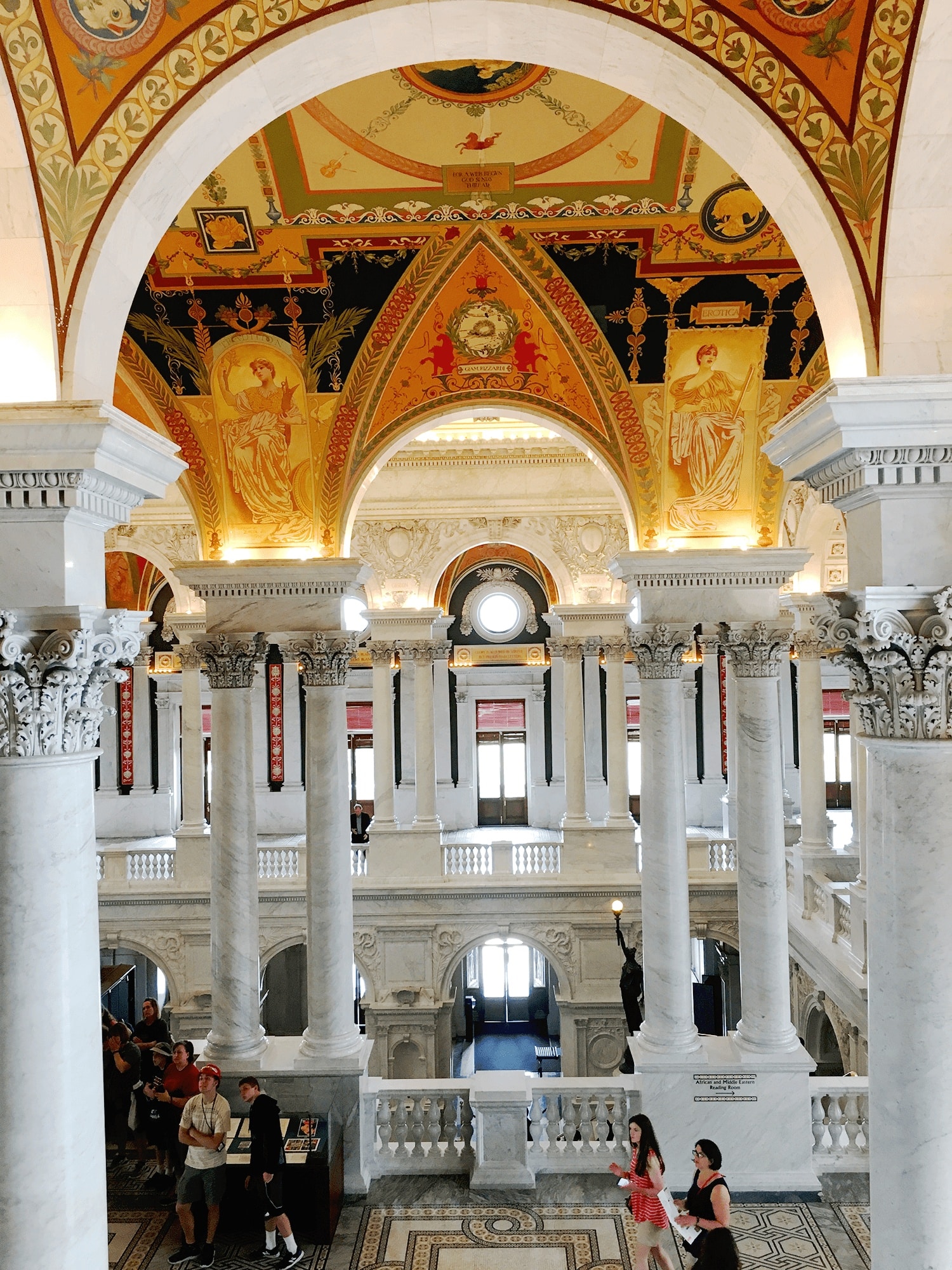
As a literary traveler, I was BLOWN away during my 2019 visit! I could not believe how gorgeous it was.
I really thought this kind of beauty was only in Europe, in places like the Austrian National Library.
⏳ Duration: 1 – 1.5 hours
📚 Free timed-entry passes are required. Prefer a guide? Book a guided tour 🎟️
2. United States Capitol
Also known as the US Capitol Building, the United States Capitol is the seat of the United States Congress.
Because it is actively used today, a visit to the Capitol requires a bit more security. But honestly, it wasn’t any worse than a walk through TSA.
You can tour the Capitol with a professional tour guide and visit the Crypt, Rotunda, and National Statuary Hall.


Just so you know, this tour does not include the Senate and House Galleries, but you can get a separate tour pass to visit them.
I recommend making a reservation to be safe.
Especially as visitors without reservations are encouraged to arrive at the Capitol Visitor Center as early in the day as possible to obtain passes.
So many people were there when I visited in May 2019! I imagine it’s worse in peak summer.
⏳ Duration: 1 hour
🗳️ FREE — reservations are recommended but not required. You can also bundle Capitol Hill with the Library if you want a guide 🎟️
3. White House
I’ve never toured the White House, but even walking by it is worth adding to your Washington, DC, itinerary.
White House public tours are free but must be requested through your Member of Congress, at least 21 days and no more than 90 days before your preferred date. You can find your representative’s or senator’s office at congress.gov/members.
Tours run Tuesday through Saturday, excluding federal holidays, and you’ll be assigned a time slot once your request is confirmed.
If you’re not a US citizen, contact your embassy in Washington, DC, to submit a tour request.
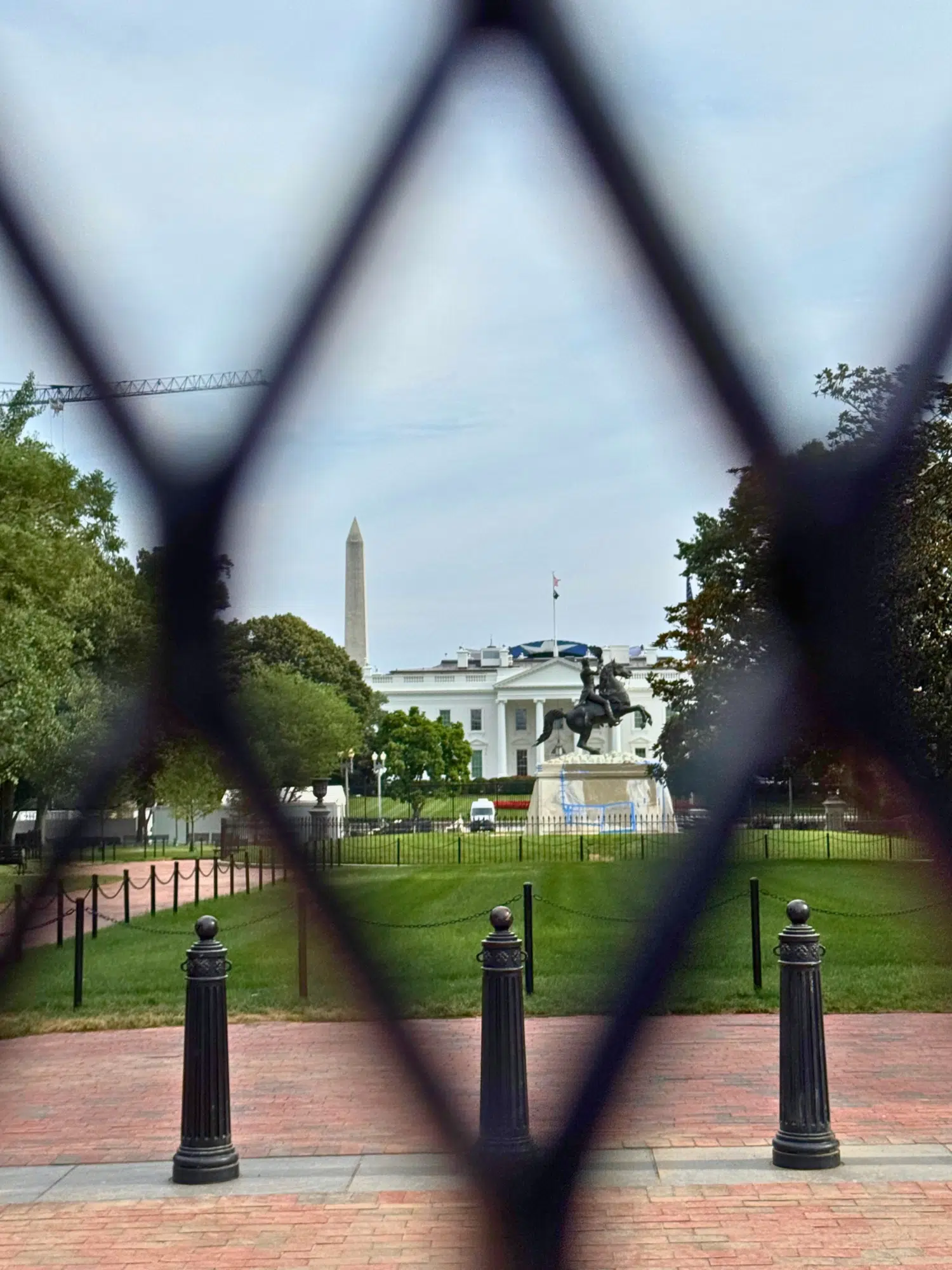
Note: Since December 2025, tours have followed an updated route due to the East Wing demolition and ballroom construction, so the rooms you see may differ from those in older guides.
⏳ Duration: 45 minutes
🇺🇸 FREE, but you’ll need to request a tour through your Member of Congress 🎟️
4. Supreme Court
Since 1935, the U.S. Supreme Court building has symbolized the importance of the judicial branch.
It serves as a federal workplace and the setting for oral arguments, while welcoming visitors from around the world to learn about the judicial branch and the nation’s highest Court.
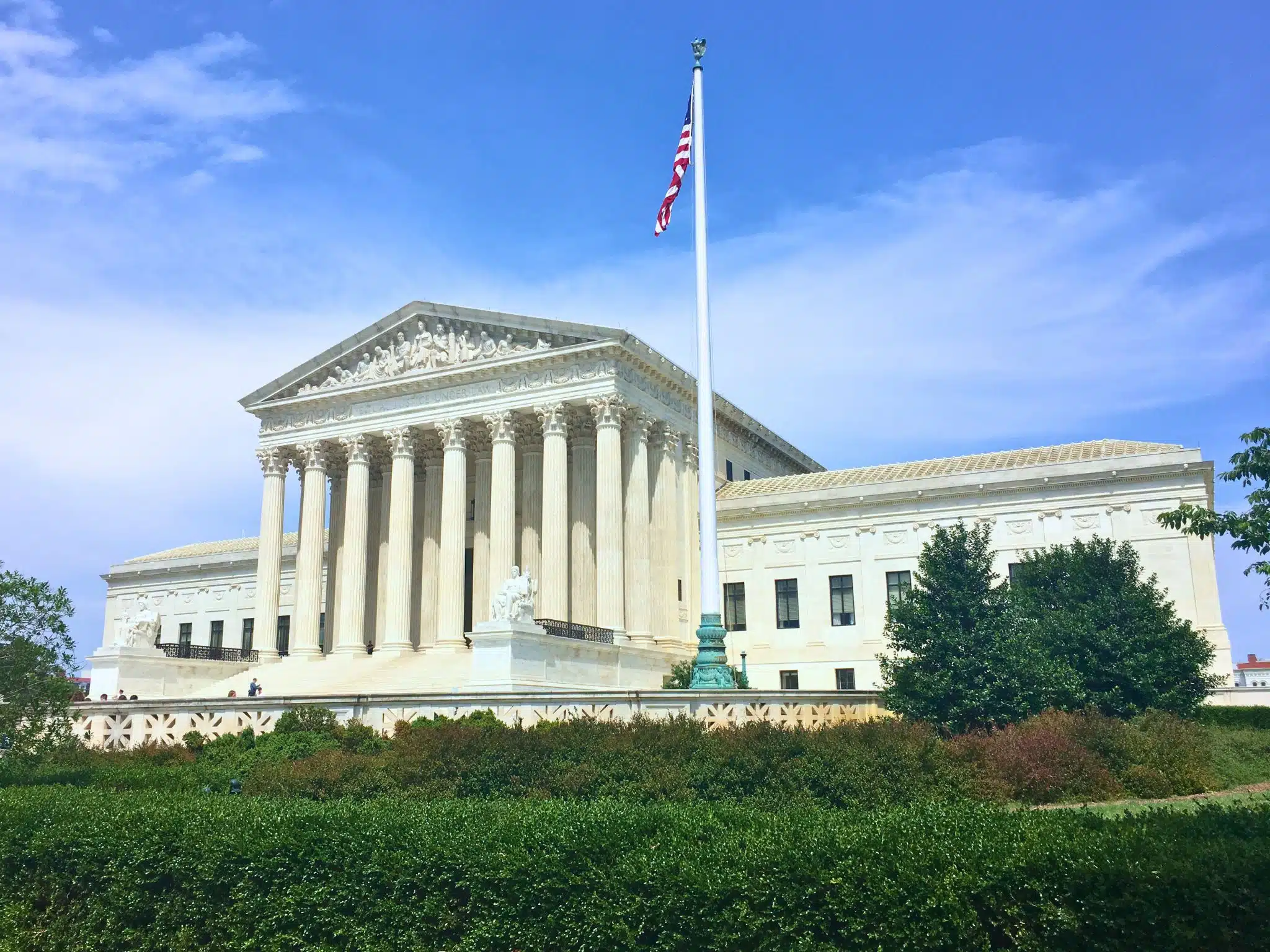
The Supreme Court Building is open Monday through Friday from 9 a.m. to 3 p.m. It is closed on weekends and all federal holidays.
Note: The Court’s business may affect public access to the building and visitor programs. Check Today at the Court for the Court’s daily calendar.
Visitors may view the public portions of the building on a self-guided basis and take advantage of a variety of educational programs, including Court-related Exhibitions. Or you can walk by and take in the grandeur of the place, as I did.
⏳ Duration: 1 – 1.5 hours
⚖️ FREE, but check the calendar, as legal proceedings may impede your visit 🎟️
Memorials and Monuments
5. Lincoln Memorial
The Lincoln Memorial honors Abraham Lincoln, the 16th president of the United States.
An example of neoclassicism, the memorial takes the form of a classical temple and stands at the western end of the National Mall.
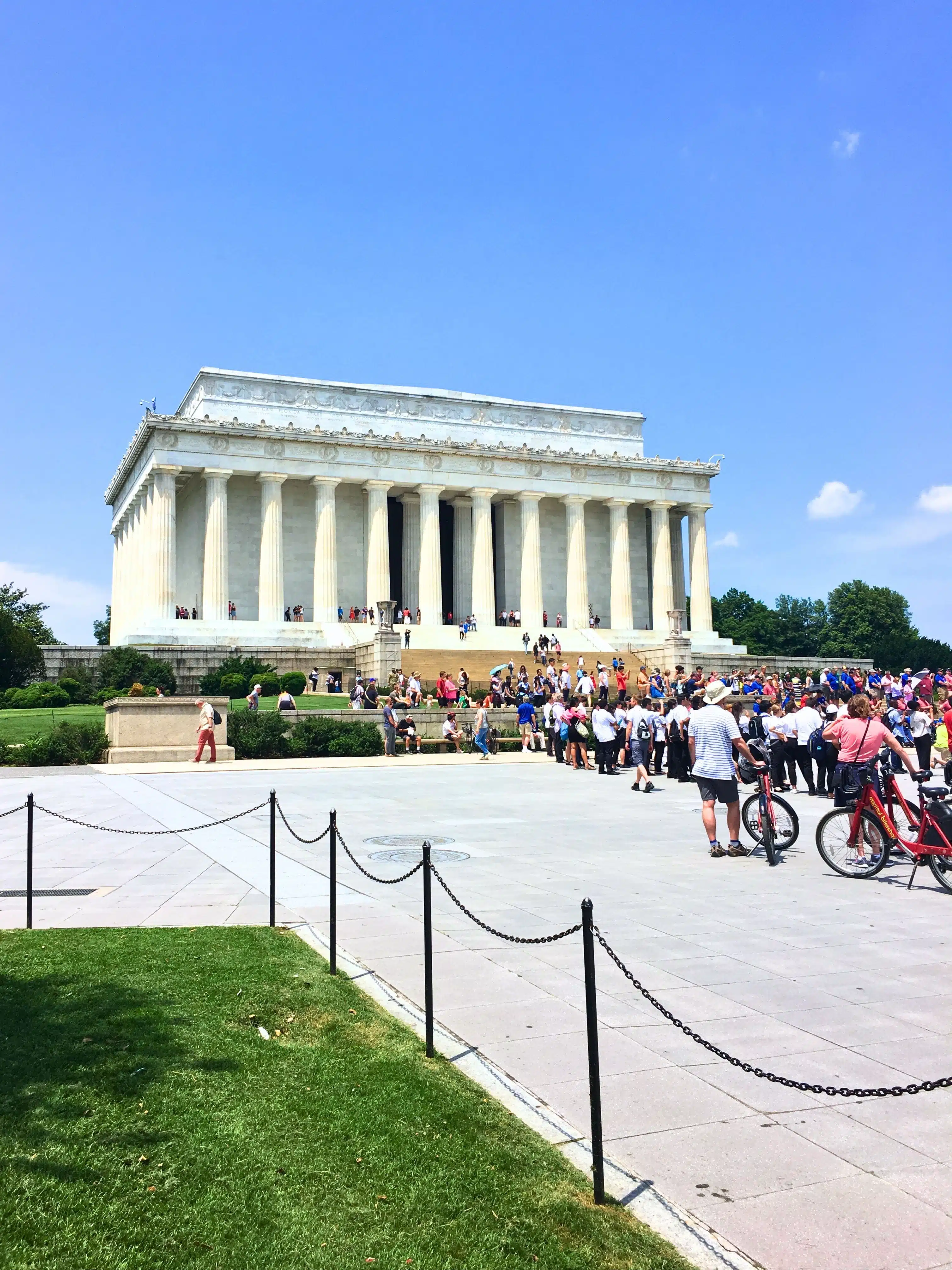
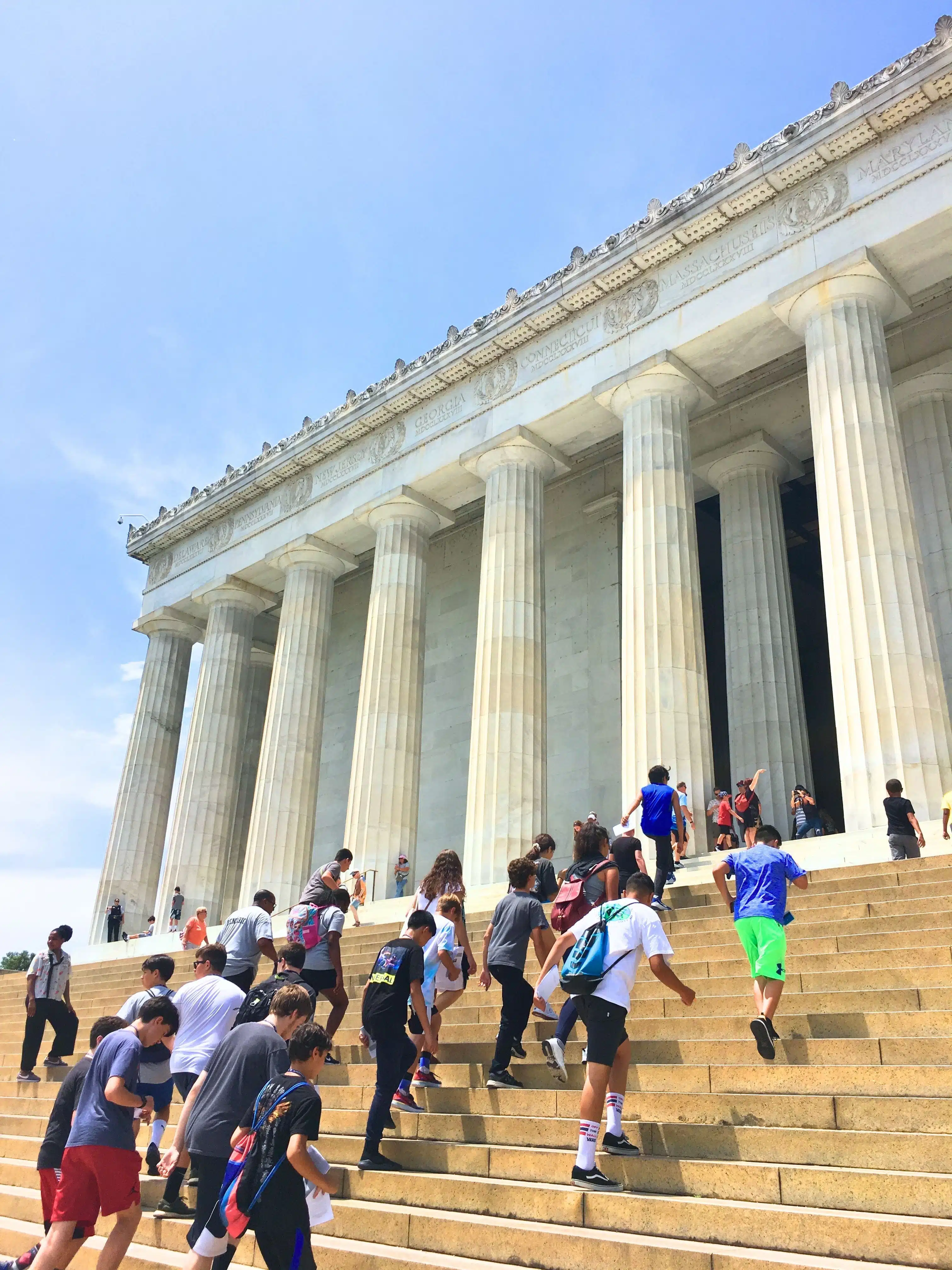

I honestly forgot just how large he was until I revisited!
It’s truly incredible how lifelike he is, even in stone.
His memorial is also a good starting or ending point for your tour of the National Mall since it sits at the very western edge.
⏳ Duration: 15 minutes
6. Washington Monument
Built to commemorate George Washington, the first U.S. president, the Washington Monument stands east of the Reflecting Pool and the Lincoln Memorial.
It’s tough to miss when visiting Washington, D.C., since it stands tall as an obelisk on the National Mall.
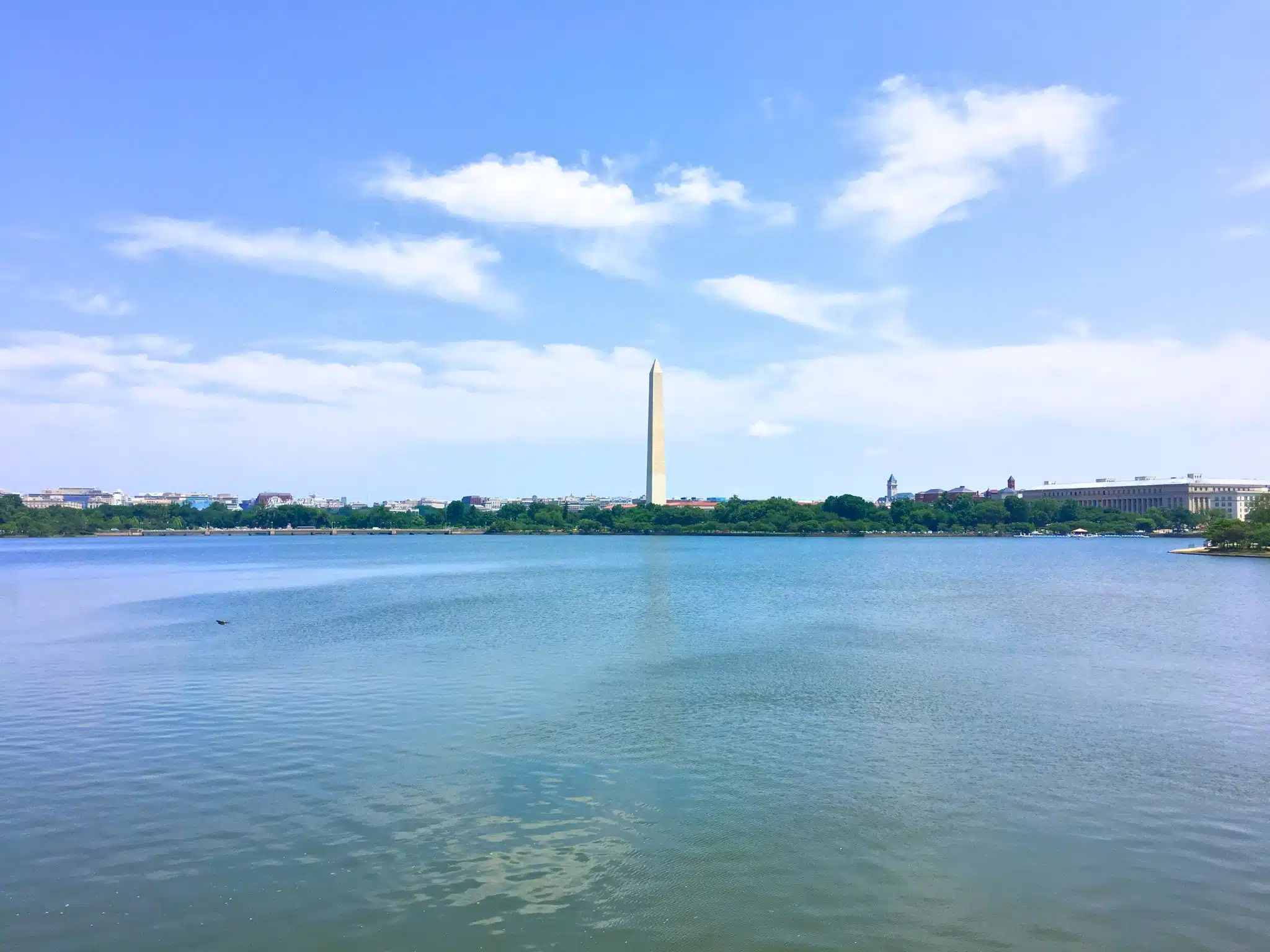
You can enter the Washington Monument, though I honestly forgot about it on my 2019 trip because it doesn’t look like there’s an observation deck at the top.
However, my family was too slow to plan the 2026 trip, and it wound up being sold out while we were there.
Note: Those uncomfortable with heights, enclosed spaces, crowds, or elevators should be aware that the Washington Monument involves all of these experiences.
⏳ Duration: 1 hour to go up (15 minutes if just viewing from the base)
🗼 Tickets are required to enter, and you can get free, same-day tickets at the Washington Monument Lodge on 15th Street nearby or pay $1 and reserve ahead. As supplies are limited, advance reservations are strongly recommended 🎟️
7. Thomas Jefferson Memorial
Built in honor of Thomas Jefferson between 1939 and 1943, the memorial features multiple quotes from the 3rd president to capture his ideology and philosophy.
Also built in the neoclassical style, it is located in West Potomac Park on the Potomac River’s shore.
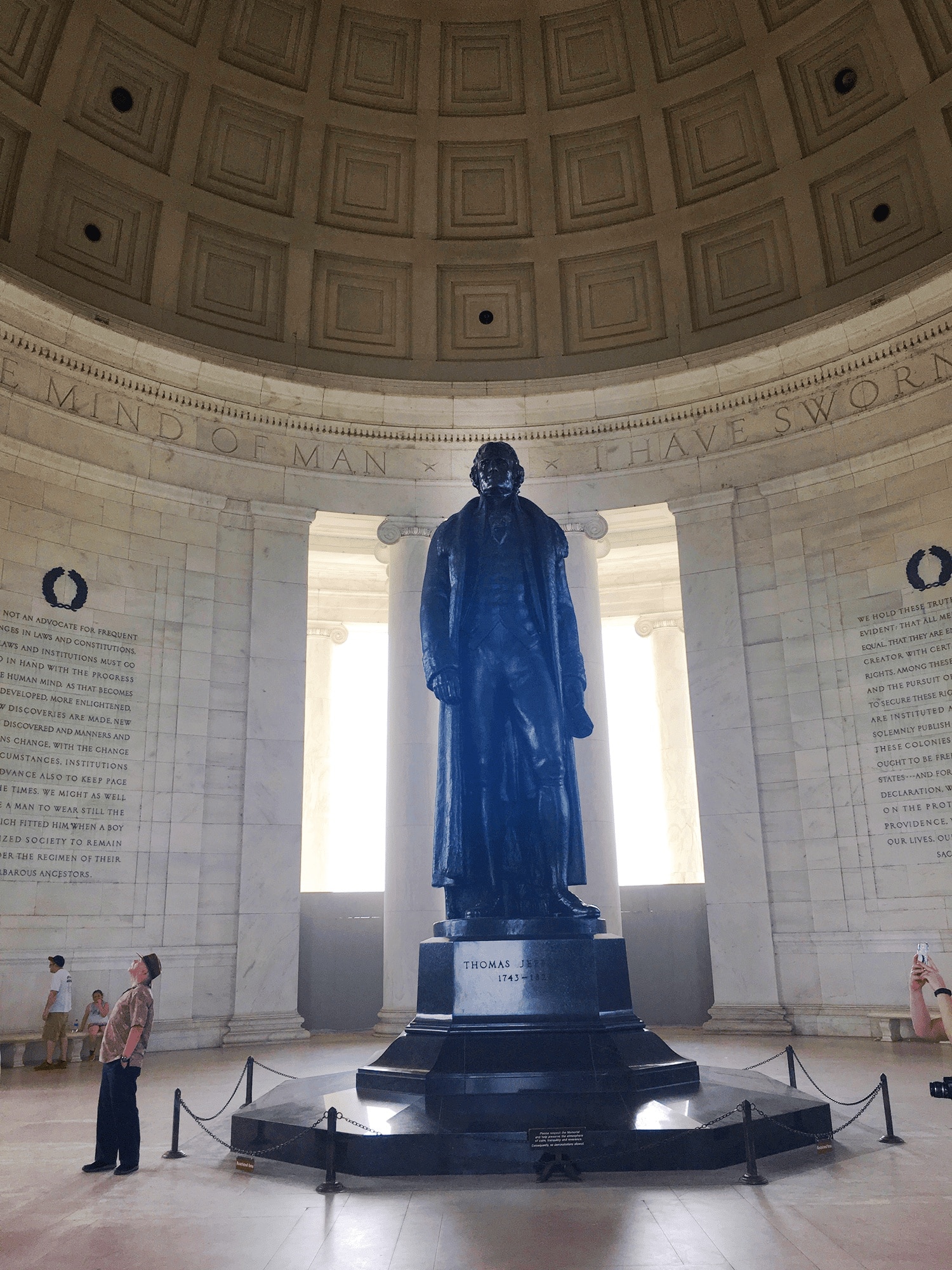
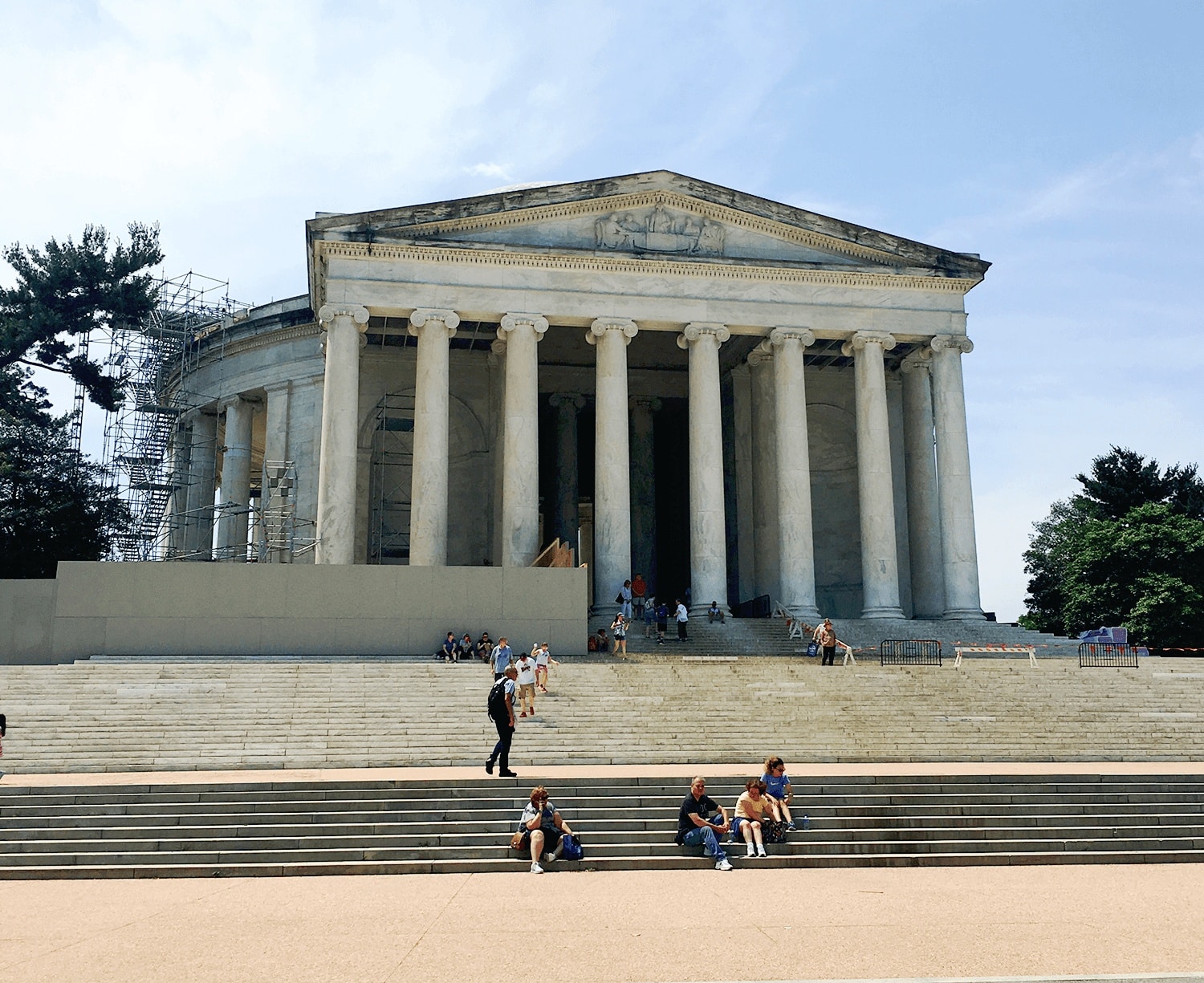
This memorial is located on the edge of the National Mall, so it is a bit of a walk from the other things to do in Washington, DC, that I’ve listed here. However, don’t let that deter you from visiting, as I loved this memorial.
That’s partly because of my experience with an actor portraying Jefferson at Colonial Williamsburg (which you can read about in my US history road trip), but I still highly recommend visiting.
⏳ Duration: 15 – 30 minutes
8. WWII Memorial
The World War II Memorial honors Americans who served in the armed forces and as civilians during World War II.
Located between the Lincoln Memorial and the Washington Monument, the World War II Memorial features 56 granite pillars, each decorated with a bronze laurel wreath representing a U.S. state or territory.
A pair of small triumphal arches represents the Atlantic and Pacific theaters, surrounding the oval plaza and fountain. On its short axis is a memorial wall of gold stars representing the fallen.
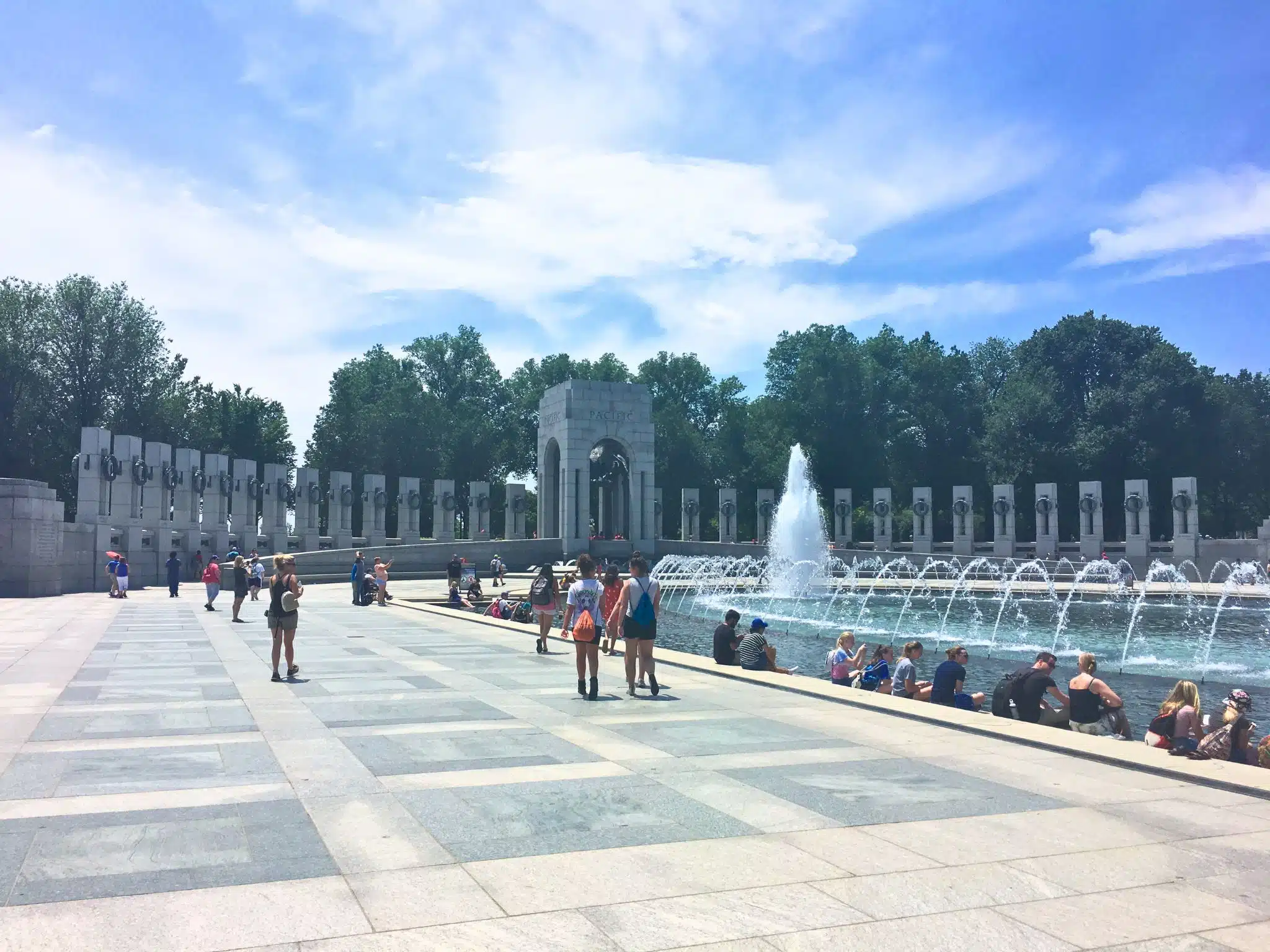
It’s a beautiful waypoint, especially between the imposing Lincoln and Washington monuments.
Take a moment to check out the bas-relief panels leading up to the memorial, which depict scenes such as Pearl Harbor, the draft and enlistment, and the historic meeting of American and Russian troops in Germany (Elbe Day).
They act like a comic book, with each panel telling a section of the history.
⏳ Duration: 15 – 30 minutes
9. MLK Memorial
The Stone of Hope is a granite statue honoring Civil Rights Movement leader Martin Luther King Jr.
The memorial design is inspired by a line from King’s “I Have a Dream” speech: “Out of the mountain of despair, a stone of hope.”

It is also in the line of sight of the Lincoln Memorial to the northwest, where King famously delivered the “I Have a Dream” speech in 1963.
If you haven’t heard it in a while, take a moment before visiting to watch it, as it adds a lot of gravity to the monument.
⏳ Duration: 15 – 30 minutes
10. Korean War Veterans Memorial
Located southeast of the Lincoln Memorial, the Korean War Veterans Memorial honors those who served in the Korean War (1950–1953).
It features 19 statues depicting U.S. military personnel in action.

In 2022, the memorial was expanded to include a granite wall inscribed with the names of U.S. military personnel (and South Koreans embedded in U.S. military units) who died in the war.
What stands out about the memorial is how lifelike these statues are.
It’s shocking as you approach them because they look so real.
Just across the reflecting pool, you’ll find the Vietnam Veterans Memorial, honoring United States Armed Forces service members who served in the Vietnam War.
⏳ Duration: 15 – 30 minutes
11. Franklin Delano Roosevelt Memorial
In memory of the 32nd president of the United States, Franklin D. Roosevelt, this national memorial spans 7.5 acres along the Cherry Tree Walk in West Potomac Park.
It traces 12 years of United States history through four outdoor rooms, one for each of FDR’s terms.
While FDR was an impressive president, I adored the bronze statue of First Lady Eleanor Roosevelt standing before the United Nations emblem, honoring her work with the United Nations and the Universal Declaration of Human Rights.
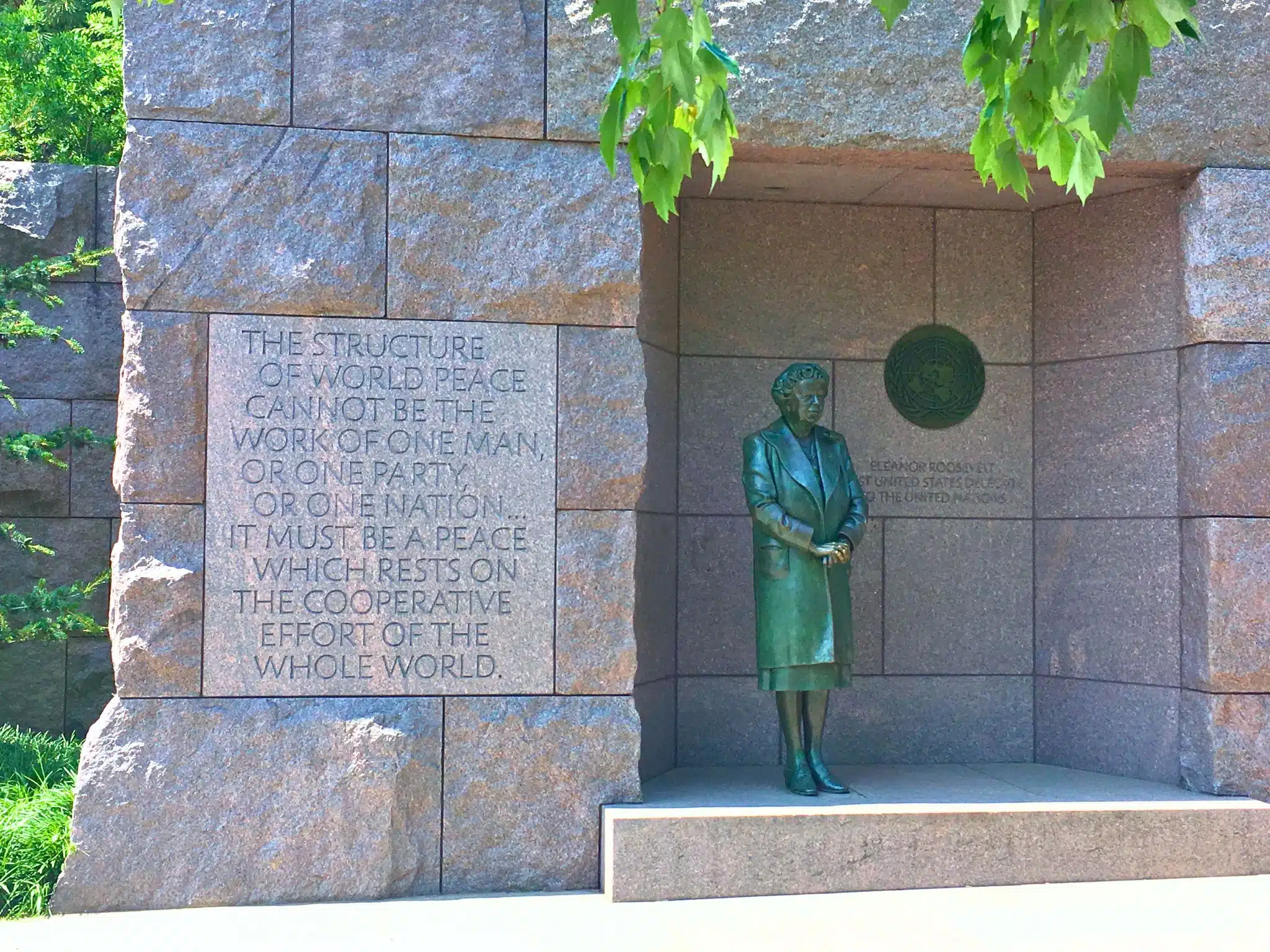
It is the only presidential memorial to depict a First Lady!
⏳ Duration: 15 – 30 minutes
Smithsonian Museums
12. National Museum of American History
The National Museum of American History collects, preserves, and displays the United States’ heritage in social, political, cultural, scientific, and military history.
Among the items on display are:
- The original Star-Spangled Banner
- Dorothy’s Ruby Slippers
- George Washington’s Uniform
- Abraham Lincoln’s Top Hat
- Alexander Graham Bell’s Large Box Telephone
- C-3PO from Star Wars Return of the Jedi
- RMS Titanic Life Vest
… to name but a few!

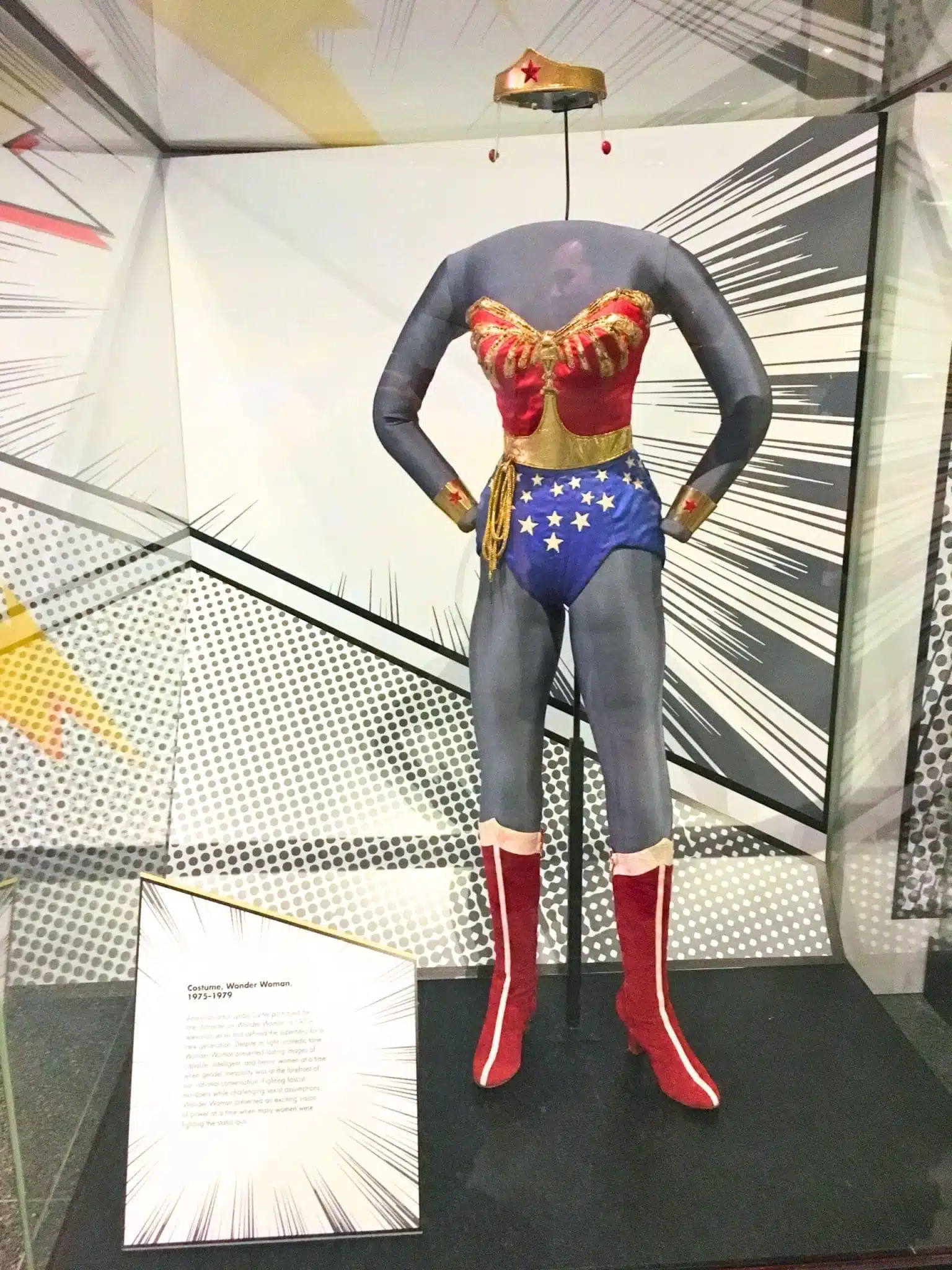
What I found most interesting about this museum was the variety of items.
Here, they value Lincoln’s top hat as much as C-3PO because both are influential to the American people.
It’s a museum with something for everyone—history buffs and pop-culture nerds alike.
⏳ Duration: 2 hours
13. National Museum of the American Indian
The National Museum of the American Indian is dedicated to the culture of the Indigenous peoples of the Americas.
It houses one of the world’s most extensive collections of Native objects, photographs, and media, spanning the entire Western Hemisphere from the Arctic Circle to Tierra del Fuego.
The museum’s curvilinear architecture, indigenous landscaping, and exhibitions, all designed in collaboration with tribes and communities, combine to offer visitors insight into the spirit and sense of Native America.

Although this is a smaller Smithsonian, I appreciated that they included both older and newer artifacts to show the progression of Native culture.
It’s also a fabulous place to grab lunch! Legit, when I asked locals where to go, they all suggested Mitsitam Native Foods Cafe.
And while it’s a cafeteria-style restaurant, don’t let that dissuade you; they offer a diverse selection of Indigenous food from across the Western Hemisphere, not just a single Nation.
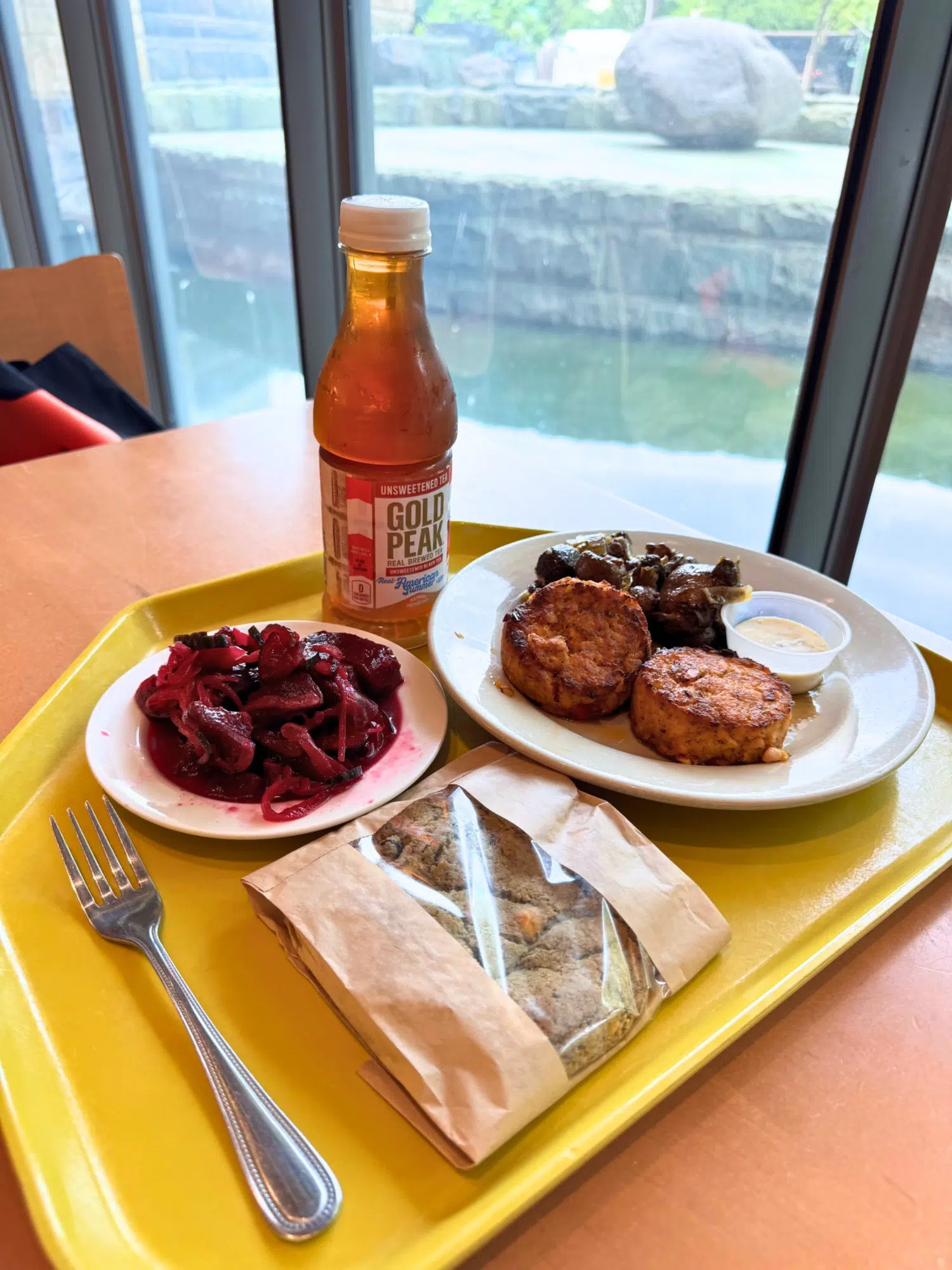
⏳ Duration: 30 – 45 minutes (longer if eating lunch)
14. National Air and Space Museum
The National Air and Space Museum is dedicated to human flight and space exploration.
It’s also a center for research on the history and science of aviation and spaceflight, as well as planetary science, terrestrial geology, and geophysics.

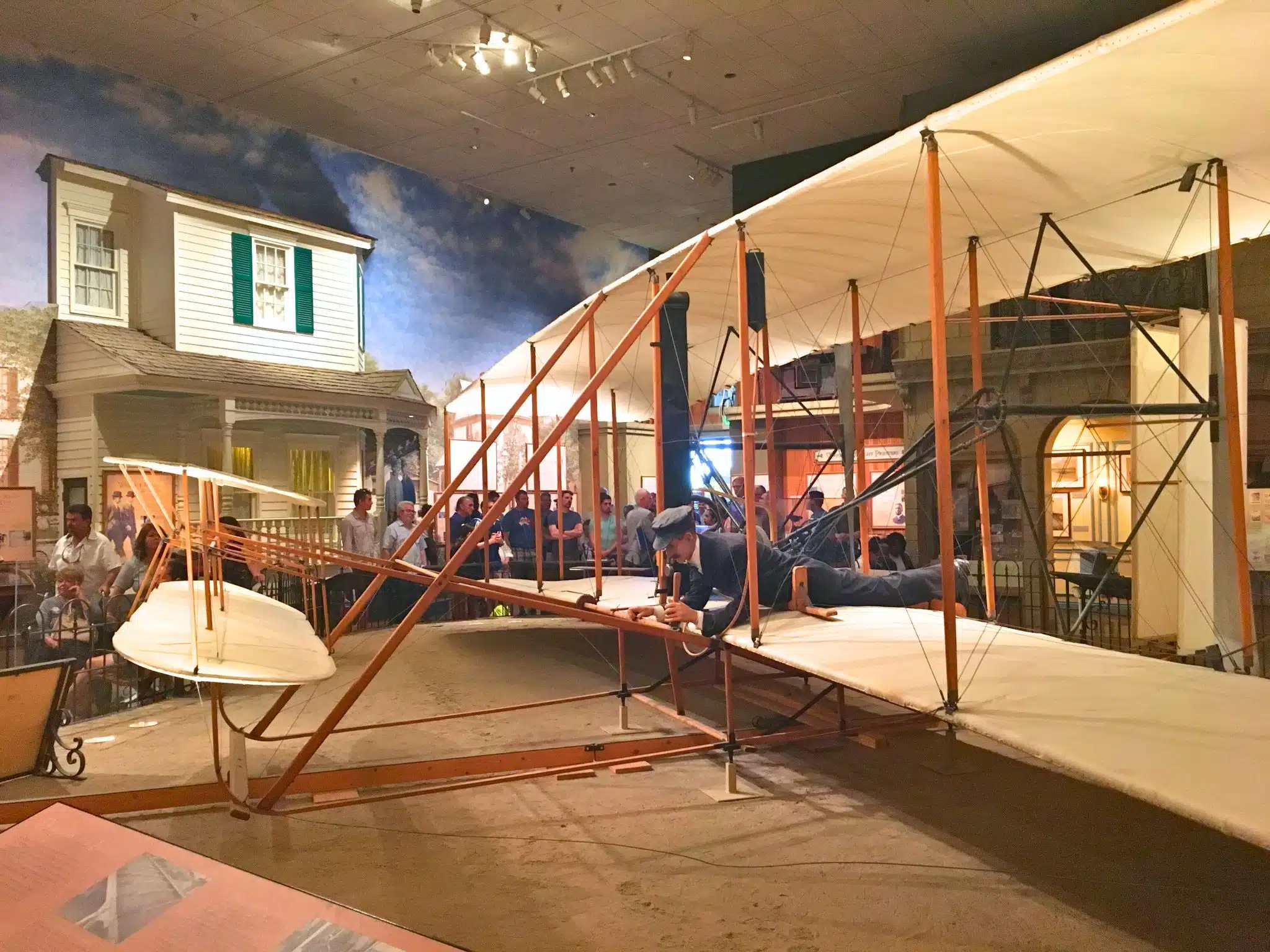


Almost all of its spacecraft and aircraft on display are original primary or backup craft rather than reproductions.
Its collection includes:
- The Apollo 11 Command Module Columbia
- The Friendship 7 capsule flown by John Glenn
- Charles Lindbergh’s Spirit of St. Louis
- The Bell X-1, which broke the sound barrier
- The Wright brothers’ Wright Flyer airplane
… to name but a few!
Many of these are suspended in the air, so you feel as if they are flying above you.
I was most surprised to see the screen-used T-70 X-wing Starfighter from Star Wars: The Rise of Skywalker on my 2026 visit.

The National Air and Space Museum is the Smithsonian where I’ve spent the most time, partly because I’m a nerd fascinated by space.
However, it was sweltering in DC when I was there in 2019, and they had fantastic air conditioning! I spent a good few hours in their Planetarium, watching film after film to chill in the cool air and darkness.
⏳ Duration: 1 – 2 hours
👩🚀 FREE, but a timed-entry pass is required because this is one of the most popular Smithsonian museums 🎟️
15. Steven F. Udvar-Hazy Center
The Steven F. Udvar-Hazy Center is a 760,000-square-foot (71,000 m2) museum housed in two large hangars.
It showcases thousands of aviation and space artifacts, including the Space Shuttle Discovery, an SR-71 Blackbird, and a Concorde.
Part of the National Air and Space Museum, the Steven F. Udvar-Hazy Center is located outside of DC in Chantilly, Virginia, a 30- to 45-minute drive from the city center.
I took the Metrorail as far as I could, and then a family member picked me up and drove us the rest of the way.
You could do the same, but swap an Uber or Metrobus for the latter half and get there within an hour and a half.

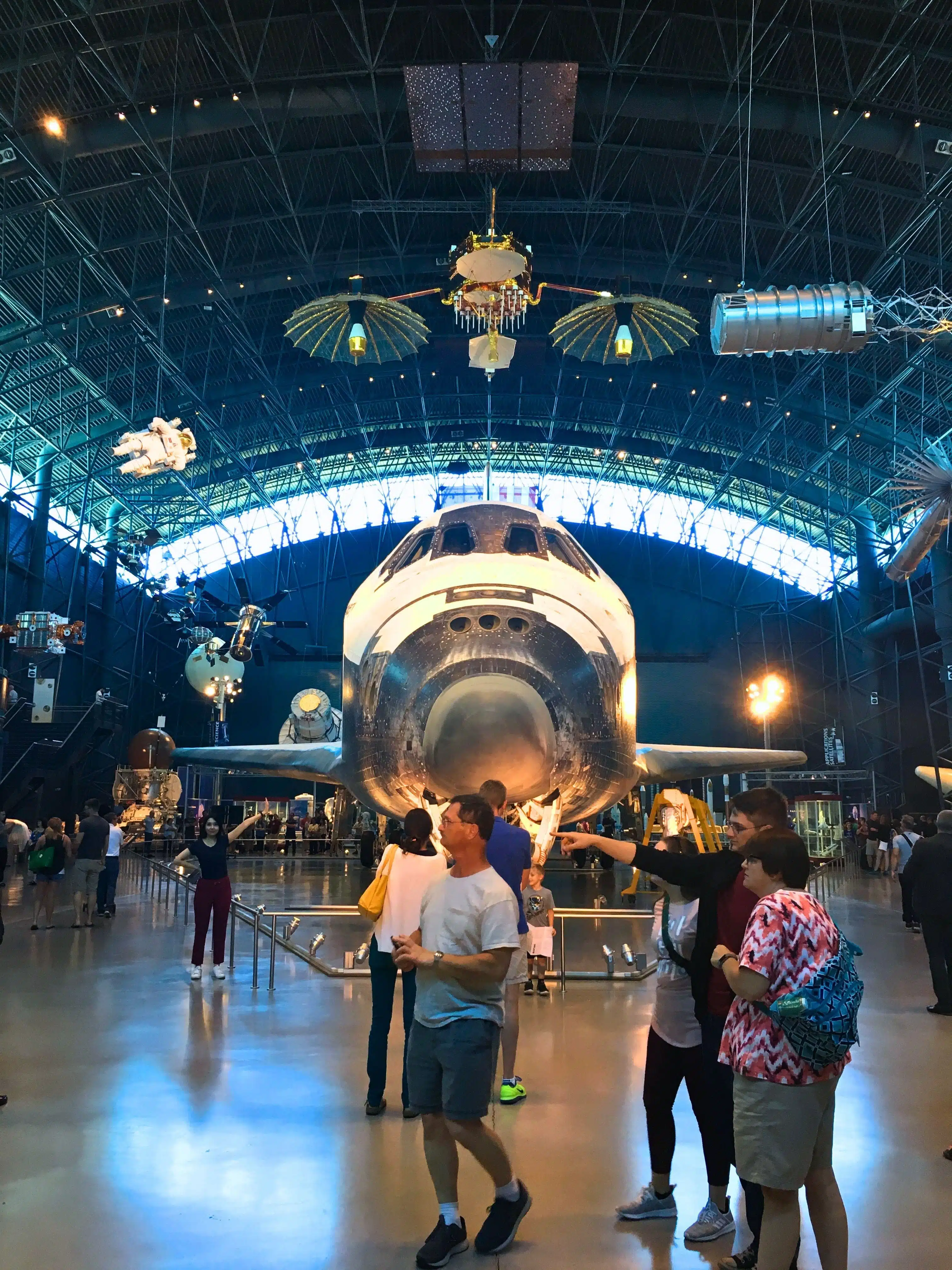
After seeing the Space Shuttle Endeavour in Los Angeles, it was a treat to see another one up close! For those visiting California, you can read more about it in my guide to nerdy things to do in Los Angeles.
If you’re not a huge fan of space, you can skip this on your Washington, DC, to-do list, since it is a bit of a journey to get here.
⏳ Duration: 2 – 4 hours
16. National Portrait Gallery
The National Portrait Gallery (NPG) is an art museum whose collections focus on images of American artists, politicians, scientists, inventors, activists, and performers who have contributed to the nation’s history, development, and culture.
Housed in the historic Old Patent Office Building, you can find the official Presidential Portrait of Barack Obama, which was painted by Kehinde Wiley.
When I visited in 2019, this portrait was still relatively new and drew many to its colorful canvas!
Now that a few years have passed, it sees fewer visitors. In 2026, I really enjoyed seeing the progression of the presidential portraits.


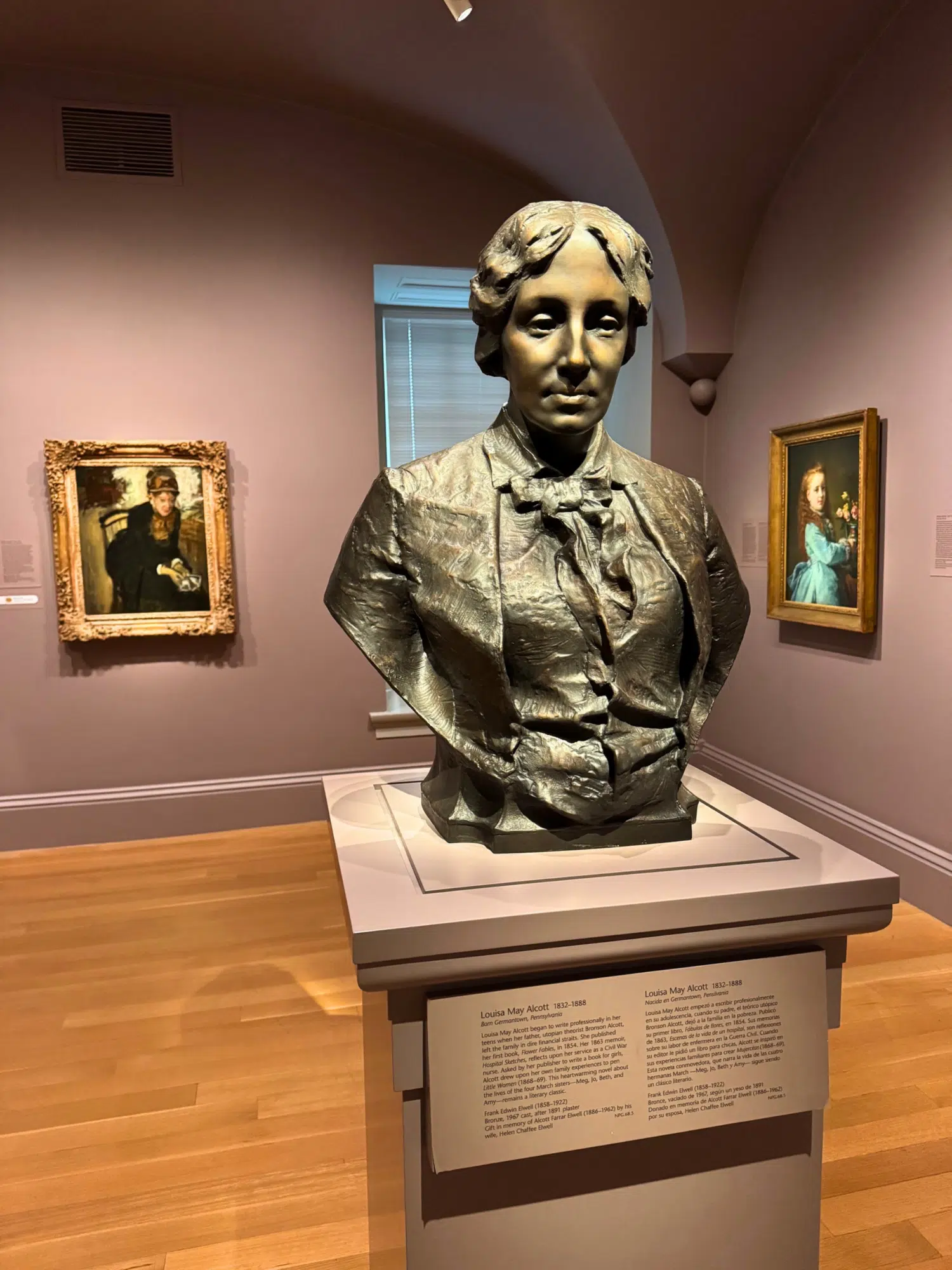
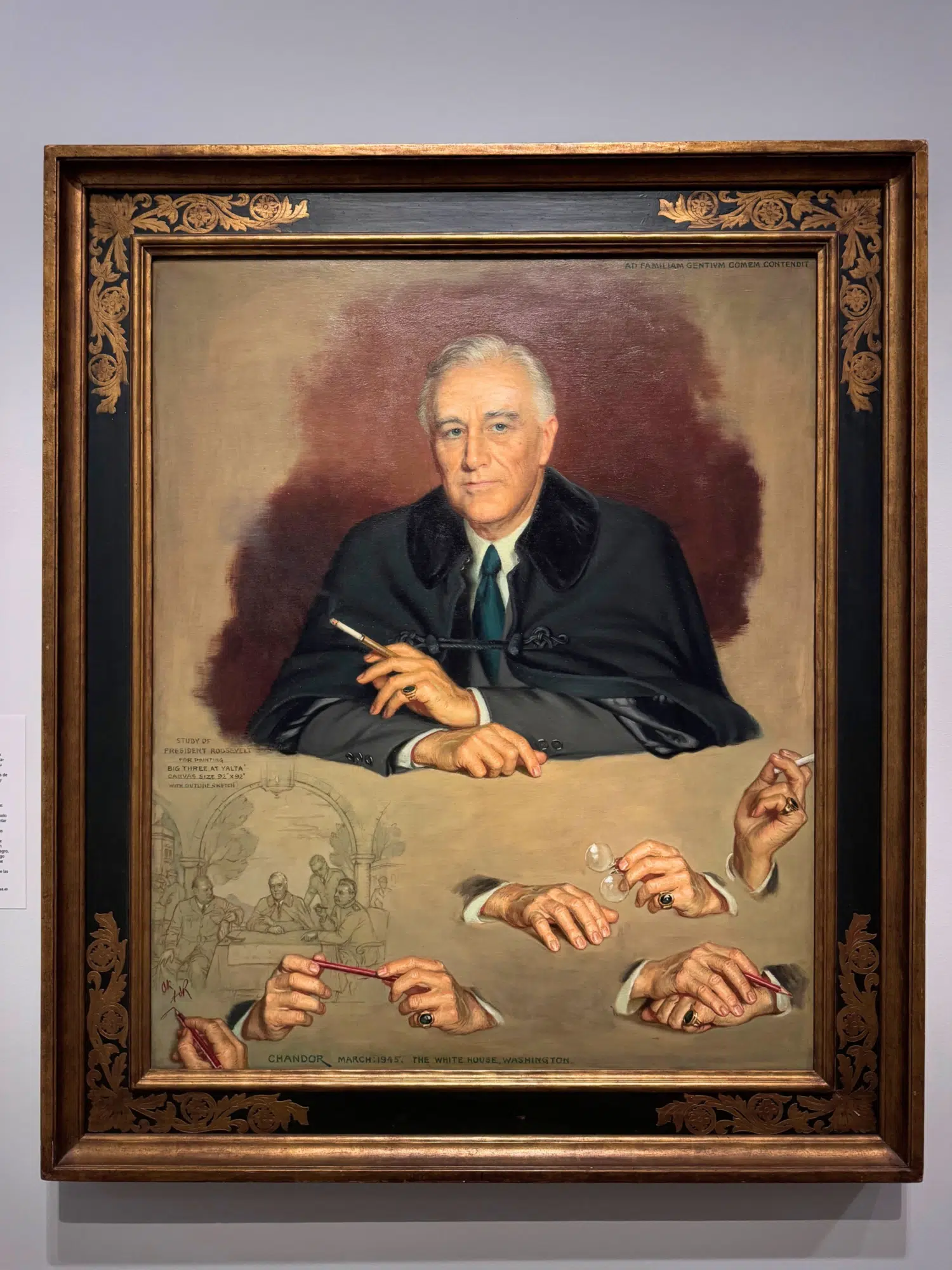
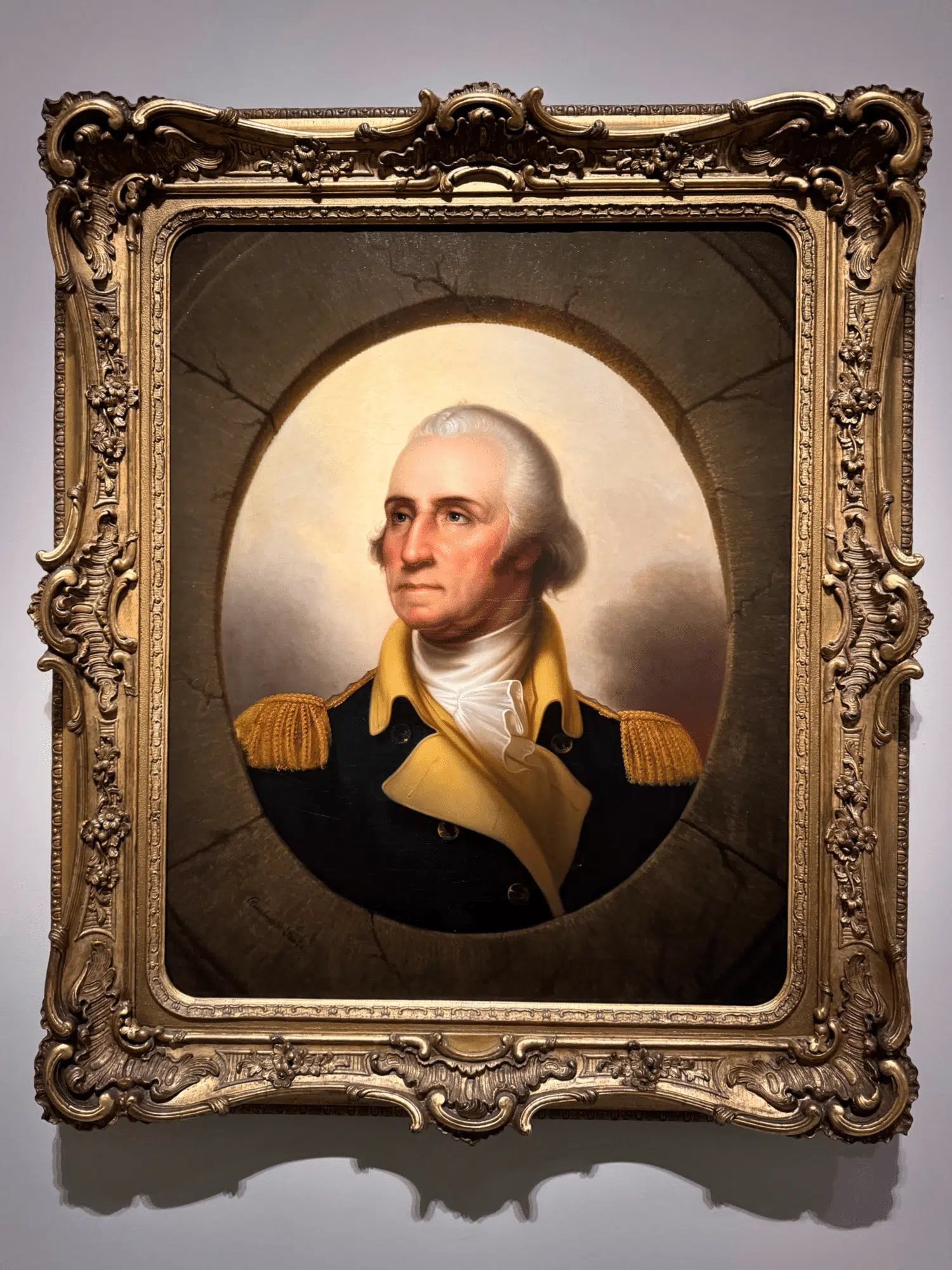

Download the SMARTIFY app; it’ll give you access to free audio guides and collection tours.
⏳ Duration: 2 – 3 hours
17. Smithsonian Institution Building (The Castle)
The Smithsonian Institution Building, better known as the Castle, is the Smithsonians’ first and oldest building.
Opened in 1855, it is both a historic architectural and cultural landmark.
Since I visited during America’s 250th anniversary celebrations, they offered a brief overview of the country’s history, covering everything from Thomas Edison’s Incandescent Light Bulb to Sally Ride’s in-flight suit jacket to a Fragment of the Star-Spangled Banner.


The Castle temporarily reopened May 22 to Sept. 7, 2026, for the nation’s 250th birthday (which is why I was able to visit), and will close again until 2027 while construction continues.
⏳ Duration: 1 hour
Museums and Libraries
18. National Archives Museum
The original Declaration of Independence, Constitution, and Bill of Rights are housed in the Rotunda for the Charters of Freedom at the National Archives Museum.
I visited as a child and skipped in 2019 because of the line. However, in 2026, with National Treasure on my mind, I braved the line, and it didn’t take much time at all!
There were still quite a few people here, but they spread out well enough that you weren’t like sardines in the rotunda.


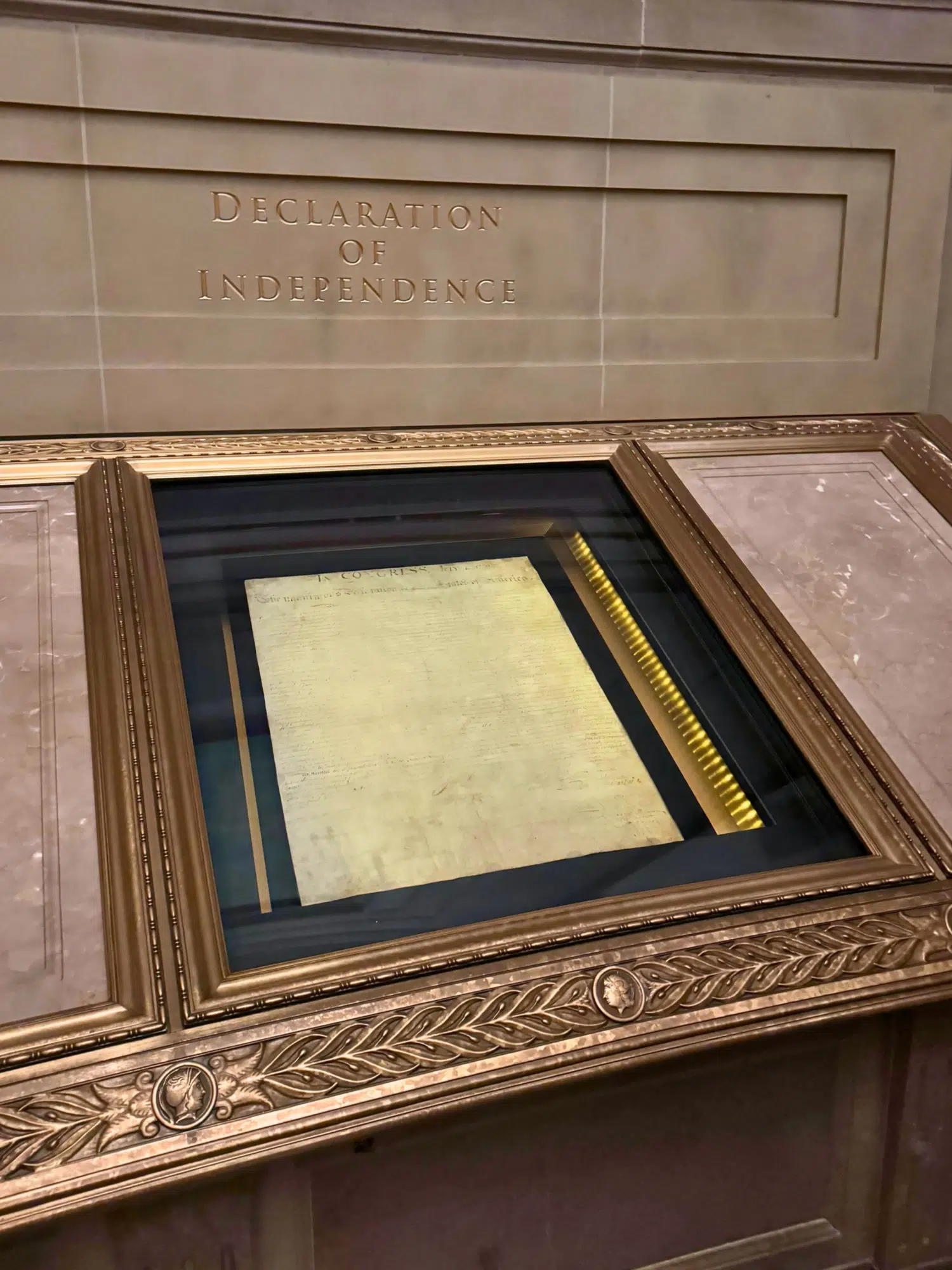


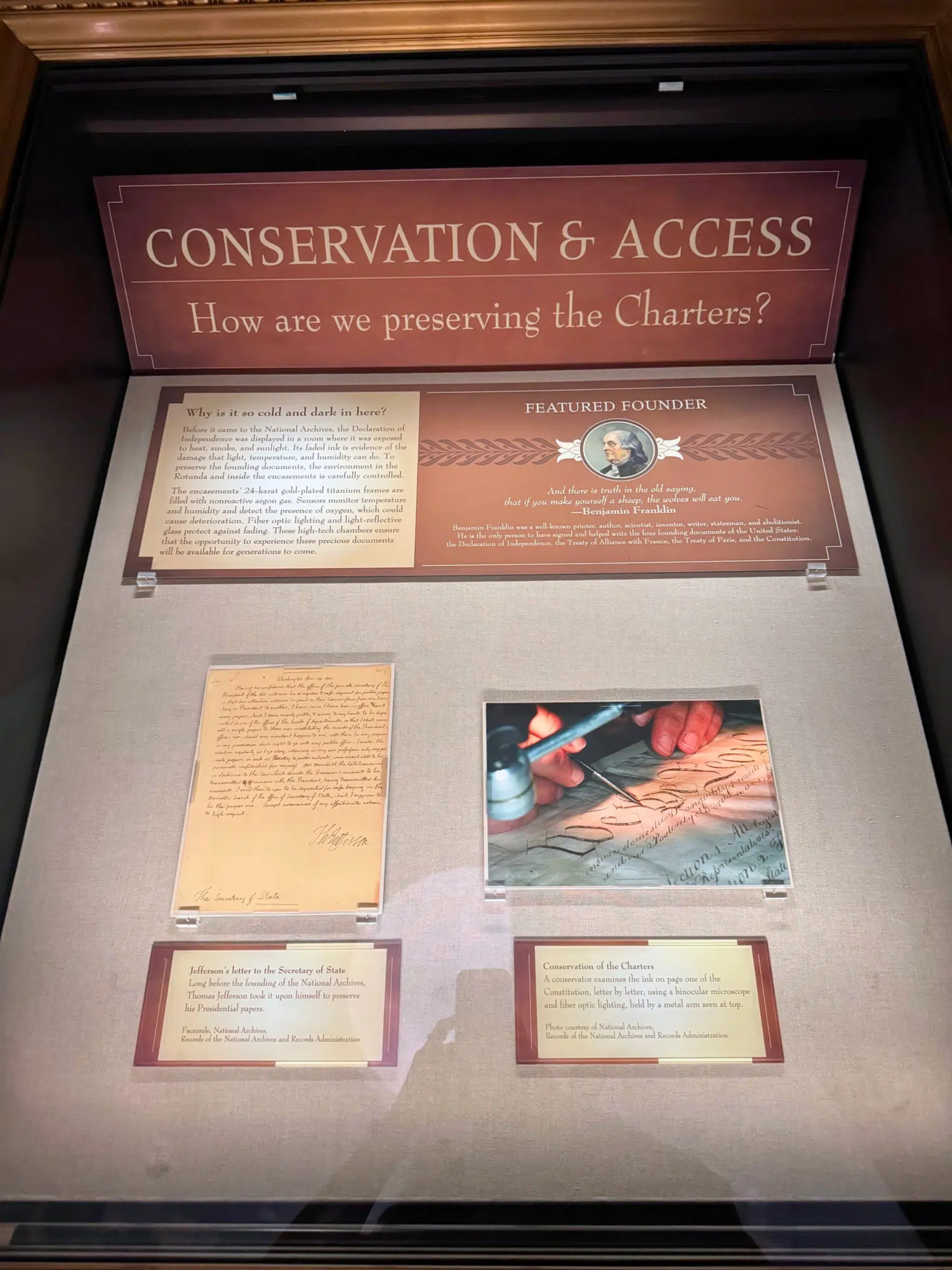


I also checked out the other exhibits they have inside, such as suffrage, the amendments to the Constitution, conservations, and the Boston Massacre.
⏳ Duration: 1 – 1.5 hours
📜 You can get free general admission tickets online or book a timed-entry ticket for $1. If you’re looking for a guide, book this skip-the-line tour 🎟️
19. National Gallery of Art
The National Gallery of Art is an art museum housing a collection of paintings, drawings, prints, photographs, sculptures, medals, and decorative arts that trace the development of Western art from the Middle Ages to the present, including the only painting by Leonardo da Vinci in the Americas and the largest mobile by Alexander Calder.
There are also works of art by Vermeer, Monet, Manet, Raphael, Rodin, Degas, Gauguin, Picasso, and many more.

Admittedly, as a big da Vinci nerd, I went for that. But there is a LOT more to this museum than just that one painting.
Looking for a more urban art style? Discover unique street art around DC.
If art is of little interest to you, this is a good one to skip on your things to do in Washington, DC, list.
⏳ Duration: 2 – 3 hours
🖼️ FREE — you can also take a free guided tour or an audioguide tour 🎟️
20. Folger Shakespeare Library
Do you think England has the world’s largest collection of William Shakespeare’s printed works? Nope! Think again—that’s the Folger Shakespeare Library!
As an independent research library, they lead in methods for preserving rare materials and serve as a primary repository for materials from Britain and Europe’s early modern period (1500–1750).
Established by Henry Clay Folger and his wife, Emily Jordan Folger, the library offers advanced scholarly programs and national outreach for K–12 classroom teachers focused on Shakespeare education.
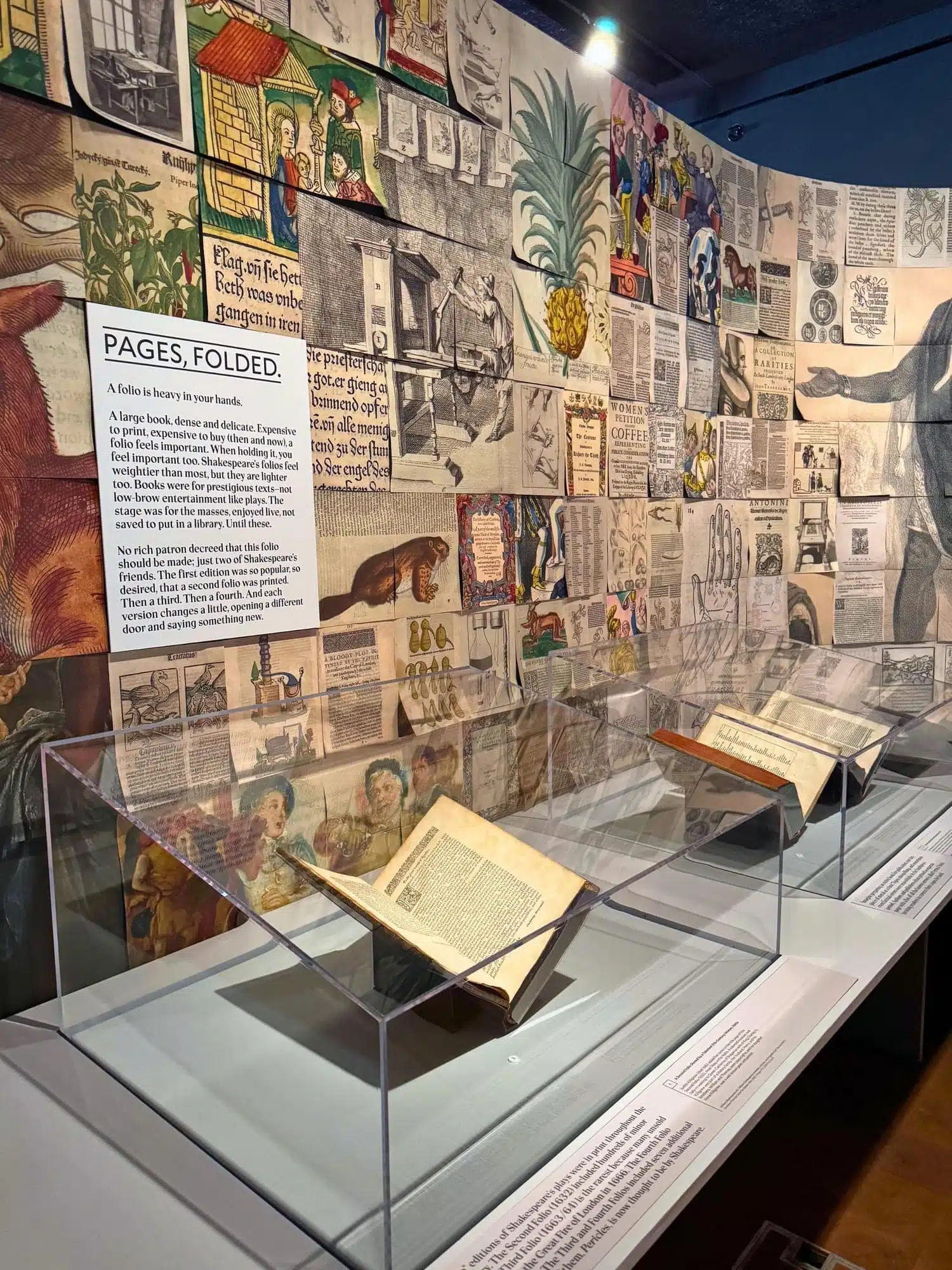


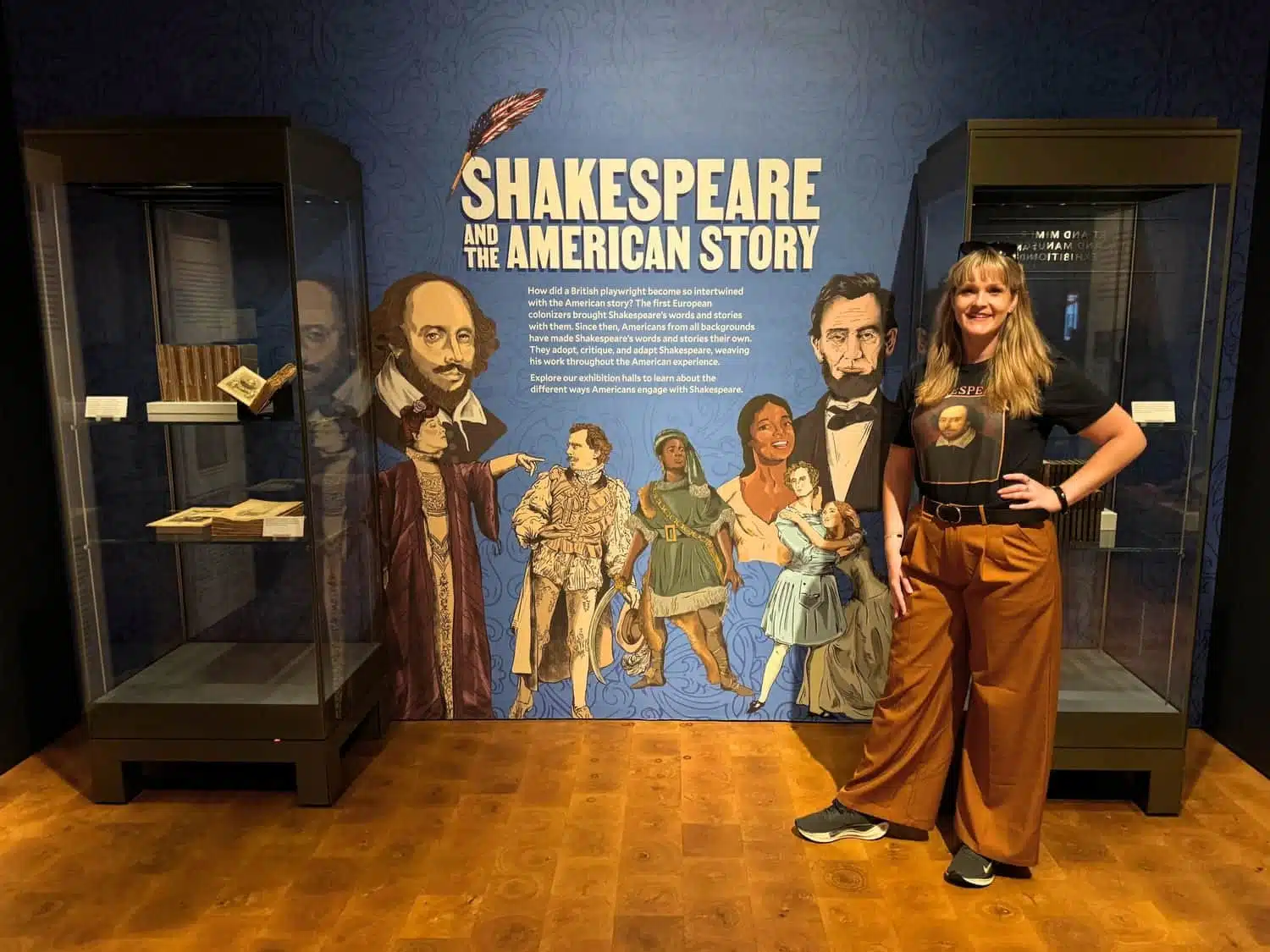
After visiting Stratford-upon-Avon, Shakespeare’s hometown, in 2015, I had no idea that most of his legacy now lay outside England.
If you’re not a scholar, you won’t have access to certain areas of the library, but it does have an exhibit and a theater that hosts performances and events throughout the year.
The exhibit expanded exponentially in 2024, and I toured it in 2026 and saw a performance. Both are well worth the trip, especially if you’re a theater nerd.
⏳ Duration: 45 minutes – 1 hour (longer if seeing a show)
🎭 FREE, but the Folger recommends that you reserve a pay-what-you-will timed-entry pass, with a suggested donation starting at $15 🎟️
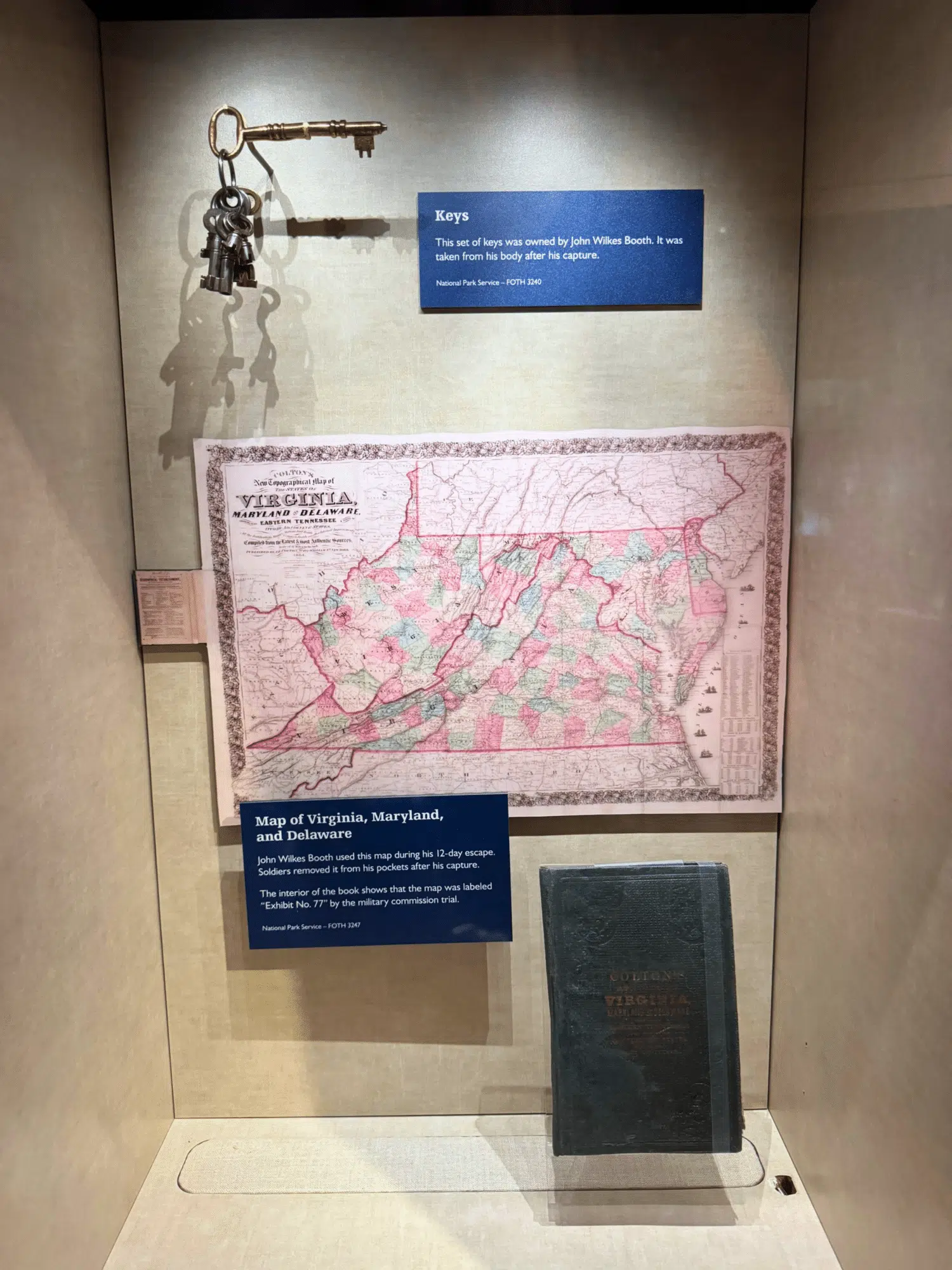
21. Petersen House
The Petersen House is a 19th-century Federal-style row house known as the place where President Abraham Lincoln died on April 15, 1865, after being shot the previous evening at Ford’s Theatre across the street.
I tried to visit Ford’s Theatre while visiting DC in 2026; however, it was closed for a rehearsal, so I was directed across the street to the Petersen House for their exhibit.
The house served as a boarding house in 1865 and has been a National Park Service-administered museum since the 1930s.
Seeing the room where Lincoln passed was very somber, as they did a great job of explaining that day’s events step by step.
After touring the house, you head into the Ford’s Theatre Society Center for Education and Leadership building.
It features a series of exhibits on the aftermath of Abraham Lincoln’s death, including Lincoln’s funeral train home to Illinois, the manhunt for John Wilkes Booth, and Lincoln’s enduring legacy.



⏳ Duration: 45 minutes – 1 hour
Misc.
22. Walk the National Mall at Night
One of the most magical things to do in Washington, D.C., is to see the National Mall lit up at night.
After seeing the performance at the Folger Shakespeare Library, I took a walk from there (on the east end of the Mall) to the Washington Monument.
From there, I could see all the way to the Lincoln Memorial.

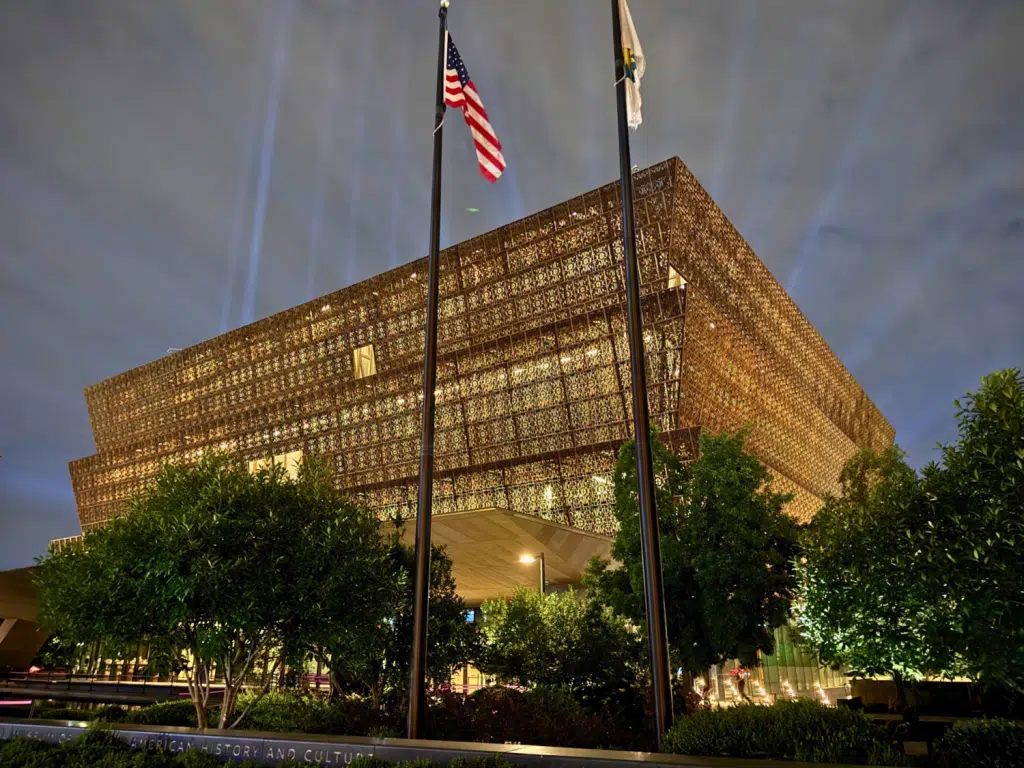

It’s quite a sight at night, and as a solo female traveler, I still felt safe because people were wandering around and it wasn’t super dark.
Depending on how much energy you have, you can walk the entire National Mall or just part of it.
Between the Capitol steps and the Lincoln Memorial, the Mall spans 1.9 miles (3.0 km). Between the Capitol steps and the Washington Monument, the Mall spans 1.2 miles (1.8 km), which is about the distance I walked.
🌃 If you don’t want to walk alone, take a guided tour of the monuments at night. There’s even a dedicated tour for solo female travelers 🎟️
23. Arlington National Cemetery
Arlington National Cemetery is the largest cemetery in the United States National Cemetery System, one of two maintained by the United States Army.
More than 400,000 people are buried across its 639 acres (259 ha) in Arlington County, Virginia. One of them is my uncle!
That’s why I was visiting in 2026, as he was being interred in Arlington after his 21-year Air Force career.
While my visit wasn’t what a typical tourist would get, you can still visit places like the Military Women’s Memorial, the Tomb of the Unknown Soldier, and President John F. Kennedy’s gravesite.
If you don’t want to walk, it’s 639 acres; you can purchase a tram ticket.
🪦 FREE — Arlington National Cemetery is quite expansive, so if you’d prefer to be guided, book a guided tour 🎟️
24. Old Town Alexandria
Old Town is Alexandria, Virginia’s historic downtown and waterfront neighborhood, situated along the Potomac River about 8 miles south of Washington, D.C.
Founded as Belhaven in 1749, it is the United States’ third-oldest historic district and the city’s cultural and commercial heart.
I visited as it was near where I was staying in 2026 for my uncle’s interment at Arlington.
It’s quite different from DC, which is a lot more hustle and bustle, while Alexandria is like stepping back in time.
While walking around is free to explore places like King Street Mile and the Waterfront, they do have some great paid attractions I checked out:
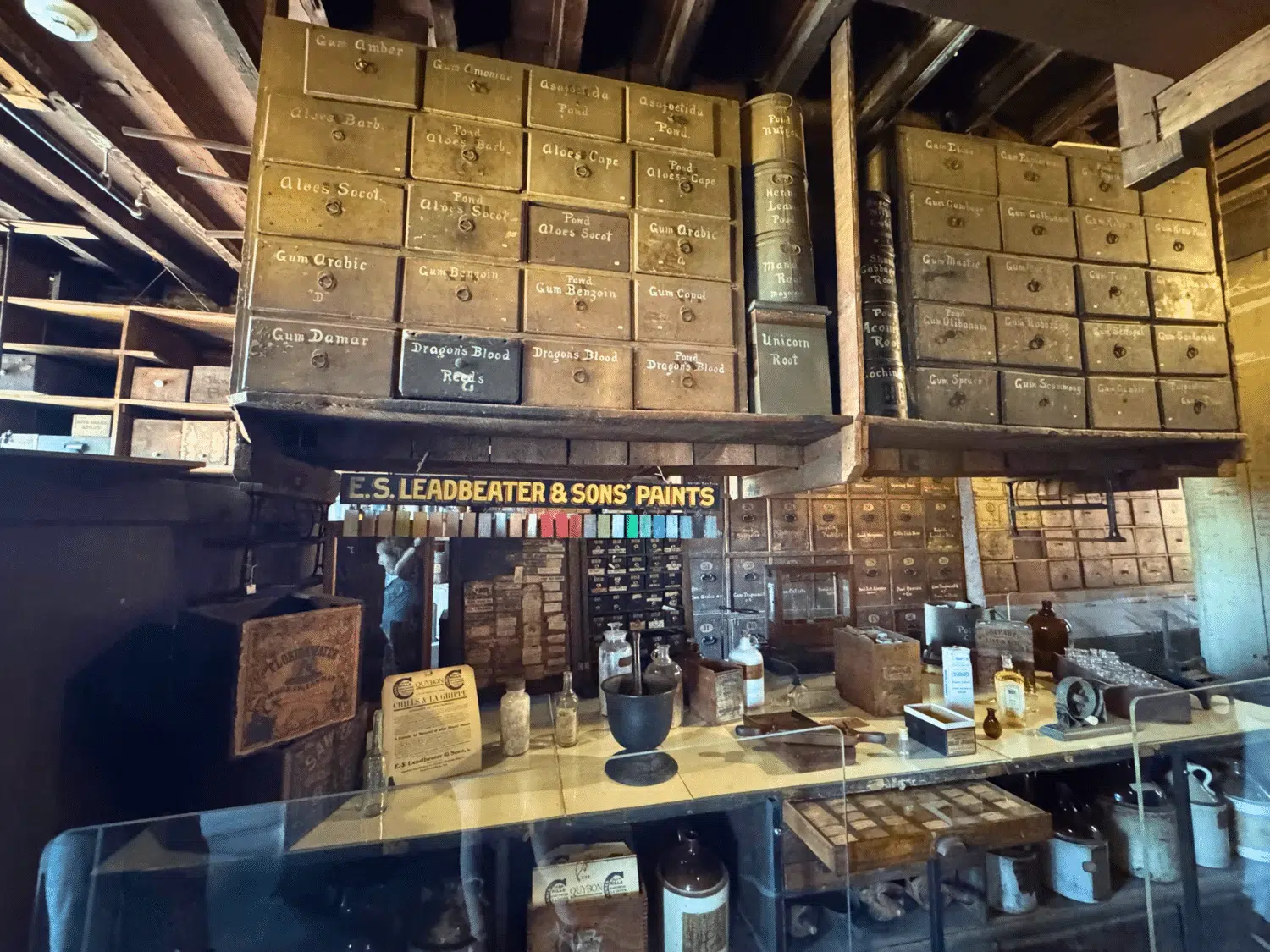
- Stabler-Leadbeater Apothecary Museum — A historic apothecary shop from 1792
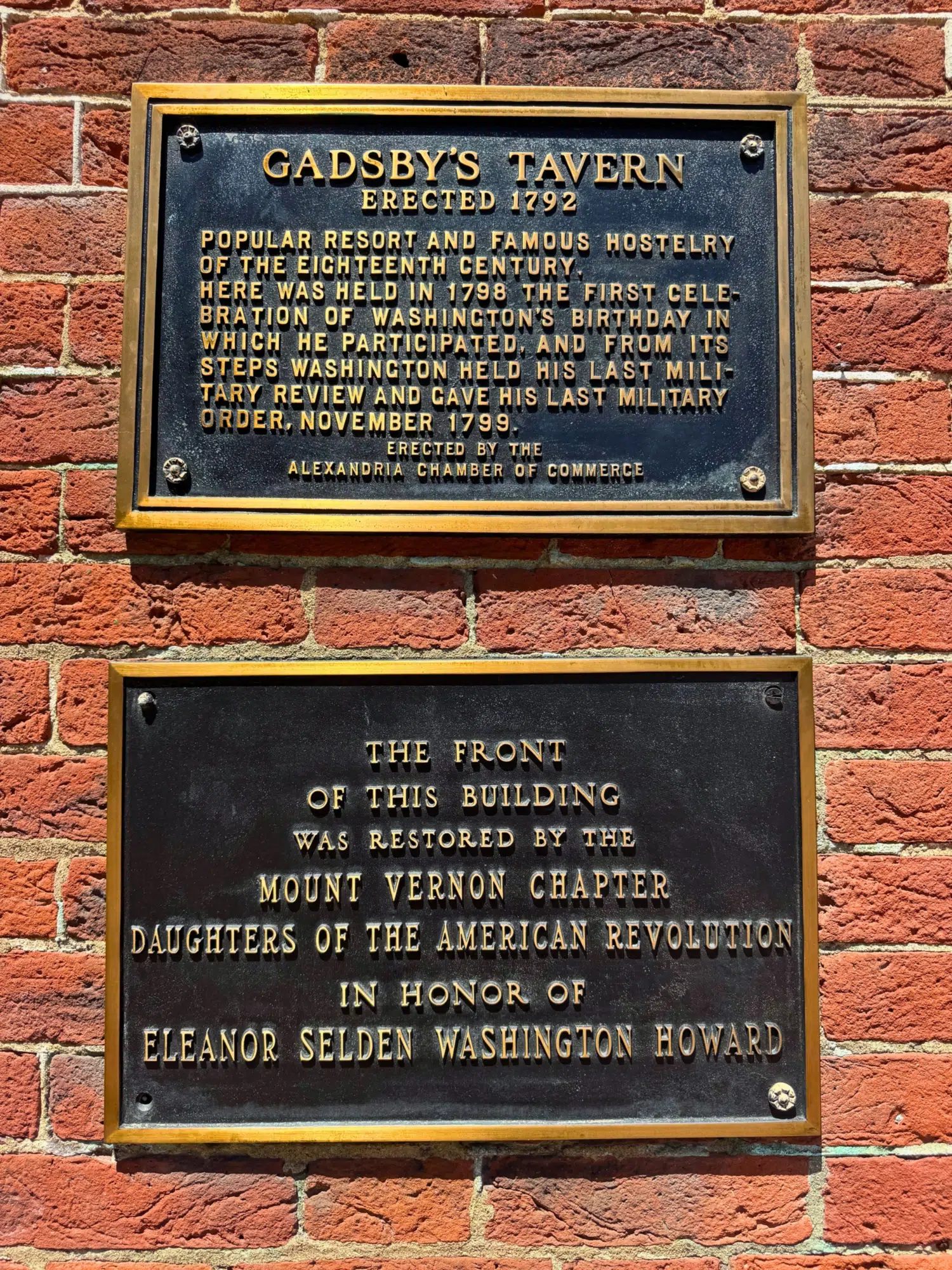
- Gadsby’s Tavern Museum — A 1785 tavern and a 1792 City Tavern and Hotel. Notable patrons include George and Martha Washington, Thomas Jefferson, and the Marquis de Lafayette. It’s also an aesthetic place to grab a bite to eat or a drink, as my family and I did!





25. United States Botanic Garden
The United States Botanic Garden is among the oldest botanic gardens in North America.
The Garden informs visitors about the importance, fundamental value, and diversity of plants, as well as their aesthetic, cultural, economic, therapeutic, and ecological significance.
It also strives to demonstrate and promote sustainable practices.

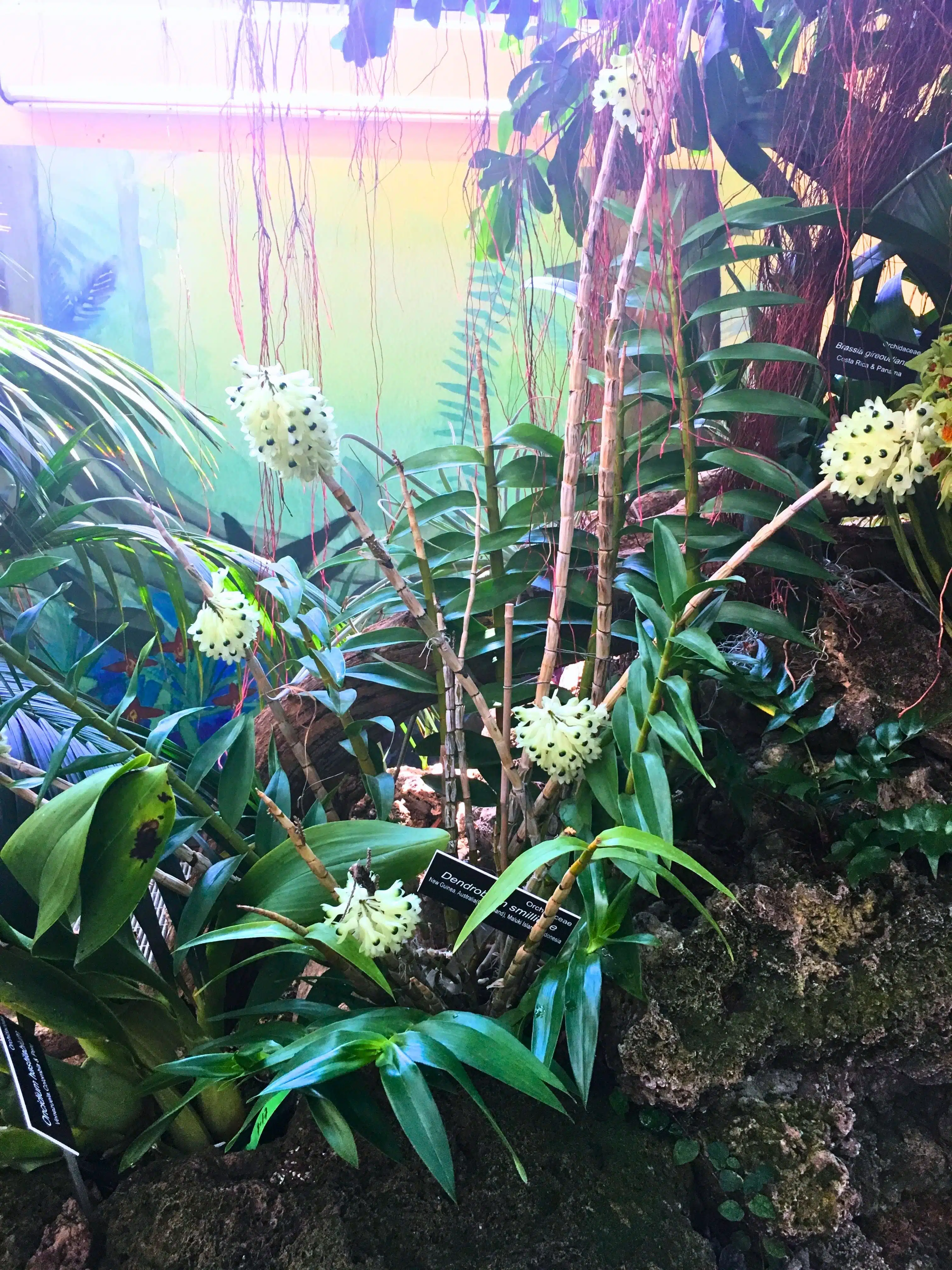
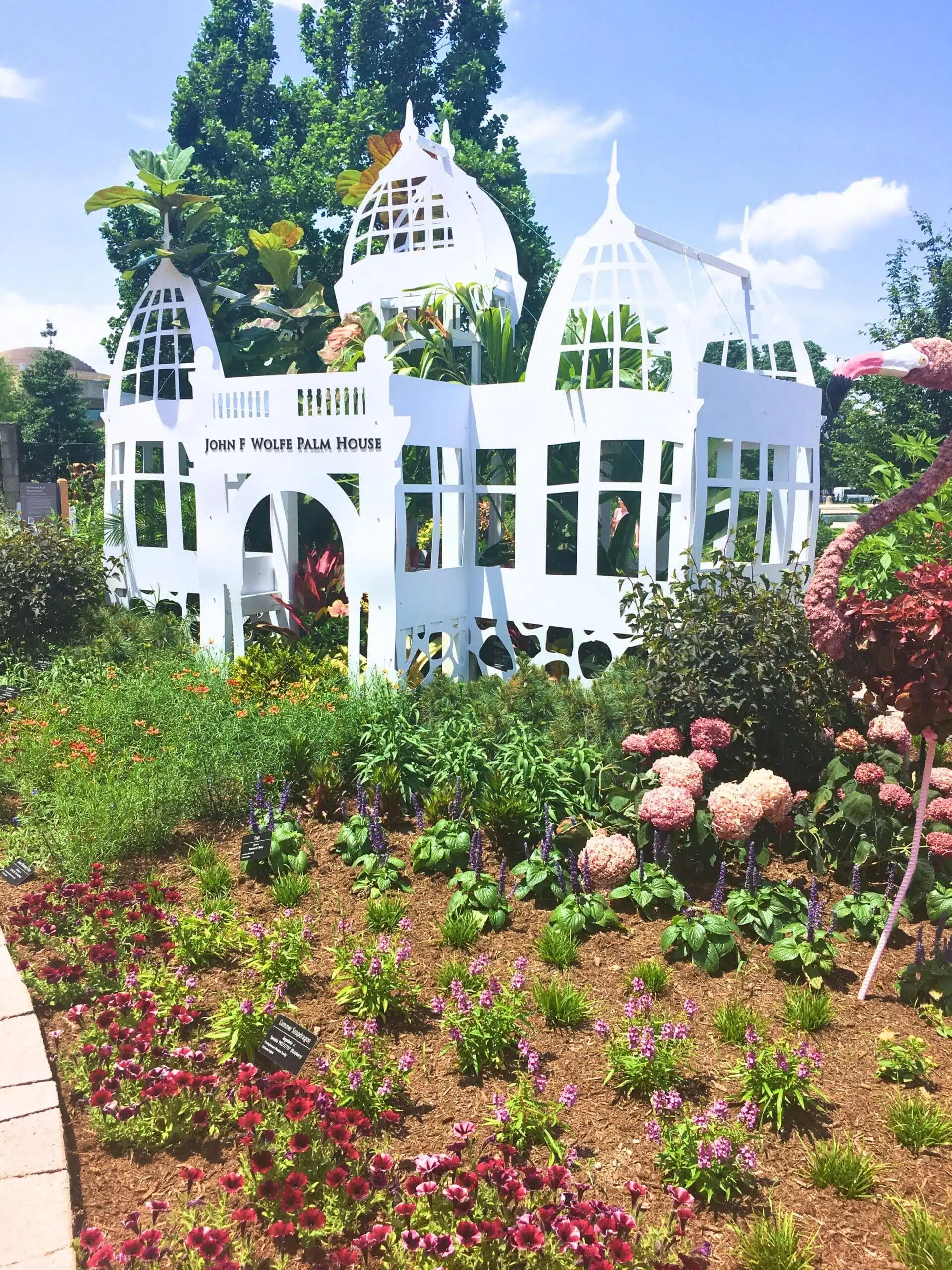
Admittedly, Botanic Gardens aren’t usually my thing, but my cousin, who worked at the Smithsonian for a time, recommended it.
However, I strongly recommend against visiting during peak heat hours because it stays warm inside. It was already sweltering and humid outside, so I wanted to escape the heat.
I didn’t find it here.
But if you visit in the morning or evening, it’ll likely be a better experience than mine was.
The Garden offers a variety of exhibits, tours, and programs, but I didn’t experience much of it because I was so overwhelmed by the heat.
⏳ Duration: 1 – 2 hours
Paid Attractions in and Around DC
26. International Spy Museum
The International Spy Museum documents the tradecraft, history, and contemporary role of intelligence and espionage.
It houses the largest collection of international espionage artifacts on public display.
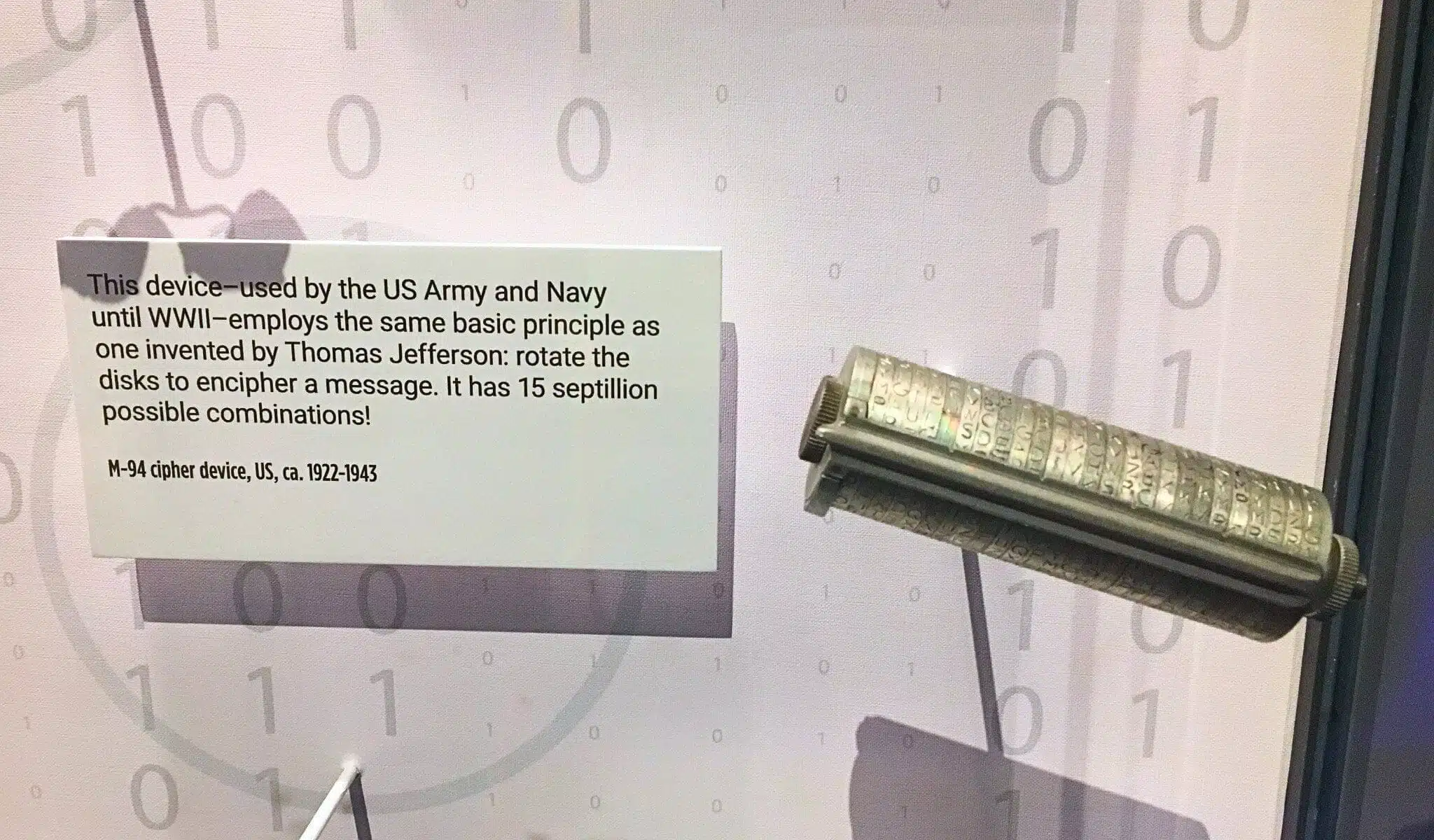
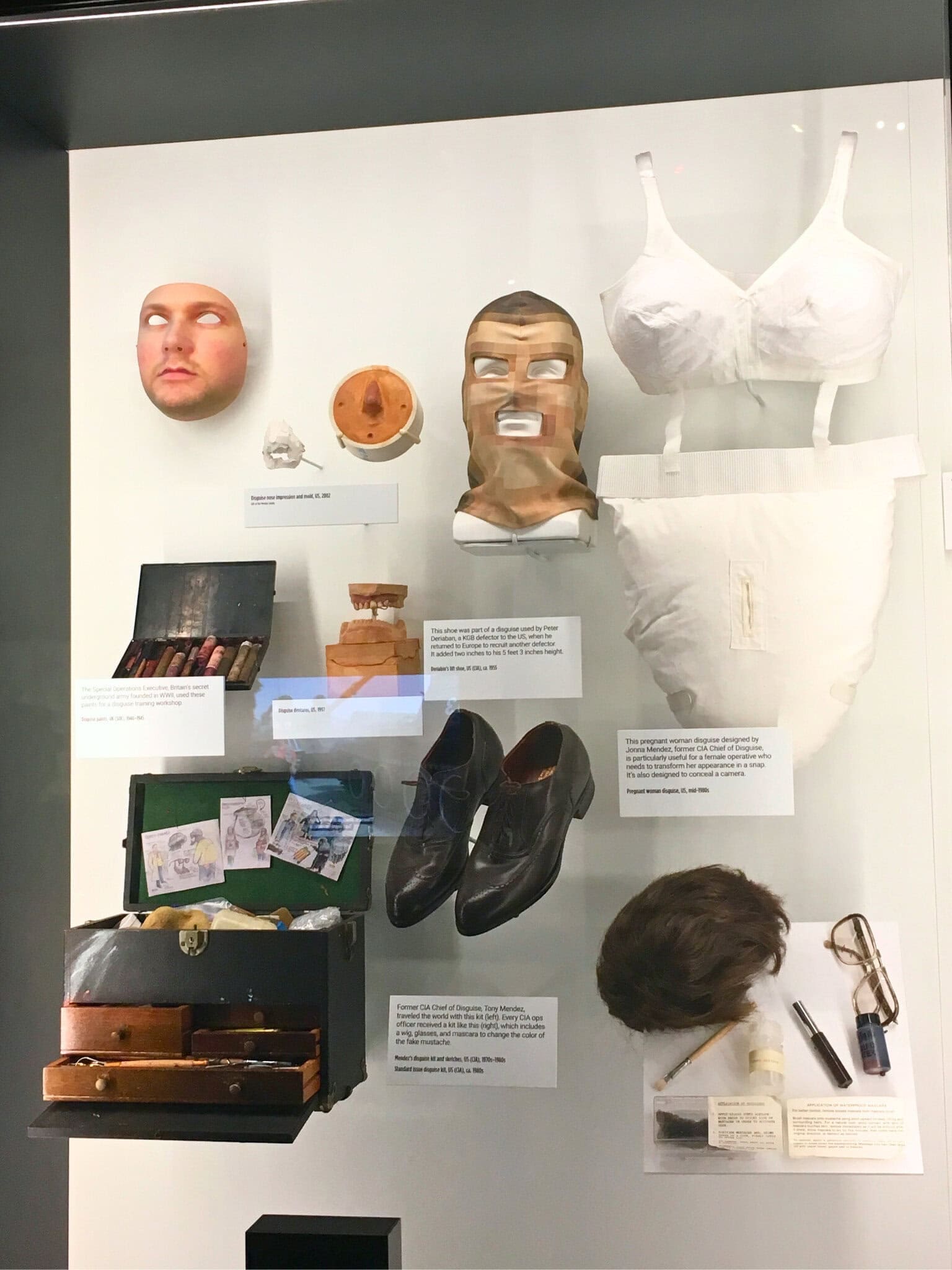
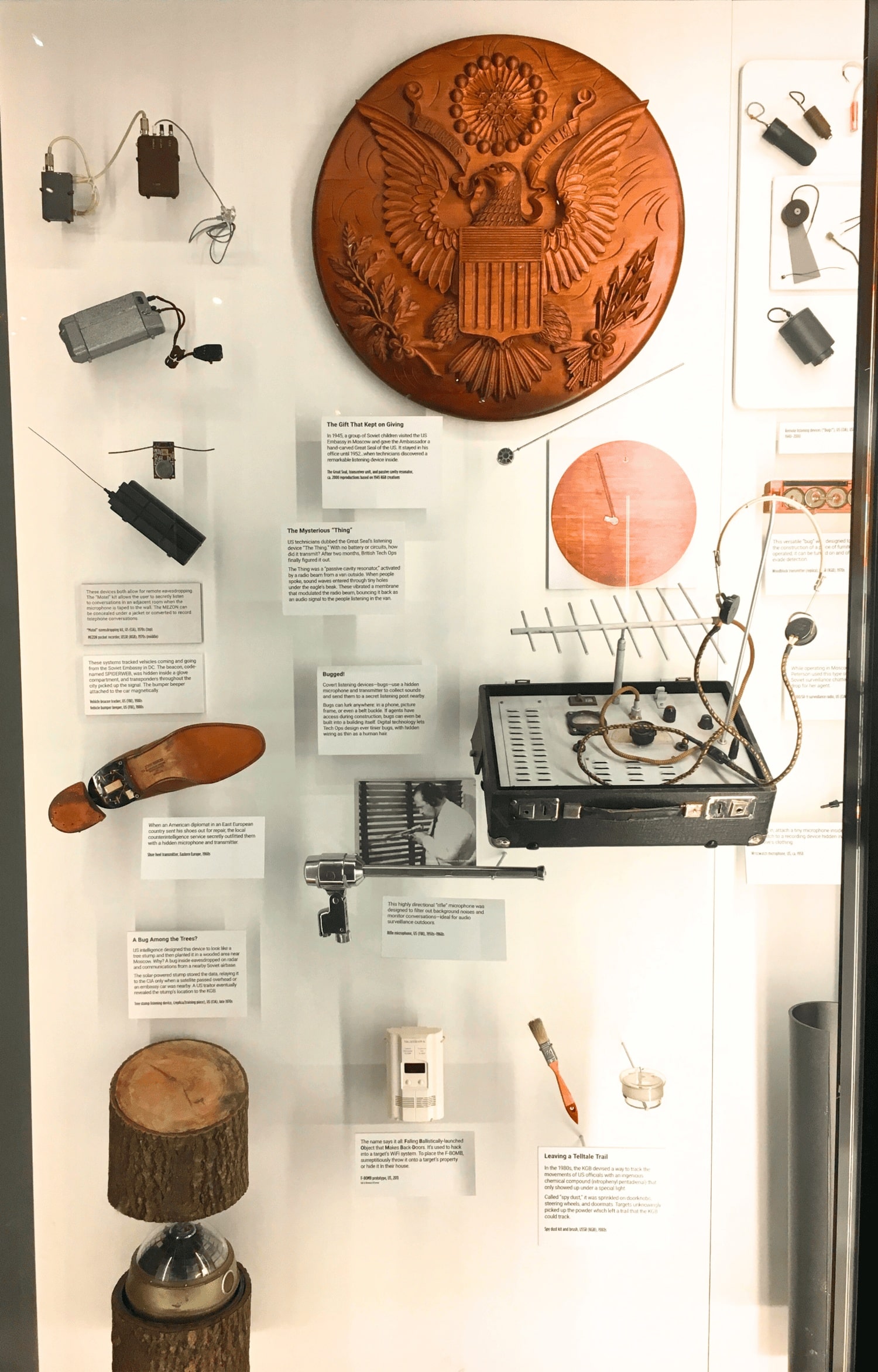
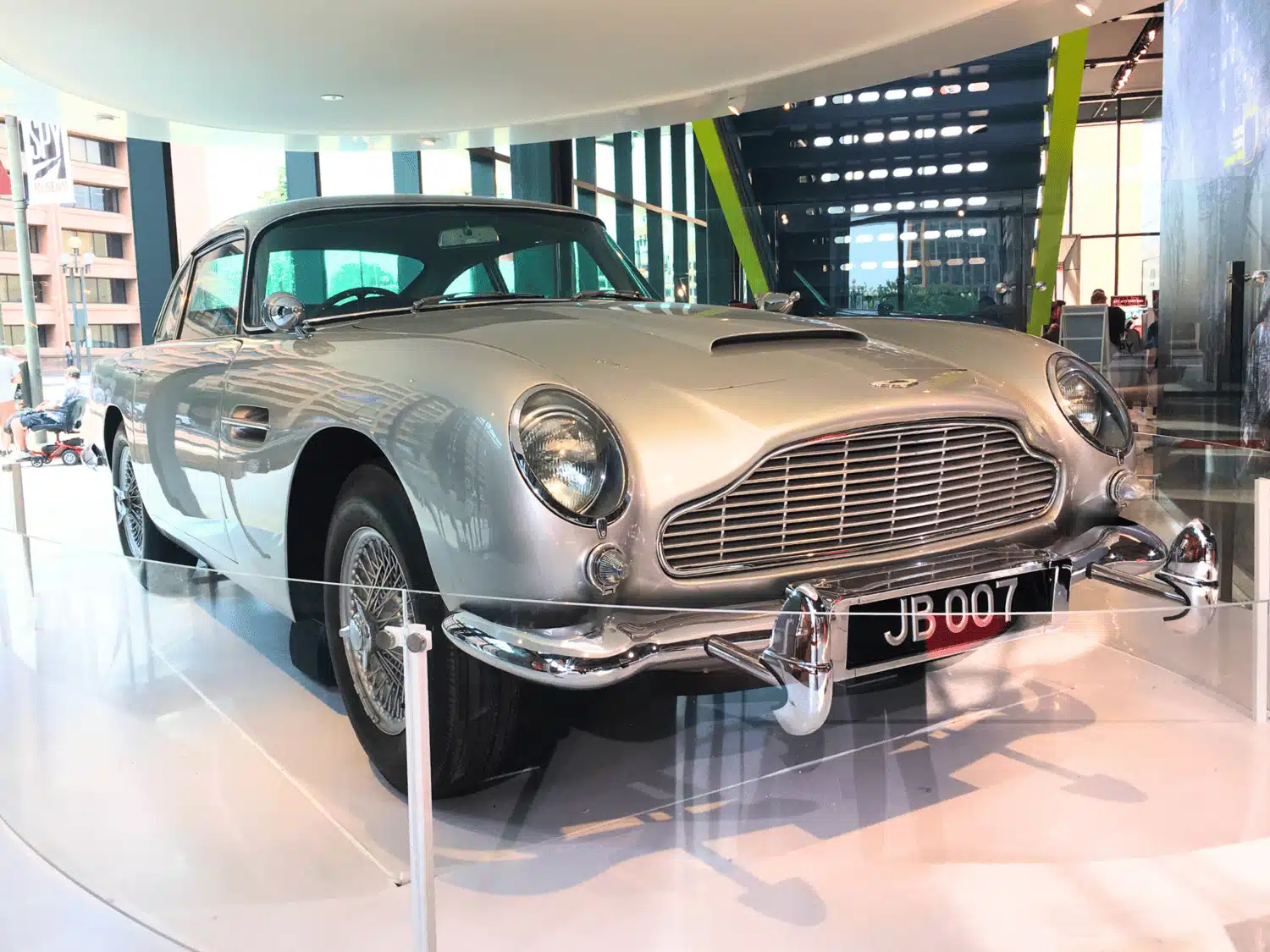

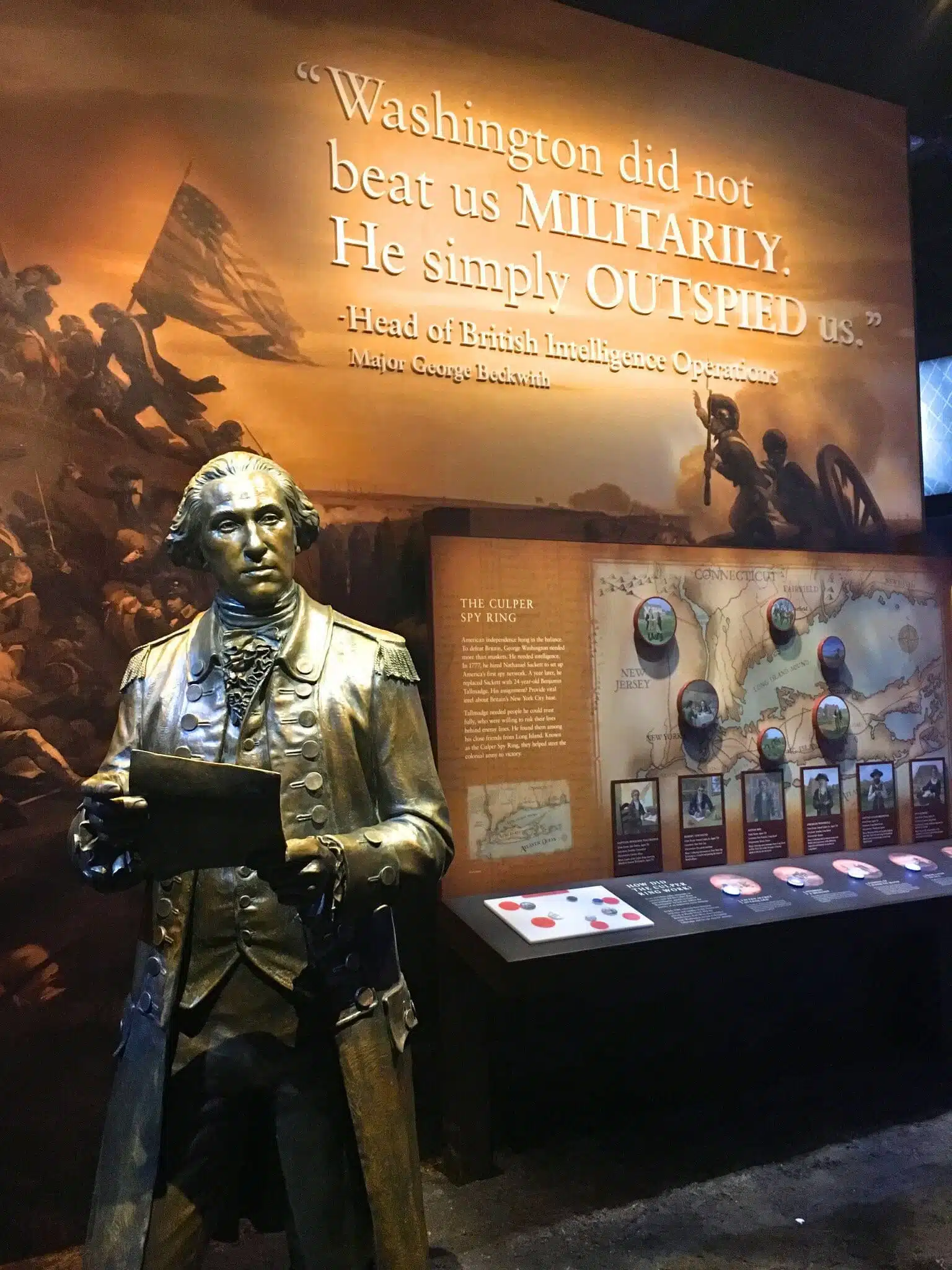
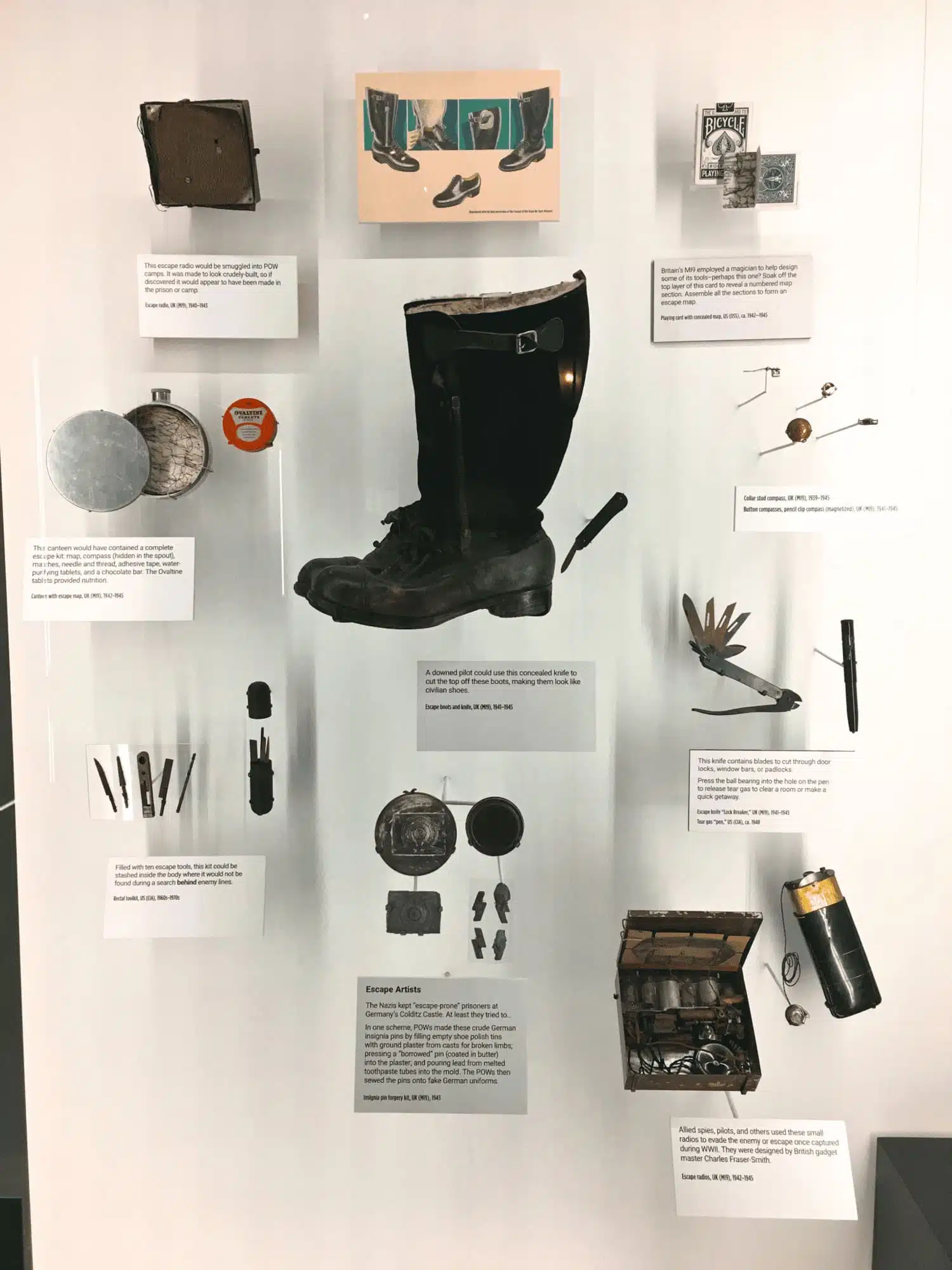
This museum was new when I visited in 2019, and I was thrilled to find one dedicated to the art of espionage.
As a huge fan of films like Salt, which I think is the best spy movie, I wanted to see what real-life spies are like.
What this museum does best is balance intrigue with the real-world consequences of spying.
It also grounds the experience without bogging it down in details that may be hard to process.
It’s even engaging for children, with interactive exhibits.
⏳ Duration: 2 hours
🕵️ Book your tickets online in advance, as prices are cheaper the further out you book 🎟️
27. George Washington’s Mount Vernon
Home to one of the Founding Fathers, the commander of the Continental Army, and the first president of the United States, as well as his wife, Martha, Mount Vernon is a historical landmark.
This estate offers many activities, including touring its 18th-century home, strolling through the gardens, visiting museum galleries, and more.
The museum exhibit covers George Washington’s life, beginning with his first job as a surveyor. It then traces his leadership during the French and Indian War, his expanding business interests at Mount Vernon, his service in the Revolutionary War, and, of course, our nation’s founding.
If you have the time, you could fill an entire day here.
Mount Vernon sits on the banks of the Potomac River in Fairfax County, Virginia, and is a must-visit for any history buff.

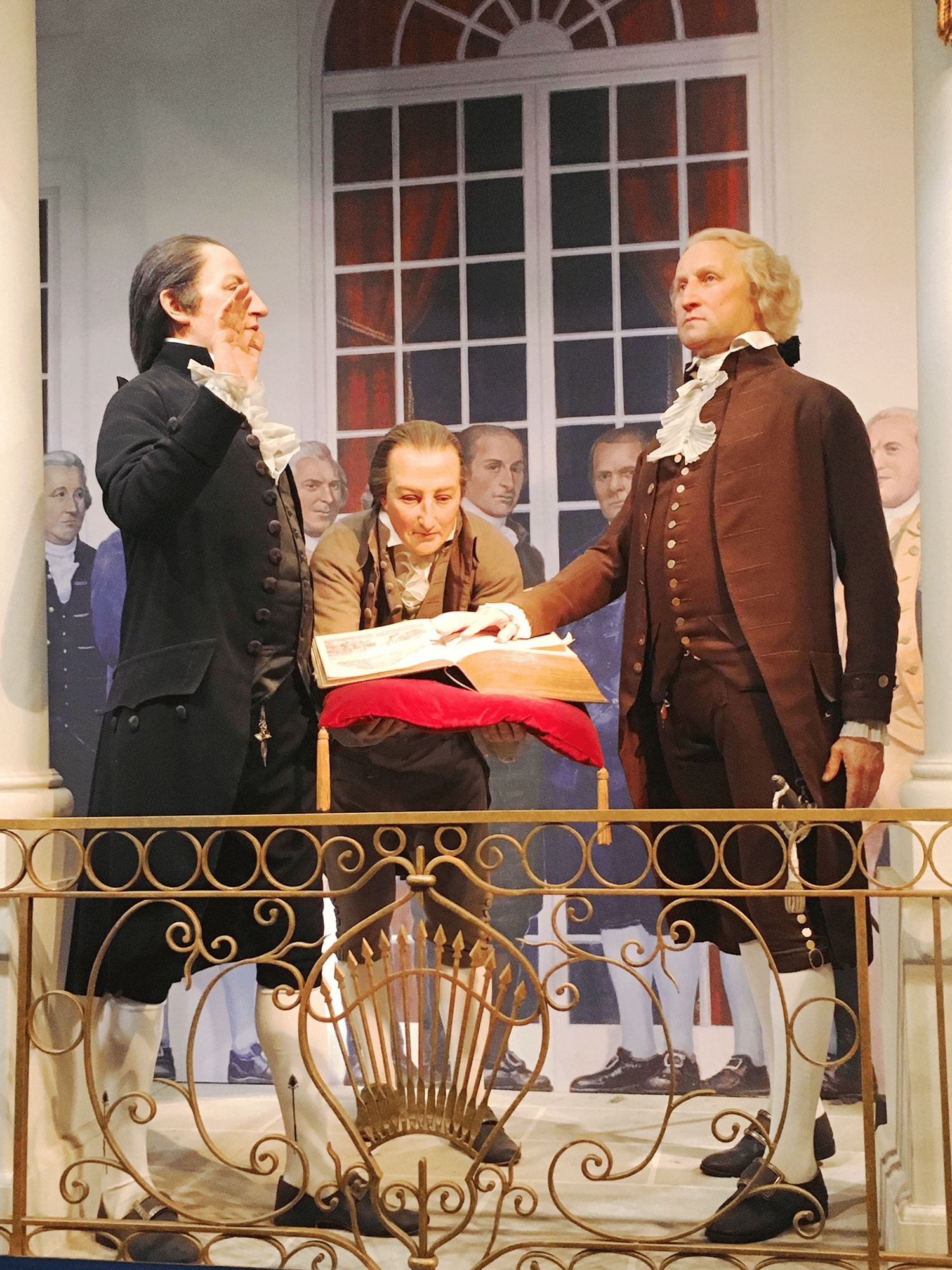

When I visited in 2019, they were refurbishing his home, but I could still go inside and see it.
I arrived later in the day, and the next available tour was the National Treasure Tour.
Not that I’m not a fan of the films (I am a film tourist after all); I just didn’t expect a tour dedicated solely to one of them!
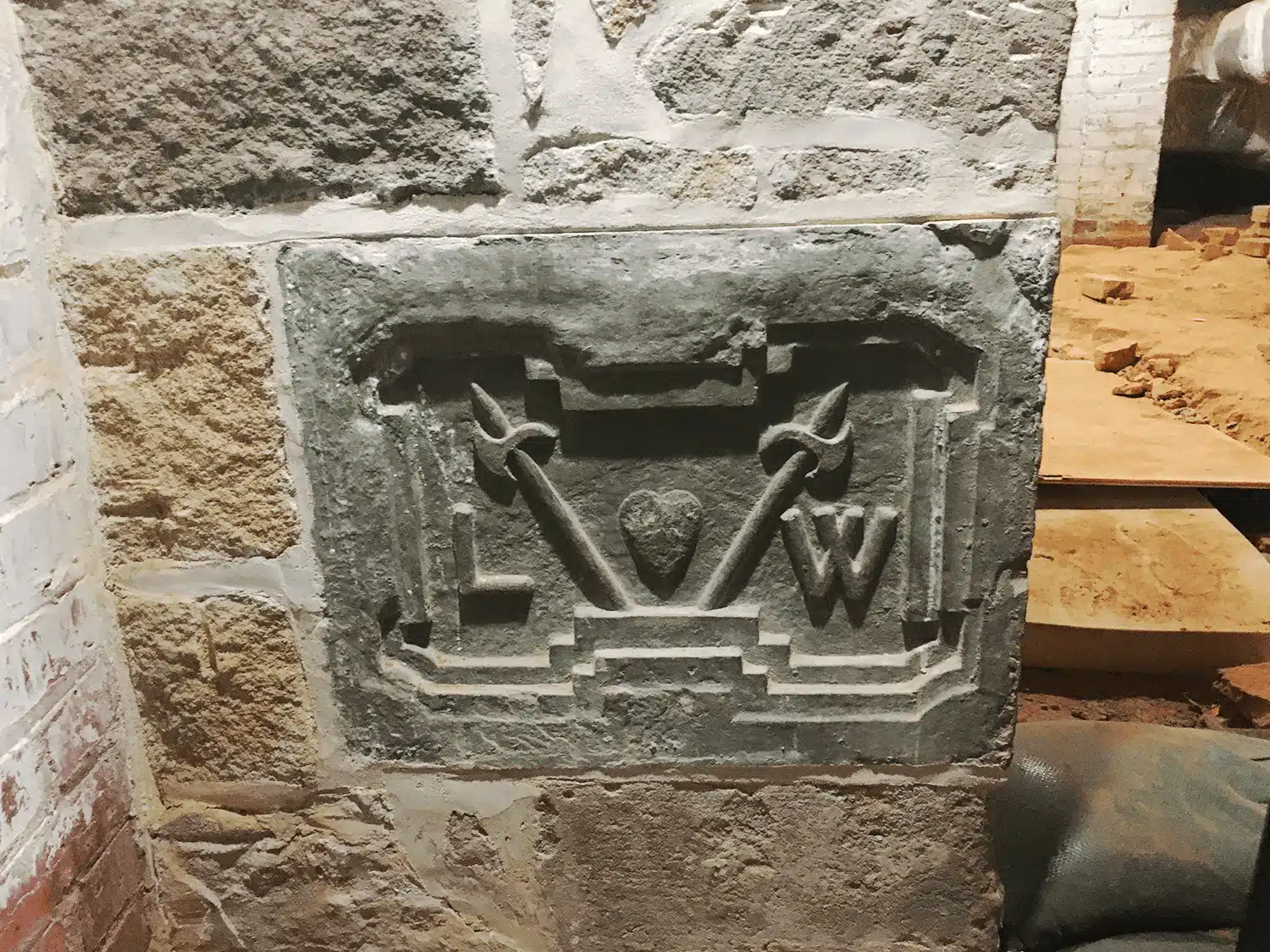
Part of the second film, National Treasure: Book of Secrets, was filmed here, and as part of the tour, I got to go under the home and see the cornerstone, which is central to the plot.
Note that Mount Vernon is another attraction on this list of things to do in Washington, DC, that’s outside the city.
But I wanted to add it here since it is relatively close, two hours by public transportation and between 45 minutes and an hour by car.
⏳ Duration: 3+ hours
🇺🇸 This is a popular attraction, so get tickets online in advance to secure the day and time you want! Else you’ll get whatever’s available like I did 🎟️
28. Washington DC Capitol Hill Haunts Tour
Capitol Hill is reportedly one of the most haunted sites in Washington, DC!
On this ‘Capitol Hill Haunts’ tour, we heard stories of feuding ghosts of past lawmakers in the House, hauntings tied to the Lincoln Conspiracy trials, ghosts of Presidents, and a curse that surrounds everything on the Hill.
There are also supposed disturbances at the Folger Library and a Demon Cat that torments the Capitol Hill guards even today.

When I visited DC in 2019, I decided to check out ghost tours because they are an entertaining way to learn about a city from a unique perspective.
Ghost tour guides are usually fun and insightful, and my guide from Amerighost was no exception!
She was a thrill to spend the evening with, especially because my friend and I were the only ones on the tour, so it turned out to be a private tour for us.
In addition to learning about the Supreme Court Building, the Library of Congress, and the US Capitol, our guide also shared knowledge of other landmarks, including Mount Vernon.
For those with mobility issues, the entire tour was on level ground and under a mile long.
⏳ Duration: 1.5 hours
👻 Book online in advance as there’s no ticket office to purchase from 🎟️
29. National Museum of Women in the Arts
The National Museum of Women in the Arts is the world’s first museum dedicated solely to championing women in the arts.
Since opening in 1987, the museum has acquired a collection of more than 6,000 works by more than 1,000 artists, spanning the 16th century to the present.
The museum occupies the former Masonic Temple, a building listed on the U.S. National Register of Historic Places.


I visited in 2026 on the suggestion of a friend who’s lived in DC for nearly a decade. He knows I’m a big fan of women in history, so that was the impetus.
I enjoyed my time here, and I barely saw anyone else in the whole place, so if you’re looking for a crowd-less museum, this is it!
🖼️ At the National Museum of Women in the Arts (NMWA), they believe art is for everyone, so they offer several ways to visit for free or at a discount 🎟️
I visited for free through Museums for All as I receive food assistance (SNAP benefits).
More Free Things to Do in Washington DC
30. Bureau of Engraving and Printing – A government agency within the United States Department of the Treasury that designs and produces various security products for the United States government, most notably the Federal Reserve Notes for the Federal Reserve, the nation’s central bank.
I’ve had a money museum-type experience in other countries, and it’s a fun way to spend some time.
31. National Postal Museum — A Smithsonian museum dedicated to preserving, studying, and presenting postal history and philately (the study of stamps). It showcases the world’s largest and most comprehensive collection of stamps and philatelic materials.
This museum looks so quirky for what you’d think is an uninteresting subject!
32. National Museum of Natural History — The National Museum of Natural History (NMNH) is a Smithsonian museum dedicated to collecting and preserving the world’s largest collection of natural history specimens and human artifacts.
I’ve been to a few Natural History museums, so I didn’t feel the need to visit this one, but I would recommend it to those who haven’t explored others.
What to Skip in Washington DC
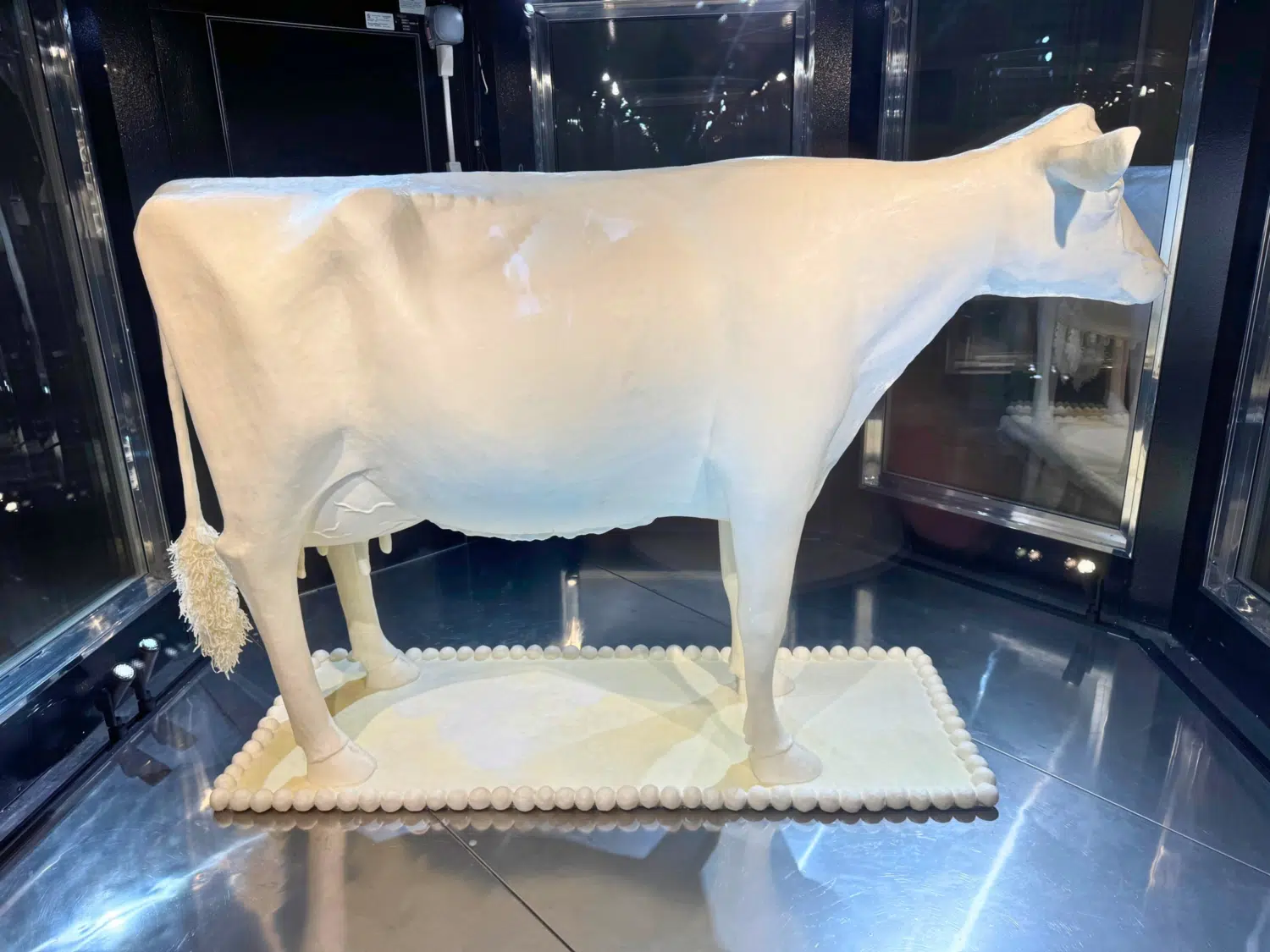
Renwick Gallery — The Renwick Gallery, a branch of the Smithsonian American Art Museum in Washington, D.C., displays American craft and decorative arts from the 19th through the 21st centuries.
A friend recommended this museum, but it was a bit too quirky for me, with a cow made of butter!

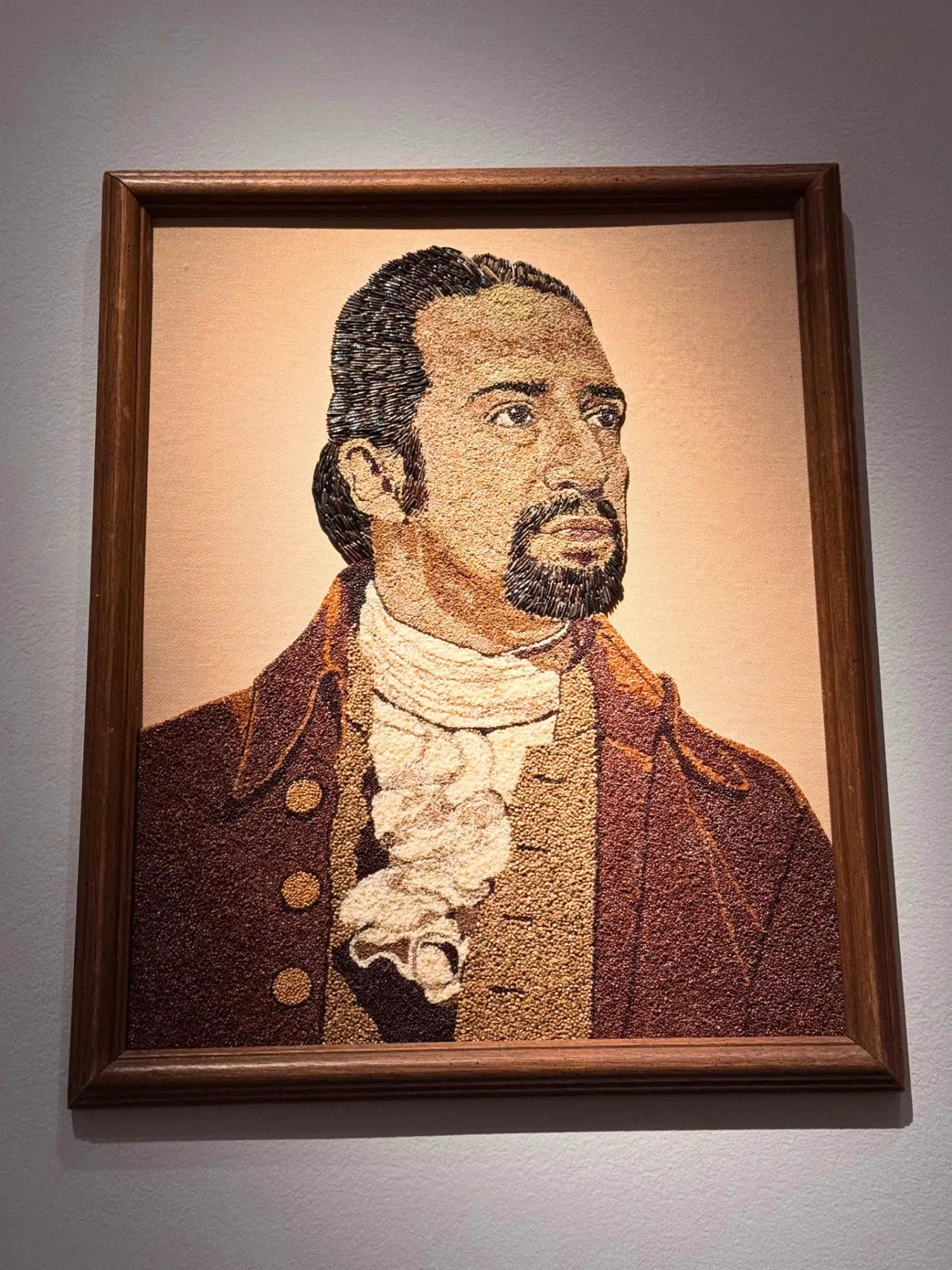

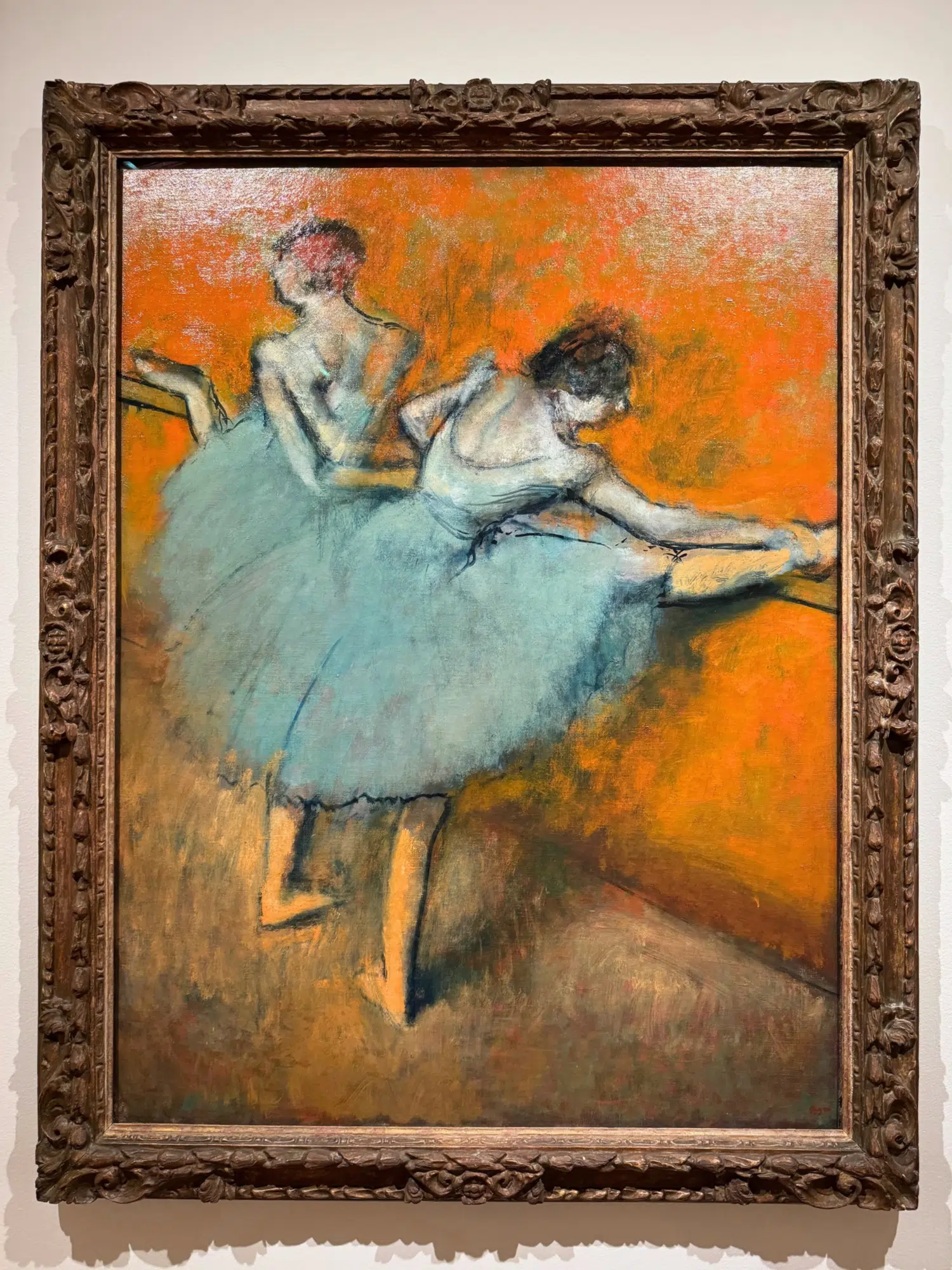
The Phillips Collection — The Phillips Collection is an art museum in the Dupont Circle neighborhood of Washington, D.C. The collection includes works by Pierre-Auguste Renoir, El Greco, Vincent van Gogh, Claude Monet, Pablo Picasso, and others.
However, it’s a paid exhibit (with a few discount options available), and unless you’re really into art, I don’t recommend it.

Sample Washington DC Itineraries
Washington DC in 1 Day
If you only have a single day, stay close to the National Mall so you’re not wasting time in transit.
Start early at the Library of Congress or the US Capitol, since both benefit from arriving before the crowds. From there, walk the Mall itself, hitting the Lincoln Memorial, WWII Memorial, and Washington Monument grounds, all quick stops of 15–30 minutes each.
Pick one Smithsonian museum and spend real time in it, rather than rushing through several. The National Air and Space Museum is my top pick, as it’s engaging for all ages.
If you have energy left in the evening, a ghost tour of Capitol Hill or a walk along the Mall at night is a fun way to close out the day without needing reservations booked far in advance.
Washington DC in 2 Days (Weekend)
Two days are enough to slow down slightly and add a paid attraction or two.
Spend day one on the National Mall, visiting the Library of Congress, the Capitol, the Lincoln Memorial, the MLK Memorial, and one Smithsonian museum.
Save day two for a mix of paid and free sites: the International Spy Museum, National Portrait Gallery, and National Museum of American History, if you want to see a bit of everything that makes up the United States.
Washington DC in 3 Days
I’d recommend three to four days to cover DC’s main sites without rushing, leaving room to add one attraction outside the city center.
Use days one and two for the National Mall and Smithsonian museums as above, then dedicate day three to a half-day trip: George Washington’s Mount Vernon or the Steven F. Udvar-Hazy Center, depending on whether history or aviation interests you more.
Both require extra travel time (Mount Vernon is roughly 2 hours by public transport; Udvar-Hazy is a 30–45-minute drive), so building in a dedicated day rather than squeezing it into an already packed itinerary makes the trip much less stressful.
How to Get Around DC
Most of the city’s biggest attractions are within walking distance of each other on or near the National Mall, so you don’t need to plan a complicated route between neighborhoods.
If you want to cut down on walking, take the metro or a bus, as I did in 2026.
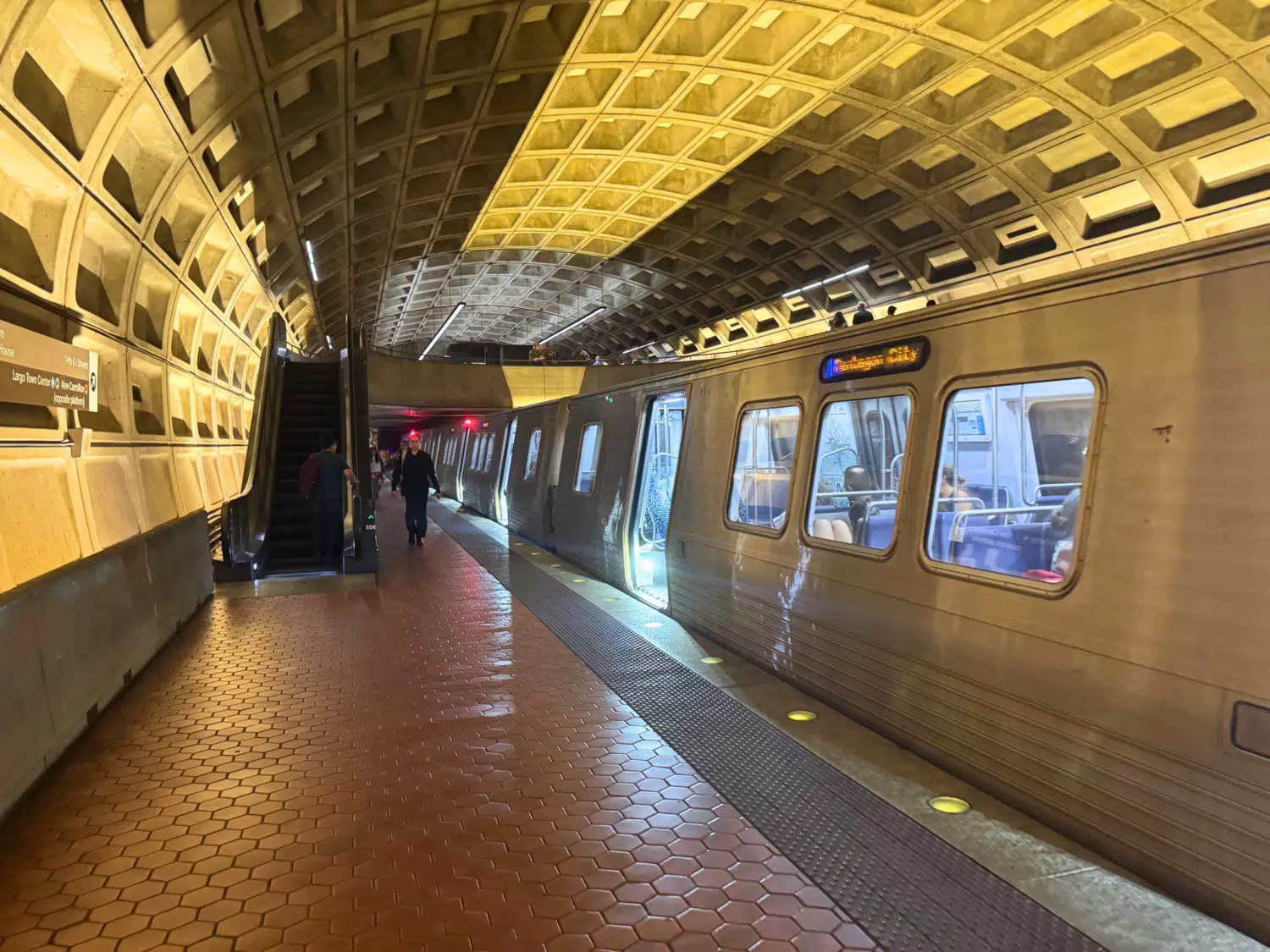
Both are affordable and easy to use if you follow Google Maps’ or Citymapper’s directions.
If you’re in a time crunch, the metro is faster because buses have to contend with traffic.
Here are your options to get around Washington DC:
- Metrorail: This expansive network of tunnels and above-ground tracks connects all four DC quadrants with suburban Virginia and Maryland. The Metrorail system offers a convenient, affordable way for visitors to get around. It even reaches the airport.
- Metrobus: Operates hundreds of routes throughout DC and the surrounding area, with over 1,400 eco-friendly buses.
- Car: Driving in the city can be stressful and expensive, since parking can be a nightmare and traffic is heavy. However, if you plan a day trip outside the city, it may be worth it. I rented a car in New Bern, NC, and then drove up to DC. Then, I returned it to the DC airport before taking an Uber into the city center.
- Ride-share: Uber and Lyft are both available in DC. I use Lyft for late nights when bus routes are fewer.
- Regional Public Transit: The region, commonly referred to as the DMV, has various options to serve visitors looking to see sites outside the city.
- Fairfax Connector provides buses in Virginia
- The Virginia train system known as the VRE
- The MARC train in Maryland
- Other regional transportation systems are listed on WMATA’s website.
Where to Stay in DC
I was lucky to have a friend in DC, so I stayed with him during my 2019 visit.
He was literally a block away from the Supreme Court, so very central!
But during my 2026 visit, I stayed at the Highroad Hostel in the Adams Morgan neighborhood. It was a short bus or metro ride down to the National Mall from there.
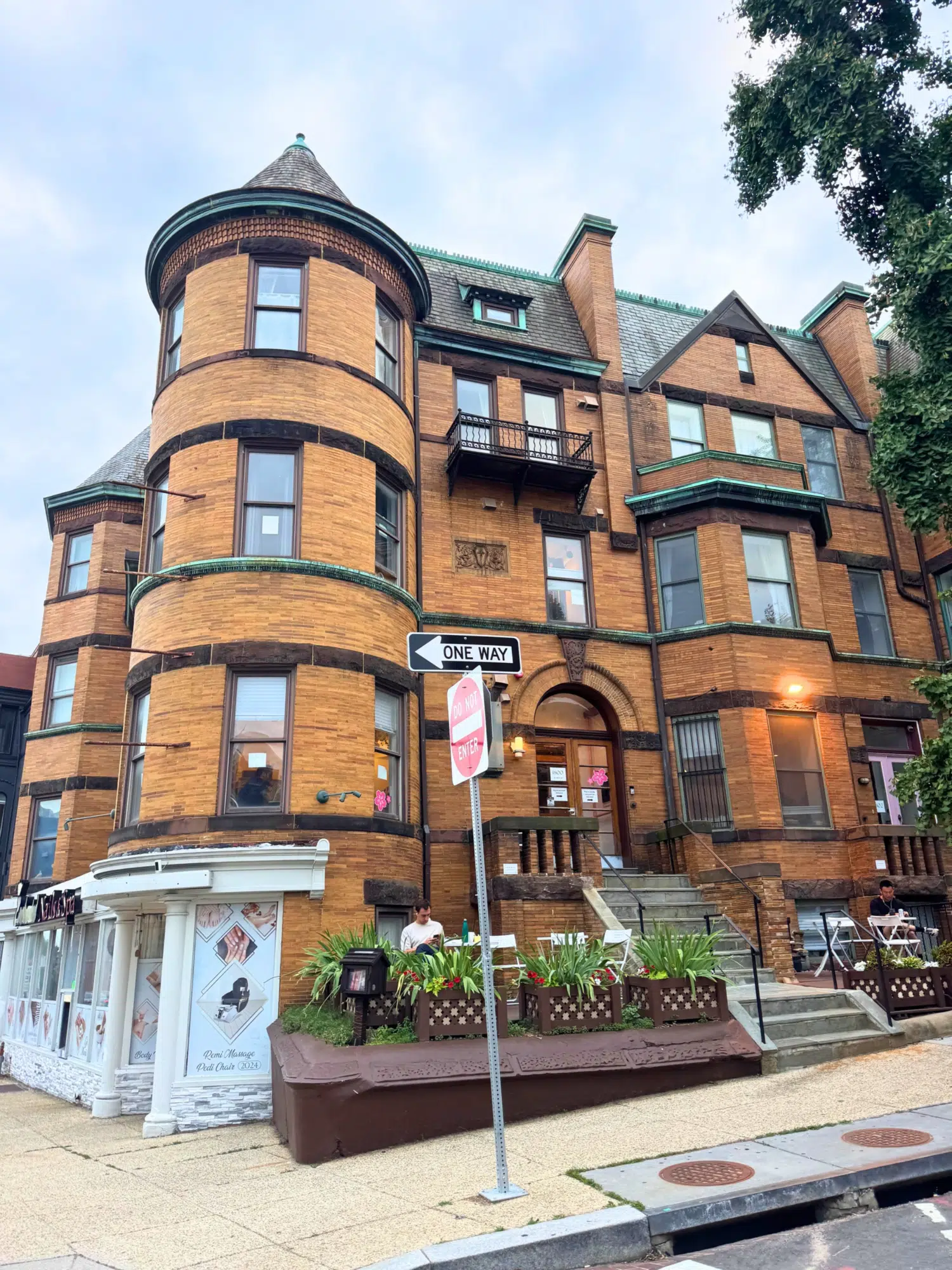
Overall, my top tip is to stay central, which significantly helps reduce transit time.
FAQs
Do attractions in Washington, DC, close during a government shutdown?
Smithsonian museums, the National Zoo, and other federally funded sites can close during a government shutdown.
Closures are temporary; check each site’s website before you go.
How Many Days Do You Need in Washington, DC?
Three to four days in Washington, DC, covers the National Mall memorials, the US Capitol, the Library of Congress, and two or three Smithsonian museums without rushing.
Three days leave room for a half-day trip to Mount Vernon or the Udvar-Hazy Center; four days fit both.
Is Washington, D.C., Worth Visiting?
Washington, DC, is worth visiting because many of its top sights are free, including the Smithsonian museums, the Library of Congress, the Capitol tour, and the National Mall memorials.
Few US cities let you see the Declaration of Independence, the Apollo 11 Command Module, and a Leonardo da Vinci painting in one day.
What are the Best Free Things to Do in Washington, DC?
The best free things to do in Washington, DC, include the National Air and Space Museum, the National Museum of American History, the Library of Congress, the US Capitol tour, the National Gallery of Art, the National Archives, and the National Mall memorials.
Several require free timed-entry passes, so reserve those before your trip.
Is Washington, D.C., Safe for Solo Travelers?
Washington, DC, is generally safe for solo travelers around the National Mall and the main museum areas, which see heavy daytime foot traffic.
At night, stick to well-lit, busy routes like the Mall, or join a guided evening monuments tour.
What is the Best Time to Visit Washington, DC?
Spring and fall are the best times to visit Washington, DC, with milder weather than the hot, humid summer.
Spring brings cherry blossoms around the Tidal Basin, usually from late March to early April, along with the year’s biggest crowds.
Can You Visit Washington, D.C., on a Budget?
Washington, DC, is one of the easiest major US cities to visit on a budget, since the Smithsonian museums, National Mall memorials, the Library of Congress, and the Capitol tour are free.
Metrorail and Metrobus keep transport costs low, so most of your spending goes to food and lodging.
Which Smithsonian Museums Should I Prioritize?
The National Air and Space Museum and the National Museum of American History are the Smithsonian museums to prioritize if you only have time for one or two.
Together, they cover the widest range of iconic artifacts.
Add the National Museum of the American Indian for a shorter visit, with lunch at Mitsitam Café.
What are the Best Museums in Washington, DC?
The best museums in Washington, DC, are the National Air and Space Museum, the National Museum of American History, the National Gallery of Art, the National Archives Museum, and the International Spy Museum.
All are free except the Spy Museum.
Related Washington, D.C. Travel Guides
- International Spy Museum: Is Washington, DC’s Top Secret Attraction Worth Visiting?
- Top 25 Things to Do in Washington, DC: The Best Mostly Free Attractions
- Folger Shakespeare Library Review: Is the Renovated Exhibition Worth a Visit?
Want to remember this? Pin this 32 Things to Do in Washington, DC, for First-Timers, Including Free Attractions article to your favorite Pinterest board!