

Is the Akrotiri Archaeological Site Worth Visiting? Visitor’s Guide to Greece’s “Pompeii”
This site contains affiliate links and is a member of the Amazon Associates Program. At no additional cost to you, I may receive a commission from these links. I only make recommendations based on my experience. See my Disclosure Policy for more info.

When travelers think of Santorini, they often imagine blue-domed churches, whitewashed cliffs, and picture-perfect sunsets in Oia.
But if you’re searching for something beyond the typical Instagrammable moments, visit Akrotiri, a 3,600-year-old archaeological site often called the “Pompeii of the Aegean.”
You might wonder is Akrotiri worth visiting? Or is it “just another pile of ruins,” or worse, not worth the time compared to better-known sites like Pompeii?
Plus, with so much to see on the island, deciding whether to spend a few hours here can feel like a gamble.
That’s why understanding what makes Akrotiri extraordinary—its preserved streets, frescoes, and even advanced plumbing systems—is key to making the most of your visit.
As someone who has walked these ancient streets and pieced together their fascinating history, I can assure you that Akrotiri offers a side of Santorini most visitors never experience.
Whether you’re a history enthusiast, a curious traveler who wants more than just sunsets, or even a family seeking an educational adventure, this guide will show you exactly why Akrotiri deserves a spot on your itinerary.
What is Akrotiri? The “Pompeii of the Aegean”
When most people think of Santorini, they picture those famous blue-domed churches and an epic sunset over the sea.
But here’s the thing: this gorgeous Greek island is sitting on top of one of the most incredible archaeological discoveries in the world, and most tourists have no clue it exists.
Meet Akrotiri, a 3,600-year-old Minoan city that’s basically the Pompeii of Greece (but actually way older) and my favorite thing I did in Santorini.
Just like Pompeii, this ancient settlement was perfectly preserved when a massive volcanic eruption buried it under ash around 1600 BCE. The same eruption that created Santorini’s dramatic cliff-side landscape also gave us this incredible time capsule.
The site earned its “Pompeii of the Aegean” nickname because of how remarkably well-preserved everything is.
Unlike Pompeii, though, archaeologists haven’t found any human remains at Akrotiri, which suggests the residents had enough warning to evacuate before the volcano erupted.
Smart cookies, those Minoans.
Now, if you’re a history nerd like me, you’re probably already booking your ticket.
But even if ancient civilizations aren’t usually your thing, Akrotiri is worth considering for one major reason: it’s a UNESCO World Heritage site that offers a completely different side of Santorini.
While everyone else is fighting for the perfect sunset selfie in Oia, you could be exploring streets that haven’t seen foot traffic for nearly 4,000 years.
And here’s where it gets really interesting—some scholars think Akrotiri might have inspired Plato’s legend of Atlantis.
The timing and location line up pretty perfectly with Plato’s descriptions.
Whether you buy into the Atlantis theory or not, there’s something undeniably alluring about Akrotiri, which is why you should add it to your Santorini itinerary.
What to Expect at the Akrotiri Archaeological Site
What You’ll See Inside

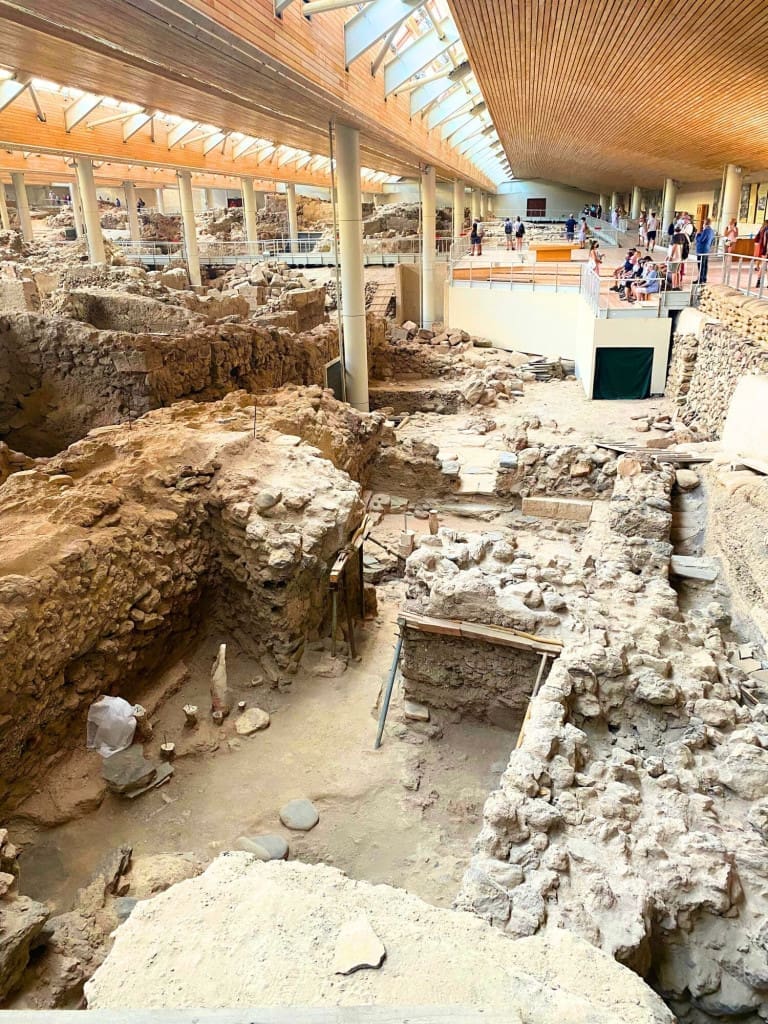
The Minoans who lived here had multi-story buildings (public and private), squares, gorgeous frescoes, storage rooms, and sophisticated plumbing systems.
We’re talking about Bronze Age people who were living it up with indoor bathrooms and elaborate drainage systems while most of the world was still figuring out basic agriculture.
While it’s likely hard for you to tell which room is which in these photos. I assure you that there are signs at the site and if you take a guided tour, the guide will explain the function of each area/room.
And even if you do have some trouble visualizing the city, there is a video of what you’re looking at, which’ll help to give some context.
The Minoans were also amazing traders as they had many relations with other cultures in the Aegean, as evidenced by fragments of foreign pottery at the site.
Do note that only about 5% of the original city has been excavated, so while what you’ll see is amazing, it’s only a small fraction!
The Protective Canopy and Walkways
The site is housed under a canopy and has elevated walkways so you can easily see everything.
The walkways are ramps, so you don’t have to worry if you have trouble with stairs.
It’s also air-conditioned, which is a serious bonus if you’re visiting Santorini in the sweltering summer heat!
What’s NOT There (Managing Expectations)


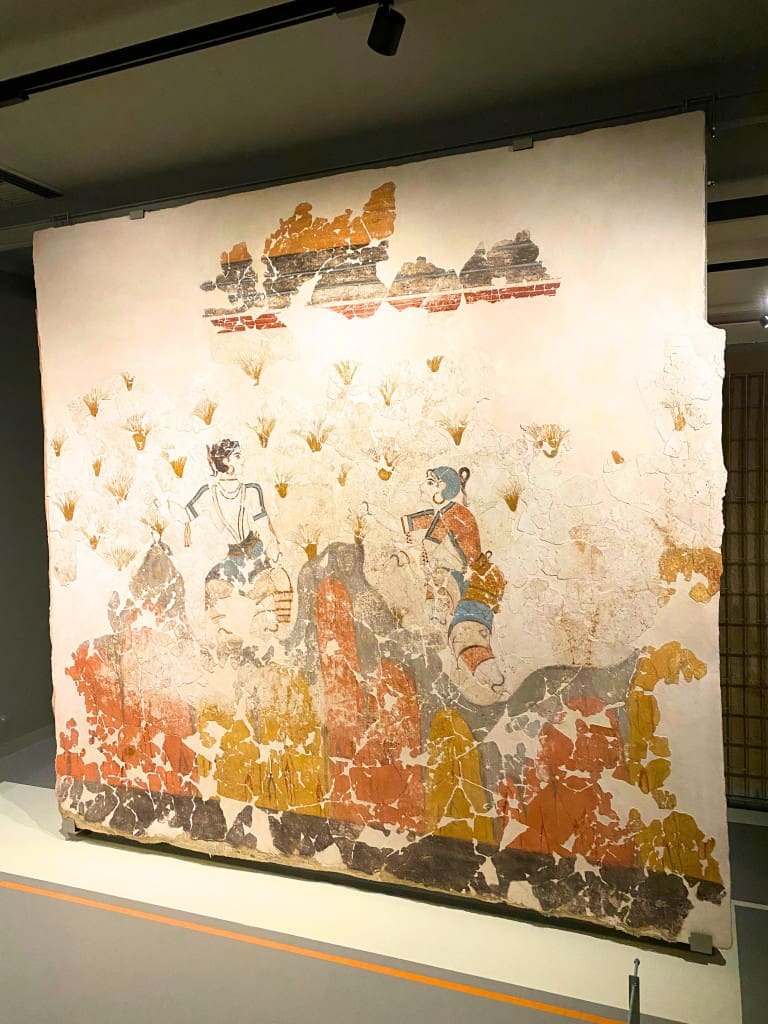
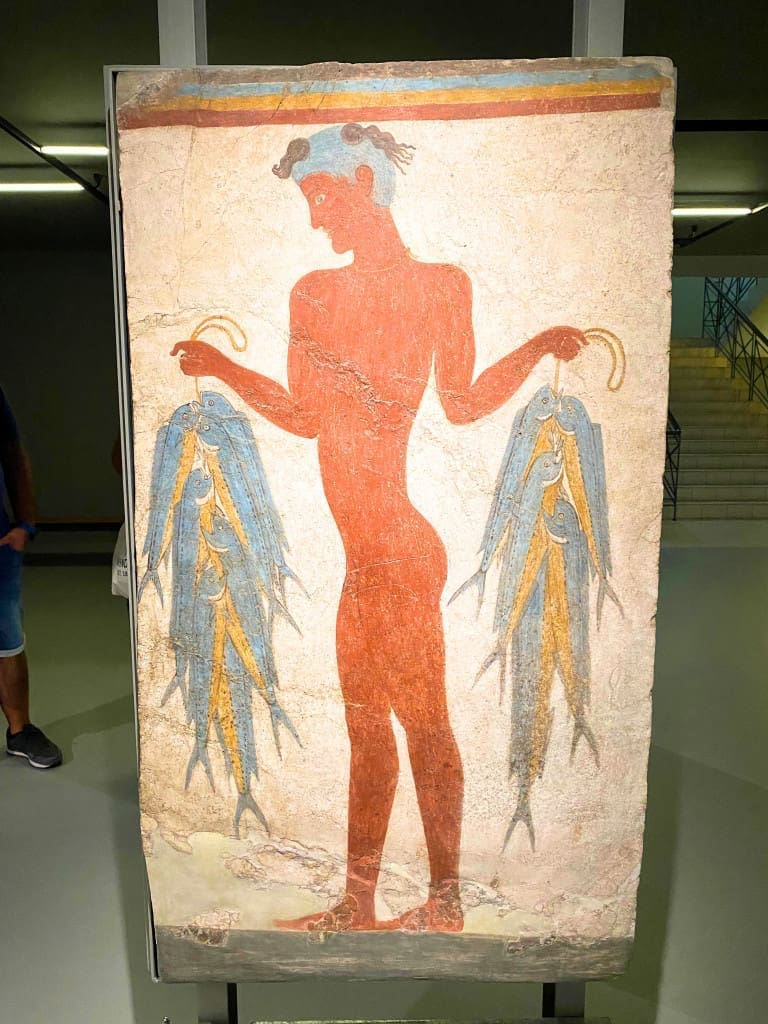
Now you may be saying, Michelle, where the heck are those frescoes?
To preserve what they found, they moved all the artifacts to the Museum of Prehistoric Thera.
Which means yes, you’ll have to use a bit of imagination to visualize what Akrotiri was like back in the day, with all the items in it.
We visited Akrotiri first and then went to the museum.
If I were to do this trip again, I think I’d do the reverse.
That way, I could see all the ‘people handled’ artifacts, which feel much more personal, like their furniture, before visiting the place they were found.
What’s in the Museum of Prehistoric Thera?


The Museum of Prehistoric Thera uses Akrotiri as a reference point to showcase the life and culture of Thira during the Prehistoric period, providing a detailed look into the island’s history.
Here, you’ll find exhibits displaying art, pottery, artifacts, furniture, and frescoes.
Pottery is particularly abundant because of the circumstances surrounding the demise of the city, in that its sudden evacuation meant that inhabitants were only able to take their most valuable possessions with them.
Furniture in Akrotiri was preserved similarly to the bodies in Pompeii, as layers of fine volcanic dust produced negatives of the disintegrated wooden objects.
Using these negatives as molds, liquid plaster-of-Paris was poured in and produced casts of parts, or even entire pieces of furniture such as beds, tables, chairs, or stools.
However, the museum exhibition that stood out the most to me was the “Thera wall paintings: the masterpieces of the Aegean Prehistory.”
These impressive wall paintings are displayed as they would have been in the settlement rooms, creating the feeling of walking through Akrotiri itself.
The Akrotiri frescoes are essential for the study of Minoan art because they are better preserved than those from Knossos and other Cretan sites, which mostly survived only in small fragments.
Akrotiri Practical Information
Entrance Fee and Tickets

You can book directly for a ticket, which is €20, but that only gets you entry.
If you’re traveling with children up to the age of 18 from non-European Union countries, they get free entry upon presentation of a passport for verification of their age and country of origin.
What I recommend doing is booking a ticket with an audioguide or a tour guide.
If you don’t book one online, a few different guides may be waiting outside the site when you arrive.
That’s how we got our tour guide when we got there, who was an archaeologist and full of interesting facts, and I felt it really improved our experience!
She is one of the reasons I say yes to ‘Is Akrotiri worth visiting?’
However, it was a public tour, so if you want a private tour, they also have that option.
How to Get to Akrotiri

We got to Akrotiri on the public KTEL buses, which you can find more info about in my Santorini travel guide.
It’s the most budget-friendly way to get around, but if you are visiting during peak season, they may be busy, so I recommend heading over to Akrotiri early.
You can also drive over there if you plan on renting a car, get a taxi or a tour operator to take you.
How Long to Spend
We spent around 1 – 1.5 hours at Akrotiri on our guided tour and then looked around a bit afterward, so I’d say 2 hours to be safe.
However, if you’re short on time, I think you could rush through in an hour.
For those wanting to also visit the Museum, we spent about 1.5 hours there.
Best Time to Visit
Especially if you’re visiting during peak season (summer), it is best to go early in the morning to avoid crowds and the summer heat.
Who Should (and Shouldn’t) Visit Akrotiri
Perfect for:
- History, culture, and archaeology enthusiasts
- Families with children 8+
- Travelers seeking authentic and less crowded experiences

Consider skipping if:
- You have limited time in Santorini as it is at least a 20 minute drive from Fira, and 35-50 minute drive from Oia
- You’re traveling with very young children, as they may not fully grasp the experience, and there’s nothing really interactive here
- You’ve been to Pompeii and weren’t impressed as Akrotiri is a much smaller site in comparison so you won’t be wowed if you weren’t by the Italian site
- You have trouble imagining and would prefer to just see the artifacts
🇬🇷 Is Akrotiri a good place to stay in Santorini? Discover the best areas to stay in Santorini with my expert guide!
Tips for Visiting the Akrotiri Archaeological Site
Before You Go
- Bring water and sunscreen, as even though you’ll be under a canopy, it can get rather warm
- Wear comfortable walking shoes
- Charge your external battery pack
After Your Visit
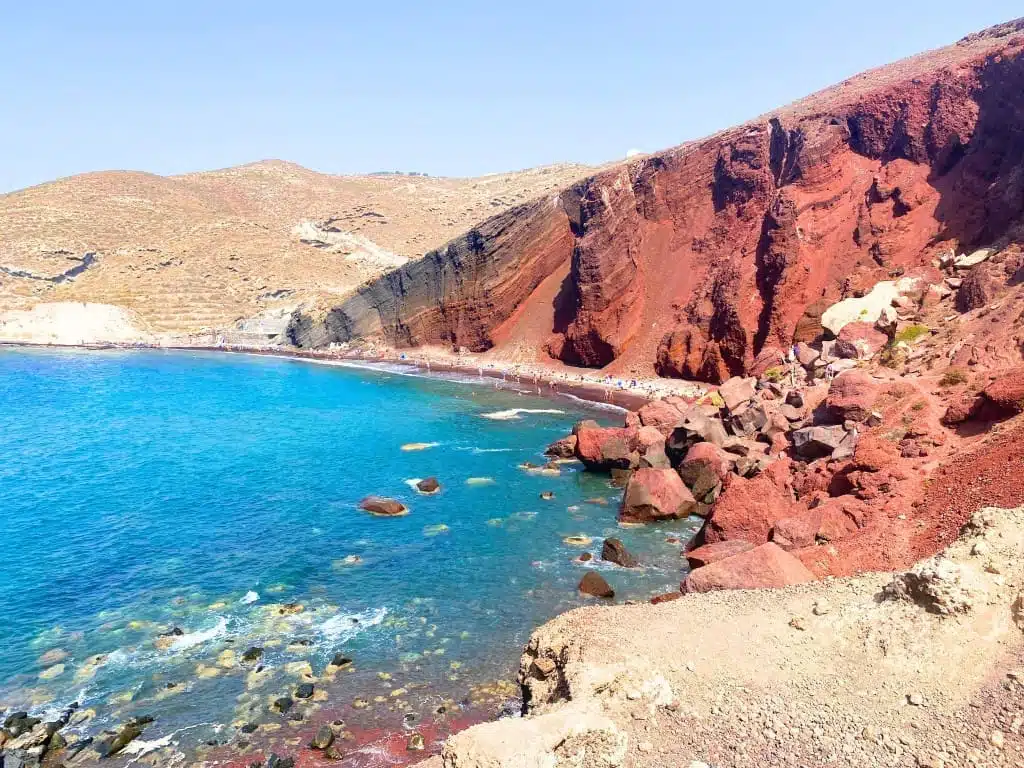
- Nearby is Red Beach; however, if you have mobility issues, I don’t recommend visiting, as it’s a rocky hike to access the beach. If you do wish to visit though, check out why you shouldn’t wear white
- There is an inhabited village nearby which you can explore, including a small Venetian castle
Final Verdict: Is Akrotiri Worth Visiting?
Yes, Akrotiri is worth visiting if you enjoy history, archaeology, or want to escape crowds, as this site is far less crowded than places like Oia.
It’s also a pretty unique place.
However, if you’ve been to Pompeii, please note this site is far less excavated that than site so you won’t be exploring nearly as much.
I saw Akrotiri before Pompeii and was floored at how much they’d uncovered at the Italian site.
Related Santorini Travel Guides
- A Useful Santorini Travel Guide: Tips for First-Timers
- What to Wear in Santorini: Greek Island Getaway Packing Guide
- Santorini in 4 Days: Affordable Itinerary for Multi-Generational Families
- 23 Awesome Things to Do in Santorini + Mobility-Friendly Options
- Where to Stay in Santorini: 8 Key Areas for First-Timer Visitors
- How Many Days In Santorini? A Simple Guide For First-Timers
- Is Santorini Worth Visiting? 14 Pros and Cons for Travelers
- Ultimate 3 Day Santorini Itinerary on a Budget
- Is the Akrotiri Archaeological Site Worth Visiting? Visitor’s Guide to Greece’s “Pompeii”
Want to remember this? Pin this Is Akrotiri Worth Visiting? A Complete Guide to Greece’s “Pompeii” article to your favorite Pinterest board!

