

30+ Hostel Travel Tips I Wish I Had Known Before My First Solo Trip as a Woman
This site contains affiliate links and is a member of the Amazon Associates Program. At no additional cost to you, I may receive a commission from these links. I only make recommendations based on my experience. See my Disclosure Policy for more info.

So you’ve decided to book a hostel—or you’re seriously considering it. Awesome. Now what?
Before I stayed at my first hostel, I had only other people’s stories and movie scenes to go on. But let me assure you, whatever nightmarish scenario is playing in your head is almost certainly worse than reality. Most hostel stays are genuinely fun—or at minimum, perfectly fine and uneventful.
That said, there ARE hostel tips I wish someone had told me before my first stay: that front door codes sometimes change overnight, that you should test your locker immediately upon arrival, and that packing the night before will save you from being the person rustling at 6 a.m. while your roommates groan.
I’ve stayed in 15+ hostels across Europe and North America over the past decade (while mostly solo)—from chains like YHA and Generator to independent gems like the Loft Hostel in Budapest. I’ve made lifelong friends in shared dorms, been locked out at 2 a.m. in a dress and heels, and learned the hard way that the cheapest option isn’t always the smartest.
This guide covers everything you actually need to know: what to check before booking, unspoken etiquette rules that’ll make you a considerate roommate, and how to make the most of your hostel stay—whether it’s your first time or your fiftieth.
Before You Book
The difference between a great hostel stay and a miserable one almost always comes down to what you do before you click “confirm.”
Here’s my pre-booking checklist.
1. Read the Recent Reviews, Not Just the Overall Score
A hostel that was great two years ago might have gone downhill.
On Hostelworld, ratings are broken down by category—security, cleanliness, and location—making it easy to spot potential issues.

I weigh security, location, and cleanliness more heavily than the others because I want to know I’ll be safe, not spending a ton on transportation, and won’t be sharing a bed with bedbugs or other gross situations.
I also search for blog posts about specific hostels, since bloggers tend to provide more detailed, firsthand accounts.
2. Know the Hostel Types
The reviews and descriptions will also tell you what kind of vibe a hostel has.
Party hostels advertise pub crawls every night and have bars on the premises.

If you’re an early-to-bed person, that’s not your place.
You may instead like a female only hostel, or a boutique or eco-friendly one.
3. Check What’s Actually Included
Towels, linens, breakfast, and even showers—none of these are guaranteed.
I’ve been charged separately for all of them at various points.
I’ve even had one offer a “free” towel in exchange for a review.
A hostel that looks cheap on paper can end up costing hotel prices once you’ve added everything, so always check the fine print.
4. Look at the Hostel’s Distance from the City Center
A cheap hostel means nothing if you’re spending your savings on taxis or long metro rides.
When I stayed at Comics Guesthouse in Rome, its location near a metro stop and a hop-on, hop-off bus stop made a huge difference.
One of my top hostel tips is to prioritize staying central, with good public transport nearby—a slightly pricier hostel in a better location saves money, time, and energy in the long run.
5. Check for Age Limits
Some hostels have age restrictions—Onefam Budapest, for example, accepts guests aged 18–39 only.
You can find this in the “About” section on Hostelworld.

Better to find out before you book than at the front desk.
If you’re worried about being the eldest one there, check out my experience staying in a hostel over 35.
6. Decide Between a Dorm and a Private Room
I book dorms for short stays when I won’t spend much time in the room or if the city is just that costly.
I’ll get a private room when I’m exhausted, need to work, feeling ill, or the price difference is minimal (sometimes only €10–15 more).
If you’re a first-timer, a smaller 4–6-bed dorm is much more manageable than a 16-bed one. Fewer people means less noise, less chaos, and a better chance of connecting with your roommates.
7. Consider Female-Only Dorms
I’ve booked female suites at several hostels—Generator, YHA, and others—and always appreciated having that option.
It adds a layer of comfort, especially for solo female travelers or first-timers.
8. Explore What Activities and Amenities the Hostel Offers
Some hostels run walking tours, pub crawls, trivia nights, and movie screenings.
At the Loft Hostel in Budapest, I was invited out to a ruin bar the minute I put my bags down.

Prime Backpackers Angel in London hosted family dinners that gave me a cheap meal and company to share it with.

Some activities can also be region-specific, such as surfing classes or pasta-making.
These extras can help to make your stay easier by providing opportunities to meet others and also save some money, so check what’s on offer before you book.
Amenities can also save you some cash, such as laundry and free breakfast.
9. Consider Chains vs. Independents
Hostel chains such as YHA and Generator tend to maintain more consistent standards for cleanliness and security.
However, even within a single chain, individual locations vary—my beloved YHA had a mismanaged location in the Cotswolds that locked me out at 2 a.m.
Researching every single property individually is one of my top hostel tips.
Independent hostels can be equally fantastic (like the Loft in Budapest, which I adore for its community), but because they are independent, research is especially important.
I tend to look for something unique in an independent because they should be able to provide such since they aren’t tied to a big brand.
10. Don’t Book the Absolute Cheapest Option
This is how I ended up at the Young & Happy Hostel in Paris—paper-thin walls, filthy bathrooms, no temperature control on the showers, and toilet paper constantly in short supply.
Cheap doesn’t guarantee a great experience.
Sometimes it’s worth paying a bit more to feel safe and comfortable.
11. Manage Expectations
If you’ve only stayed in hotels before, remember this is a different experience.
The quality of items such as sheets, pillows, toiletries, and more may vary.
Just learn to embrace the new experience!
12. Where to Book a Hostel
I almost always book hostels through Hostelworld.com.
I’ve never had any issues with booking with them and love the honest reviews from fellow travelers.
I have also booked a couple through Booking.com, but that’s typically because the hostel in question is only available there.
Before Your Stay
13. What to Pack for a Hostel Stay
I’ve written a full 44-item hostel packing list for women, so I won’t repeat the whole thing here.
But these are my top non-negotiables that I’d never check into a hostel without:
- Flip-flops—Shared bathrooms see a lot of foot traffic, and cleanliness varies wildly.
- Noise-cancelling headphones—Between roommates rustling around, street noise, and bar music from downstairs, you’ll sleep so much better with a way to block out the noise. Earplugs don’t work for me, but if they do for you, that’s a good alternative.
- TSA-approved locks—Your luggage likely already has these built in, but I find them to give me an added level of comfort if my suitcase doesn’t fit in the hostel locker.
- A portable charger—Outlets near your bunk aren’t guaranteed, and you don’t want your phone dying when you need it for maps, alarms, door codes, or emergencies.


A lot of people constantly tout the need to bring a padlock.
I just don’t want to add that weight to my luggage, especially with airline regulations tightening, so I’m always prepared to rent one if needed.
I’ve only ever had to pay for one once; usually, they’ll just lend it to me on the condition that I make sure to give it back.
Checking In and Settling In
14. Notify the Hostel of Your Check-In Time
I do this with hotels too, especially if I’m coming in late or a plane is delayed, but it’s especially important to do so for hostels, as not all of them have 24-hour reception.
The last thing you want to do is travel all the way to someplace only to find you can get in because it’s past their usual hours.
15. Save All Codes
Get the Wi-Fi password, front door code, and any other access codes, and save them on your phone or write them down. Also, ask whether they change and how often.
This sounds basic, but it’s the hostel tip that would have saved me the most grief.
When I stayed at YHA Stow-on-the-Wold in the Cotswolds, the front door code changed overnight without anyone telling me.
I came back from a wedding at 2 a.m. to a locked door, no emergency number posted anywhere, and no way in.
I ended up sleeping on a friend’s couch. The next day, I found out they had only posted a small sign on the back of the front door, saying the code changes 2x a week.
Had I asked, I would at least have known. Do I blame the hostel for not being clearer about this? Yes, but I also don’t want you to learn this lesson the hard way.
16. Ask About Checkout Procedures
Some hostels require you to strip your bed and leave linens in a designated spot.
Some offer luggage storage after checkout so you can explore for the rest of the day.
Knowing this upfront saves you from scrambling on your last morning.
17. Test Your Locker Immediately
At Comics Guesthouse in Rome, my assigned locker was broken when I arrived.

I reported it, and they fixed it the same day—but only because I flagged it right away.
Don’t wait until you’ve left valuables unsecured to discover a problem.
18. Lock Your Valuables
Passport, wallet, electronics—into the locker they go.
Even if you’re just stepping out for five minutes as it only takes seconds for something to disappear.
I’m lucky in that I’ve never had anything stolen *knocks on wood*, but I truly believe being cautious is part of that.
And if safety is your main concern, I’ve written a whole post on whether hostels are safe, complete with my nightmare experiences and 10 key takeaways.
19. Note Where Emergency Exits Are
I know we all kind of ignore fire escape plans, but after the fire alarm went off at 12:15 a.m. at the Young & Happy Hostel in Paris (thankfully a false alarm), I’m more mindful of this.
Just give it a quick glance when you arrive.
20. Request a Lower Bunk
I learned this the hard way at the Elephant Hostel in Amsterdam, where I slipped on the bunk ladder and hurt my foot for days.
I now book only lower bunks, even if it means waiting for one to become available.
They also give you more storage space underneath.

Hostel Etiquette (The Unspoken Rules)
Most hostel guests follow the unspoken rules: don’t be loud at night, turn off the lights, and don’t stomp around (there was a woman I nicknamed Godzilla at the Elephant Hostel in Amsterdam who stomped around. Don’t be Godzilla.)
But there are a few more that experienced hostel-goers know, and following them will make you a much better roommate.
21. Pack the Night Before
Don’t be the person digging through a crinkly plastic bag at 6 a.m. while everyone’s sleeping.
Set out what you need for the next day before you go to bed, especially if you’re departing super early.
22. Use your Phone Flashlight, Not the Room Light, if You Come in Late
Nothing ruins a good night’s sleep faster than someone flipping on the overhead lights at 1 a.m.
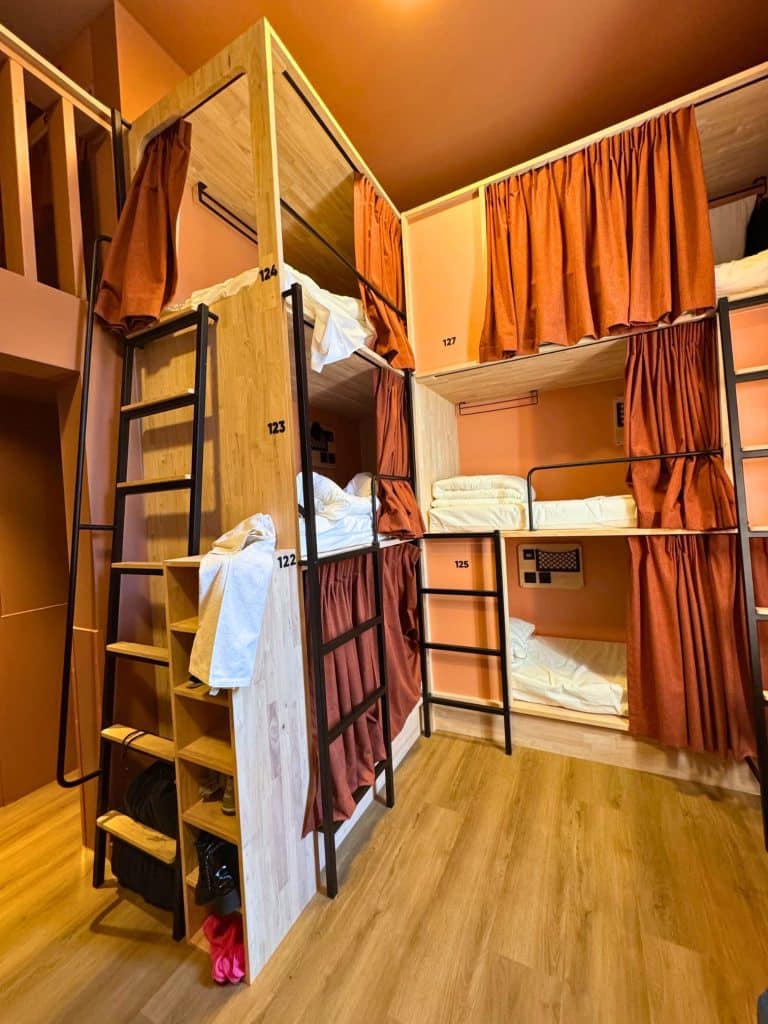
Some hostels have bed partitions that help block light—I find them most helpful when someone’s coming in late—but don’t count on them being there, as I’ve found them only about a quarter of the time I’ve stayed in hostels.
23. Set One Alarm—Not Five
During San Diego Comic Con, one of my hostel mates’ alarms kept going off repeatedly.
I’d wake up in the middle of the night, see her turn it off, only for it to go back on again 15 or so minutes later.
Needless to say, I wound up telling her aggressively to shut it off!
This is the kind of thing that makes the whole room silently resent you.
Set one alarm and keep your phone close enough to turn it off immediately, and then get up or whatever you had to do for the alarm you set.
24. Don’t FaceTime or Take Long Calls in the Dorm Room
Use the common areas or step outside.
Your roommates don’t want to listen to your endless conversation.
Especially when the light from your FaceTime is also lighting up the room.
25. Respect Shared Bathroom Time
Don’t camp out for 45 minutes when other people are waiting.
Keep your shower routine efficient, especially during peak morning hours.
Having a designated toiletry bag also helps, so you’re already prepared.
26. Keep Your Stuff Contained to Your Bunk Area
Spreading your belongings across the floor is a fast way to make enemies, or at least a hazardous zone.
I was on the top bunk at the Prime Backpackers Angel in London (it was the only bed left), and the woman on the bottom kept putting her shoes and other belongings at the bottom of the ladder.
When I asked, she moved them, but I also shouldn’t have to ask because what if it was the middle of the night and I didn’t see her stuff and I tripped or fell on them?
Keep your area tidy to avoid causing others grief and physical injury.
Making the Most of Your Stay
Hostels offer a lot more than just a cheap bed.
Here’s how to get the full value out of your stay.
27. Use the Common Areas
At Prime Backpackers Angel in London, I chatted with people from different parts of the world—and that happened in the common area, not the dorm room.
If you’re looking to meet people, the afternoon common room tends to have people having actual conversations over coffee or snacks.
If you’re looking for more of a party crowd, visit at 11 p.m., where the crowd is often pre-gaming for a night out.
28. Take Advantage of Hostel Activities
Walking tours, food tours, movie nights, pub crawls—many hostels organize these for free or at a discount.
At YHA Oxford Street and Prime Backpackers, I found a massive list of activities!
Make sure to take full advantage of whatever your hostel offers—it’s a great way to save money and meet fellow travelers.
29. Download the Hostelworld App
If you’ve booked through Hostelworld, you can also use their app!
It’s one of my favorite hostel tips, as it’s where you can join chats with fellow hostel-goers and find people to do things with.

30. Cook in the Kitchen to Save Money
Admittedly, I do not do this often as I like to eat out. I’m a lazy cook, what can I say!
If you’re looking to save a few bucks, hit a nearby grocery store and use the hostel kitchen.
I did a lot of grocery shopping in Belfast, London, and Edinburgh when I was staying for 2-week stints, and it saved me a significant amount compared to eating out for every meal.
Many hostels have fully equipped kitchens—take advantage of them.

31. Ask Staff for Local Recommendations and Discounts
Hostel staff often know the area better than any guidebook.
At YHA Oxford Street, I saved a few pounds by asking at the front desk about discounts on attractions. This is how I saved some money while visiting Hampton Court Palace.
Sometimes they also provide you with discount cards as part of your stay.
I had this happen at the Montreux Youth Hostel in Switzerland, where they gave me a Montreux Riviera Card.

This card offers free local public transportation (bus/train) and discounts of up to 50% on major attractions like Chillon Castle, museums, and boat trips.
Final Thoughts
Hostels get better the more you stay in them, as you’ll learn what works for you.
Your first stay won’t be your smoothest, and that’s completely okay.
You’ll figure out your own system for packing, storing valuables, and navigating shared spaces—and your best hostel tips will come from your own experiences.
If I could go back and tell first-time-hostel-me one thing, it would be this, my #1 on my hostel tips list: do your research, but don’t overthink it.
The vast majority of hostel guests are perfectly pleasant, respectful people who are just as tired from sightseeing as you are.
Related Hostel Guides
- Are Hostels Safe? My Nightmare Experience + 10 Key Takeaways
- Hostel Items List for Women: 44 Must-Haves + 7 Non-Essentials
- 30+ Hostel Travel Tips I Wish I Had Known Before My First Solo Trip as a Woman
- My Experience Staying in a Hostel as a Solo Female Over 35: Honest Insights
Want to remember this? Pin this 30+ Hostel Tips I Wish I Knew Before My First Solo Trip article to your favorite Pinterest board!

