

What to See in Vatican City: One-Day Itinerary Featuring 8 Sites
This site contains affiliate links and is a member of the Amazon Associates Program. At no additional cost to you, I may receive a commission from these links. I only make recommendations based on my experience. See my Disclosure Policy for more info.

Overwhelmed by what you can actually do in one of the most-visited places on earth?
Even though it’s the world’s smallest country (0.17 square miles, if you want to get technical), there are plenty of things to do in Vatican City to pack your day full!
I spent a full day there during my solo trip to Rome and found it worth the dedication of an entire day.
I’ll be honest, though. Vatican City is not a laid-back afternoon stroll, as the crowds can be overwhelming, especially if you don’t plan in advance. Still, it is genuinely awe-inspiring (even if you’re an atheist, like me), especially the view from atop St. Peter’s dome.
Whether you’re religious, an art history nerd, or just someone who watched Angels & Demons and thought, “I need to see that”—Vatican City will deliver. You just need to go in with a list of what to see, a proper wardrobe, a plan for how long to spend at each attraction, and a list of highlights to look out for while you’re there.
1. St. Peter’s Square
| ⏱️ HOW LONG 15 minutes | 💶 COST Free | ✨ HIGHLIGHTS Bernini’s colonnade, the obelisk |
St. Peter’s Square isn’t actually a square. Instead, it’s a vast oval piazza designed by Bernini in the 17th century, and it’s one of the finest examples of Baroque urban design in the world.
Standing in the square, the two curved colonnades wrap around the piazza, the obelisk at the center dates back to ancient Egypt, and the whole thing is just as grand as it looks on TV, even if it is on a small piece of real estate.

My favorite aspect of the colonnade is the 140 statues of saints that stand atop it, installed between 1670 and 1673. These travertine statues represent various saints, martyrs, and popes. The statues are part of Bernini’s symbolic, welcoming “arms” of the Church.

If you’re visiting on a Sunday, the Pope delivers the Angelus prayer from his window at noon, and the square fills with thousands of people.
I visited on a Monday, which is why you can see chairs still set up.

Movie Buff Note
No, Angels & Demons was not filmed in the Vatican because the production was banned by the Catholic Church due to controversy over The Da Vinci Code.
Top Tip
Early morning is the best time to photograph the square as the light is beautiful and it’s significantly less crowded. Or in the evening when the Vatican is alight.
2. St. Peter’s Basilica
| ⏱️ HOW LONG 1.5–2 hours | 💶 COST Free (fee if reserving a time) | ✨ HIGHLIGHTS The Pietà, Bernini’s Baldachin, tomb of St. Peter |
If you only do one thing in Vatican City, it’s this.
St. Peter’s Basilica is free to enter (a fee is charged if you reserve a day/time), stunning beyond what photos can prepare you for, and despite the crowds, genuinely worth every minute inside.
The sheer scale of it is disorienting in the best way, as I found myself looking up at the ceiling, constantly astounded by how large the building is, in addition to its vast gilding.
The Pietà, Michelangelo’s marble sculpture of the Virgin Mary holding Jesus, sits behind protective glass to the right as you enter. It’s the only piece Michelangelo ever signed, which I find fascinating, as it’s certainly not the only amazing piece of art he created.
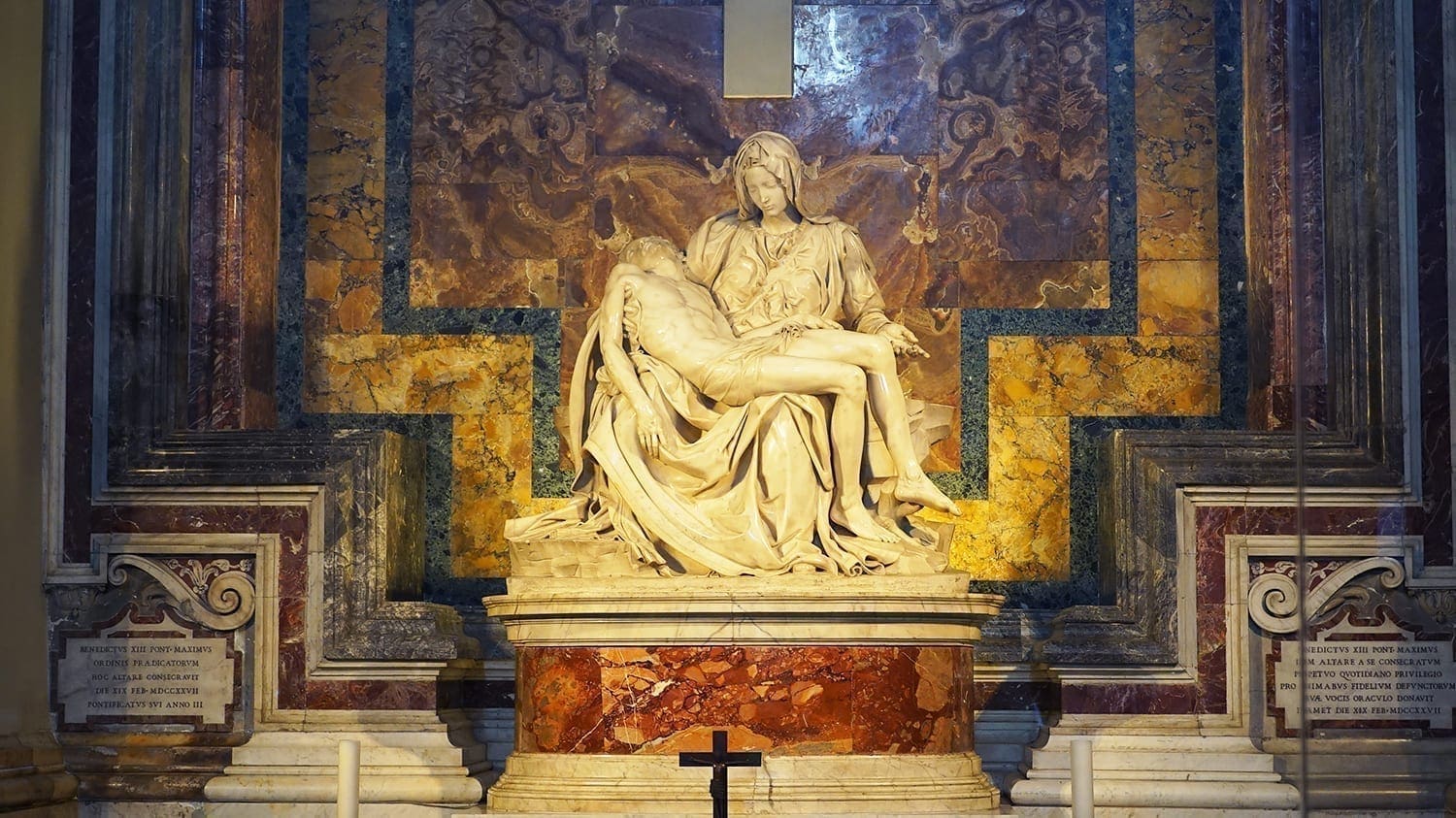
He sculpted it when he was just 24 years old, which honestly makes me feel deeply unaccomplished, but I digress.
You’ll also want to make your way to Bernini’s Baldachin, the enormous bronze canopy standing over the tomb of St. Peter.


At roughly 29 meters tall (about the height of a four-story building), it’s one of the largest bronze structures ever cast. Created to visually connect the dome with St. Peter’s tomb below, you’ll find yourself constantly craning your neck up and down between them because of the sheer scale.
I also really adored looking at the various monuments and tombs to Popes here.

What to Know Before You Go
The dress code requiring shoulders and knees to be covered is strictly enforced.
They will turn you away. Shortly after my visit, my cousin went with her family and wasn’t allowed in because her skirt ended above the knee. Bring a lightweight scarf to wrap around your shoulders on a warm day, so you can remove it when you leave.
Security lines can get long, but typically move faster than you’d expect.
I visited using the Omnia Card; however, as that card is more expensive than it needs to be, I’d either book skip-the-line tickets or a guided tour with skip-the-line access to guarantee smooth entry.
Top Tip
Go early, like 7 AM, to beat the crowds and get ahead in the security line.
3. Climb St. Peter’s Dome
| ⏱️ HOW LONG 45–60 minutes | 💶 COST €17 stairs / €22 with elevator | ✨ HIGHLIGHTS 360° views over Rome, looking down into the basilica from above |
Most people skip the dome. Don’t be like most people.
I climbed in June, wearing a long skirt (a mistake as it was a trip hazard), and it was hot.
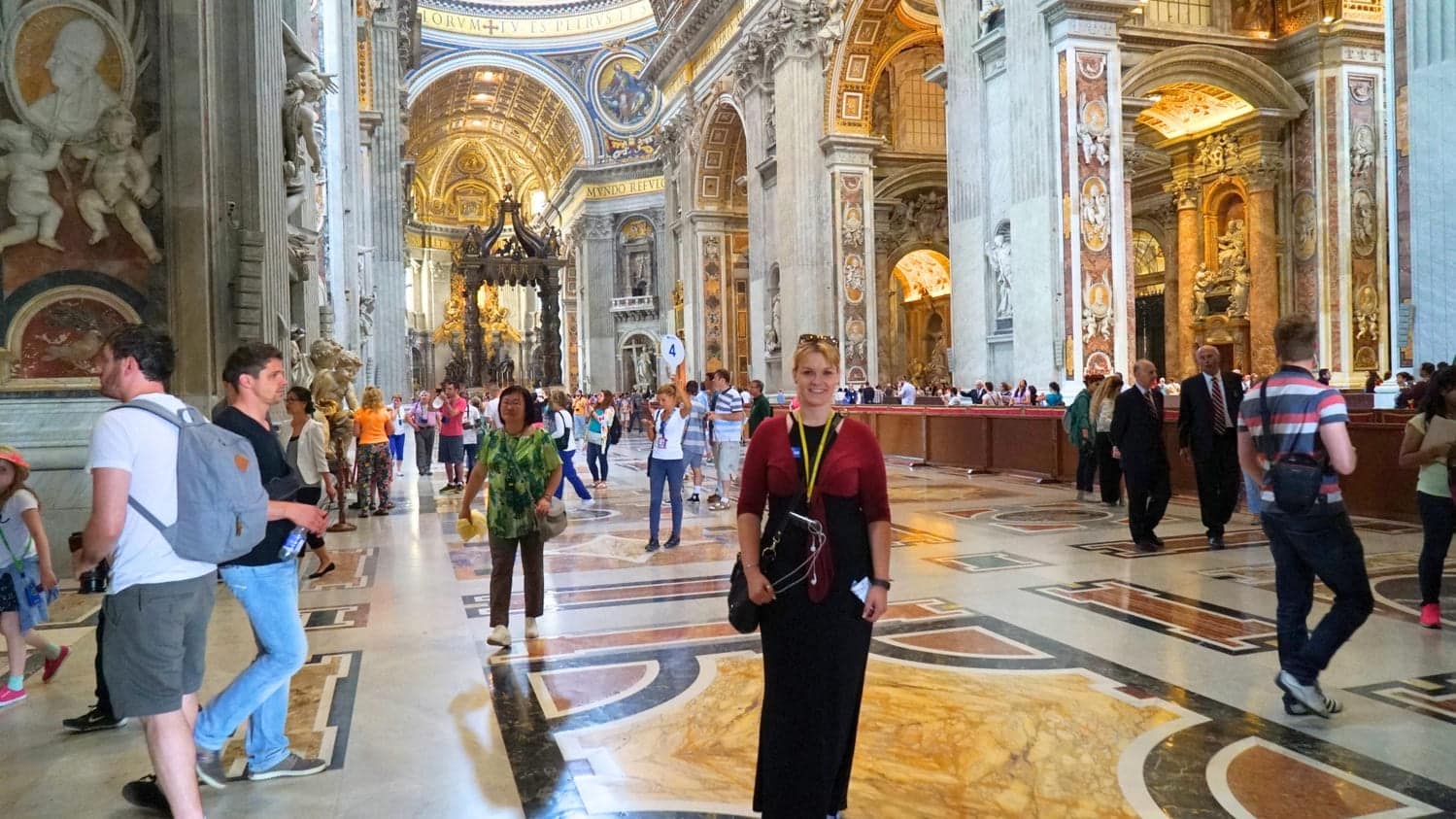
The staircase narrows significantly as you get closer to the top, and the walls curve inward with the dome. It can feel claustrophobic if you’re not prepared for it.
And yet I would do it again in a heartbeat because of the epic 360° views!
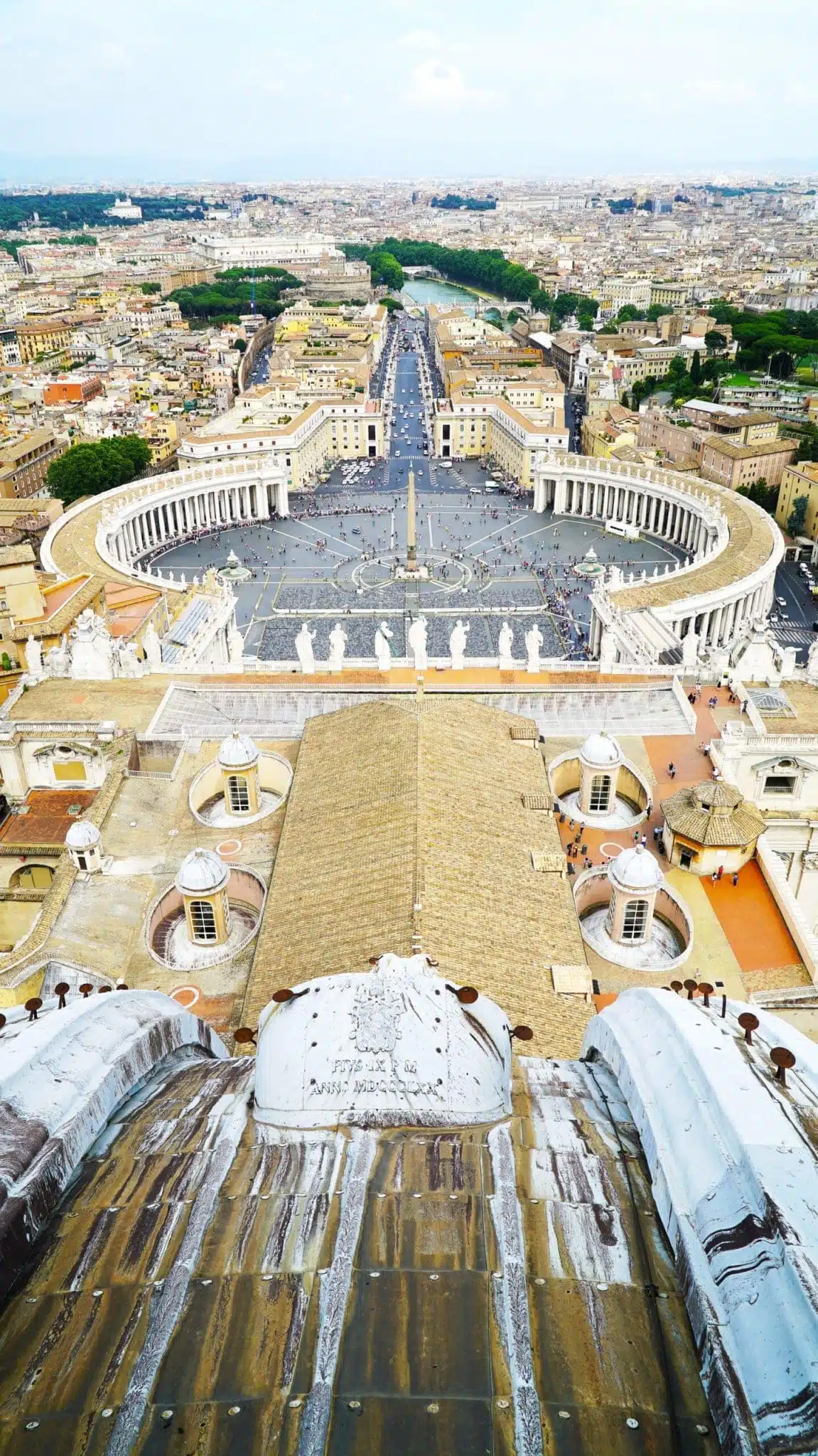
You have two options: take the elevator partway up and walk the remaining 320 steps, or walk all 551 steps from the bottom.
There’s typically a line for the elevator, but none for the full stairs. I did all the stairs, and the view at the top made every single sweaty step worth it.
Even before reaching the very top, there’s an interior gallery where you can look down into the basilica. A completely different perspective on the space below, and genuinely spectacular as it helps you understand just how vast it is.


Reservations are mandatory, so book your time slot in advance. A ticket includes a visit to the basilica with a Digital Audio Guide, so it’s solid value if you haven’t been inside yet.
Top Tip
Go earlier in the day and leave the Vatican Museums for the afternoon, since they’re mainly indoors. If I were to redo my visit, that’s exactly what I’d do, as I ended up climbing the dome around 2 PM in June heat, which was not the coolest part of the day to ascend.
RELATED POST: Simple Guide to Climbing St. Peter’s Dome + Mistakes to Avoid
4. Look for the Swiss Guards
| ⏱️ HOW LONG 5–10 minutes | 💶 COST Free | ✨ HIGHLIGHTS The Renaissance-era uniforms |
The Swiss Guards are the official protective force of Vatican City and, honestly, one of the most visually striking things you’ll encounter at the entrance to St. Peter’s Square, which will make them super easy to spot.

They’ve been guarding the papacy since 1506 (the same year Michelangelo began work on the Sistine Chapel), and their distinctive striped yellow, blue, and red uniforms are frequently attributed to Michelangelo himself, though historians debate this.
What’s not debated: keeping an eye out for them is a bit of fun to add to your list of things to do in Vatican City. If you’re traveling with kids or just a nerd like me, you can make a game of it.
They’re not just ceremonial, either. Swiss Guards are trained soldiers.
Recruitment requirements include being Swiss, Catholic, male, and unmarried, and they must have completed Swiss military training before applying.
Top Tip
I found them standing by their sentry boxes as I exited the dome. I saw people approach and ask something; I assume it had to do with the Pope. Whether or not they were successful with their pleas, I don’t know.

5. The Vatican Museums & Sistine Chapel
| ⏱️ HOW LONG 3–5 hours | 💶 COST €20 online / + €5 for skip-the-line | ✨ HIGHLIGHTS Gallery of Maps, Gregorian Egyptian Museum, the Sistine Chapel |
The Vatican Museums contain around 70,000 works of art, 20,000 of which are on display across 24 galleries.
I’ll say that again: 70,000 works.
You could spend days here without seeing everything, and most people are just trying to make it to the Sistine Chapel without losing their minds.
My suggestion? Pick a few rooms to genuinely linger in and don’t try to do it all.
When I spent five hours navigating every accessible gallery, the Gallery of Maps was one of the rooms that truly deserved a chunk of time.
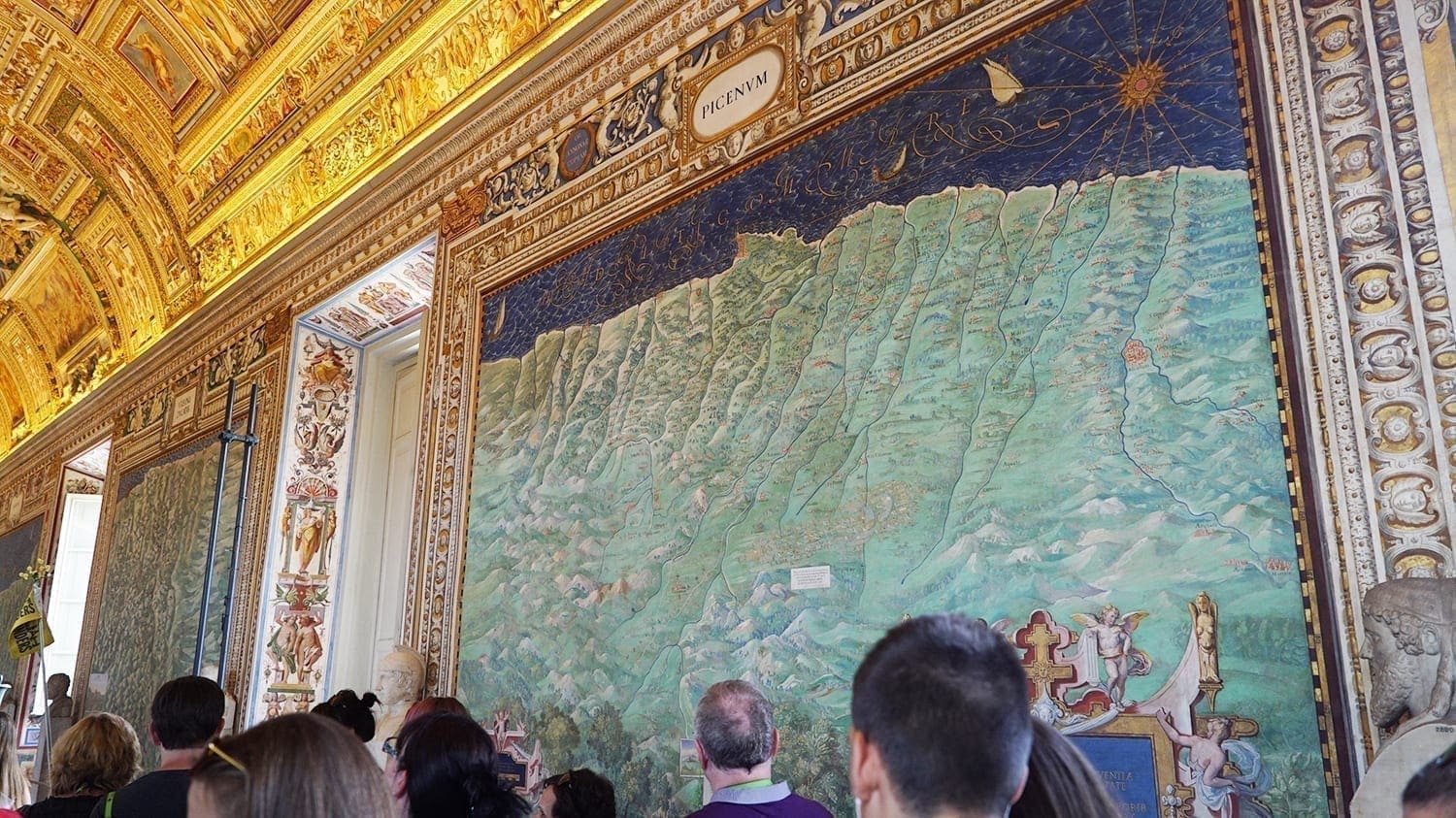
It’s a collection of topographical maps of 16th-century Italy painted on the walls, commissioned by Pope Gregory XIII, and it remains the world’s largest pictorial geographical study.
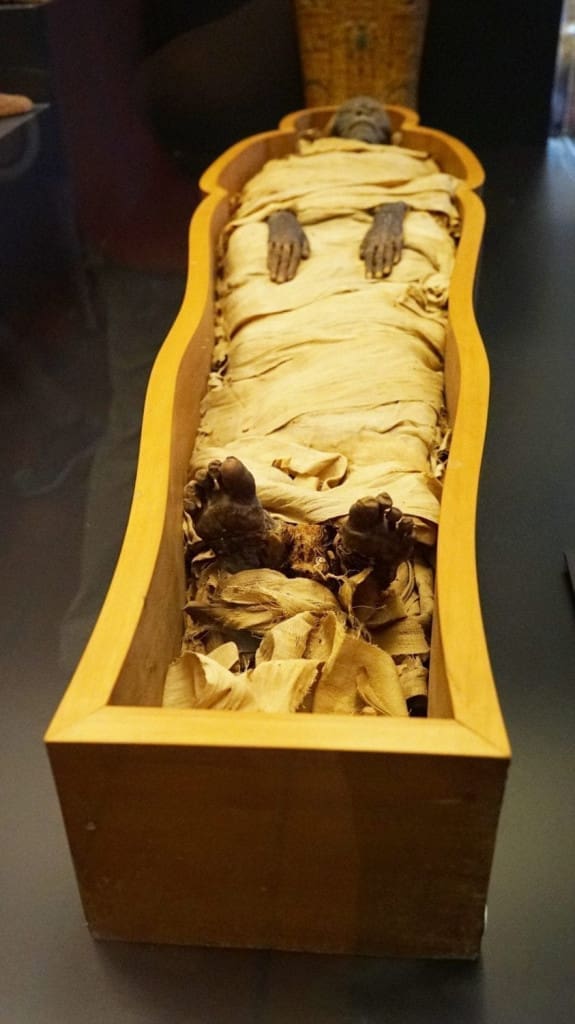
Another standout is the Gregorian Egyptian Museum, which is dedicated to Egyptian artifacts. It occupies nine rooms, and you’ll discover everything from mummies to stone tablets.


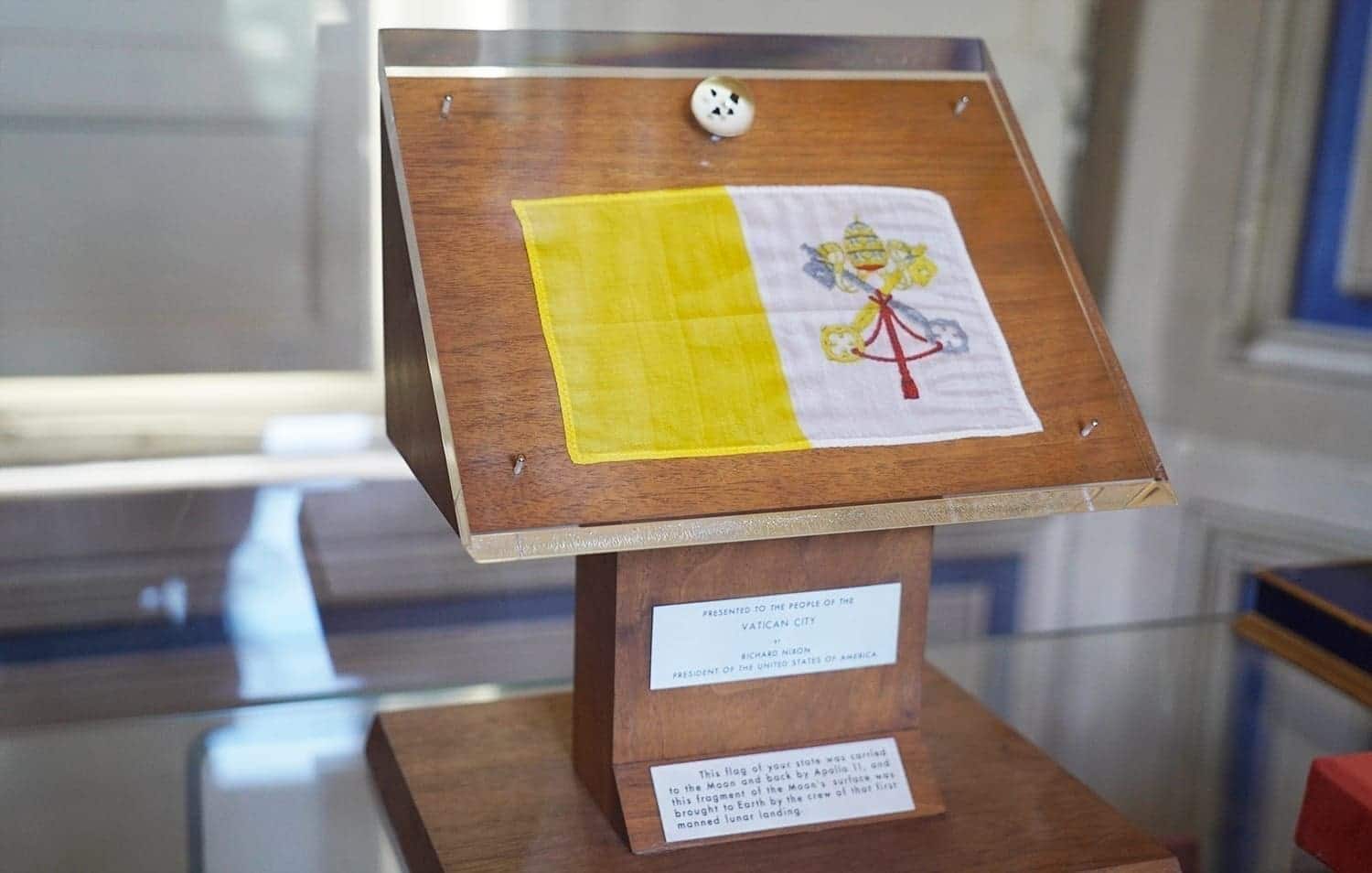
One surprise I wasn’t expecting: a fragment of the Moon’s surface from the Apollo 11 mission, along with the flag the astronauts brought back.
Given the complicated relationship between the Church and the scientific community, seeing something so clearly born of scientific achievement on display here felt a little out of place.
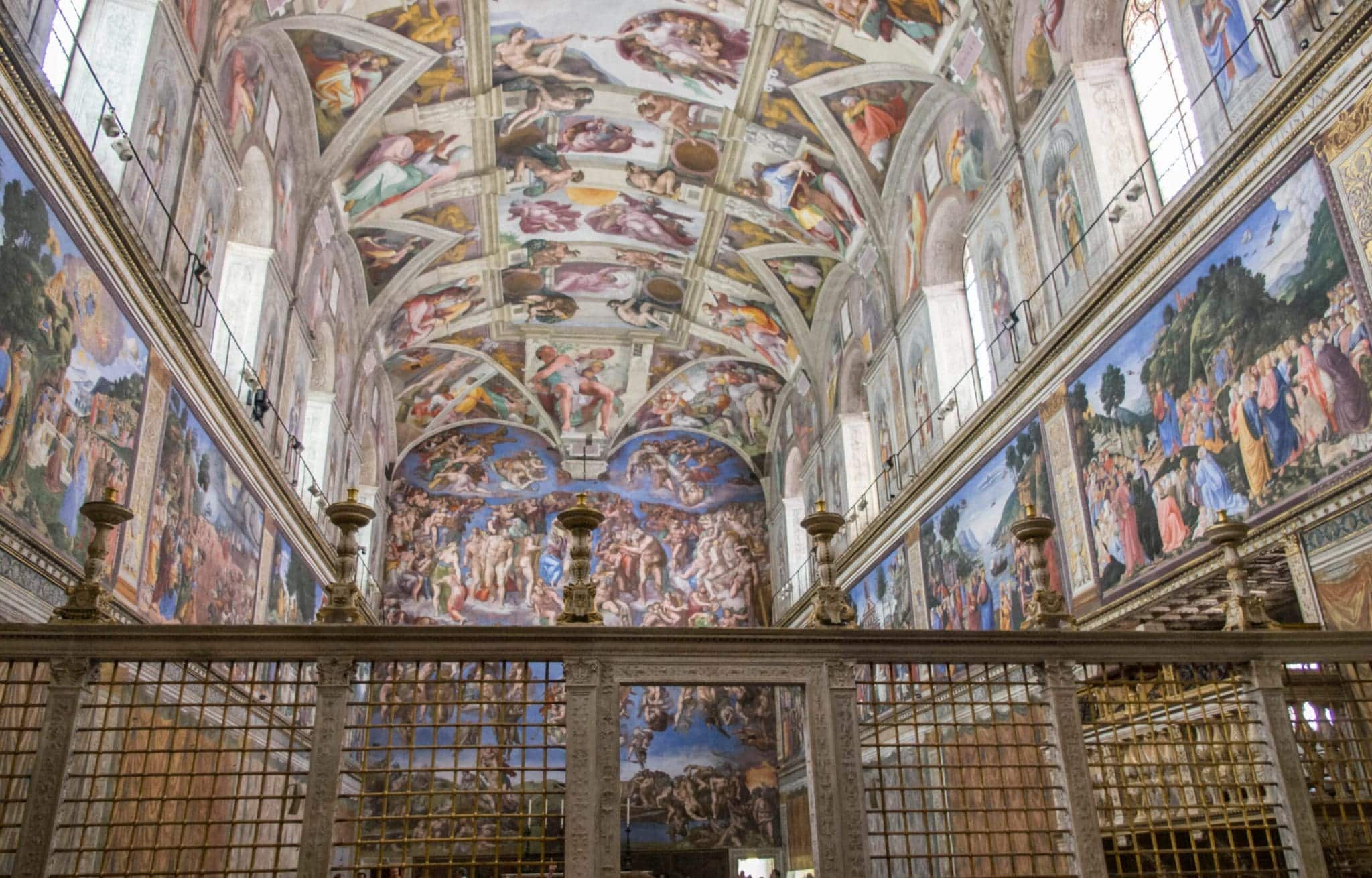
And then there’s the Sistine Chapel. The layout funnels you there as the grand finale, so you won’t miss it. Michelangelo’s ceiling, which took four years to paint, lying on scaffolding, is extraordinary.
No photos are allowed inside (guards shout “No photo! Silenzio!” approximately every 90 seconds), which is why I’ve shown some stock here.
Saving Money
If you’re planning to hit multiple Vatican and Rome attractions, it’s worth reading my honest review of the Omnia Card before you book.
I used it to cover the cost of entry to the Vatican Museums and found it convenient to pick up just outside the Vatican, but whether it actually saves you money depends on your itinerary, so read the full breakdown first. Otherwise, a skip-the-line ticket or guided tour is advised.
Skip hiring the €8 audioguide and download Rick Steves’ tour for free!
What to Know Before You Go
Book tickets online in advance—always.
The walk-up line wraps around the block.
If you’re dying to see the Sistine Chapel and want as much peace and quiet as you can manage, book an early morning guided tour that accesses the museums before general entry.
Top Tip
If you want to see the Sistine Chapel without crowds, book the earliest available entry slot. Otherwise, go in the afternoon as the Vatican Museums are indoors, while some of the other things to do in Vatican City don’t have that luxury.
RELATED POST: Easy Guide to What to See in the Vatican Museums
6. Spot the Nuns and Priests
| ⏱️ HOW LONG Ongoing throughout your visit | 💶 COST Free | ✨ HIGHLIGHTS An only-in-Vatican-City experience you won’t find elsewhere |
This might sound like a strange addition to a sightseeing list, but hear me out!
Part of what makes Vatican City unlike anywhere else on earth is that it’s a functioning city-state and spiritual capital, not just a museum.
That means the people you pass on the street include nuns in full habit, priests from dozens of countries, bishops, cardinals, seminarians, and religious pilgrims from all over the world.
I saw a wide assortment of habits and priests in various colors, which kinda stumped me, since I don’t often see nuns, period, and often only one priest, especially out and about in the world.
I mean, short of watching Sister Act I and II again and again, I’ve never seen a gaggle of nuns. Seeing them gather, it was the only thing my mind had to connect it to.

I wish I’d snapped a photo, but it also seemed weird to request one, so just imagine the movies.
Top Tip
The area around St. Peter’s Square after a Sunday Angelus blessing is particularly rich for this. Pilgrims come from all over the world, and the square becomes an extraordinary cross-section of global Catholic life.
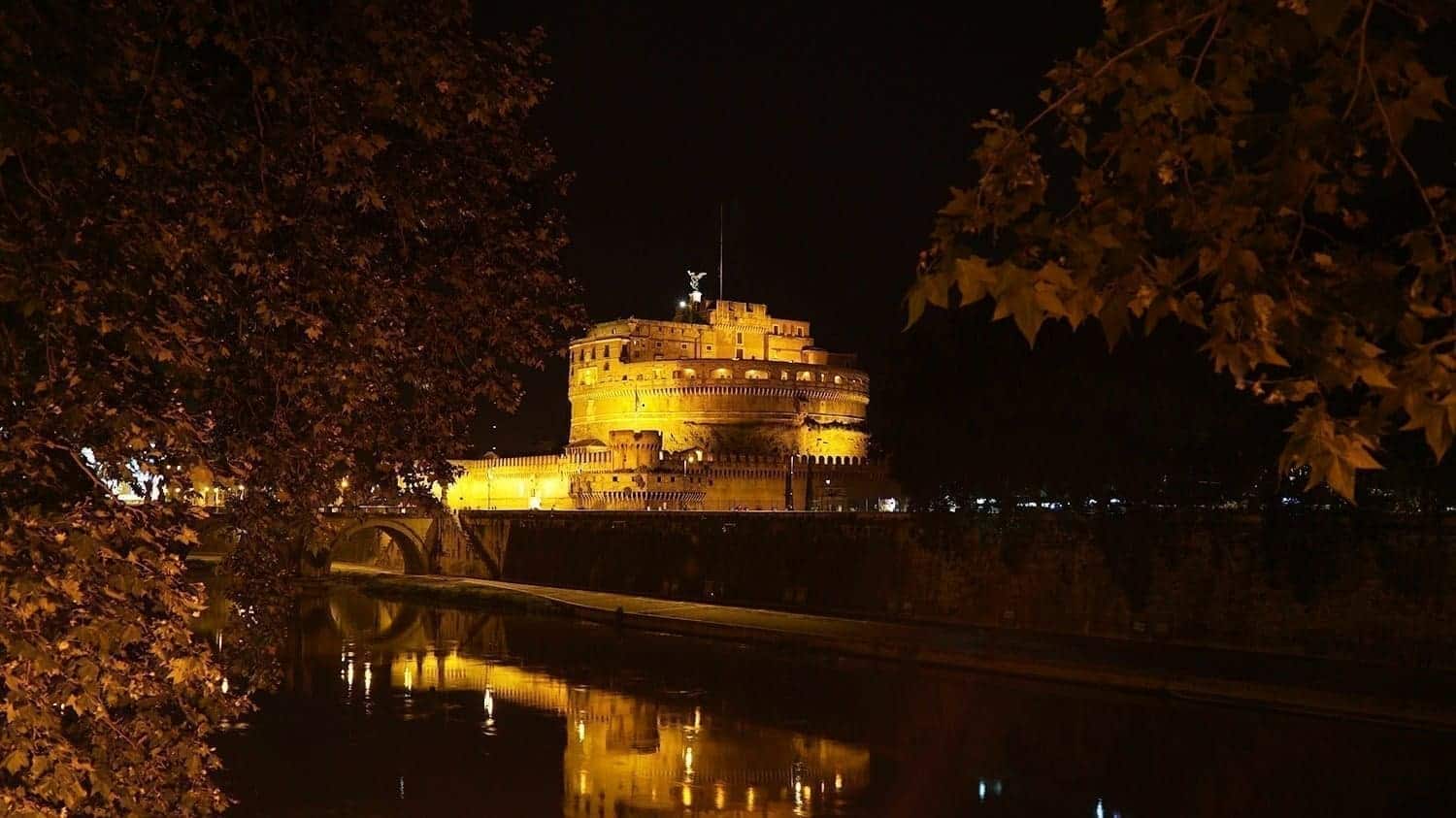
7. Castel Sant’Angelo
| ⏱️ HOW LONG 1.5–2 hours | 💶 COST €20 | ✨ HIGHLIGHTS The papal escape tunnel, rooftop views over Rome, papal apartments |
Castel Sant’Angelo isn’t technically inside Vatican City as it sits just across the Tiber, but it’s so historically tied to the Vatican and so close that it absolutely belongs on this list of what to see in Vatican City.

Built as a mausoleum for Emperor Hadrian in the 2nd century, it was later converted into a fortress and served as a papal refuge for centuries.
There’s a secret passageway, the Passetto di Borgo, that runs directly from the Vatican to the castle used by popes escaping danger, most famously during the Sack of Rome in 1527.
The castle has papal apartments, a weapons collection, prison cells, and at the very top, a terrace with panoramic views over Rome and the Tiber.
Angels & Demons fans will obviously recognise it immediately!
The walk along the Tiber from the Vatican Museums to Castel Sant’Angelo takes about 10 minutes and crosses Ponte Sant’Angelo, lined with Bernini’s angel sculptures.


While I didn’t have time to squeeze it into my 3-day Rome itinerary, I still enjoyed walking around it and regretted not finding time to visit.
Top Tip
Book tickets in advance to skip the line. Late afternoon is a beautiful time to visit, as the light on the Tiber at golden hour is exceptional.
8. Visit at Night
| ⏱️ HOW LONG 30 minutes | 💶 COST Free | ✨ HIGHLIGHTS St. Peter’s Square and Castel Sant’Angelo illuminated |
This one often gets overlooked, and I genuinely can’t understand why, as it’s one of the most magical walks I’ve ever done on my travels.
St. Peter’s Square at night is completely free and utterly different from the daytime chaos.
The basilica’s façade is lit up, the square is quieter, and there’s something almost cinematic about the whole thing, making it my favorite item on this list of what to see at the Vatican.
You half expect someone to emerge from the shadows with a briefcase, à la every thriller set in Rome.
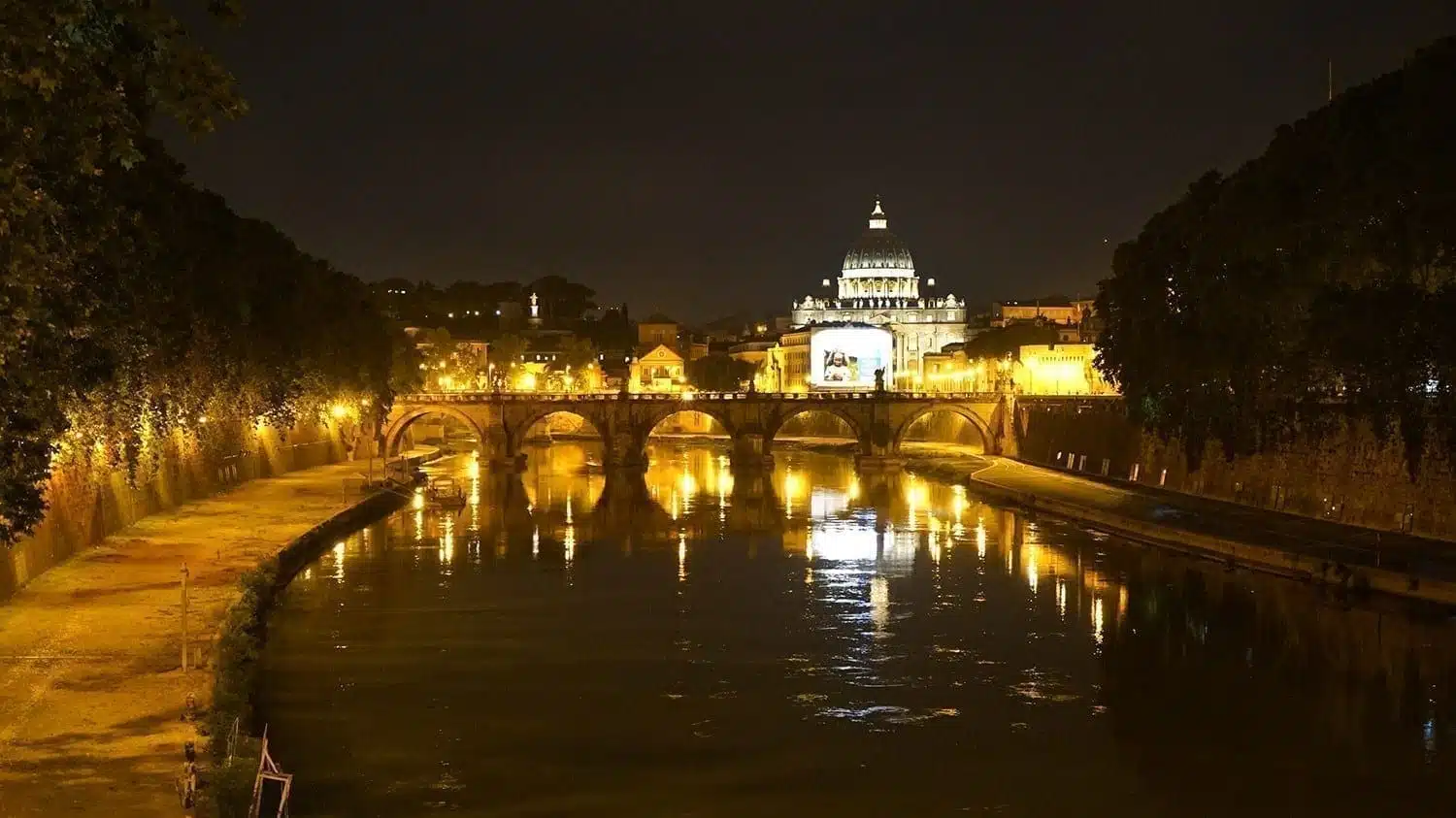
The square itself is always accessible, and even if the basilica and museums are closed, walking through the colonnade and standing in front of the church after dark is worth doing on its own.
At this time, the crowds thin dramatically, and you actually get to breathe and take it in.
If you’re doing a broader evening walk through Rome, I have a full nighttime walking route that connects eight illuminated landmarks across a 2.4-mile loop.
Vatican City fits in perfectly at the start or end of that walk.
Top Tip
Come after 9 PM in summer when the day crowds have thinned out. The square is well-lit and well-populated enough that solo female travelers will feel comfortable here.
Things to Do in Vatican City at a Glance
| Attraction | Time Needed | Cost | Highlights |
|---|---|---|---|
| St. Peter’s Square | 15 min | Free | Colonnade, obelisk |
| St. Peter’s Basilica | 1.5–2 hours | Free (fee if reserving time) | The Pietà, Bernini’s Baldachin |
| Climb St. Peter’s Dome | 45–60 min | €17–€22 | 360° Rome views |
| Swiss Guards | 5–10 min | Free | Unique uniforms |
| Vatican Museums & Sistine Chapel | 3–5 hours | From €20 + €5 for skip-the-line | Gallery of Maps, Sistine Chapel |
| Spot Nuns & Priests | Ongoing | Free | Only-in-Vatican atmosphere |
| Castel Sant’Angelo | 1.5–2 hours | €20 | Escape tunnel, rooftop views |
| Visit at Night | 30 min | Free | Illuminated square and Castel Sant’Angelo |
**All prices were last verified in March 2026. Always check official websites before visiting, as admission prices and hours can change.
How to Plan a Day in Vatican City
I started my day at the Vatican Museums, partly because I didn’t know how long it would take me, since I’m one of those read-every-sign kind of museum-goers; however, I regret this decision.
I did St. Peter’s afterward, which was fine, but then I did the dome climb, which was about 2 pm by then, in the middle of June, so it was HOT!
Wearing the long skirt and covering my shoulders per the rules, I was sweltering.
To avoid this mishap for you, I suggest you start at the Basilica, climb the dome, and then visit the Vatican Museums, which are indoors and thus have air conditioning.
For the rest of the things to see at the Vatican, aside from Castel Sant’Angelo, there are no tickets, so they can be done at any hour.
6:30 am: Enter St. Peter’s Square
6:45 am: Get in line for St Peter’s Basilica
7:00 am: Enter and tour the Basilica – approx. time, depends on security
9:00 am: Climb the dome
10:00 am: Late breakfast or early lunch
11:00 am: Tour the Vatican Museums
3:00 pm: Head to Castel Sant’Angelo
3:10 pm: Tour Castel Sant’Angelo
5:00 pm: Rest or grab a bite
Sunset: Head back to the area for the nighttime views
FAQs
Is the Vatican worth visiting?
Yes, the Vatican is one of the top highlights of a Rome trip, between the Vatican Museums’ roughly 20,000 displayed works (including the Sistine Chapel), St. Peter’s Basilica, and the option to climb St. Peter’s dome for one of the best views in Rome.
Budget a full half-day or more, since touring it properly takes that long.
Related Rome Travel Guides
- 3 Big Mistakes I Made While Visiting the Colosseum in Rome
- How to Build a 3 Day Itinerary for Rome Italy
- Omnia Card: Discount Pass for Attractions in Rome
- Reviewing Comics Guesthouse: The Best Hostel in Rome Italy?
- Easy Guide to What to See in the Vatican Museums
- How To See This Remarkable View From St Peter’s Basilica Dome
- 8 Free Things to See at Night in Rome Italy
- Visiting the Roman Forum: Visual Guide to Rome’s Epic Ruins
- What to See in Vatican City: One-Day Itinerary Featuring 8 Sites
Want to remember this? Pin this 8 Things to Do in Vatican City: What to Easily See in a Day article to your favorite Pinterest board!

