

Pompeii: The Exhibition: Guide on What to Expect Before You Visit
This site contains affiliate links and is a member of the Amazon Associates Program. At no additional cost to you, I may receive a commission from these links. I only make recommendations based on my experience. See my Disclosure Policy for more info.

Wondering if Pompeii: The Exhibition is worth your time and money?
With over 150 authentic artifacts from the Naples National Archaeological Museum—not replicas, but actual 2,000-year-old treasures preserved in volcanic ash—this traveling exhibition promises an immersive journey into one of history’s most tragic moments.
As someone who’s explored several Roman ruins, everything from the Colosseum to the actual ruins of Pompeii in Italy, I approached this Pompeii: The Exhibition review with both excitement and healthy skepticism on whether it’d deliver on its dramatic promises.
But after experiencing it at the Reagan Library myself, I was taken aback by the haunting plaster casts of victims and even emotional over the immersive CGI recreation of Mount Vesuvius’s eruption.
Whether you’re a history enthusiast or simply curious about ancient Roman life, let me walk you through exactly what you’ll see inside and whether it justifies the ticket price.
Daily Life in Pompeii
Starting with the daily life of the city, Pompeii: The Exhibition shows how it was once a bustling commercial port, as well as a strategic military and trading center.
Telling the tale of Pompeii before its destruction.
What they ate, their use of healthcare, what their houses looked like, and whom they worshiped.
Not much has changed in some instances, surprisingly, as you can see by the fishing gear, cookery, and medical tools.
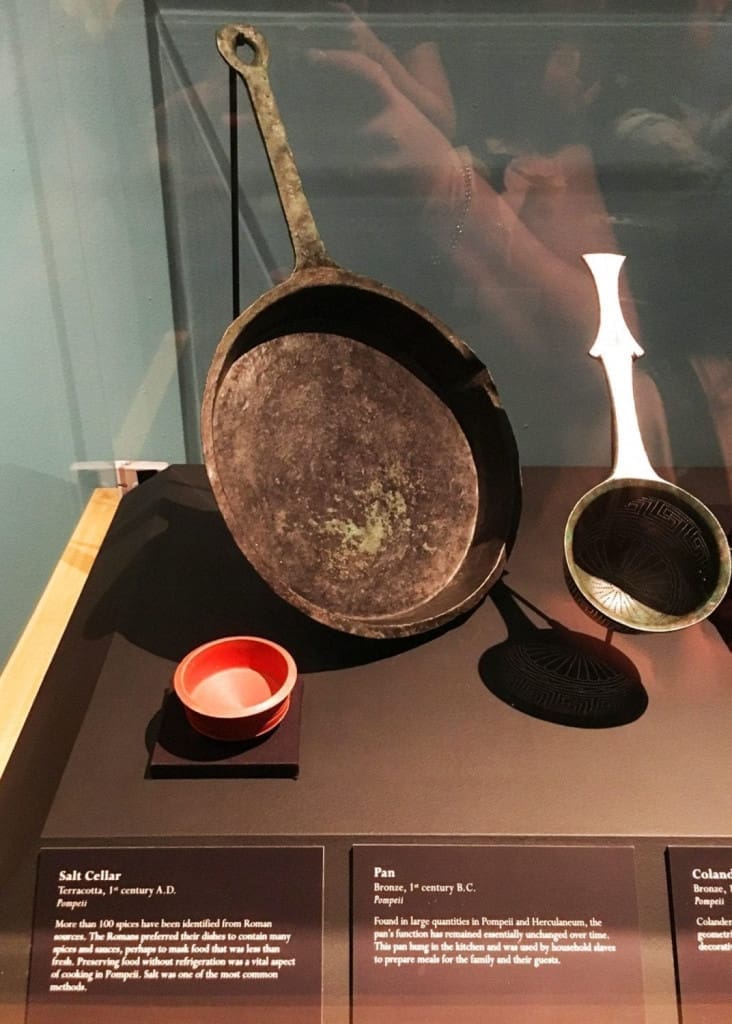
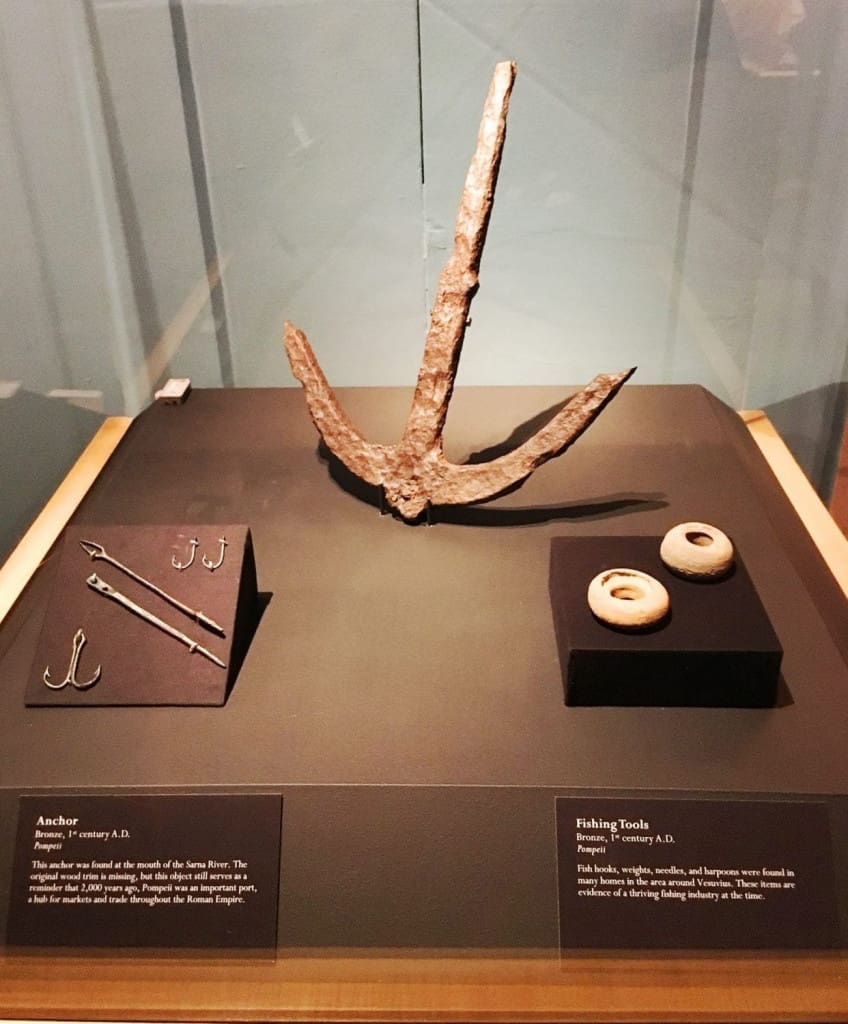
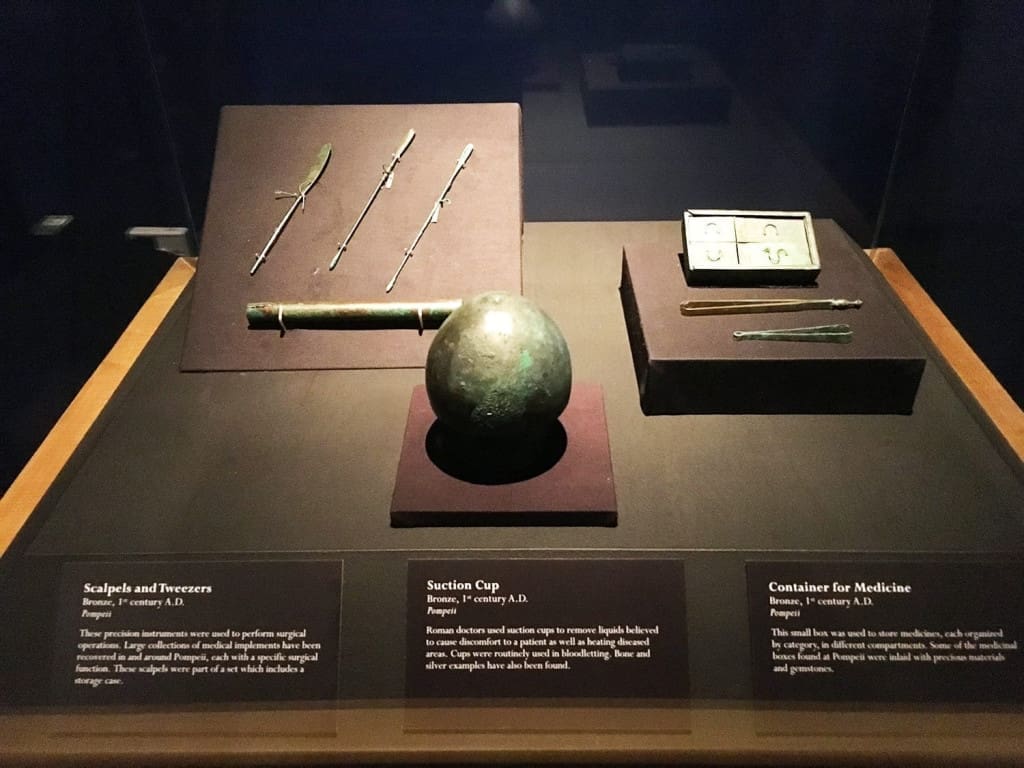
Of course, they used different methods and materials to create these products.
But in their design and use, there isn’t much of a difference.
A piggy bank was on display, looking a lot like a simple one you could buy today.
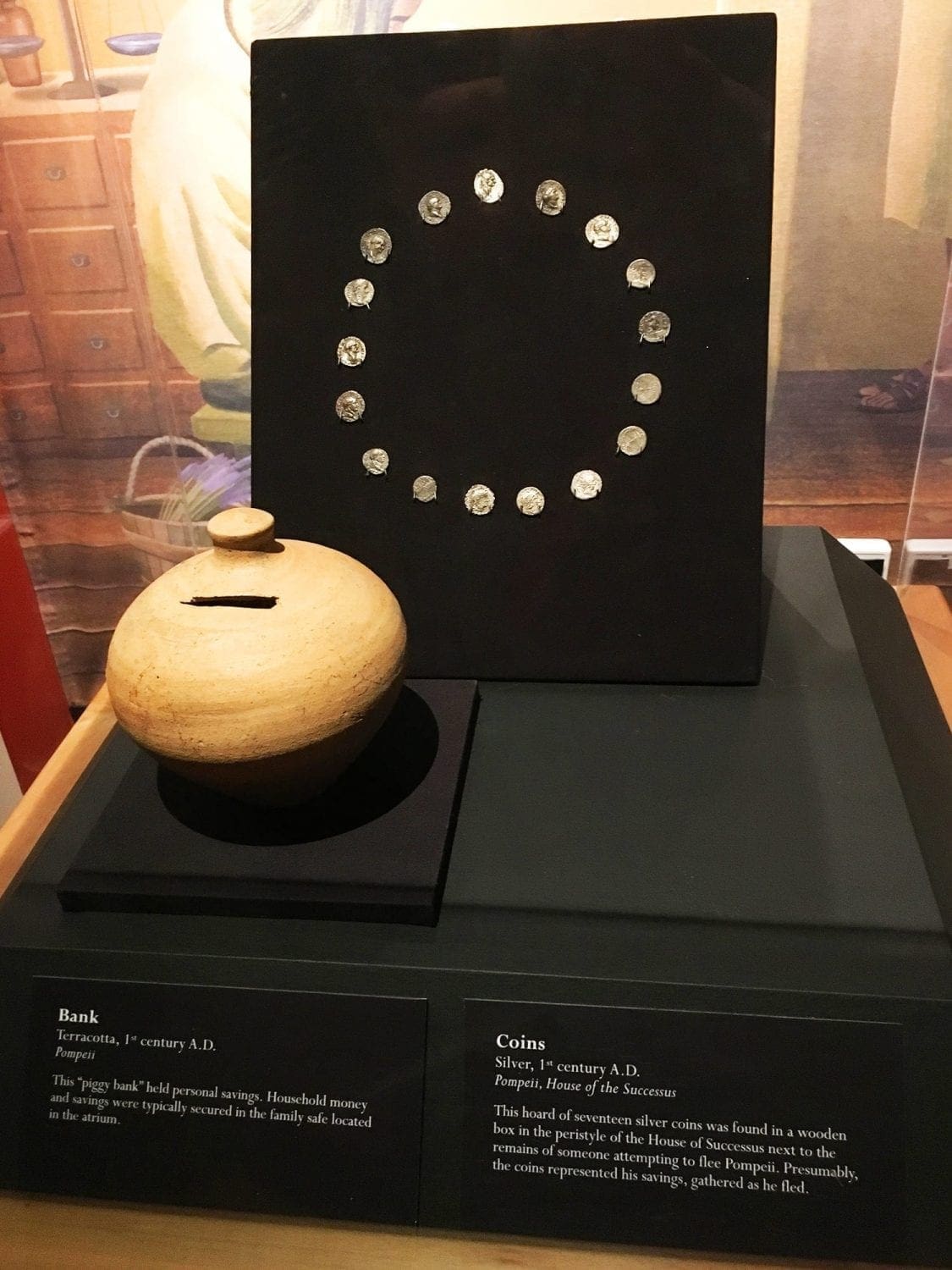
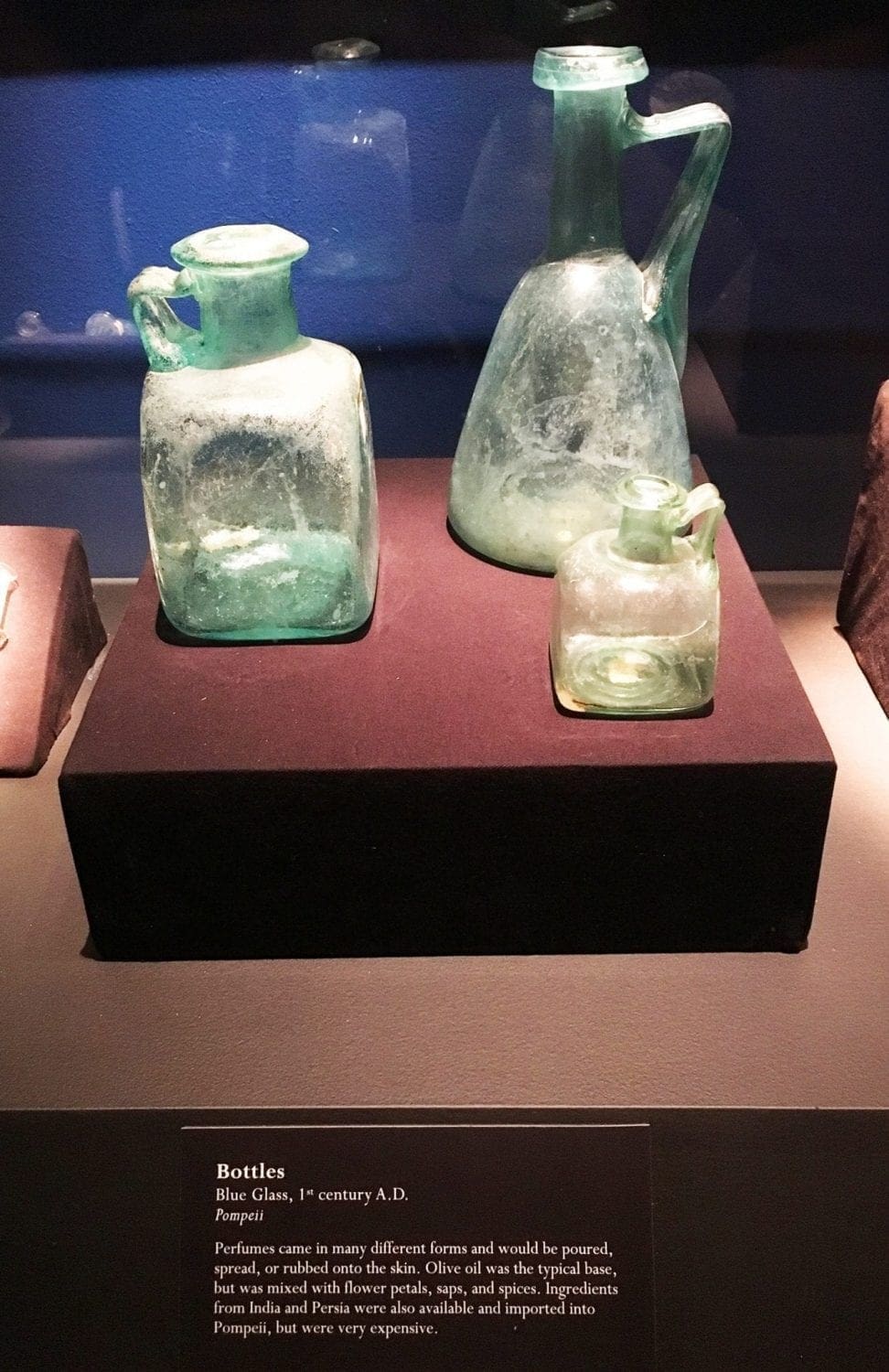
More than 150 artifacts are displayed at Pompeii: The Exhibition, including mosaics and frescoes, gladiator armor, weapons, a ship’s anchor, ceramics, plates, furniture, bottles, and jewelry.
Rediscovered over 250 years ago, it’s easy to forget they were hidden and forgotten about for centuries.
Witnessing Pompeii’s Final Hours
As part of the Pompeii exhibit, an immersive CGI experience lets you watch the city’s final day unfold.
With Vesuvius in the background and the city in the foreground, you see how it would have been for a citizen.
It was an incredibly powerful experience.
A large screen plays through August 24, 79 A.D., hour by hour.
There were earthquakes days before the eruption.
No alarm was raised, however, as the locals were used to them.
The video starts off with some rumbles in the morning.
Around mid-morning, Mount Vesuvius erupts.
After a couple of hours, the buildings are on fire.
Molten rock and pumice were then expelled at a rate of 1.5 million tons per second.
The video darkens as rocks and volcanic ash fill the atmosphere, turning day into night.
Wafts of smoke came from both sides of the screen.
Not the darkness of a cloudy night or a night where there is no moon, but darkness as if the light had gone out in a room that is locked and sealed.
Pliny the Younger (eyewitness)
Within 24 hours, the Roman city of Pompeii lay in ruins, covered by 15 feet of ash and volcanic debris.
It is estimated that about 2,000 people died in Pompeii, with up to 16,000 killed across Pompeii, Herculaneum, and the surrounding region.
They said that within a few years, many had forgotten where Pompeii even was.
This video, I’m 90% sure, is the same one I watched at the exhibit, but I implore you to wait till you visit to watch it, as it was truly powerful for me in the context of the museum.
However, I wanted to link in case you want a sneak peek, if you’re planning on bringing kids.
The People of Pompeii
After the video concludes, the screen rises, revealing the body of a woman (as seen in the featured image).
After watching how a city could be wiped away in a matter of 24 hours, it was extremely powerful to see this human being face down, trying to protect herself.
Through scientific research, they found that the woman before us was probably pregnant.
Though some prayed to the gods, most felt as if the gods had abandoned them.
Pliny the Younger
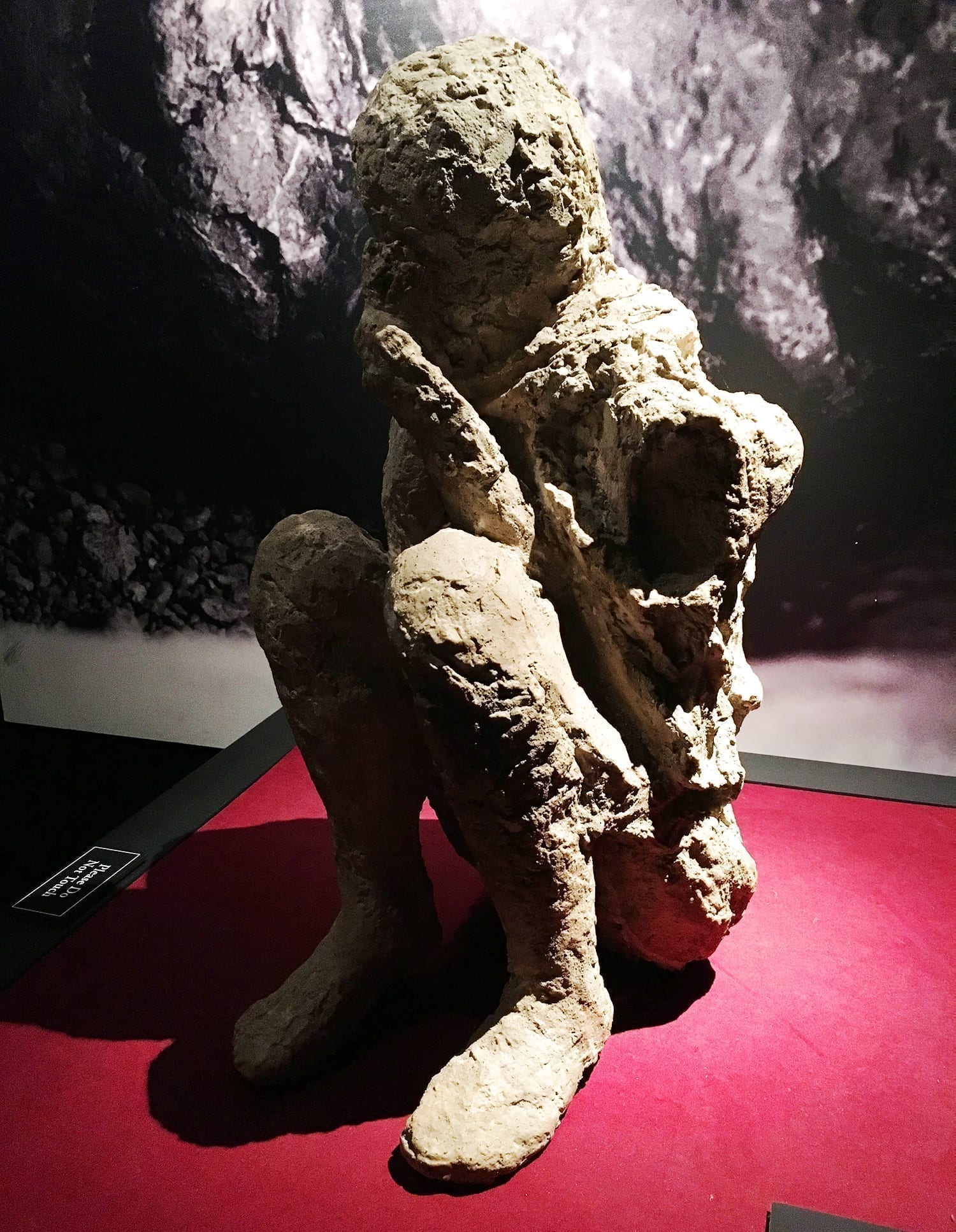
As excavators uncovered human remains, they noticed that the skeletons were surrounded by voids in the compacted ash.
The voids were made by the hardened ash around the disintegrated bodies of the victims.
These full-body casts were created by carefully pouring plaster into the hollows, eerily preserving the citizens in their final moments.

The child seen below was found in the House of the Golden Bracelet alongside its mother, father, and sibling.
Perhaps three or four years old, the folds in its tunic and facial expression were preserved, making it one of the best-preserved casts in Pompeii.

The Crouched Man, seen below, was found on the grounds of the grand palaestra, or exercise grounds.
He’s also known as the “muleteer” for the mule or donkey that was found nearby.
This man crouched low to the ground and pulled his cloak over his mouth to shield himself from the vapors of Vesuvius.
Rediscovering the City
After the discovery of frescoes in 1599, while digging a well, further exploration of the area took place.
Excavations began in the 1700s.
In 1748, when explorers examined the site, they found that the volcanic ash had acted as a preservative. Many of the buildings, skeletons, and remnants of city life were still intact.
Providing historians with a glimpse into what life was like in ancient Rome.
Even though the city has been excavated for hundreds of years, scientists believe that almost 25% of it remains undisturbed.
🏺 If you’re interested in ancient Rome, there’s no better place to visit than the Roman Forum and the Colosseum!
My Pompeii: The Exhibition Review
So, is Pompeii: The Exhibition worth visiting?
I’d definitely say so.
Especially if you can’t make it over to Pompeii quite yet, or to Akrotiri in Santorini, which was similarly preserved.
While nothing can quite replace the actual ruins outside of Naples, this is a good substitute for those looking for some history closer to home.
That video is something I can still recall how I felt in the room about. I almost had tears welling for those who experienced such devastation.
And while the ruins of Pompeii were incredible to see, this exhibit is a snapshot of what it was like for them on that disastrous day. My guided tour of the ruins was instead more focused on the buildings than on the human element—this exhibition flips that entirely.
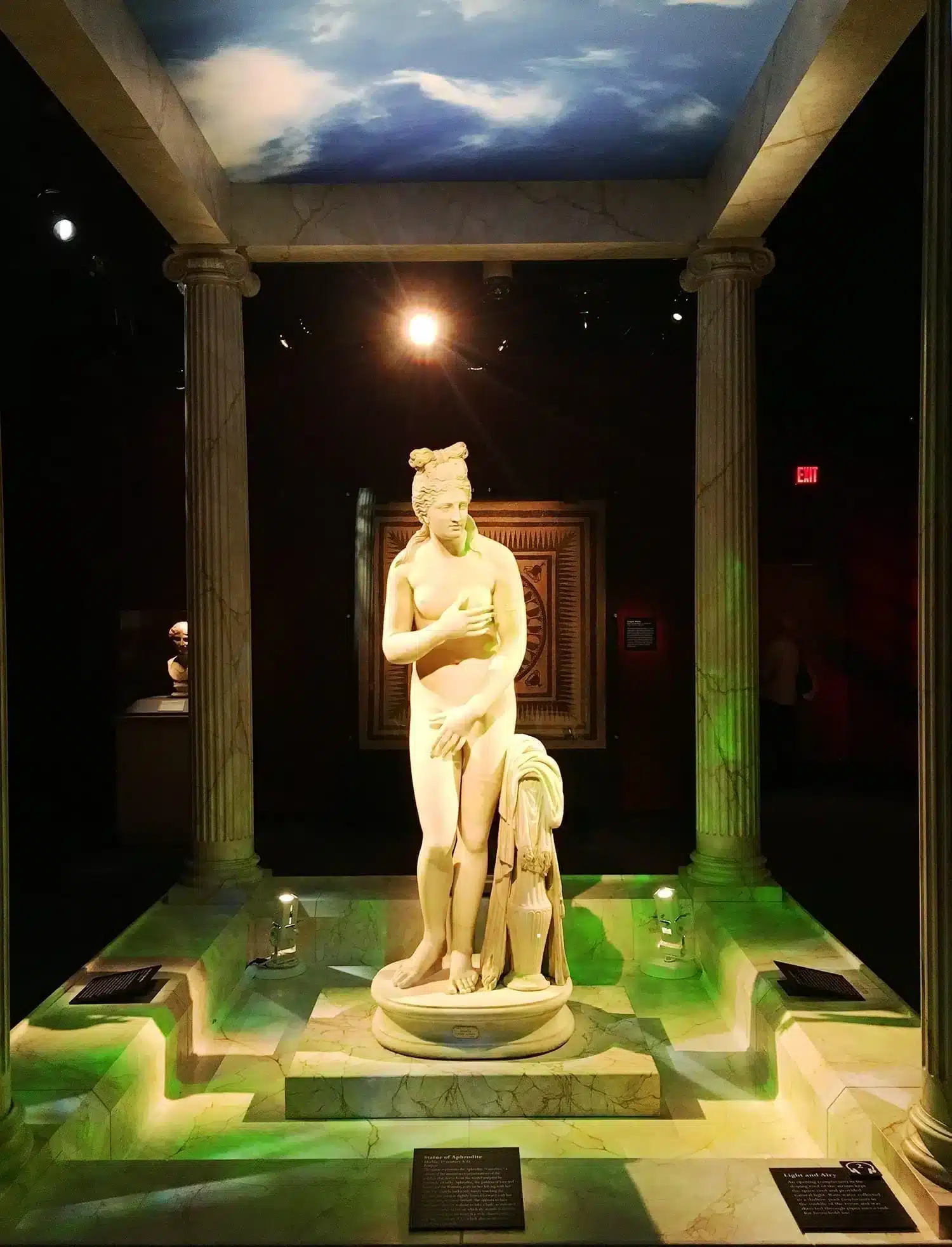
I learned a lot about the culture and citizens of the historical city.
I really only knew about the city’s destruction before visiting.
Now, I have a much better understanding of the historical significance, what its discovery meant to our collective knowledge, and what life was like before the devastation.
At $39.95, it’s a reasonable afternoon for history lovers! However, for small children, I’m just not sold on the idea they’d be able to grasp the full extent of this event.
FAQs
What Happened to Pompeii?
On August 24, 79 AD, Mount Vesuvius erupted without warning, destroying the Roman city of Pompeii in under 24 hours.
Earthquakes had occurred in the days before the eruption, but locals were accustomed to tremors, so no alarm was raised.
As the eruption intensified through mid-morning, molten rock and pumice were expelled at a rate of 1.5 million tons per second.
Volcanic ash rose miles into the sky, turning daylight into total darkness.
Within 24 hours, Pompeii lay buried under 15 feet of volcanic ash and debris.
According to History.com, approximately 2,000 people died within Pompeii itself, with up to 16,000 killed across Pompeii, Herculaneum, and the surrounding region.
The city remained buried and largely forgotten until 1748, when excavations revealed that the ash had acted as a remarkable preservative, with buildings, skeletons, and everyday objects remaining largely intact.
Today, scientists estimate that roughly 25% of Pompeii remains unexcavated.
How Were the Pompeii Plaster Casts Made?
The plaster casts of Pompeii’s victims were created using a technique developed by archaeologist Giuseppe Fiorelli in 1863.
As volcanic ash hardened around the victims’ bodies, it formed solid shells. Over time, the bodies decomposed, leaving hollow voids in the compacted ash.
Excavators discovered these voids and poured liquid plaster into the hollows to fill them. Once the plaster set and the surrounding ash was removed, it revealed eerily detailed full-body casts preserving victims in their final moments, including facial expressions, clothing folds, and body positions.
Among the most well-preserved is the cast of a child, approximately three to four years old, found in the House of the Golden Bracelet alongside their mother, father, and sibling.
The folds in the child’s tunic and their facial expression remain clearly visible after nearly 2,000 years.
Pompeii: The Exhibition displays several of these original casts—not replicas—making them among the most haunting artifacts in the exhibit.
Related California Travel Guides
- Which Hearst Castle Tour is the Best? California Day Trip Guide
- Pompeii: The Exhibition Review: Devastating 2,000-Year-Old History
- 21 Nerdy Things To Do In Los Angeles That Every Geek Will Love
- The Leonardo da Vinci Exhibit is Truly Worth It: An Honest Review
Want to remember this? Pin this Pompeii: The Exhibition Review: Experience its Devastating History article to your favorite Pinterest board!

