
44 Things to Do Before Traveling Internationally + Free Downloadable Checklist
This site contains affiliate links and is a member of the Amazon Associates Program. At no additional cost to you, I may receive a commission from these links. I only make recommendations based on my experience. See my Disclosure Policy for more info.

Ever stood at airport check-in only to discover you won’t make your flight because you chose poorly when deciding how to get there?
International travel involves dozens of details that seem obvious in hindsight but are easy to miss when you’re caught up in the excitement of planning. From checking your credit card details (I once paid $35 in foreign fees) to verifying passport requirements that vary by country, there’s a lot that can go wrong.
After 35+ international trips and helping fellow travelers avoid mistakes, I’ve developed this comprehensive 44-point checklist of things to do before traveling internationally, covering everything from the obvious must-dos to the easily forgotten details that can derail your trip—or at least cost you money.
Whether you’re a first-time international traveler or a seasoned traveler who wants to make sure nothing slips through the cracks, this guide will help you leave prepared, confident, and ready to spend your money on experiences instead of avoidable fees.
What Should I Do Before Traveling Internationally?
The most critical pre-trip steps are verifying your passport is valid (most countries require 3-6 months beyond your departure date), checking visa and entry requirements, and getting a travel credit card with no foreign transaction fees. On the practical side: copy your passport, refill prescriptions, check travel advisories, and pre-book high-demand attractions like the Uffizi or Colosseum. Based on 35+ international trips, I start this process about three months out as the earlier you begin, the more money and stress you’ll avoid.
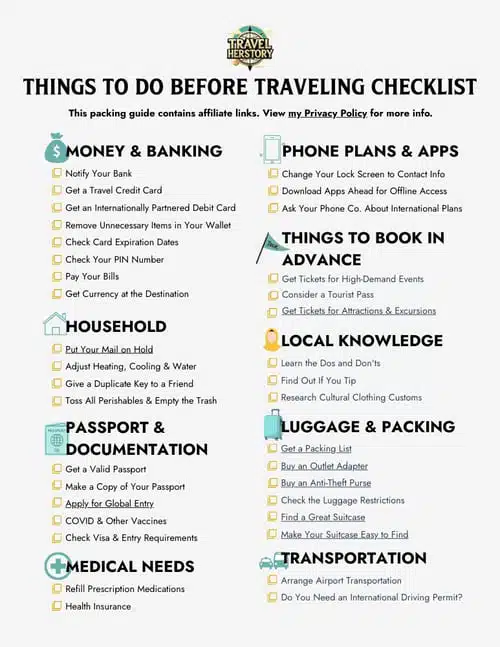
Things to Do Before Traveling Abroad Checklist
About three months before a trip, my travel OCD sets in.
This is when I start narrowing down my list of sights and cities to visit, which I organize in Google Docs.
By this point, you should definitely have your plane tickets to and from your starting and ending countries.
Then comes the tedious part: the preparation.
Not to worry, this checklist for foreign travel is here to help!
I created this after my first solo trip to Europe in 2013 and have refined it over 35 international trips since!
Money & Banking
1. Notify Your Bank
Letting my bank and/or credit card company know I’ll be away used to be one of my top things to do before traveling overseas, as they would freeze accounts if they thought it was suspicious activity.
However, banks aren’t requiring this as much anymore, but it’s still something you should double-check, as it’ll vary by company.
You can do this online or by phone.
2. Get a Travel Credit Card
When I went to Vancouver in 2010, I stupidly neglected to research whether my card incurred international fees.
Needless to say, I came home with about $35 in charges.
And I was only there for a few days!
To avoid my mistake, do your research before your trip to see whether you’ll need a different credit card for travel.
Chase Sapphire
I have the Chase Sapphire Preferred credit card, which JGOOT (‘Just Get Out of Town’—the travel coach) recommended for its points benefits.

It offers:
- $300 travel credit (it automatically credited me back a flight just under $300)
- Reimbursement for TSA PreCheck and Global Entry
- 60,000 bonus points after spending $4,000 in purchases in the first 3 months
- Trip cancellation or delay insurance
- Lost luggage reimbursement
- Auto collision damage waiver (I still occasionally buy the insurance from the rental place)
If you book a flight through them, they also guarantee that if the price drops within a certain period, they’ll give you up to $50 back, which has happened to me on occasion.
Capital One Venture Card
I have also used the Capital One Venture Card and really love it!
For spending $3,000 in 3 months, I got $500 worth of points back.

I also took advantage of the Capital One travel deal with Hotels.com, which gave me 10x points for hotels booked through a dedicated link.
This Hotels.com deal is now over, but I was able to rack up a lot of points while it lasted!
I got over 75,000 points, which is $750 worth!
Over the years, I’ve also racked up enough points to book additional flights for myself.
| Chase Sapphire Preferred | Capital One Venture | |
|---|---|---|
| Sign-up Bonus | 100,000 points after $5,000 spent (3 mo) | 75,000 miles after $4,000 spent (3 mo) |
| Travel Credit | $300/year | None |
| TSA PreCheck/Global Entry | Reimbursed | Reimbursed |
| Trip Cancellation/Delay Insurance | Yes | No |
| Lost Luggage Reimbursement | Yes | No |
| Auto Collision Damage Waiver | Yes | Yes (secondary coverage) |
| Notable Perk | Complimentary Apple TV | Had a Hotels.com 10x points deal (expired) |
Both have an annual fee of $95, but the Chase card clearly wins out, and this table shows just some of its perks! I go into more depth about it on my travel resources guide.
Note: the table reflects the current offers as of June 2026, which differ from what I received when I originally got the cards.
3. Internationally Partnered Debit Card
An internationally accepted debit card is one I don’t often hear recommended, but I do because it can be costly to use ATMs abroad, as fees tend to rack up quickly if you’re constantly pulling out cash.
The Bank of America debit card allows cash withdrawals without fees at certain banks, thanks to its international partners such as Barclays and BNP Paribas, so you won’t pay any extra fees when withdrawing.

Do check your bank’s partners before you travel internationally, because if they don’t have any, you may incur fees.
The only thing to be aware of is that some banks don’t allow you to transfer money between banks on your cell phone. So, if you’re only bringing over your iPhone, not a laptop, make sure to transfer all the money you’ll need before you go to your account tied to the debit card!
4. Lighten Your Wallet
Take out any cards or items you won’t use on your trip.
It lightens your bag, and if something does get lost, you haven’t lost everything!
I tend to remove things I know I for sure won’t use, like my Costco membership card.
5. Check Expiration Dates
This was something I didn’t even consider until I did my 4.5-month trip across Europe in 2025, as I had never gone for that long before!
While I was abroad my mom texted me and said a card arrived and asked if I wanted her to open it.
I said ‘Sure.’ And lo and behold, it was my new debit card!
I looked at the one I had on me, and it was set to expire the following month!
Luckily, my travel buddy (whom I met on Bumble BFF) lives near my mom and was leaving in just a few short days to meet up with me, so my mom gave her the card to hand off to me.
But had that not been the case, my mom would have had to mail it to me, or we would have had to come up with something else.
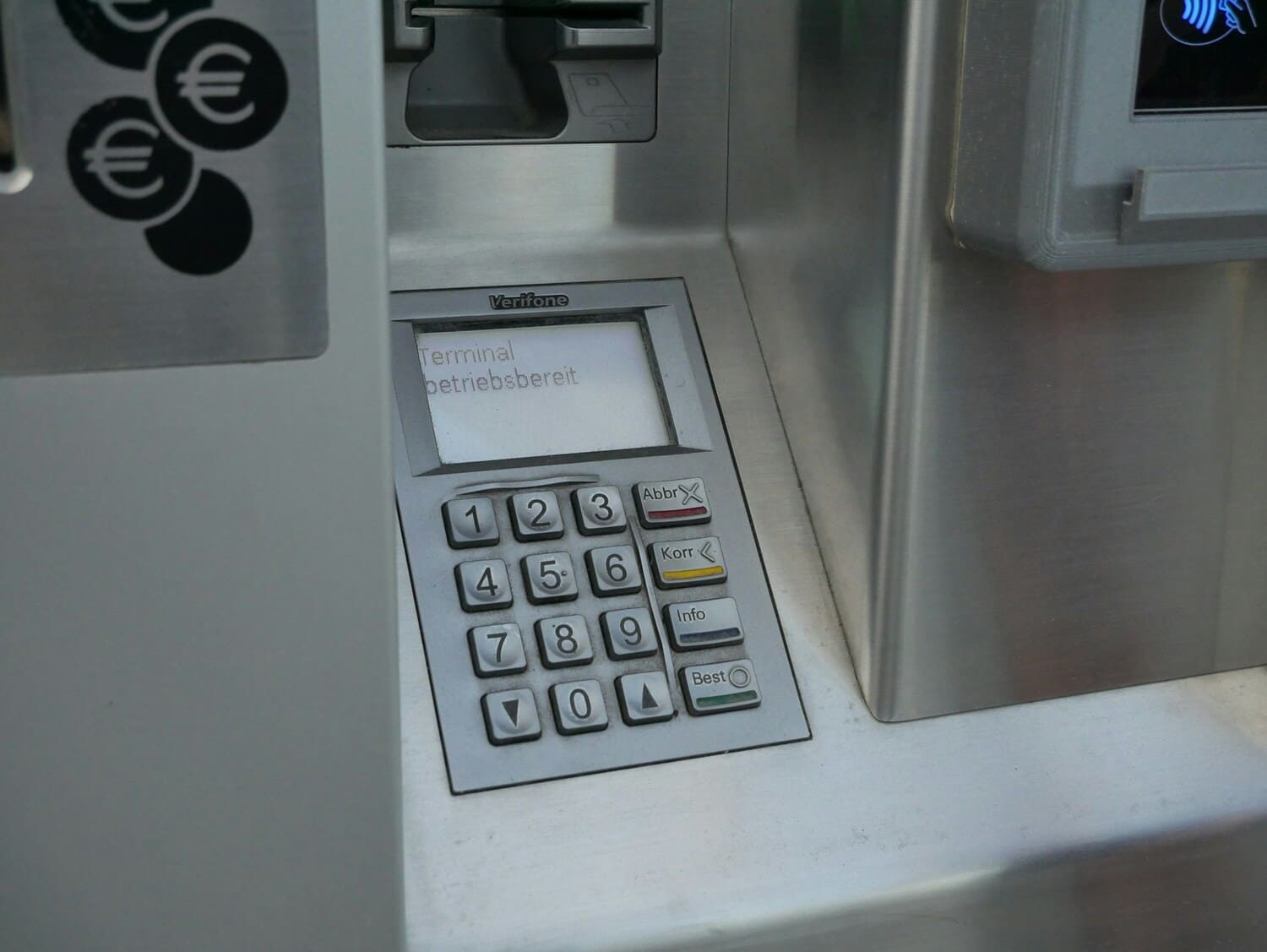
6. Change Your PIN Number
Make sure your PIN is four digits.
Why?
Because some international ATMs only support 4-digit PINs.
Also, check that your PIN does not start with a zero, as some international ATMs may struggle with it.
Additionally, you should know your PIN by the numbers, not the letters, as some ATMs outside the United States do not have letters on their keypads.
7. Pay Your Bills
Ensure your rent, credit cards, car, and any other types of payments are made before you leave!
The last thing you want to worry about is whether your car is paid for while you’re on a trip abroad, especially as late fees may be incurred if it isn’t!
8. Currency Exchange
While you can get the local currency before you travel, I tend to wait until I get there.
I don’t like carrying a lot of cash around, and the US exchange rate isn’t usually the best.
Instead, I wait till I get to the airport at my travel destination and withdraw some cash there.
This way, the airport has tons of security, so it’s likely a legit ATM, and I have it before I even set foot outside.
I always bring some cash from my home country in case I have an issue with an ATM and can go to a cash exchange.
However, I try to avoid this as at cash exchanges, you’ll typically lose about 5 to 10 percent when converting dollars to euros or another foreign currency.
Please note that many places post-COVID actually prefer credit cards over cash. For even more currency tips for travelers, check out this excellent Rick Steves’ article.
Household
9. Put Your Mail on Hold
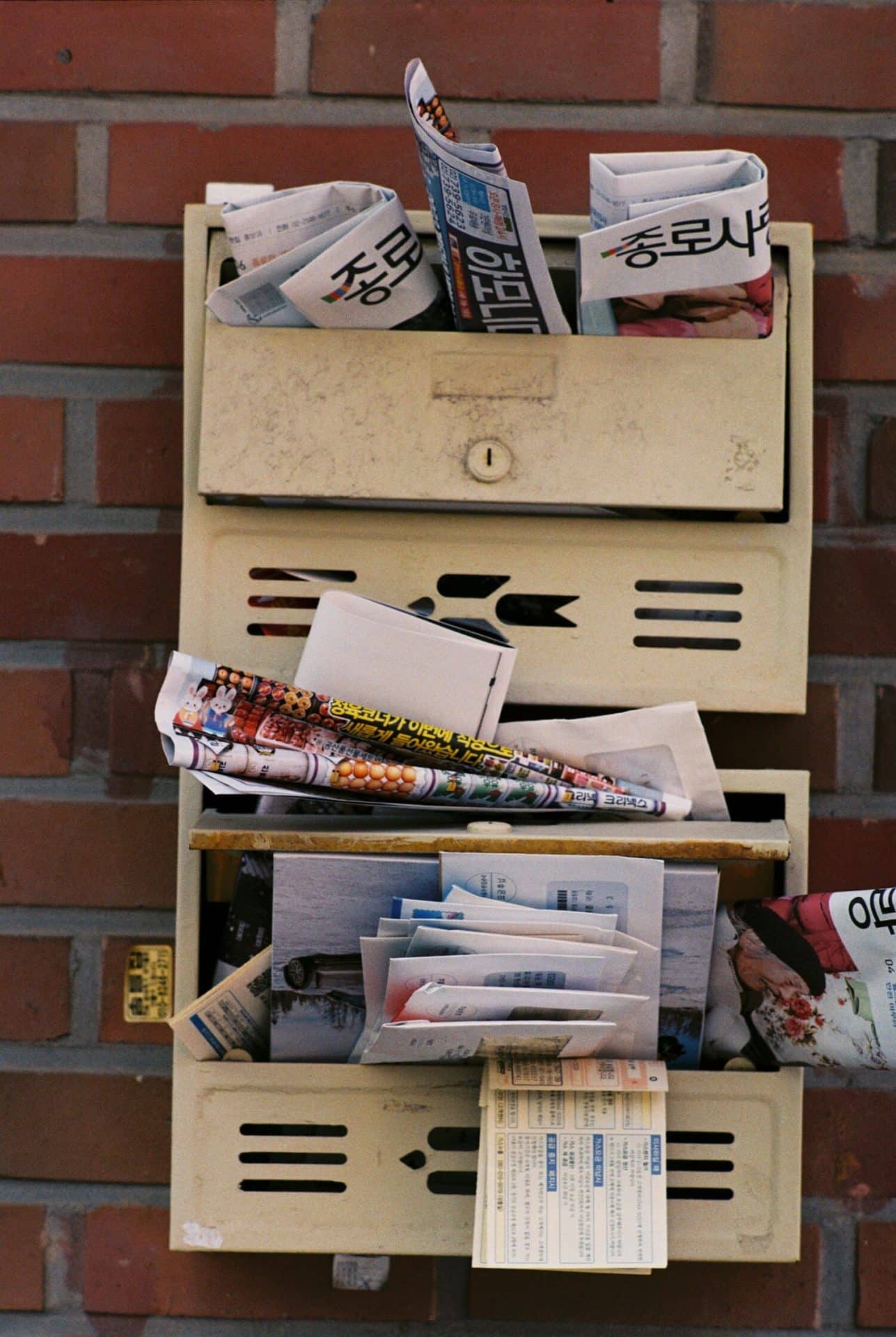
Put your mail on hold so it doesn’t pile up at your door or in your mailbox.
Aside from the eyesore, you do this so that no one knows you’re not home.
I’ve luckily never been robbed *knocks on wood*, but everyone knows if you have a pile of mail sitting for days and days, you’re likely not home.
You can put your mail on hold online for most U.S. locations using the USPS hold mail service.
10. Adjust Heating, Cooling & Water
If you’re traveling for an extended time, you may want to turn off your water.
This way, if a pipe bursts or some other calamity occurs, your home won’t flood.
You’ll also want to turn down the heat or air conditioning to save money, unless you have pets or plants that need specific temperatures.
11. Give a Duplicate Key to a Friend
If something does happen and you need someone to access your house while you’re away, it’s a good idea to give a spare key to a trusted person.
Or at least hide it somewhere that you can give instructions on how to find it in case of an issue.
12. Toss All Perishables & Empty the Trash
Toss any food you have that may perish while you’re away.
You don’t want to come home to the smell of mold because you didn’t toss the cheese, bread, milk, etc.
Remember to take out the trash for the same reason.
Passports & Documentation
13. Have a Valid Passport
If you don’t already have a passport, apply for one STAT!
They can take a while to arrive.
Second, check if it expires soon.
If so, you may need to renew it before you travel internationally.
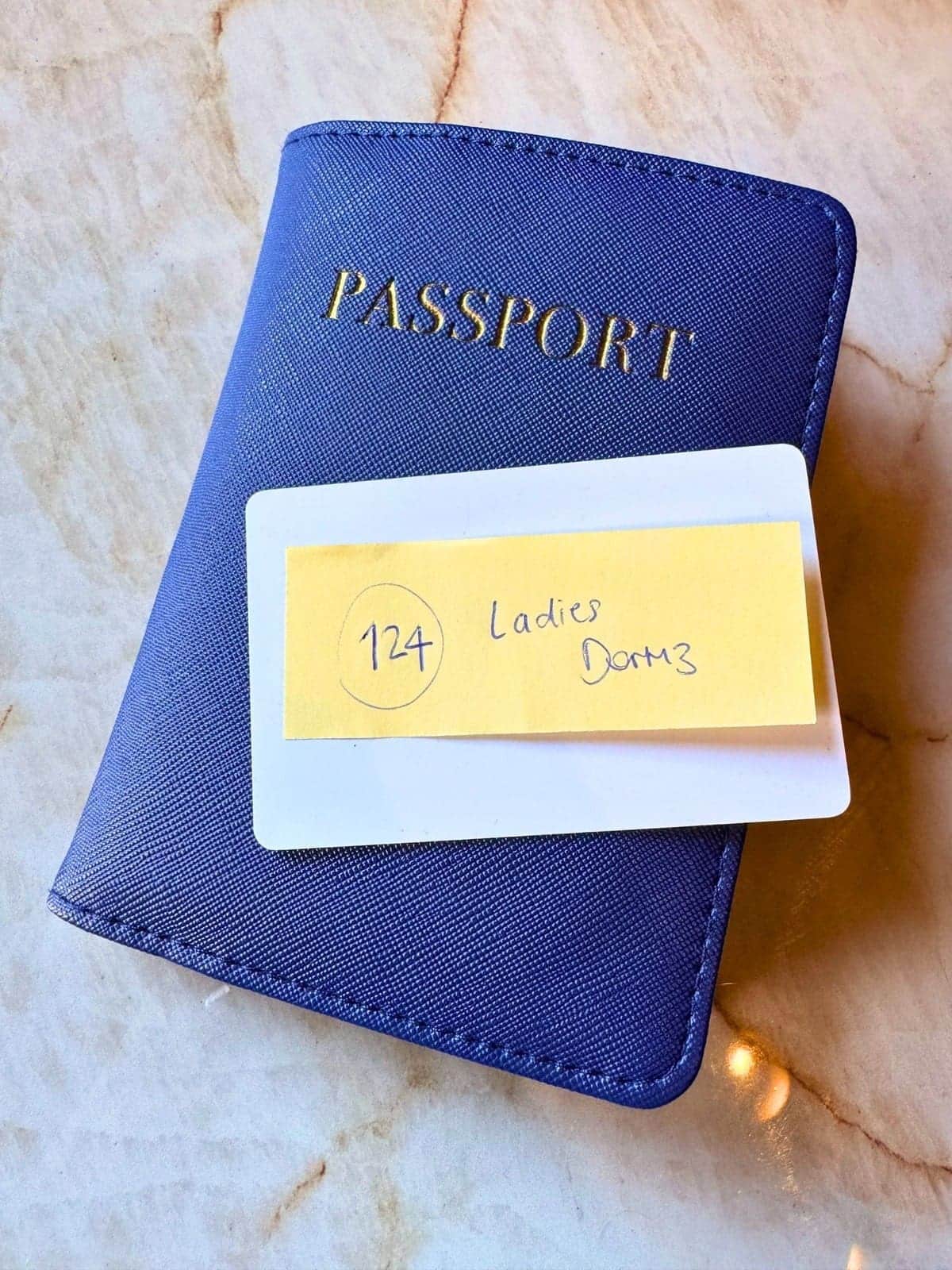
Typically, countries require at least 3 to 6 months’ validity beyond your departure date.
Check with the specific country you’re visiting to be sure, else it may be costly.
I had a friend who was headed to Malaysia. Right before he left, he saw that his passport was set to expire in three months.
He was going to be there for a while for work, and it needed to have 6 months’ validity left for him to enter the country.
So we had to rush his passport and pay through the nose for it.
14. Make a Copy of Your Passport
I always make a copy of my passport so that, heaven forbid, I lose it, I still have a valid copy.
I give a copy to my mom, keep a copy in my suitcase, and email it to myself.
It won’t work to get back home, but it’ll be proof to help get a new one!
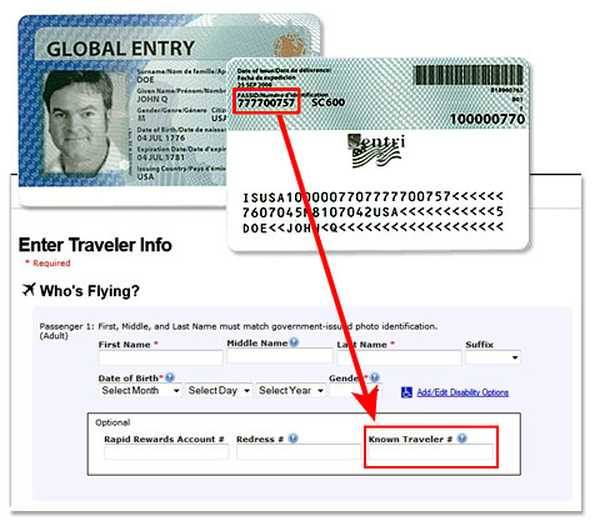
15. Global Entry
I got Global Entry for free through my Capital One credit card.
It was easy to do, as all I had to do was apply, purchase with that credit card, which reimbursed me quickly, then get pre-approved on the online form before the in-person interview.
Shortly after the interview, my Global Entry card showed up in the mail.
I’ve since used it several times to re-enter the United States without going through customs.
I simply breeze through now, only requiring me to take a photo before re-entry.
If you get Global Entry, you are also covered for TSA Pre-Check.
16. Vaccines
You need to follow the rules of the country you are visiting regarding vaccine compliance.
It’s best to check your government agency website to see if you’ll need vaccinations.
For U.S. Citizens, I go to the State Department’s Travel Advisory website. If you’re from another country, your government likely has something similar.
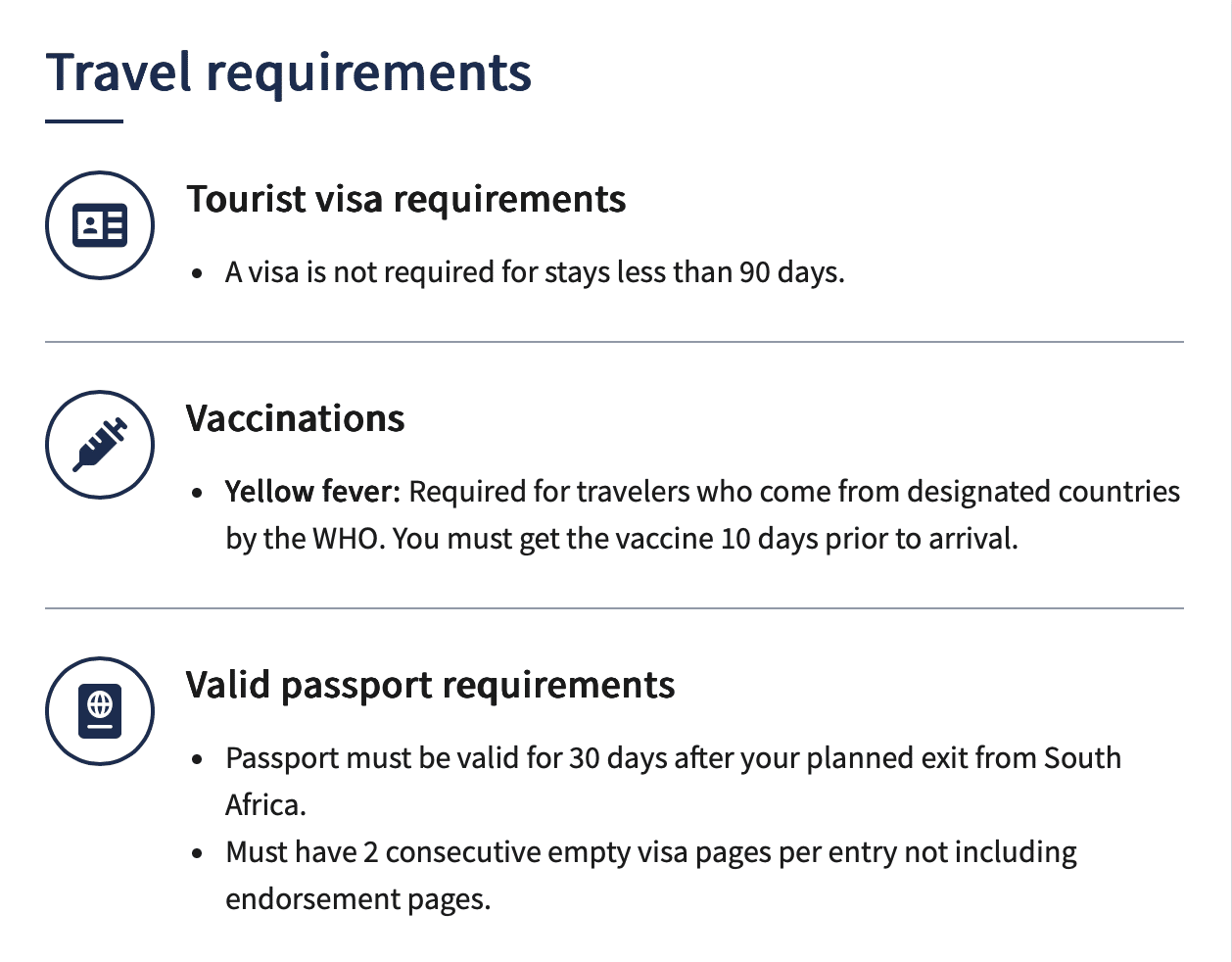
17. Check Visa & Entry Requirements
I haven’t visited any countries that required a visa yet, but I know it is a possibility, so I always check the government agency’s website for the country I’m visiting to ensure I’m following their visa requirements and have the proper travel documents.
However, I have needed to meet entry requirements, such as getting COVID tested in 2021, so ensure you check whether that’s a possibly for your destination.
Medical Needs
18. Refill Prescription Medications
If you take any sort of prescription medications, ensure you have enough for the duration of your trip.
When I went on my 4.5 month trek through Europe, I made sure to pre-order my birth control so that I had it with me.
It’s easy to do this by speaking with your doctor or, if you order online, as I do.
19. Health Insurance
Check if you’ll need travel health insurance.
I’ve only needed this once, in Thailand, right after COVID-19.
It was shortly after quarantine, so they enacted a rule that you had to get health insurance and a test upon arrival.
Besides that, I’ve never seen the need for travel insurance, but that’s because I don’t have any health conditions or partake in anything I deem risky, such as rock climbing.
However, whether you need health insurance depends on your destination country and your personal needs.
If you do wish to get insurance, I recommend SafetyWing, as I know many travelers who’ve used it.
Phone Plans & Apps
20. Change Your Lock Screen
I saw this one on SmarterTravel.com and think it’s a brilliant idea!
Change your lock screen to display your contact information, such as an email you can access without the phone.
This way, if you lose your phone—which, fingers crossed, you won’t—someone will hopefully be kind enough to contact you and return it.
21. Download Apps Ahead
Download all the apps you’ll need before you leave, especially if you don’t plan on using your phone data while traveling abroad, to avoid fees.
While there are several travel apps I recommend, you should make sure to download the airline you’re flying with app.
Some budget airlines like Ryanair charge you to print your boarding pass at the airport, so downloading the app ahead of time and checking in on it saves you money!
Having the hotel app that has your hotel bookings is also an excellent idea.
I’ve had issues telling taxis where I want to go, so being able to show them the address usually alleviates the problem.
If you plan not to use data, download an offline map app such as Maps.me, which lets you use a map without Wi-Fi or data and also provides public transport and driving directions.
I used it extensively to drive around Rhodes, Greece, and Ambergris Caye, Belize, without any trouble.
22. Contact Your Phone Company
I was at AT&T for several years and always used data without additional costs when traveling.
I’m now on T-Mobile and have enjoyed their service in Europe, Central America, and Asia.
They offer texting and data for no additional cost to my plan.
Phone calls, however, are an additional charge, and I don’t often make them, so this isn’t an issue for me.
However, your company or plan may vary, so contact your phone company to ensure you have whatever service you’d prefer.
Also inquire about setting as sometimes data and roaming settings can affect fees or service availability.
23. Do You Need a SIM or eSIM Card?
My travel buddy swears by eSIM cards.
I’ve never needed one, since my cell phone plan covers texts and data abroad.
I don’t typically need calls, and the one time I did, I paid T-Mobile $5 for a one-day international plan.
However, if your phone plan doesn’t offer this coverage, invest in a SIM or eSIM, depending on your phone type.
24. Download Offline Languages on Google Translate
Before you leave, open the Google Translate app and download the language (or languages) for every country on your itinerary.
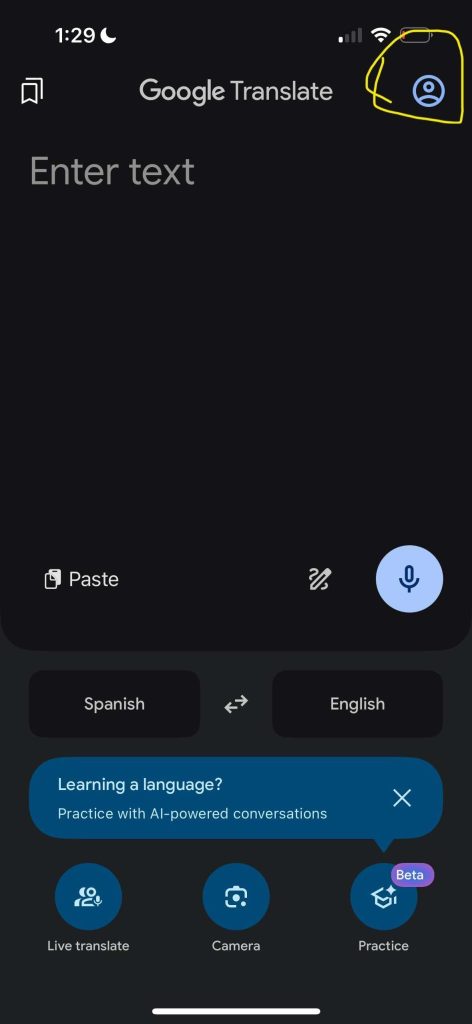
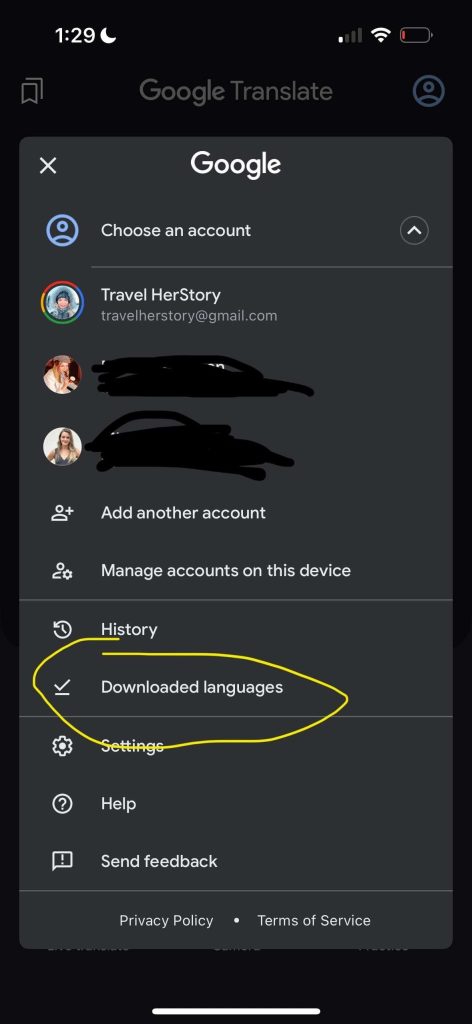
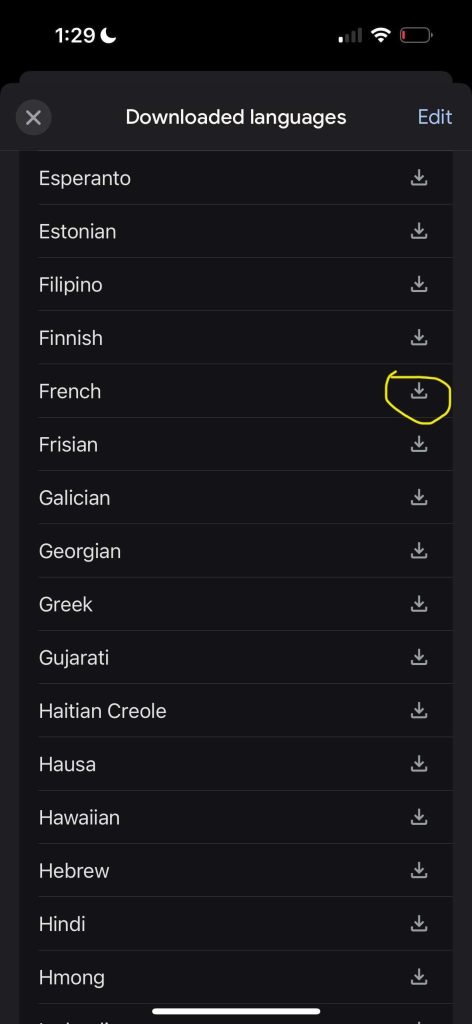
Here’s how:
- Open Google Translate
- Tap the person icon in the top right corner
- Tap Downloaded languages
- Tap the language you want and wait for it to download (it only takes a moment on decent Wi-Fi)
Once downloaded, you can use text translation with zero data or Wi-Fi, so if you land somewhere with spotty service, you’re still covered on basic communication.
Check out my complete guide to the Google Translate app for how to use the camera feature, live translate, and how to save key phrases you may need along the way.
Things to Book in Advance
25. Get Tickets for High-Demand Events
I really enjoyed going to see the ‘Tempest’ at Shakespeare’s Globe Theater when I was in London in 2013 and 2015.
So when I found out I would be returning, I decided to go again, this time seeing ‘As You Like It.’
As this is a very unique experience, tickets sell out quickly, especially the £5 ones, or if the show features a recognizable actor in the cast.
The same likely applies to any event you plan to attend, especially if it’s a limited-run or very popular one.



26. Consider a Tourist Card
The wonderful thing about tourist passes is not only that they typically provide discounts, but they’re like fast passes at Disneyland; you get to skip the line at some attractions.
They also sometimes include bus tours, which can save you from extra walking or transportation costs. I’m not a huge fan of bus tours, but they can help you see a lot in a short amount of time and often include commentary.
Additionally, they occasionally act as discount cards to restaurants, museums, and exhibits.
Many tourist passes, such as the Lisboa Card, are now available on GetYourGuide, making it easy to purchase not only a pass but also other excursions.

Do note that if you’re a student or traveling with children, it may be cheaper to buy tickets directly, but check the details before deciding.
Also, not all tourist passes are created equal.
I didn’t find that the Omnia Card for Rome helped me save at all.
For even more tourist card reviews, check out my travel planning guides.
27. Get Tickets for Attractions & Excursions
Book any attractions or excursions you can in advance!
I know not everyone’s a pre-planner, but if there’s something you MUST see, book ahead.
I ran into this issue in Florence in 2022: since seeing David is such a hot ticket, I was almost unable to see him because I didn’t pre-book.
I ended up booking a more expensive GetYourGuide tour in order to get in.
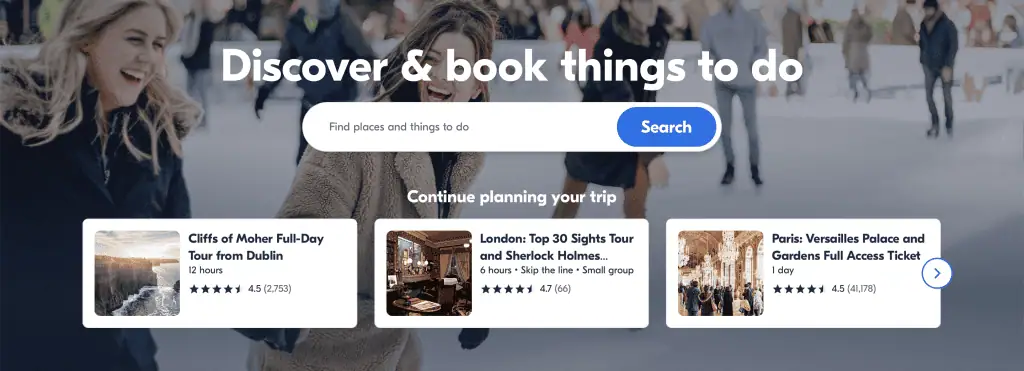
Another reason to love GetYourGuide is that it lists tons of attractions and excursions in one place, so you don’t have to hop from site to site to buy tickets.
And if something comes up, their cancellation policy is typically more flexible than the official site.
Viator is another option, though when comparing GYG vs Viator, I tend to find GYG more useful.
Local Knowledge
28. Learn the Dos and Don’ts
While planning my trip to Greece in 2020, I found out that the Greek islands don’t have potable water, so you shouldn’t drink it.
I also learned that you shouldn’t throw toilet paper in the toilet, as they have very old plumbing systems, and it can sometimes cause damage.
Reading relevant posts on wherever you’re headed can help to discover what not to do and how to be prepared for your trip!
29. Do You Tip?
It’s something almost unconscious in the United States.
But not everywhere in the world do you tip, and if they do, the amount may be different.
So it’s important to add this research to your list of things to do before traveling overseas.
30. Cultural Clothing Customs
There are a few countries I’ve been to where the clothing customs are different, and I’ll be honest, some of them I was worried about as I was nervous I’d somehow ‘do it wrong.’
But I’m happy to report I didn’t, thanks to research (which is why it’s on this list of important things to do before traveling abroad), and I also felt that if I had, there would have been plenty of gentle help.
In Thailand, you don’t wear shoes into temples, so I wore sandals whenever I planned to enter one, so I had easy-on, easy-off footwear.
In the Vatican, you must cover your shoulders and knees. My cousin wasn’t allowed in for not following the knees rule, so be prepared to wear clothing that either covers or bring along something such as a shawl you can put over your shoulders.
In Turkey, women must cover their heads before entering mosques. I bought a scarf there to do so, but also as a souvenir.

To be honest, this is the one I was most worried about just because I’d never been in a mosque before.
But there was plenty of signage, helpful staff, and some places provided a napkin-like tissue if you didn’t have a scarf.
I did see a woman’s scarf fall off by accident, and the staff came over to notify her. They were very calm about it, though, so don’t be worried if that happens, just readjust, and you’ll be fine.
If you have a particular country in mind, make sure to research specific packing guides.
Luggage & Packing
31. Get a Packing List
I use my travel ‘Pack This’ checklist, gifted to me by one of my lovely blog readers, and have been using it for years to help me pack!
It lists nearly everything you could ever need!

I check off each item, you guessed it, twice to double check I’m not forgetting anything I need.
This list also helps save space, so you don’t take things you may not need.
Seeing everything in a list helps you eliminate items from your suitcase, making it easy to pack light!
If you’re staying in hostels, make sure to check out my hostel packing guide.
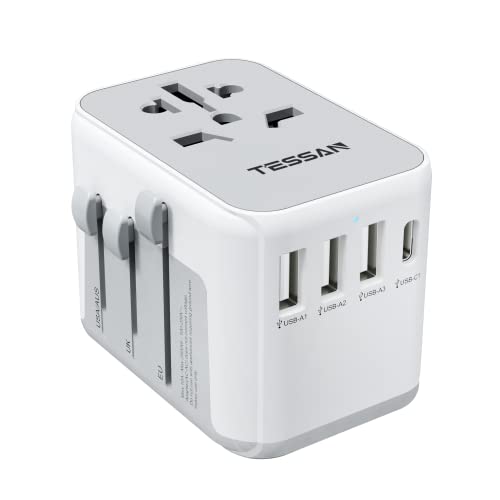
32. Get an Outlet Adapter
An outlet adapter is always a must-have on my list of what to bring when traveling internationally!
Don’t go all Leap Year on anyone (one of my favorite travel movies set in Europe) and accidentally short out the town while trying to plug the wrong type into the wrong socket. No one is going to thank you for that!