

Guide to Visiting Hampton Court Palace on a Short Day Trip from London
This site contains affiliate links and is a member of the Amazon Associates Program. At no additional cost to you, I may receive a commission from these links. I only make recommendations based on my experience. See my Disclosure Policy for more info.

With so much rich Tudor and Georgian history packed inside—from Henry VIII’s Great Hall to William III’s state apartments—you’ll want to make sure you experience everything this magnificent tour offers.
As someone who waited over a decade to finally visit Hampton Court Palace and spent four full hours exploring every corner of this historic royal residence (honestly, I could have spent more time), I can give you the insider details, including how to get there, discount ticket tips, and what to see.
I adored everything—from Anne Boleyn speaking to me during a Tudor reenactment to discovering the wine fountain, the haunted Great Watching Chamber, and yes, even a chocolate kitchen.
Whether you’re a Tudor history buff, planning a day trip from London, or simply want to see where Henry VIII lived, this guide will help you make the most of every moment—without the overwhelm.
Is Hampton Court Palace worth visiting?
Yes. Hampton Court Palace is one of the best day trips from London, offering visitors the opportunity to explore Henry VIII’s former residence, Tudor kitchens, royal apartments, historic gardens, and immersive historical experiences. Most visitors should allow 4–5 hours to fully experience the palace.
Hampton Court Palace at a Glance
| Information | Details |
|---|---|
| Distance from London | ~40 minutes by train from Waterloo |
| Recommended Visit Length | 4–5 hours |
| Ticket Required | Yes |
| Best For | History lovers, royal history fans, film/tv buffs |
| Family Friendly | Yes |
| Gardens Included | Yes (free on select Garden Open Days) |
What is the History of Hampton Court Palace?
In the 13th century, Hampton Court Palace began as a modest manor house belonging to the Knights Hospitaller of the Order of St. John of Jerusalem, a religious military order established during the Crusades.
For nearly three centuries, it sat quietly along the Thames, about 12 miles southwest of London.
Everything changed in 1514 when Cardinal Thomas Wolsey, one of England’s most powerful men and King Henry VIII’s Lord Chancellor, secured a 99-year lease on the property.
Wolsey wasn’t content with a simple country retreat—he envisioned a palace that would rival any royal residence in Europe.
Over the next fourteen years, Wolsey poured enormous amounts of money into transforming Hampton Court into an architectural masterpiece and spared no expense on furnishings, tapestries, and artwork.
The palace boasted more than 280 rooms, formal gardens, and state-of-the-art amenities for the time, including an early sewage system.
Wolsey’s Hampton Court became renowned across Europe, featuring grand galleries, a magnificent Great Hall, private apartments, and entertainment spaces.
However, Wolsey’s spectacular palace became a liability.
By 1528, his failure to secure Henry VIII’s divorce from Catherine of Aragon had put him in a precarious position.
Sensing the King’s growing displeasure and recognizing the envy Hampton Court had sparked, Wolsey made a desperate attempt to regain favor by “gifting” the palace to the King in 1528.
However, the gesture failed to save him as Wolsey was stripped of his position as Lord Chancellor in 1529 and died in disgrace the following year.
Henry VIII’s Palace
Henry VIII eagerly took possession of Hampton Court and immediately set about making it even grander.
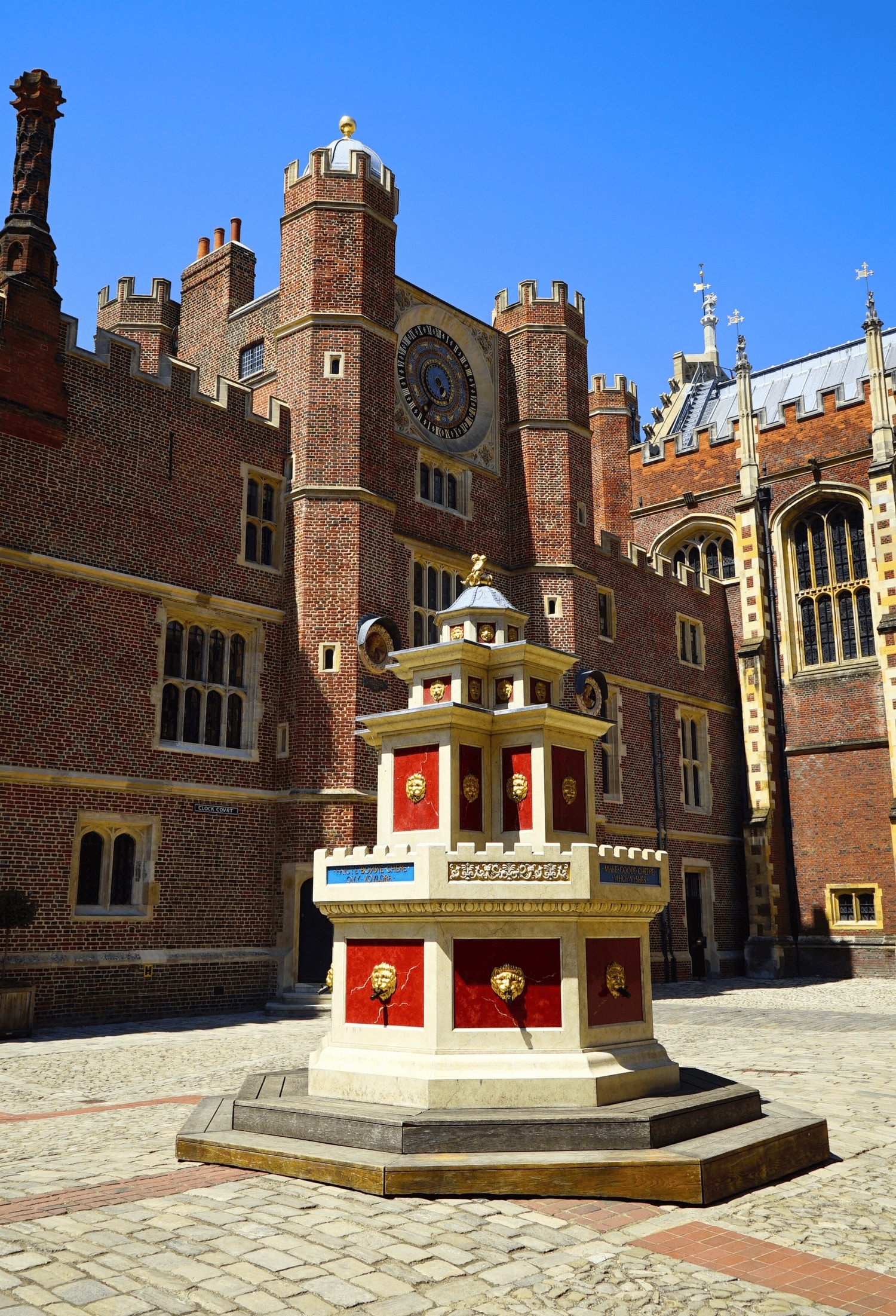
He significantly expanded the palace, adding new wings, the famous Astronomical Clock, real tennis courts, and extensive kitchens capable of feeding his enormous court of over 1,000 people.
He transformed the gardens and built a tiltyard for jousting tournaments.
Hampton Court became Henry’s favorite residence and witnessed some of the most dramatic moments of his reign.
He married two of his six wives there—Jane Seymour and Catherine Parr—and Jane Seymour died at Hampton Court just days after giving birth to Henry’s long-awaited son, the future Edward VI.
Her ghost is said to haunt the palace to this day!
Following Henry VIII’s death in 1547, Hampton Court remained a favored royal residence through the reigns of his children.
The palace fell into neglect under Oliver Cromwell, though Cromwell himself used it as a residence.
Charles II briefly revived its fortunes after the Restoration in 1660, but by the time William and Mary ascended the throne in 1689, the Tudor palace desperately needed modernization.
William and Mary’s Baroque Transformation
William envisioned transforming Hampton Court into an English Versailles to rival Louis XIV’s palace in France.
In 1689, he commissioned Sir Christopher Wren (who designed St. Paul’s Cathedral) to undertake this ambitious transformation.
Wren’s original plans proposed demolishing the entire Tudor structure, but cost constraints led to a compromise: rebuild the State Apartments and create new royal quarters while preserving Henry VIII’s Great Hall and Tudor courtyards.
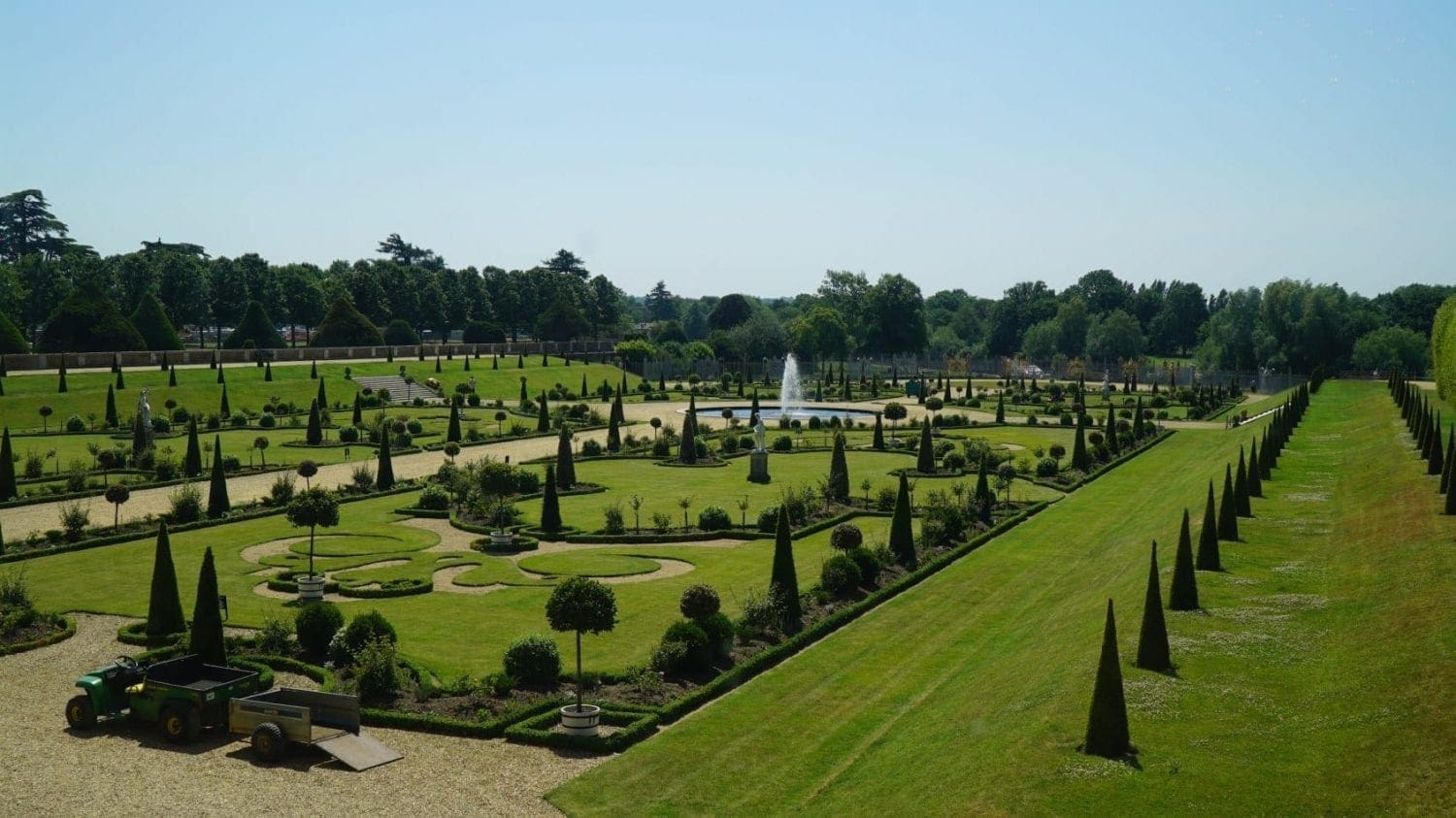
William personally oversaw the transformation of the gardens, as gardening was one of his few leisure pursuits. He spared no expense in creating grounds that reflected the formal Dutch style he loved.
William’s grand vision was never fully realized before his death, leaving Hampton Court a fascinating hybrid—Tudor on one side, Baroque on the other.
Yet this makes the palace unique among English royal residences, offering visitors two distinct architectural eras under one roof.
How to Visit Hampton Court Palace
Since 2006, when I first traveled to England, I’ve wanted to visit Hampton Court Palace.
I’m a longtime history nerd, particularly English history, and was obsessed with the show The Tudors (I even visited some filming locations while in Dublin), so that’s of little surprise.
I even made a day trip to Hever Castle, Anne Boleyn’s childhood home, in 2013, but somehow missed visiting Hampton.
But on its 500th anniversary (June 2015), I finally made it!
And even after 10+ years of travel blogging and 25 European countries, it’s one of my favorite castles I’ve ever visited.
Where Can I Get Discounted Hampton Court Palace Tickets?
I got a discounted ticket to Hampton Court Palace from my hostel, Astor Oxford Street!
They have a tour desk that sells tickets, so it was easy for me to buy one upon arrival in London.
If your accommodations don’t have a tour desk, or if you plan to visit during peak season, I highly recommend booking tickets online, as this is a popular attraction.
🏰 I’d book this tour through Headout because their cancellation policy is flexible and they offer the lowest price among online retailers when booked in advance 🎟️
Alternatively, check the official website, as they sometimes run deals, such as New Year sales, that include half-price tickets or free Garden Open Days.
- Adults – £29/32
- Students 18+ with ID and Seniors 65+ – £23.50/25
- Children 5-17 – £14.50/16
- Under 5 – Free
**Prices last verified April 2026 (prices vary based on on or off peak)
How to Visit from London
A quick ride 40-minute from the Waterloo train station to the Hampton Court train station, and I was there, making it a great day trip from London.
The station is just across the road from Hampton Court, so it’s completely walkable as it’s on flat land and impossible to miss.
Check the directions from your accommodations, as the Waterloo start point may not be the easiest or quickest for you.
I highly recommend City Mapper for real-time transportation information, or the offline Maps.me, which you can use without Wi-Fi (making it one of my favorite travel apps for Europe).
You can also visit Hampton Court Palace by:
- Taking the District Line to Wimbledon, then take a National Rail service to Hampton Court
- During summer, taking a boat that launches from Kingston (45 mins) and Richmond (95 mins)
- Hopping on a bus, routes 111, 216, 411, 461, 513, and R68 stop near the palace
But I find the train is the most efficient!
What to Expect from a Hampton Court Palace Tour
Walking up to Hampton Court Palace was simply magical; there are no other words for it.
Maybe it was the fact that I’d waited so long to see it or that I’m a history nerd, but either way, it was simply breathtaking, so much so that I stood in the middle of the road staring at it till a truck honked at me to move over. Oops!
I arrived around 10:30 a.m. and was handed a guide to the palace and garden, along with a schedule of events.
You can also get an audioguide, which is included in palace admission.
Tudor Reenactments
On the schedule at around 11 a.m. was a Tudor Welcome time play or Tudor reenactment, which started below the Astronomical Clock.
Some fantastic actors came out in period clothing and performed as if it were still King Henry VIII’s era.

I’m not ashamed to admit that I was giddy. I love this sort of thing!
The Great Hall
From the courtyard, under the clock, we followed them into the Great Hall, where one of the actresses who was dressed as Anne Boleyn asked me if ‘I’d heard the rumors’ (though she might have used the word whispers, I can’t recall now).
I guessed it was about her and Henry and happily played along.


We then proceeded into the wine cellar, where we were asked to keep quiet so we would not be heard by Anne and her ‘boyfriend’ (for lack of a better word), Henry Percy.
Henry Percy is primarily remembered as the betrothed of Anne Boleyn, whom she was forced to give up before getting involved with King Henry VIII.
As the scene unraveled, I came to realize it was the breakup scene—sad but marvelously performed.
When you visit Hampton Court Palace, I highly recommend you check out at least one of these!


Anne Boleyn’s Lasting Mark on Hampton Court
Henry VIII and Anne Boleyn had several plans for Hampton Court Palace.
Today, it is estimated that he spent £18 million on extending and improving the Palace.
There are only a few remnants of Anne Boleyn’s reign at Hampton Court Palace.
You can see one of them, which was created to celebrate Henry and Anne’s marriage, in the Great Hall.
The carpenters added Anne’s coat-of-arms to the roof and carved the entwined letters H and A on the wooden screen at the end of the Great Hall.
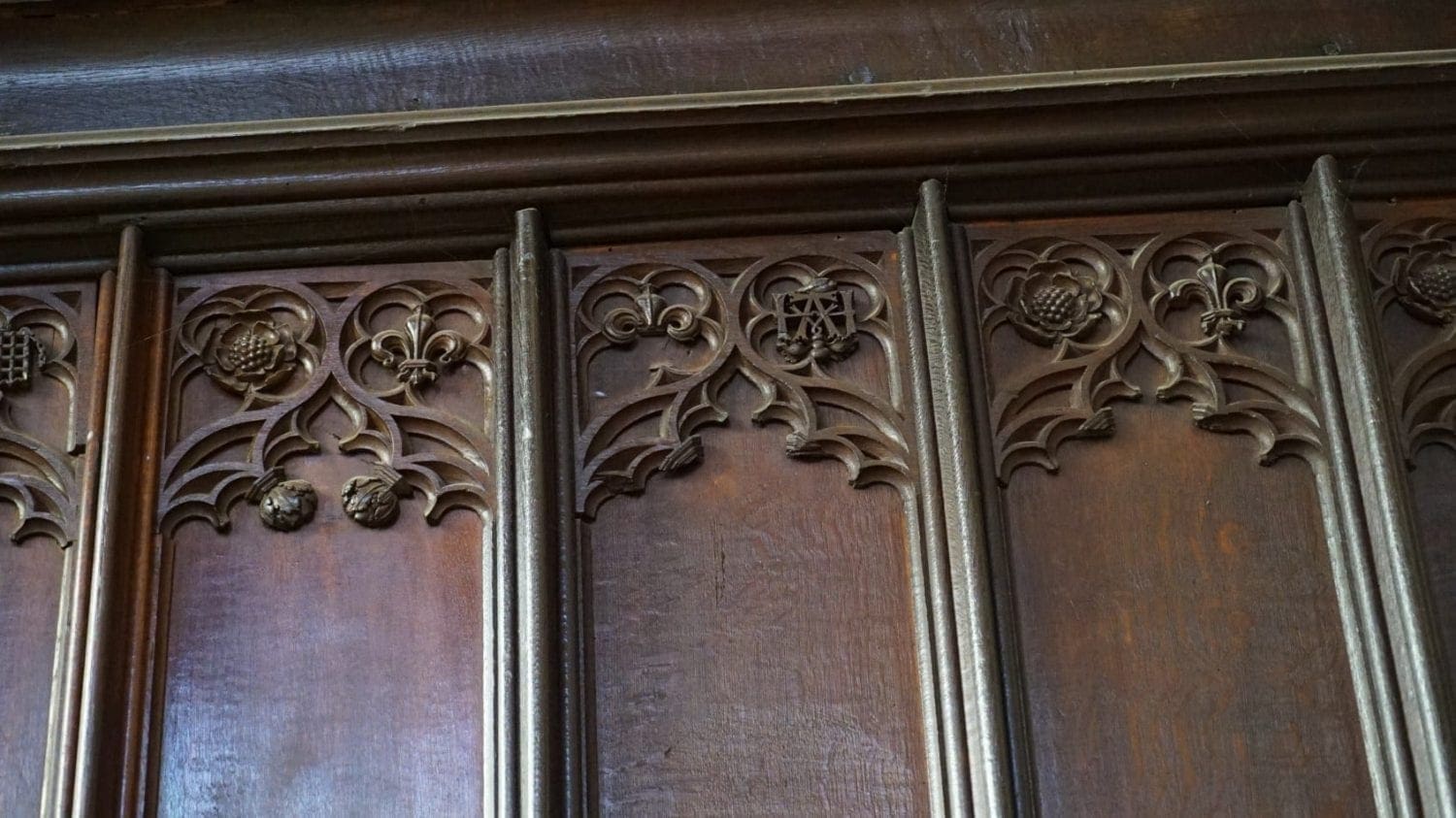
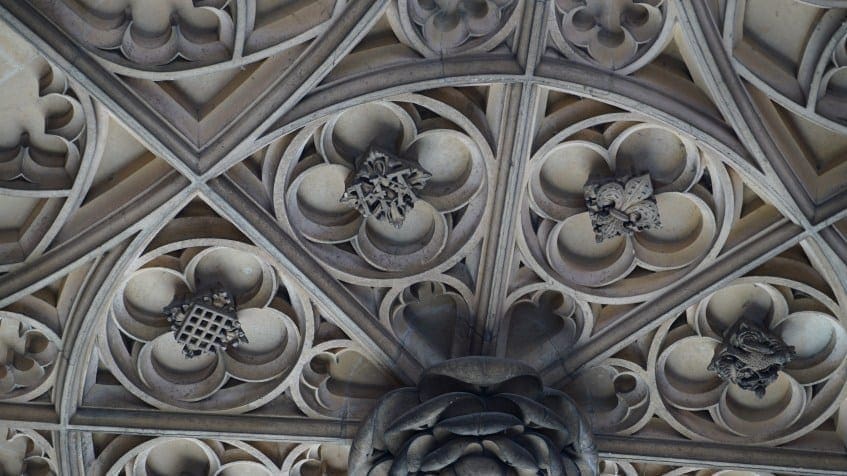
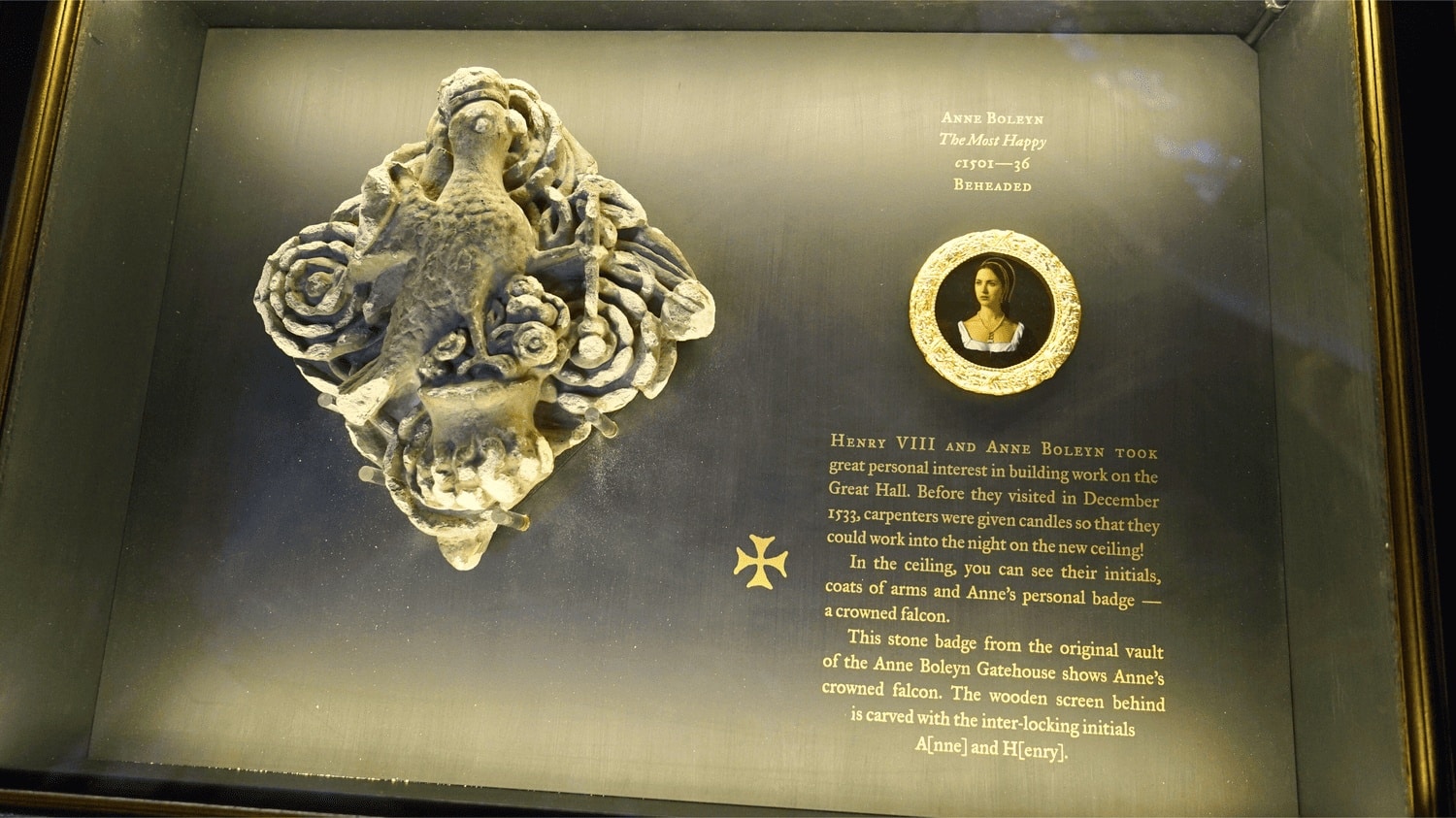
Also featured in the roof is Anne’s falcon badge, and the initials AR for Anna Regina.
The other is located over a passageway before you enter the Great Hall.
All others, to my knowledge, were erased when she was dethroned.
Cardinal Thomas Wolsey’s Closet
After the reenactment ended, I wandered around some of the galleries, first finding myself in Cardinal Wolsey’s Apartment.
Although it was Cardinal Wolsey who transformed Hampton Court Palace from a mansion into a palace, only one room remains as it was when he occupied it: Wolsey’s Closet.
This was one of the Cardinal’s private rooms.
The ceiling is elaborately decorated, and there is a rather large open fireplace here.
The graffiti on his fireplace says,
‘Who tries it, knows it.’
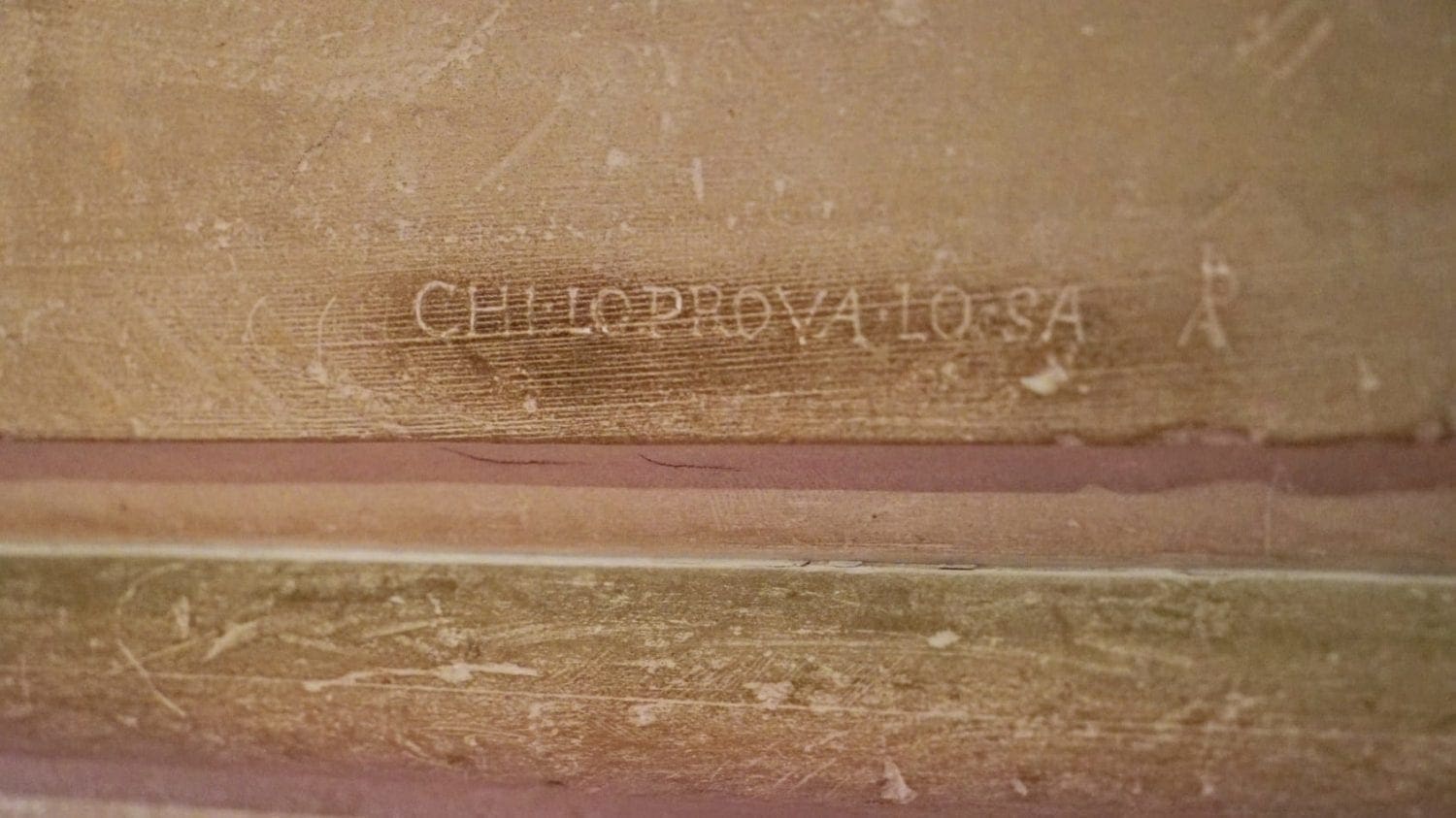
I’m not quite sure what to make of that, though it gave me something to think about while I made my way through the rest of the gallery.
Seeing historic graffiti reminded me of the Tower of London, with its famous carvings of my prisoners, which I highly recommend you add to your London itinerary.
Here you’ll also find the ‘Passion Cycle’ paintings, which depict the story of Christ’s last days.
However, I was much more fascinated by this naval scene.
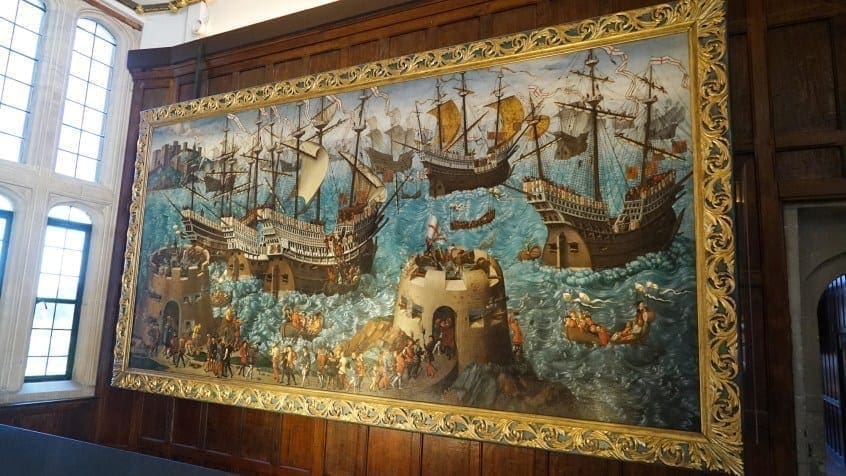

I liked how the water was painted.
I don’t think I’ve seen anything like that before.
Feel Like Royalty Inside Hampton Court Palace
One of the best things about Hampton Court is that it allows you to feel like you’re part of the palace.
To take a walk in Tudor shoes, as it were, or, more correctly, take a seat in a royal chair.
There were wooden thrones throughout the gallery, allowing you to take in what each notable resident felt during their time there.
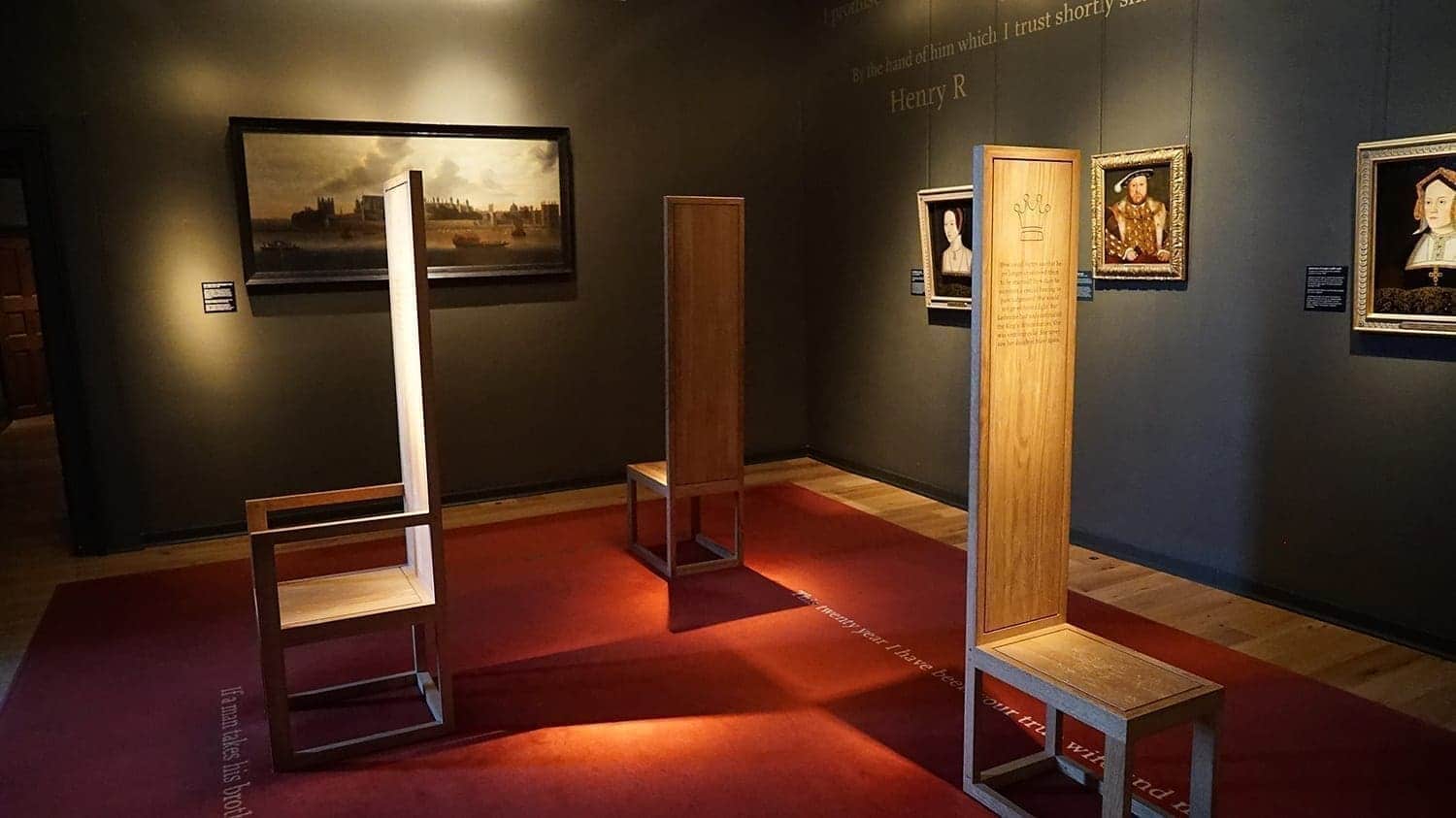
The audio guide covered a lot of fascinating information and stories; it was genuinely lovely to sit and absorb.
It just so happened that when I was going through this gallery, there was not another soul around. So, I took that as my cue to relax and let it sink in.
What must it have been like in Tudor times? For Henry, Catherine, and Anne.
Taking a Sip at the Wine Fountain
If you watched The Tudors (one of my favorite TV shows set in Europe), you’ll know about this Hampton Court Palace wine fountain.
The motto…
“faicte bonne chere quy vouldra”
…meaning “let he who wishes make good cheer,” is carved on the gorgeous, ornate fountain.
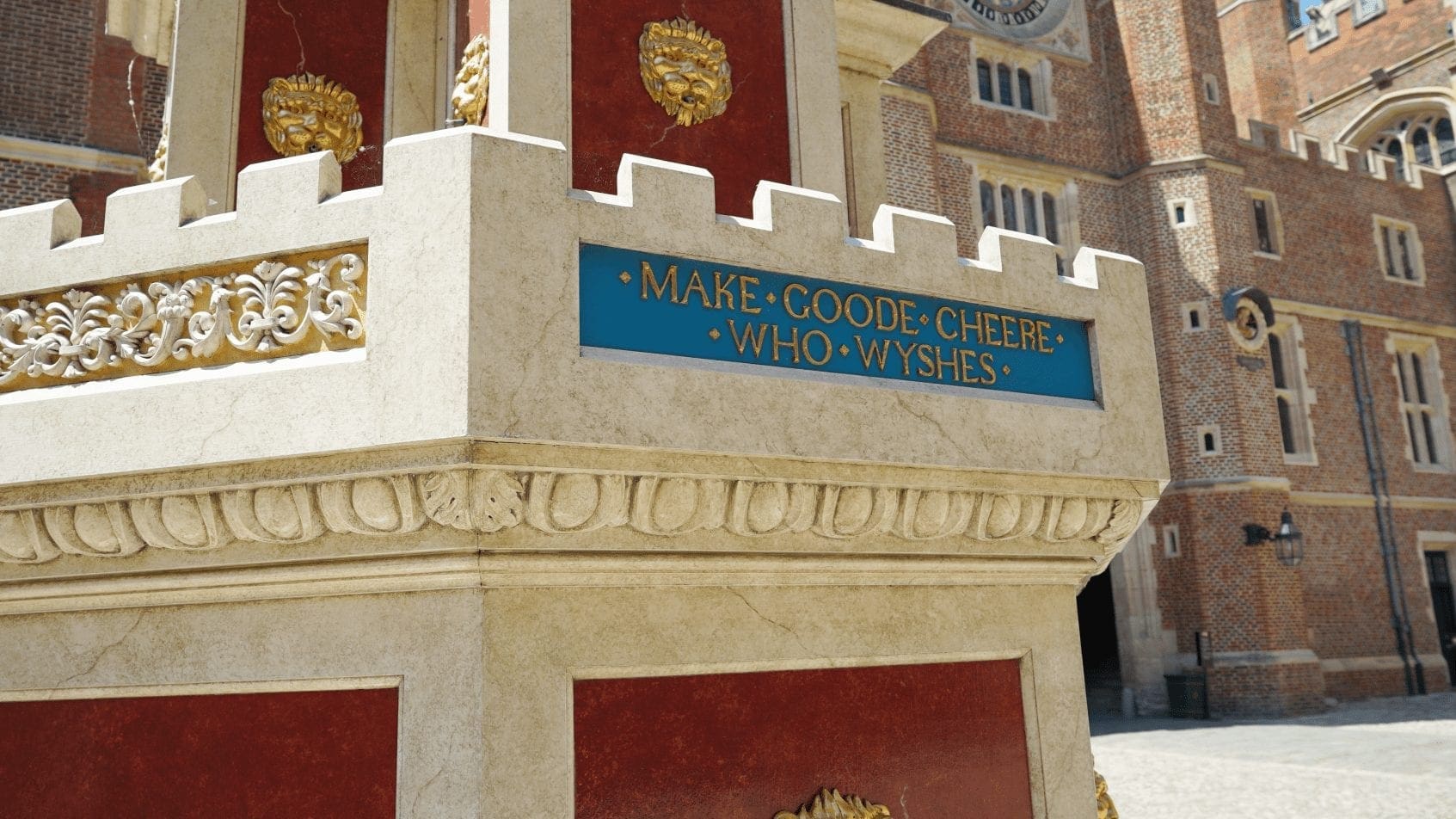
The original was created in Henry VIII’s time, and wine used to be poured from it.
Although the original no longer exists, in 2010, a working recreation of the famed wine fountain was unveiled.
“Inspired by the discovery of the remains of a 16th century conduit (or fountain) during a major archaeological dig at Hampton Court Palace in 2008, the new fountain’s design is based on detailed historic research into wine fountains that were commonly used during festivals and celebrations by Henry VIII (reigned 1509 – 1547).”
Red and chilled white wine runs from this replica on weekends and bank holidays.
Unfortunately, while I was there, they were not passing out wine from it (whomp whomp).
William of Orange’s Apartments
The next part of the Hampton Court Palace tour was the Georgian Story.
It’s very clear inside Hampton Court Palace that it is a palace of different eras.
The coolest thing about the Georgian part of the tour was that you received a ‘smell map’ upon entering.
Yep, that’s right! A scratch-and-sniff map!
Each room had something to whiff—the guard chamber had a wood-burning fireplace, while the drawing room smelled of herbs, etc.
“Courtiers attending a Drawing Room would have been packed together in this room. To mask the unpleasant stench of too many unwashed bodies, strongly scented herbs such as wormwood, gerrymander, lavender and meadow-sweet were sprinkled on the floor.”
I still have this map because I thought it was so awesome!
In one of the larger rooms, the lights changed color on some of the white mannequins, creating a charming effect.
It helped give visitors an idea of what court life may have looked like.
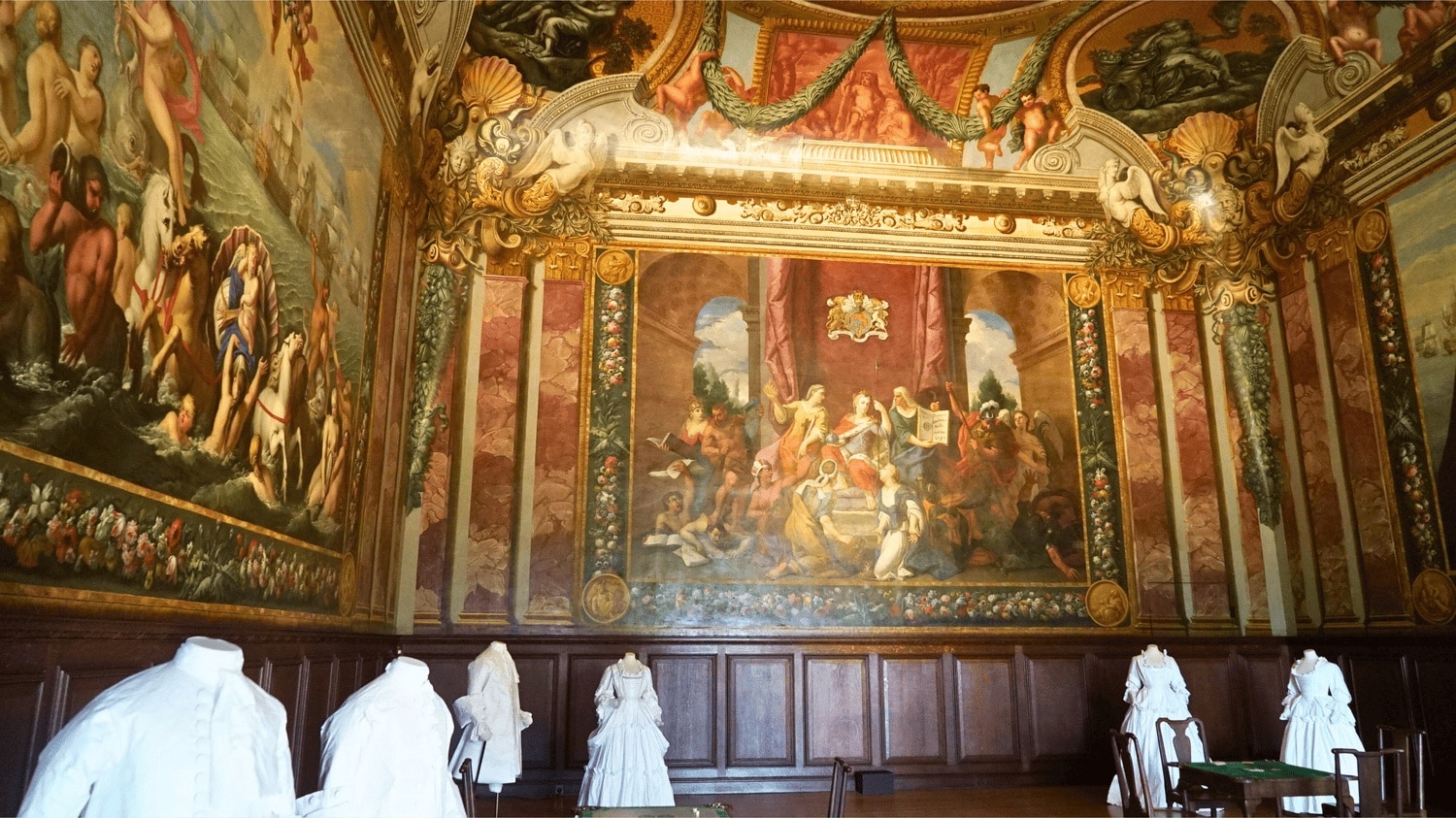
I then continued into the private drawing room and took a whiff of royal hot chocolate.
The smell of a bath followed it in the bathing room.
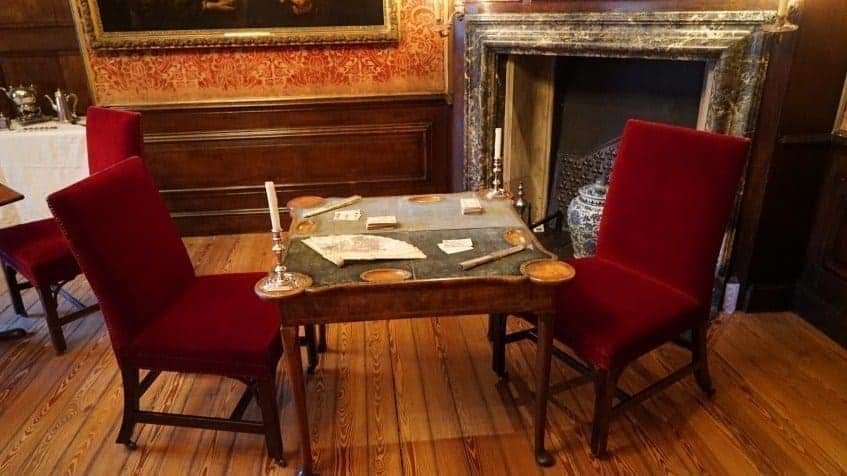
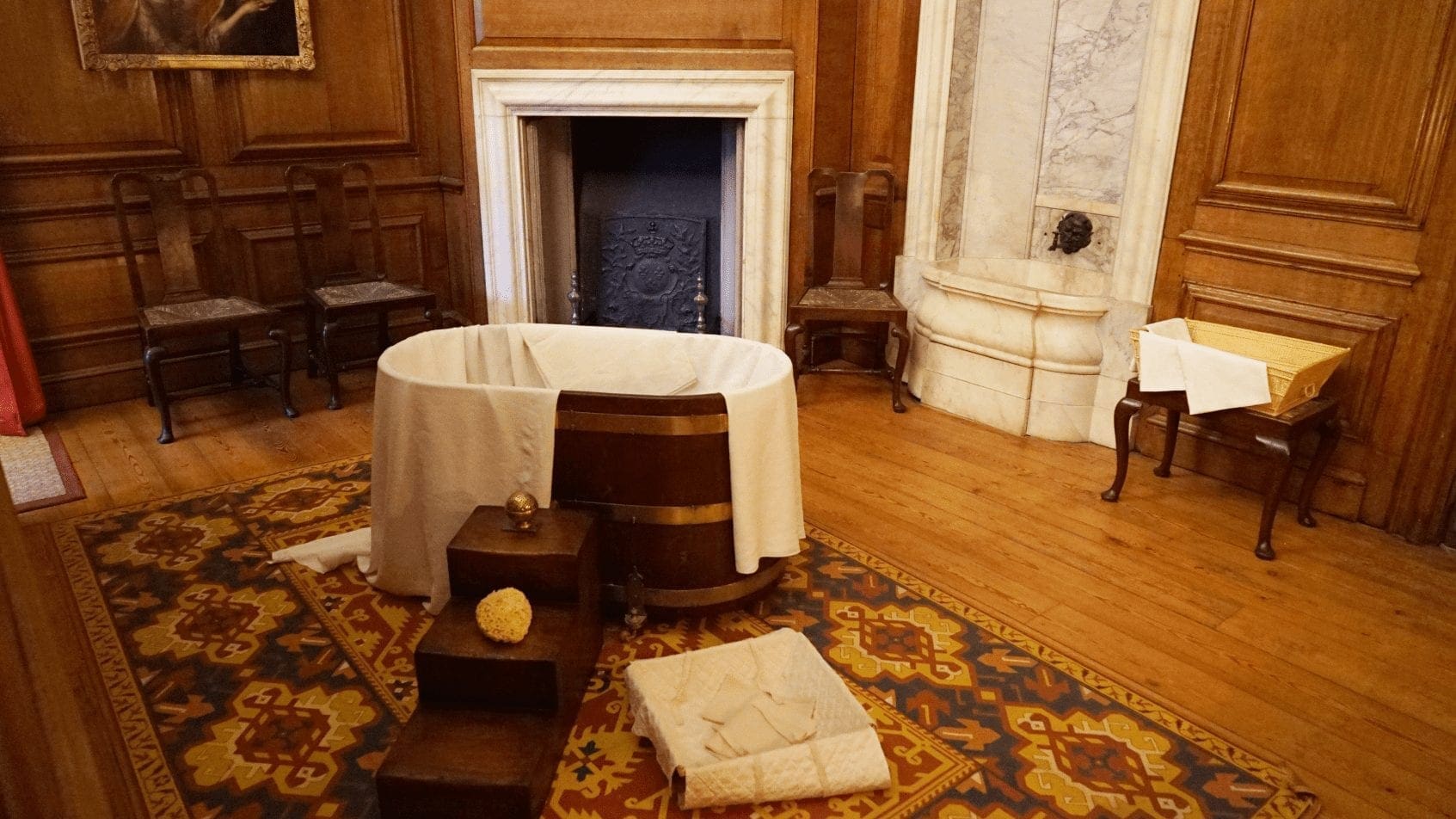
You can even smell the royal toilet if you really, really want to.
The Grand Staircase
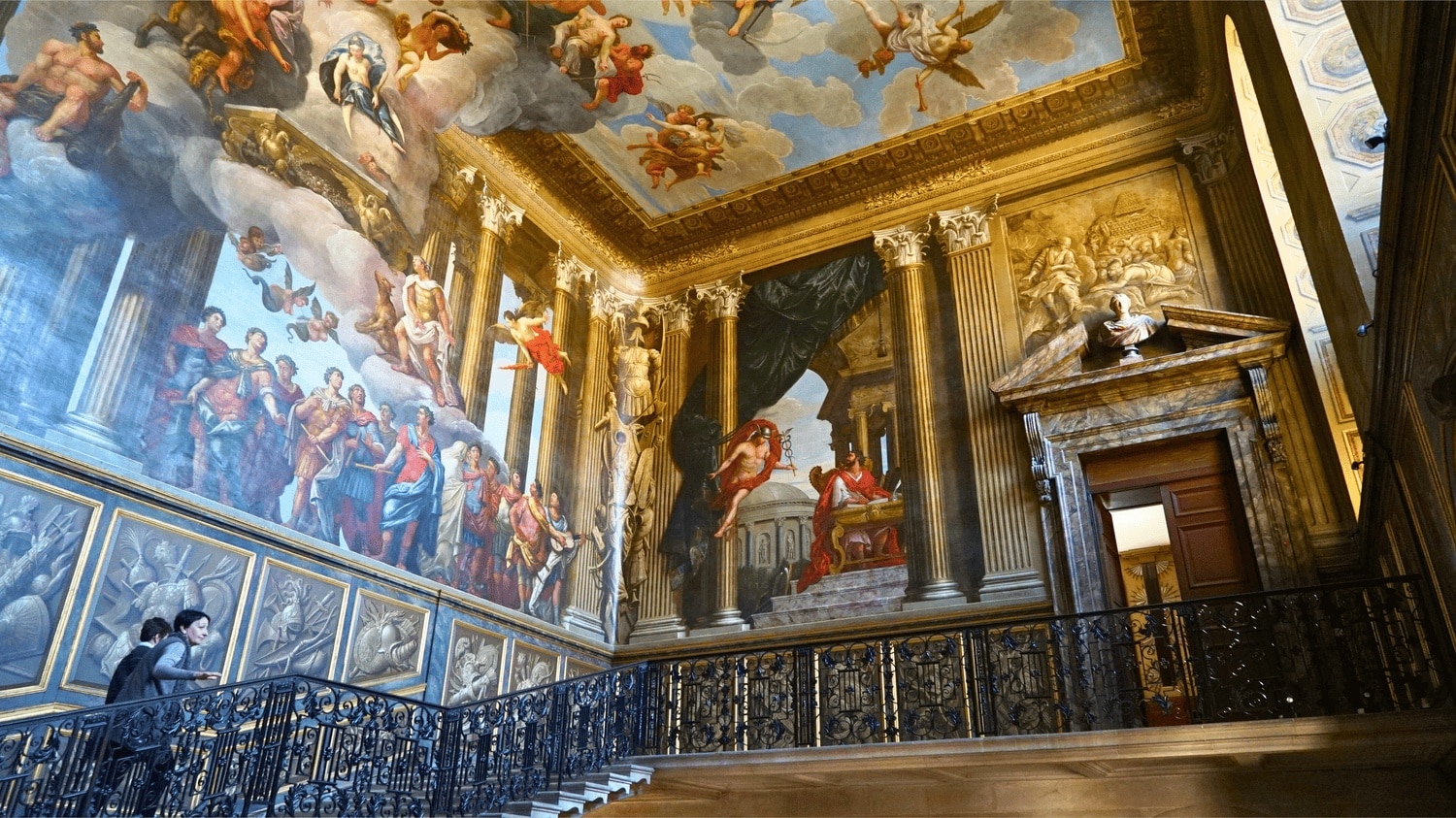
Upon entering the ‘newer’ section, you see the ‘Victory of Alexander over the Caesars’ mural by Italian artist Verriog.
The twelve Caesars represent the Catholic forces that William had ousted in the Glorious Revolution.
William is, of course, the hero, Alexander.
The King’s Guard Chamber
William of Orange’s state apartments and private rooms are railroad rooms, requiring a long walk from room to room.
Inside his part of Hampton Court Palace, swords, guns, and all sorts of weaponry adorn the walls.
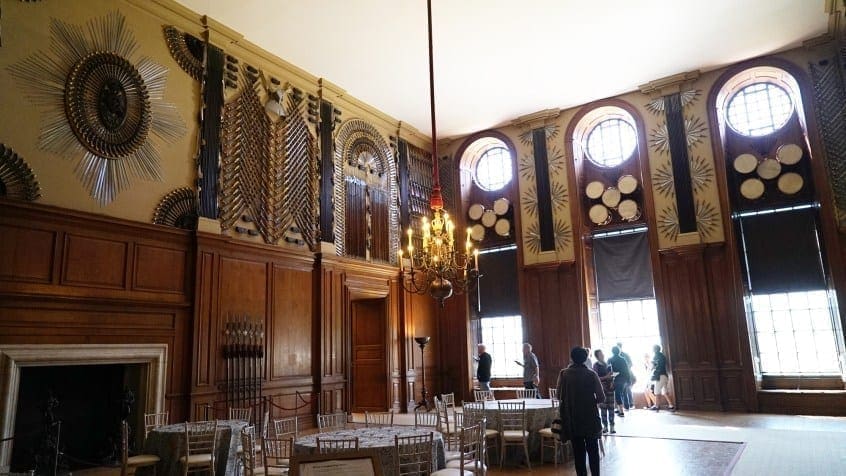
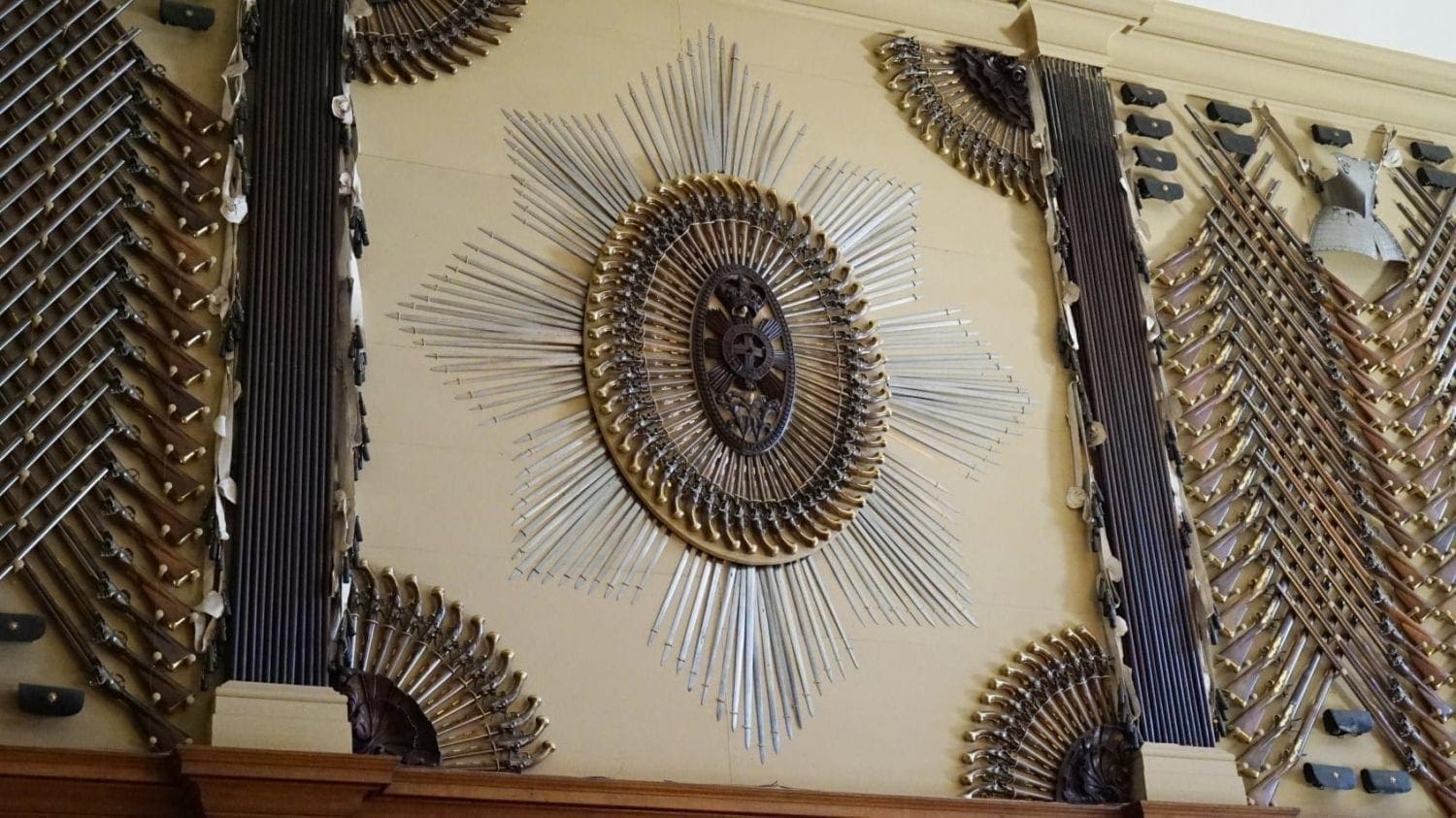
If I recall correctly, they have to take it down every few years and clean everything.
I do not envy whoever has that job!

The Presence Chamber
The Presence Chamber is the official throne room of William and Mary of England.
The chair of the estate is under its formal canopy.
In his time, visitors would have to bow to the throne as they passed, even if it was empty!
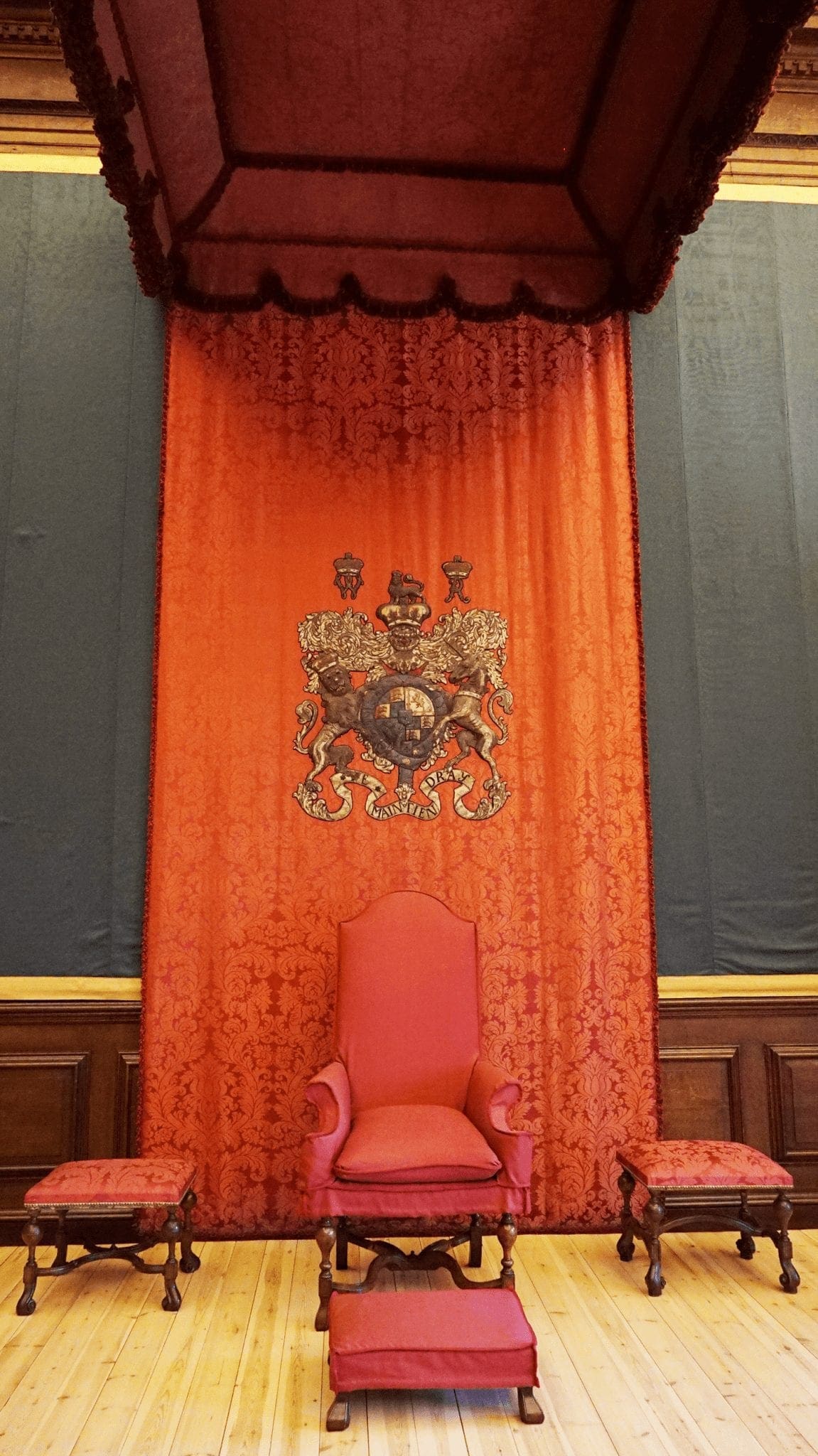
The State Apartments look empty to modern eyes but they would once have been filled with beautifully dressed courtiers who would be meeting, gossiping and playing politics.
Historic Royal Palaces
The Great Bedchamber and Little Bedchamber
You’d think this was the King’s bedroom. However, it was not!
It’s where the King was to be dressed in public.
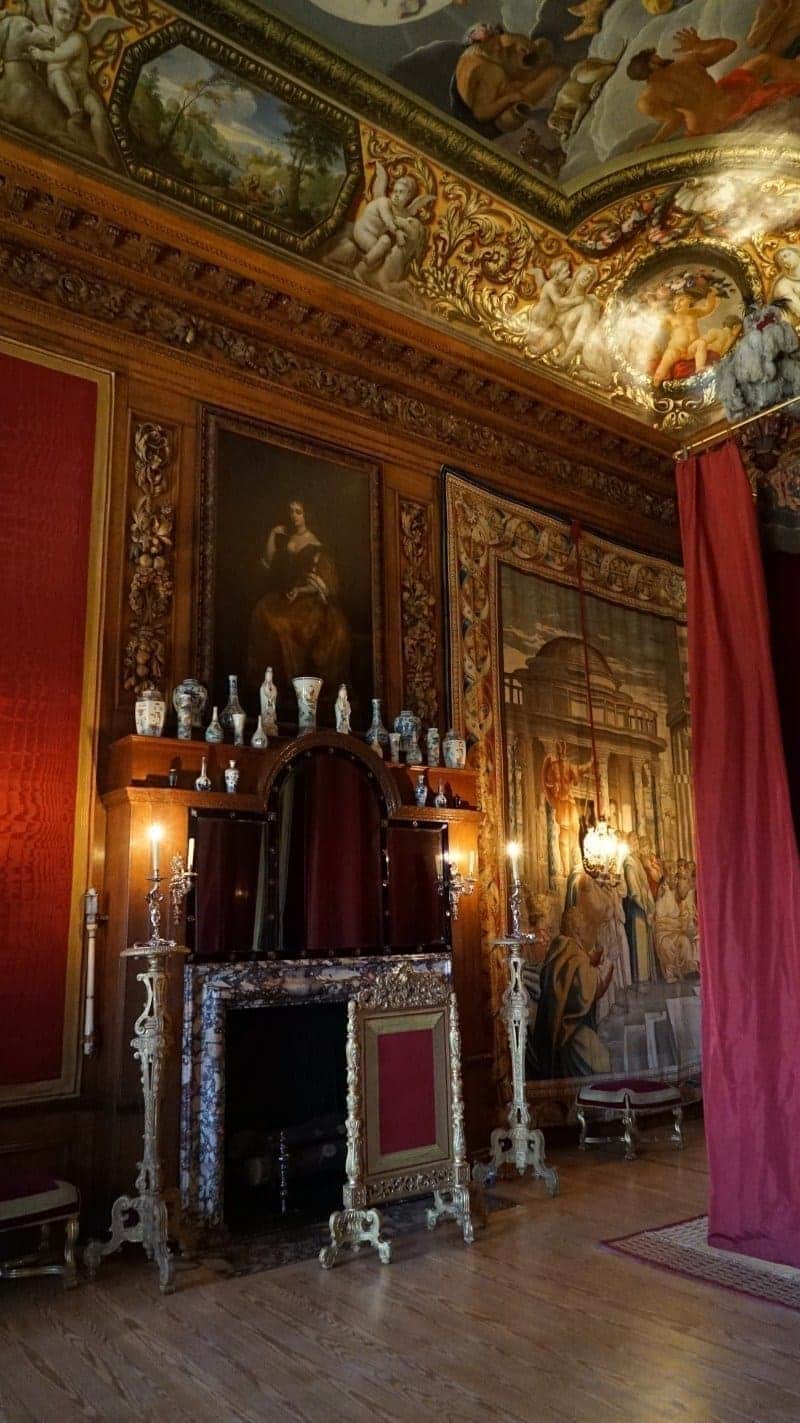
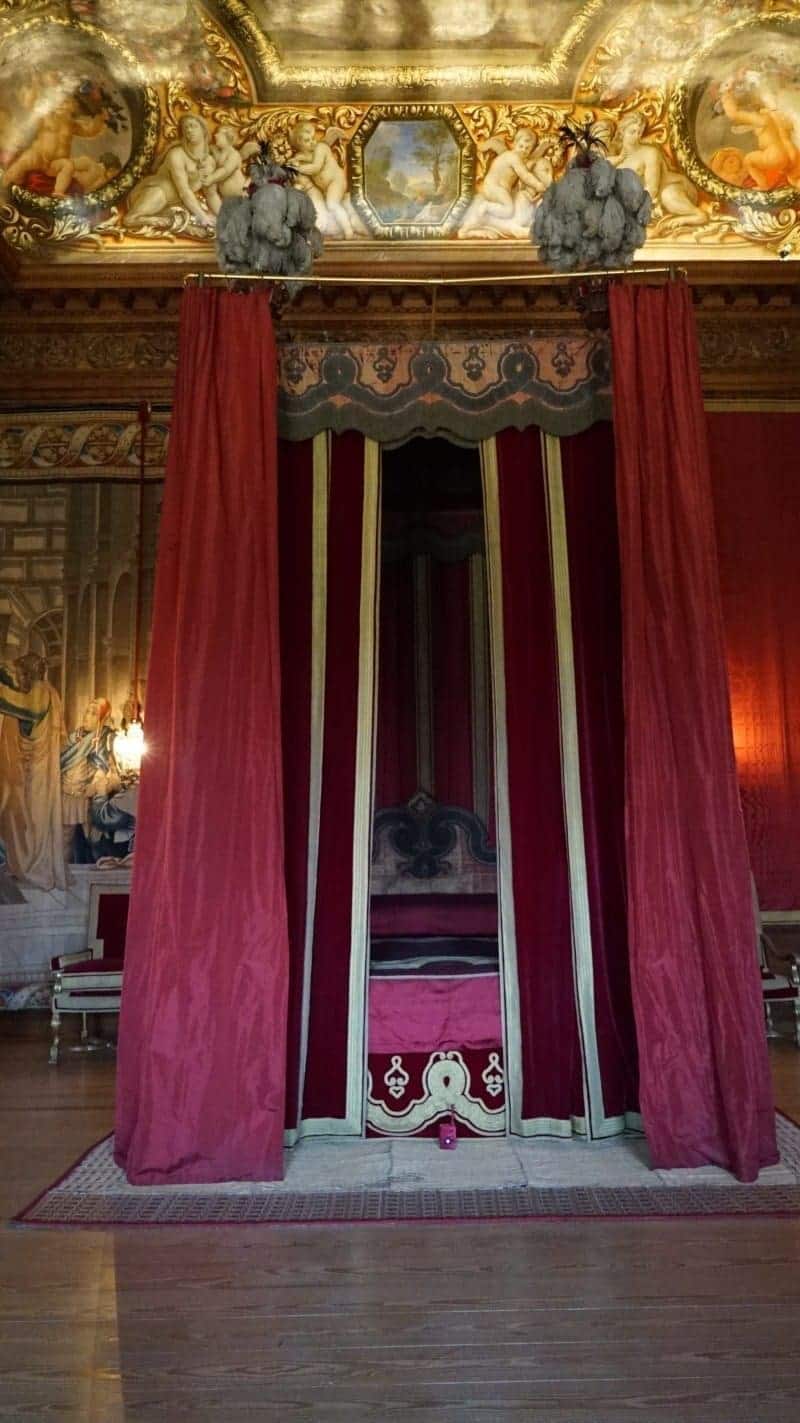
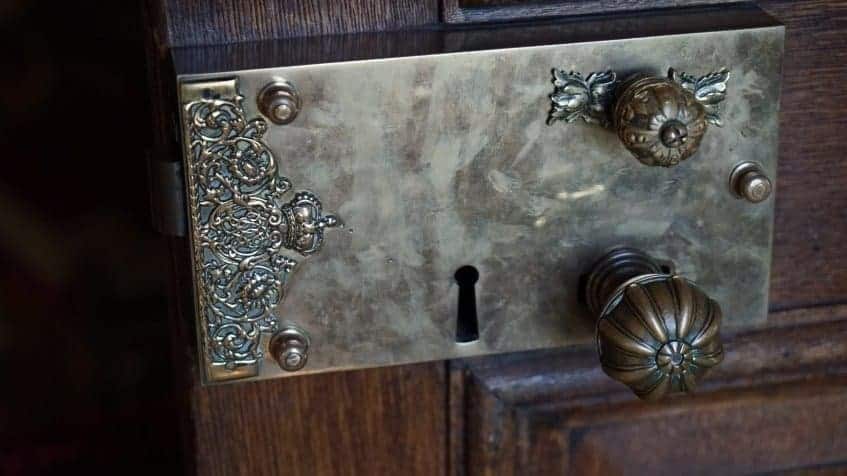

Next door is the Little Bedroom, where only the King’s most personal staff and close courtiers were allowed in.
I loved all the little details in these rooms, from the lighting fixtures to the regal doorknobs.
Private Apartments and Office
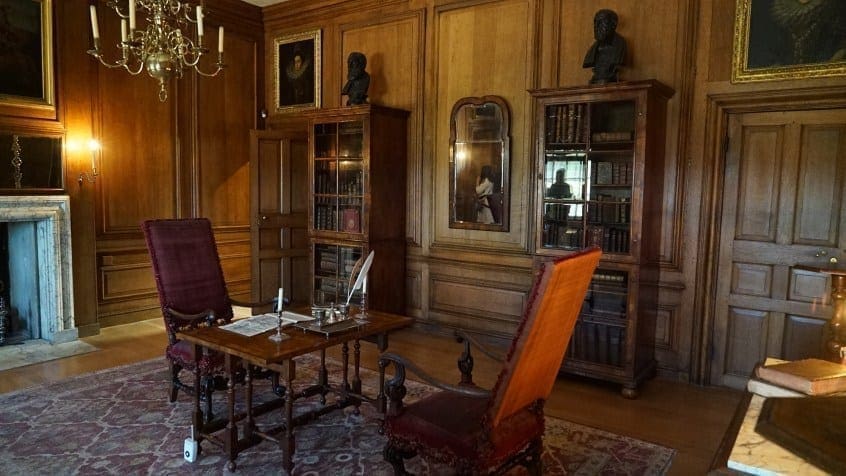
I found William’s office quite small for what I thought would be fit for a King, though the view of the Hampton Court Palace gardens from there was beautiful.
I’d love a key like that to my apartment!
Though I wonder how heavy it is.

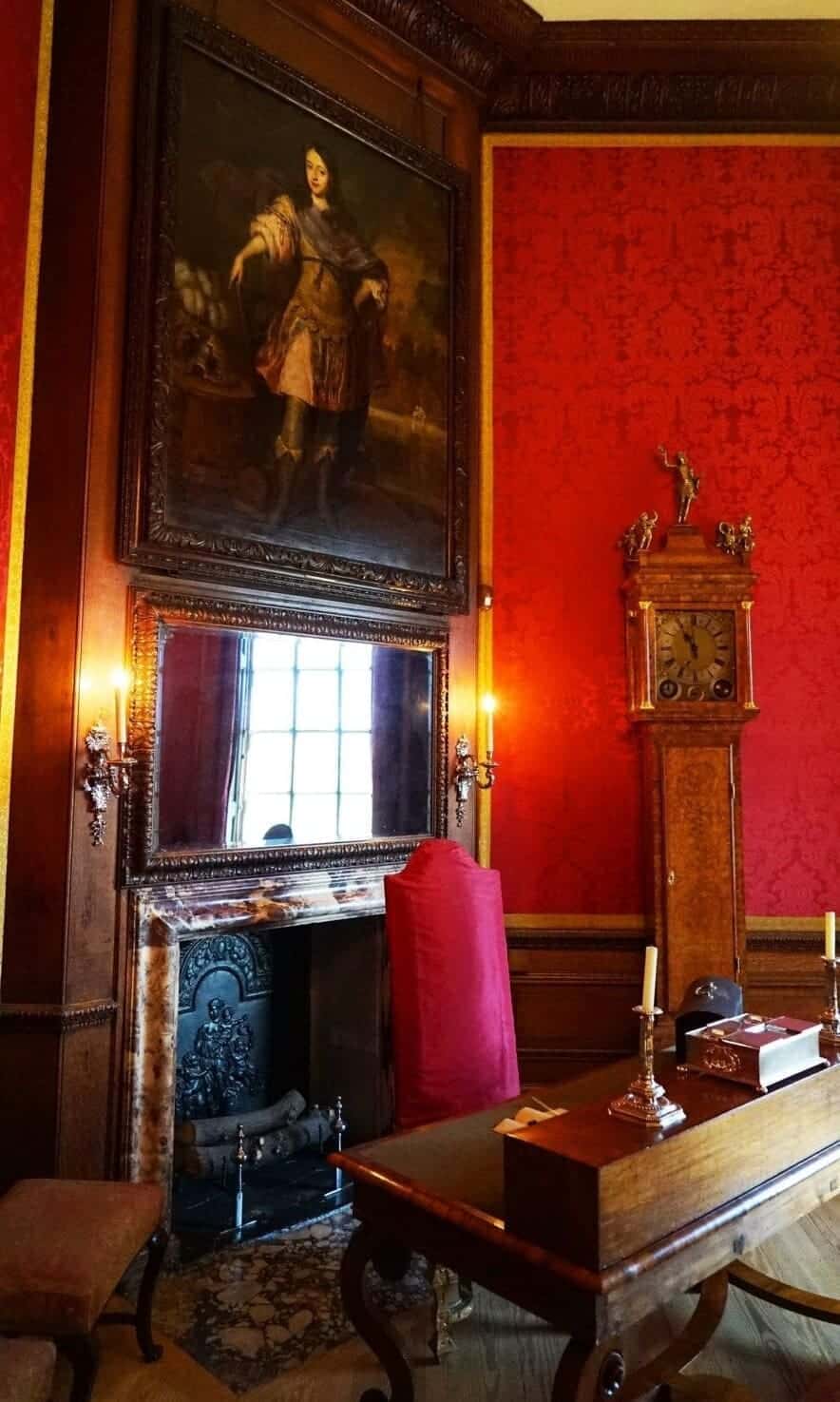
William of Orange spent most of his time in the Private Apartments, surrounded by his prized possessions and entertaining his favorite people.
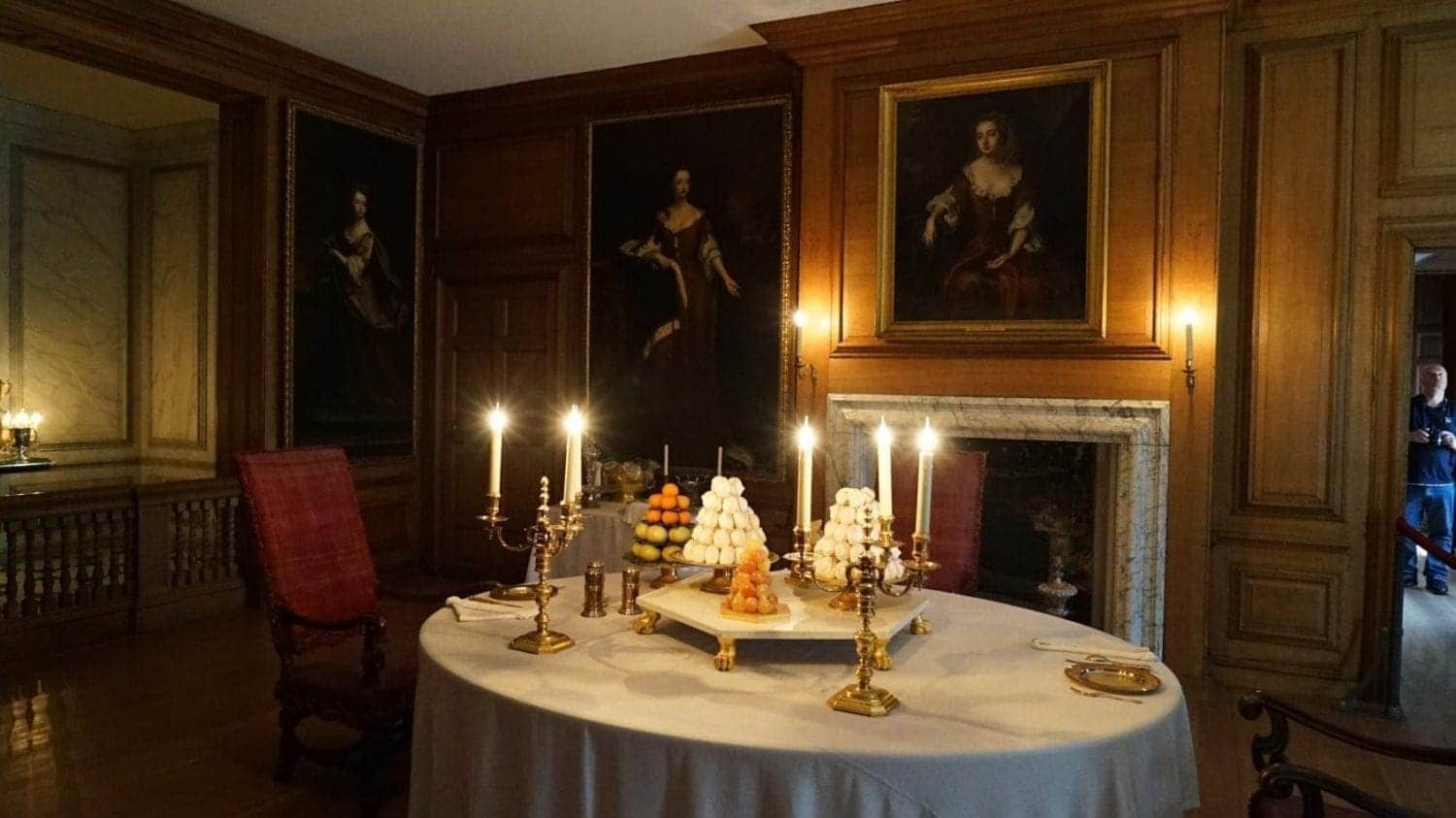
His private dining room is set as it would have been in 1700, towards the end of his life, with the famous Hampton Court Beauties paintings hung around the table.
Henry VIII’s State Apartments
Don’t let the name ‘apartments’ fool you. It looks nothing like my studio apartment in Los Angeles.
The Great Hall
Upon entering through the Great Hall, you begin the Henry VIII’s State Apartments tour.
Again, if you watched Tudors or any Henry VIII-based movies, you’ve seen something like it.
That, or you can imagine a smaller version of the Hogwarts Great Hall, minus the floating candles. Even without the wizard magic or the King himself, the hall is magnificent.
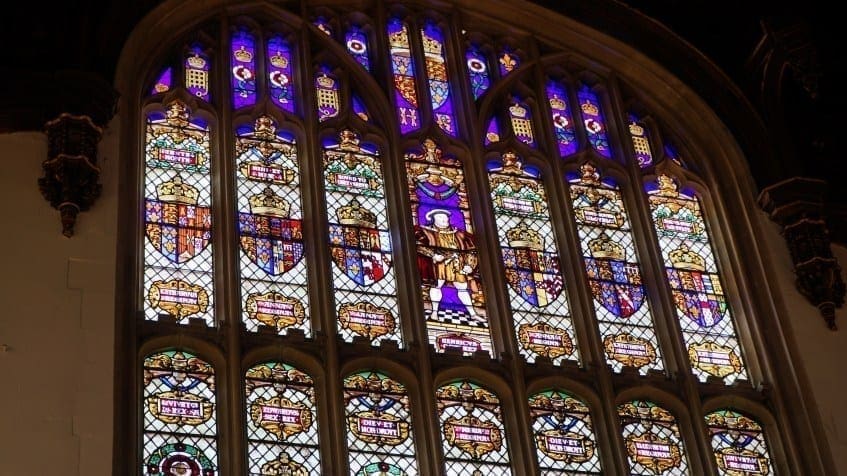

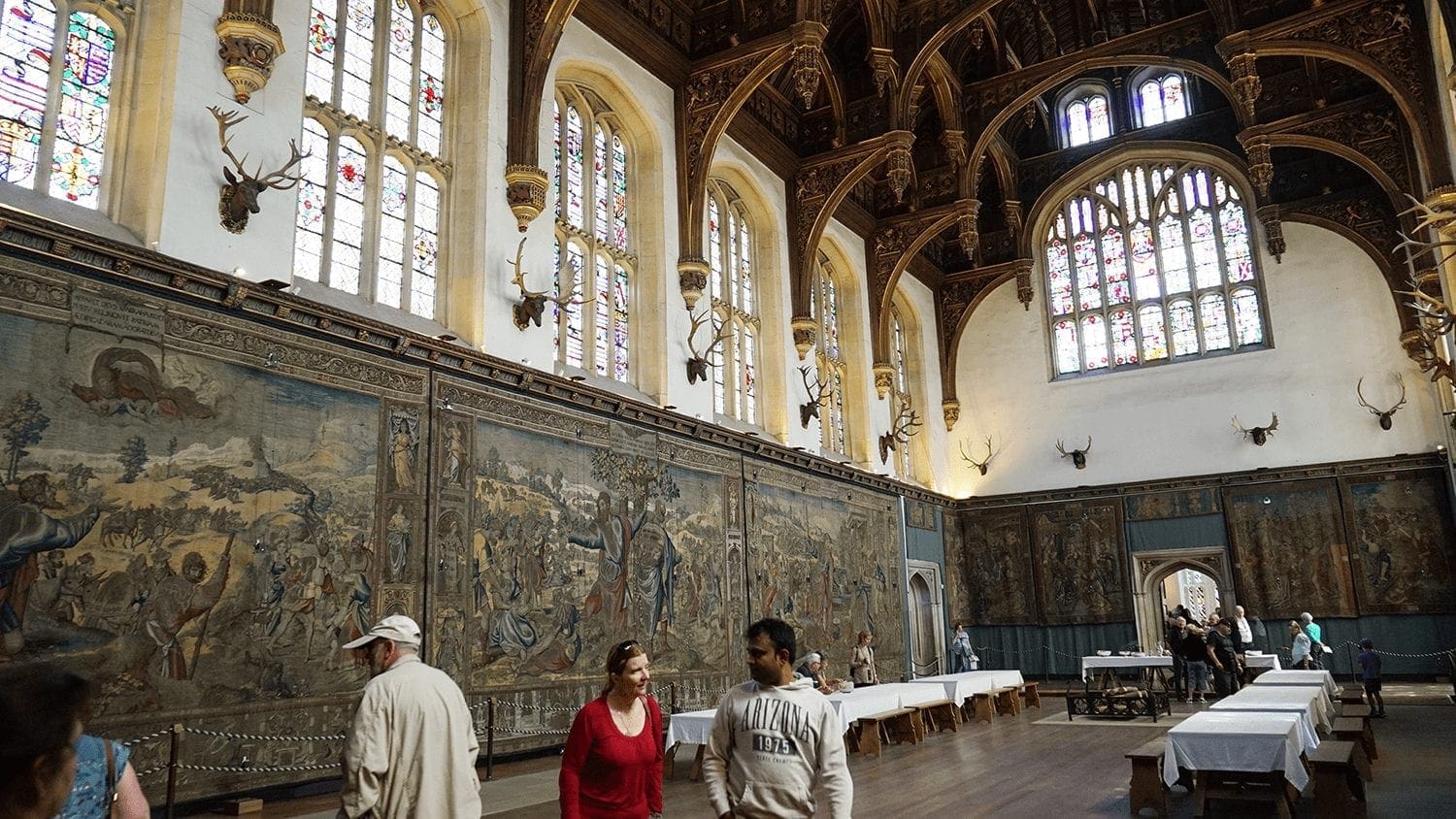
I had been in the Hampton Court Palace Great Hall earlier for the time play, but this time, I got to look around and explore.
The tapestries and stained glass are so ornate, it’s mind-blowing.
Great halls were used for eating and entertaining, and twice a day, here, you could get a meal from the nearby great kitchens—dinner at 10 o’clock in the morning and supper at 4 o’clock in the afternoon.
The Great Watching Chamber
Once you’re past the Great Hall, you’ll enter the Great Watching Chamber.
What’s extraordinary about this section is the ceiling work.
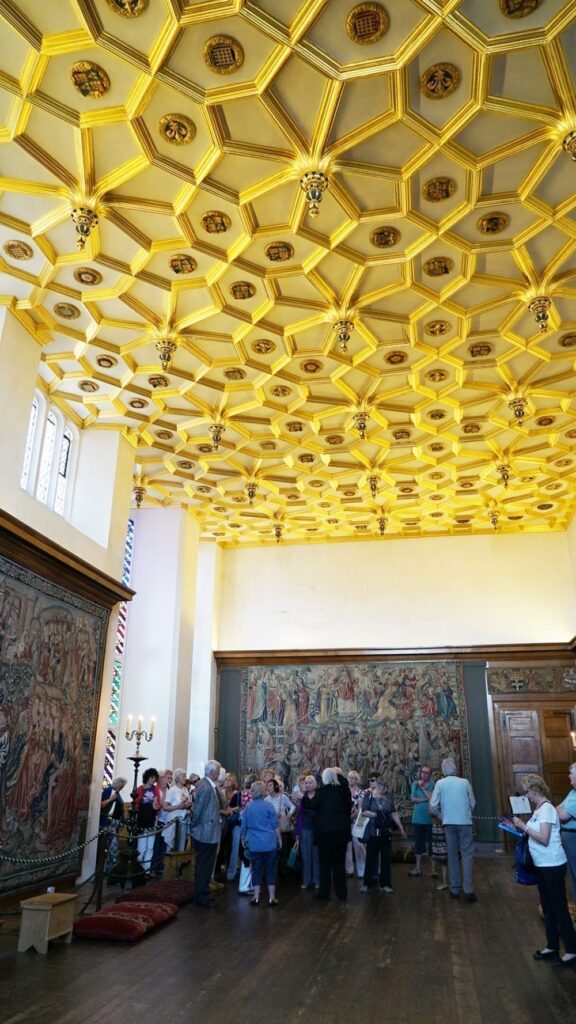
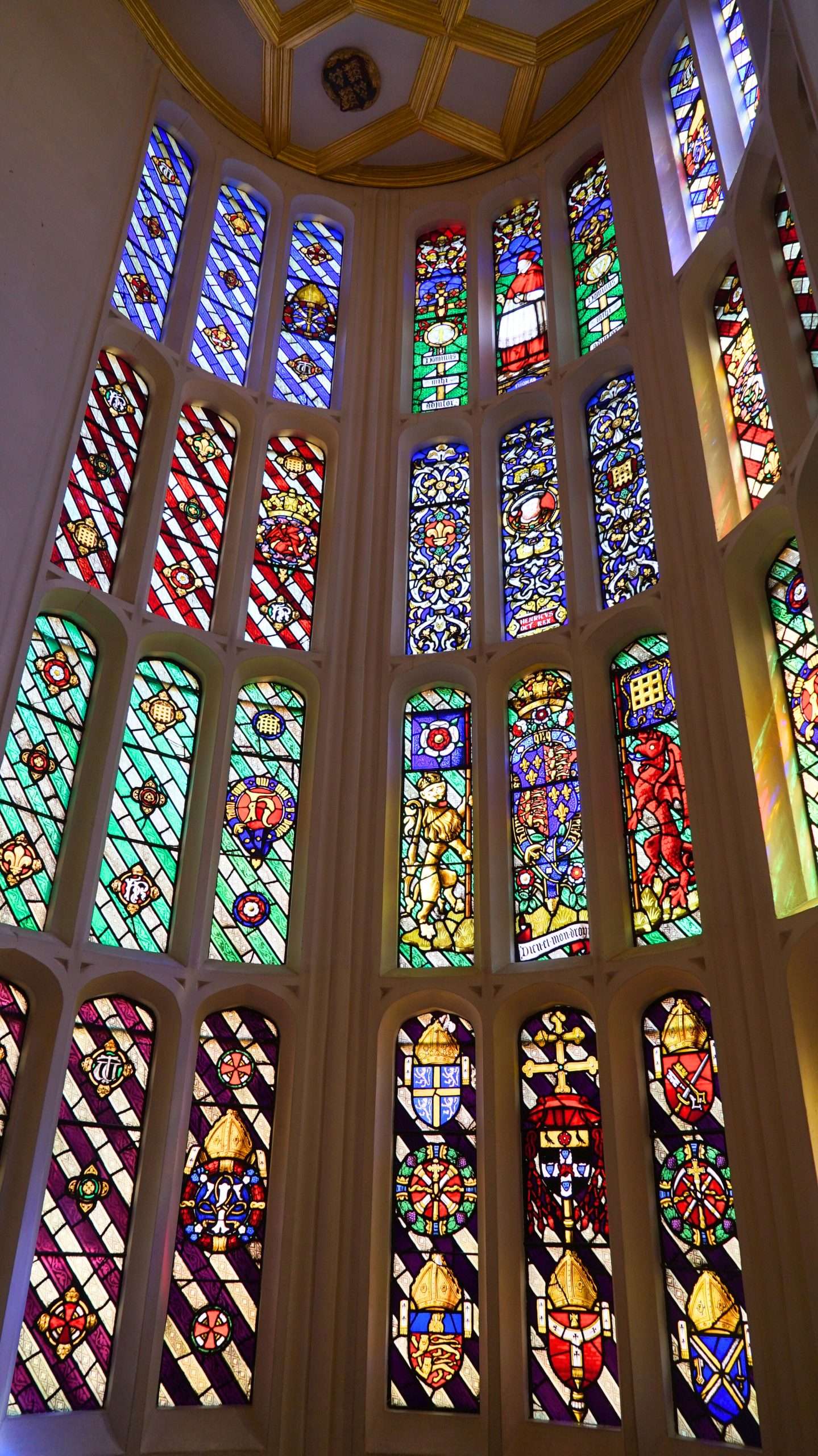
Here, the Guard stood ‘watch’ and controlled access to this important part of the palace.
Those deemed important enough were allowed entry into a sequence of increasingly exclusive chambers.
This royal ‘filtering system’ was designed to restrict access to the King and to channel people to the spaces appropriate to their rank.
The Haunted Gallery & Processional Route
Apparently, this gallery is the most haunted part of the palace.
I overheard a Hampton Court Palace tour guide say that an unusual number of people faint in this section of the Palace. I luckily escaped without doing so!
In 1541, Catherine Howard, Henry VIII’s fifth queen, learned she faced adultery charges, just years after her cousin Anne Boleyn, Henry’s second queen, was executed for similar accusations.
Legend says Catherine, terrified and desperate, escaped her guards at Hampton Court Palace and ran along the processional route to find Henry in the Chapel, to plead her innocence.
But before she could reach the door, she was seized by guards who took her screaming back to her rooms.
Catherine was executed at the Tower of London three months later, and her ghost, allegedly, has been seen running through what is now called the Haunted Gallery at Hampton Court Palace, wailing for mercy.
You’ll find the letter (a copy) that damned Catherine Howard to the executioner here.
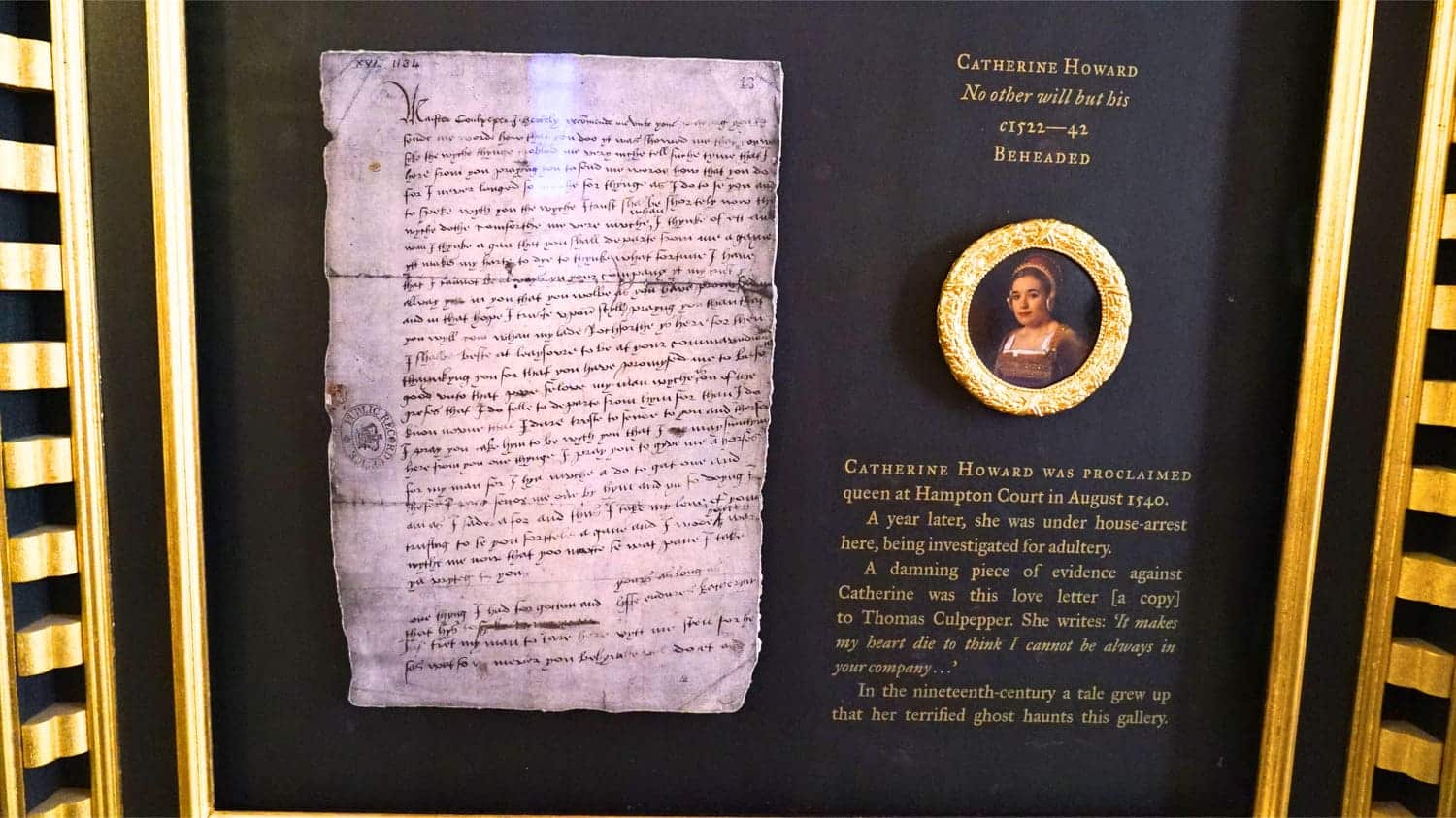
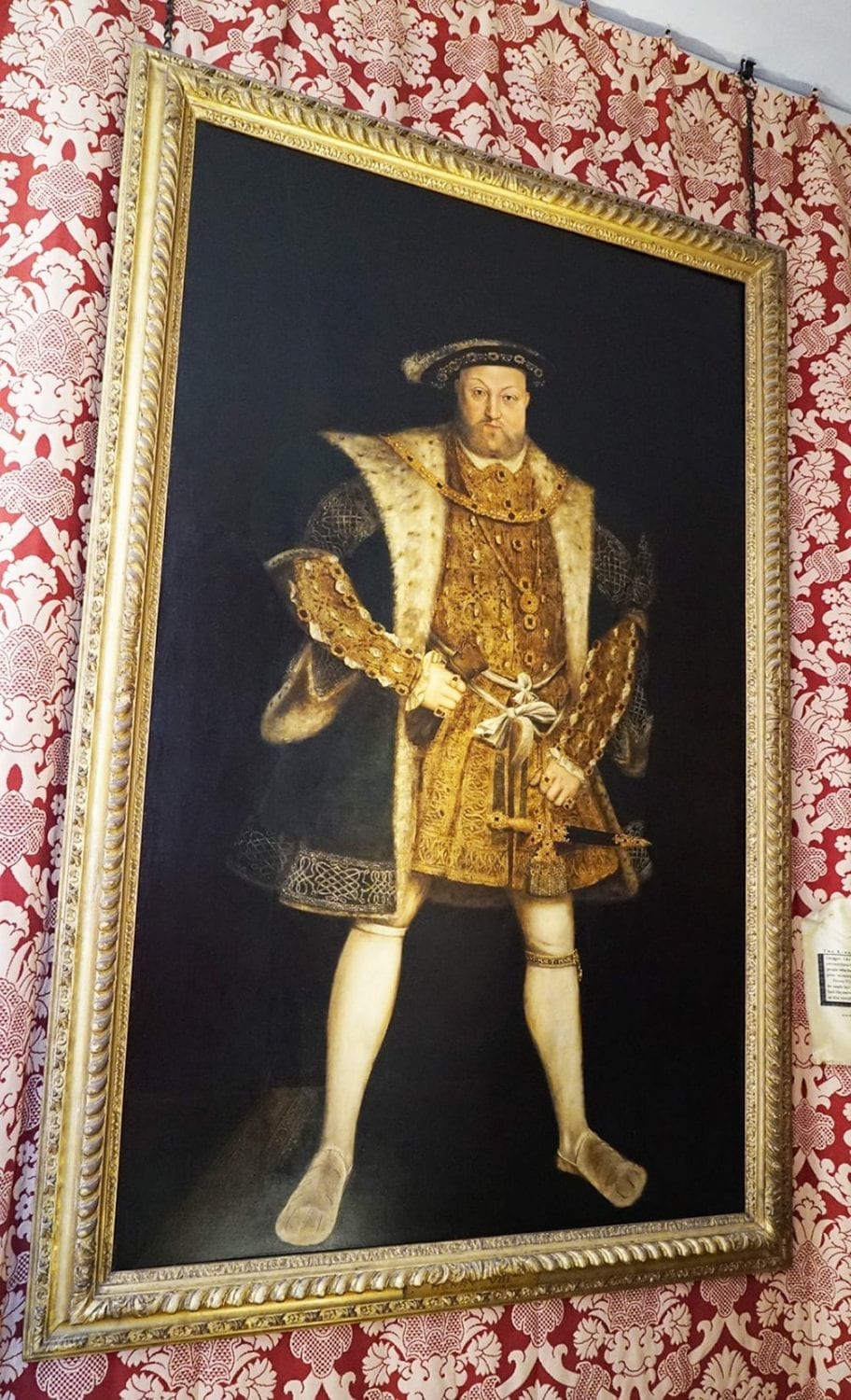
You’ll also find the famous painting of Henry VIII (see at the top of the post) that dons nearly every history textbook.
He must have been an extremely imposing man, especially with that renowned temper.
Touring Henry VIII’s Kitchen
You won’t believe just how big his kitchen is!
When you think about it, they served hundreds of people when kings lived here, so they had to feed them all somehow.
The high ceilings allowed smoke to rise from the tremendous fires that cooked meat and other dishes.
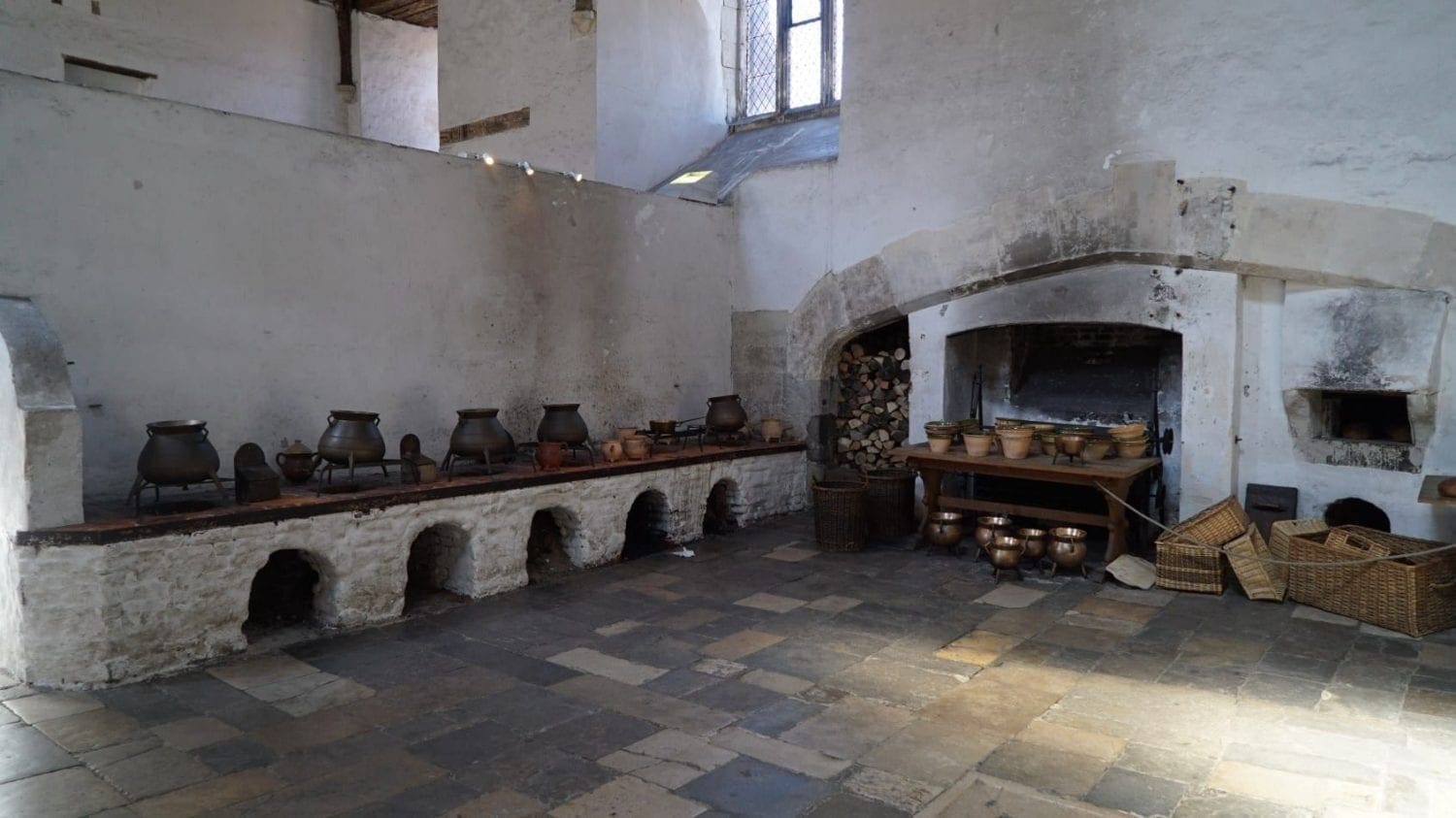
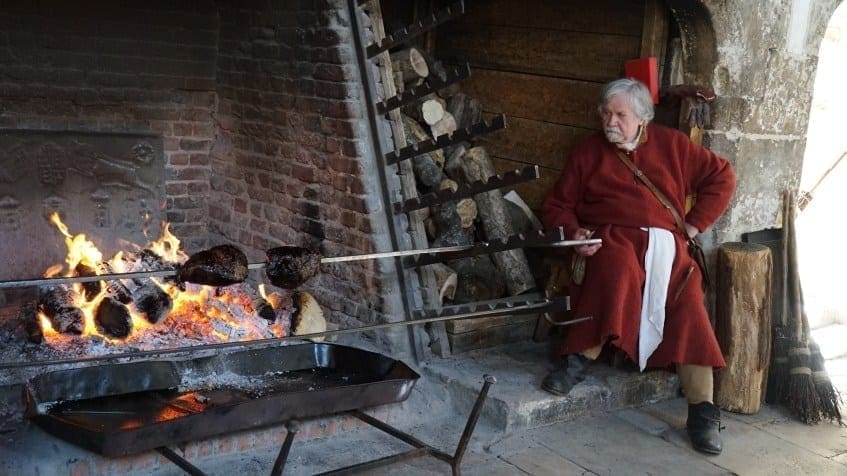
This Tudor kitchen would have been filled with workers scurrying around, making sure dinner was on time.
Banquets and feasts consisted of many courses, and each course had a variety of dishes brought out at the same time. People could then choose what they wanted to eat.
Everyone drank ale during the Tudor period because the water was unhealthy.
It wasn’t filtered like it is today, plus sewage and other marvels we take for granted weren’t the best back then. Ale at the time was brewed without hops and was not particularly alcoholic.
Wine was also drunk, mostly imported from Europe, but sometimes produced in Southern English vineyards.
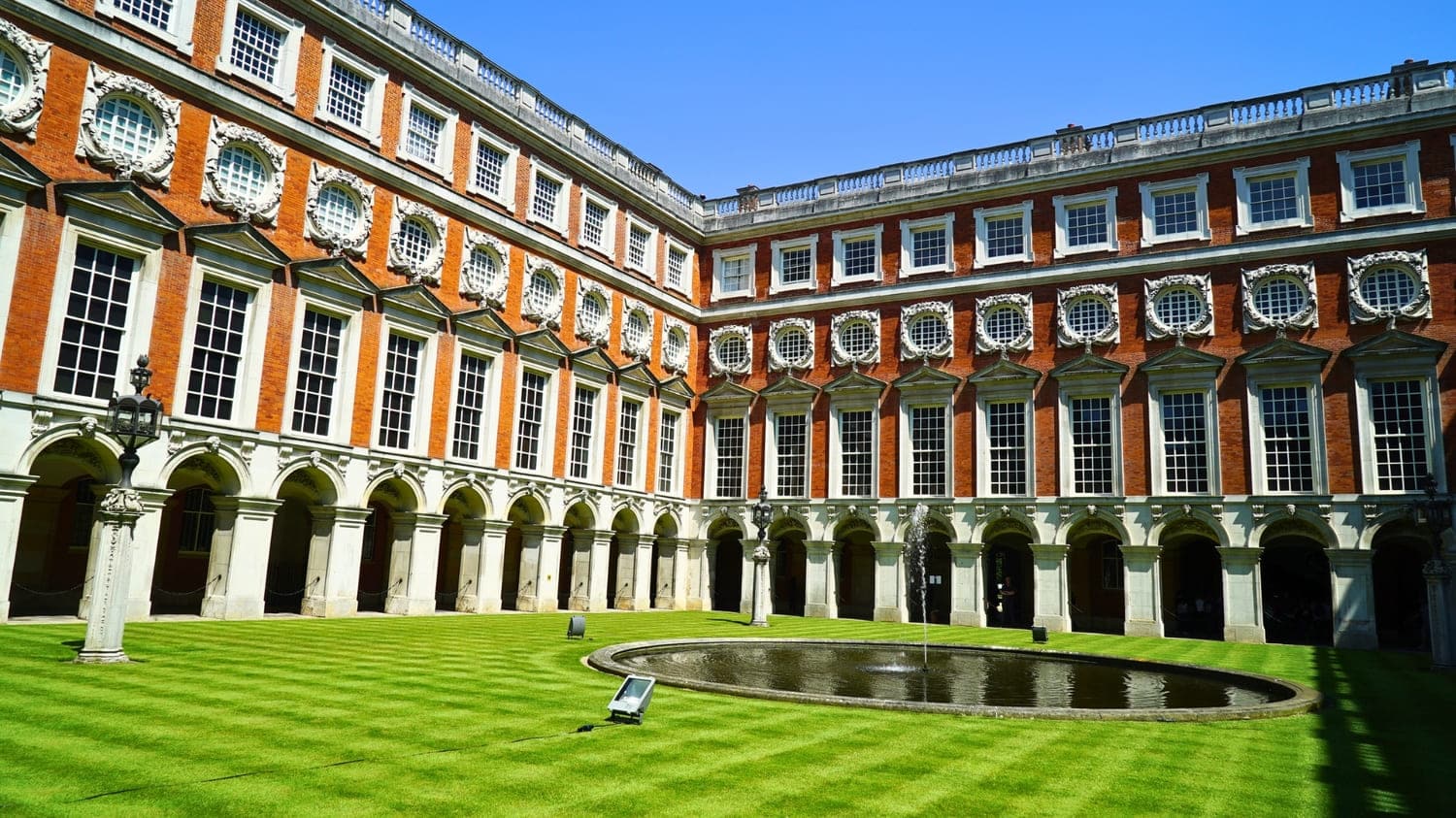
Fountain Court
The Fountain Court was part of Christopher Wren’s baroque remodeling of the palace for William III and Mary II.
It housed private and state apartments for both the King and Queen, the Lower Orangery, and the grand colonnade in Clock Court, providing a grand entrance to the King’s Apartments.
Recently, it has been featured as a filming location for Bridgerton, the hit Regency drama on Netflix.
The Chocolate Kitchen
The chocolate kitchen at Hampton Court Palace was built for William and Mary of England around 1689 and primarily served the Georgian kings.
George I even had his own chocolate maker, Thomas Tosier.
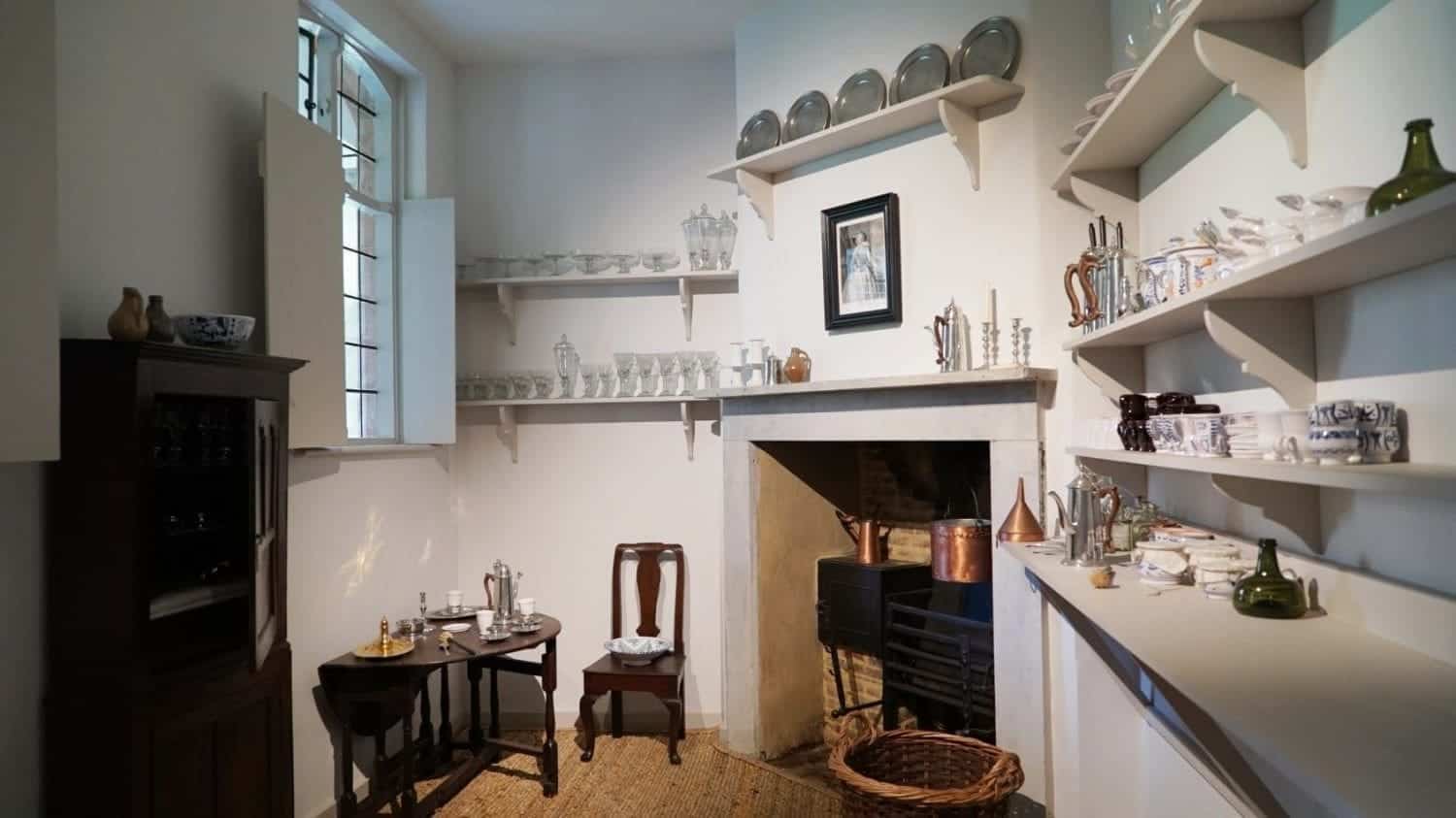
I would be as big as Henry the 8th if I had my own chocolate kitchen.
It was a big deal back in the day, too. It was expensive and prepared especially for the royals.
Chocolate was a luxury, more expensive than tea or coffee. Made with exotic spices and served in gold and silver chocolate pots. Then sipped from porcelain cups.
Nearby to the chocolate kitchen were a Confectionary and a Spicery, making sweets and preparing and storing spices, respectively.
After falling out of use, the Chocolate Kitchen lay hidden for years. The Chocolate Kitchen had been mentioned in many documents but its location remained a mystery until 2013 when one of our curators discovered an 18th-century inventory of the palace pinpointing its location. They were re-opened in February 2014, and are the only royal chocolate kitchens in Britain.
Historic Royal Palaces
The Gardens
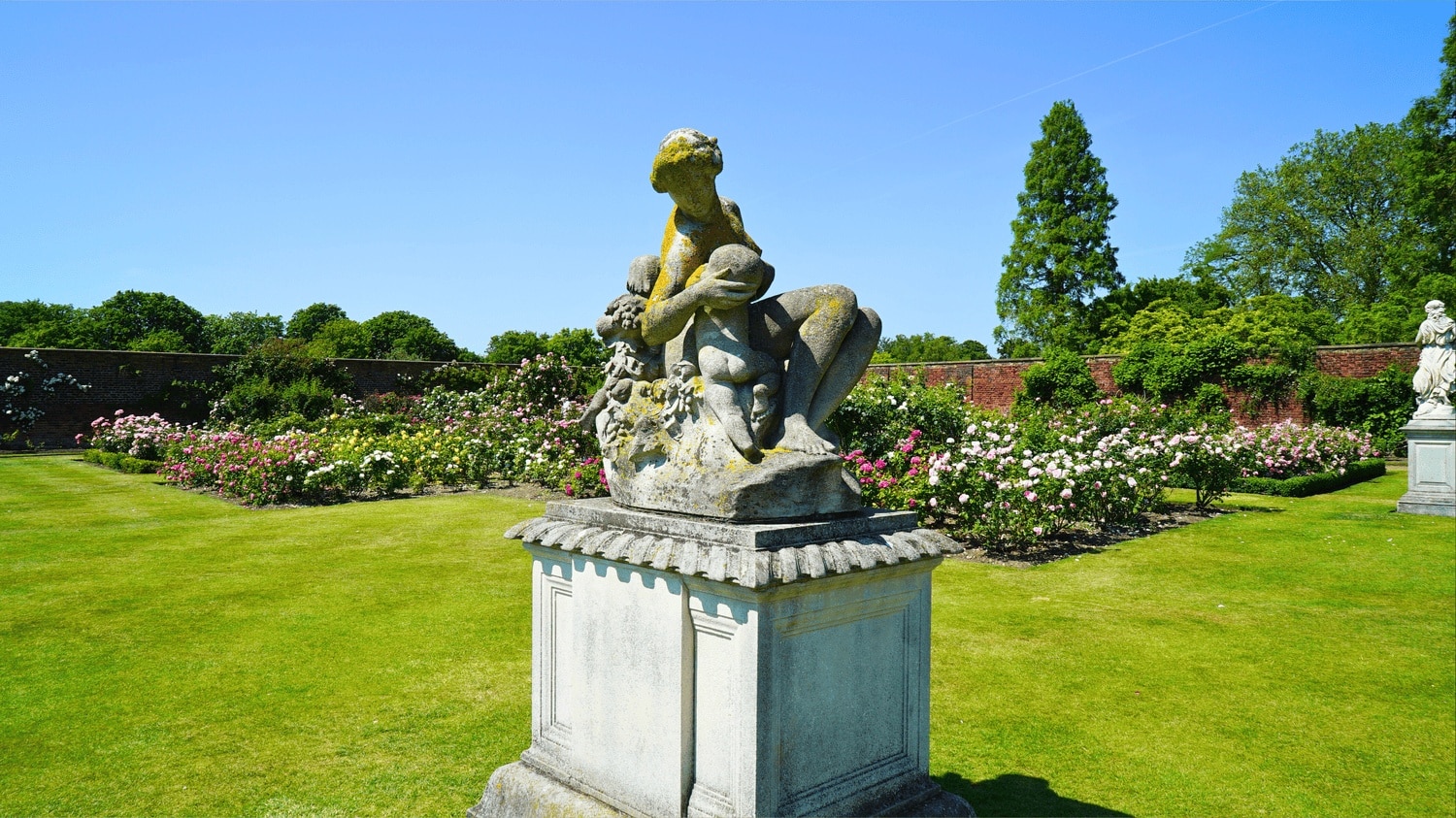
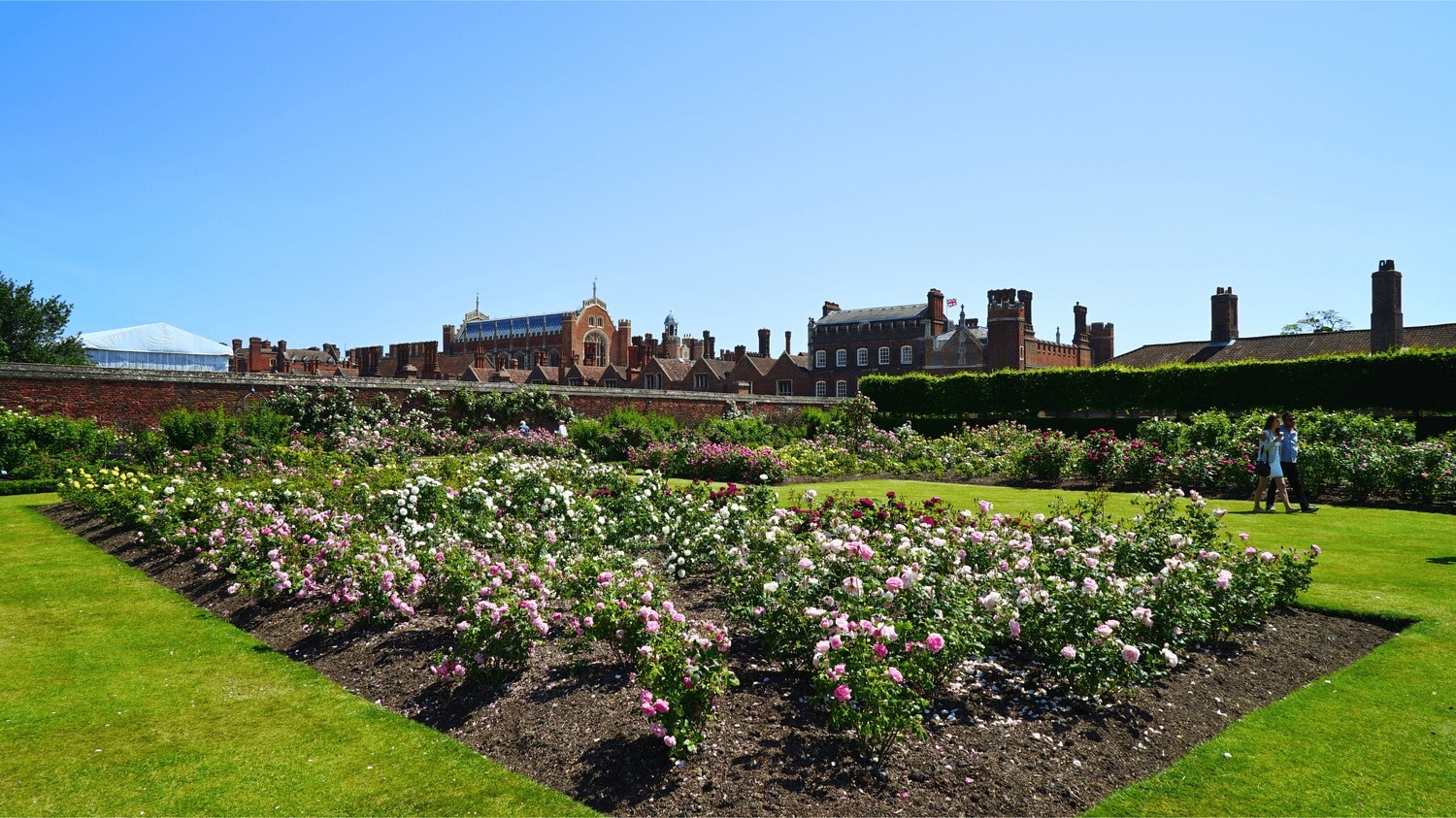
The Hampton Court Palace Gardens were once the exclusive playground of kings and queens.
From the Tudors through to the Victorians, they evolved along with the palace.
Today, there are acres of formal gardens and parkland—from walled courtyards to wide-open spaces.
You may even recognize some of them from film or TV series, including the hit Regency drama, Bridgerton, on Netflix. Making Hampton Court a hotbed for film and TV tourism!
Hampton Court Palace vs Tower of London
| Factor | Hampton Court Palace | Tower of London |
|---|---|---|
| Location | ~40 min by train from Waterloo | Inside London; 5 min walk from Tower Hill station |
| Adult Ticket Price | £29–32 | £34.80–37 |
| Recommended Visit Time | 4–5 hours | 2–4 hours |
| Main Draw | Tudor reenactments, Georgian “smell map,” wine fountain, chocolate kitchen | Crown Jewels, Yeoman Warders, dramatic execution history |
| Architectural Style | Tudor and Baroque, side by side | Medieval Norman fortress |
Having visited both, the Tower has a more dramatic history (executions, including Anne Boleyn’s), but Hampton Court lets you actually feel and smell what life was like for the royals through the Tudor reenactments and the map.
If you only have time for one and want some macabre history and the Crown Jewels, pick the Tower.
If you want a slower, more immersive day that doubles as a relaxing trip outside the city, pick Hampton Court.
Hampton Court Palace vs Windsor Castle
| Factor | Hampton Court Palace | Windsor Castle |
|---|---|---|
| Location | ~40 min by train from Waterloo | 22 miles from London; ~25–55 min by train depending on route |
| Adult Ticket Price | £29–32 | £32 |
| Recommended Visit Time | 4–5 hours | 2–3 hours |
| Main Draw | Tudor reenactments, immersive multi-sensory rooms, immersive feel | State Apartments, St George’s Chapel, still a working royal residence |
| Status | Historic site only, no longer a royal residence | Still an official residence of the King |
Windsor is grander in scale and still a working royal residence, which gives it a different kind of weight than Hampton Court.
But Hampton Court’s strength is its immersiveness: you can watch live Tudor reenactments, and even smell scratch-and-sniff Georgian rooms, details that make you feel part of the palace rather than just walking through it.
If grandeur and current royal relevance matter most to you, go to Windsor.
If you want a hands-on, story-driven day that leans into history rather than just architecture, visit Hampton Court Palace.
FAQs
Is Hampton Court Palace Worth Visiting?
Yes, Hampton Court is one of the best day trips from London, and in my view, it offers a more immersive experience than most royal palaces.
I visited in June 2015 on the palace’s 500th anniversary and spent four hours without seeing everything.
What makes it exceptional isn’t just the scale of the building, but that you can actually engage with it: watching Tudor reenactors perform, smelling scratch-and-sniff maps of Georgian rooms, and tasting wine from the recreated Henry VIII wine fountain on weekends.
It’s also uniquely layered. You’re walking through two distinct architectural eras in one visit, Tudor and Baroque, unlike any other royal palace in England.
The Haunted Gallery, the chocolate kitchen, Henry VIII’s enormous cooking facilities, and the Bridgerton-filmed Fountain Court all add to its allure.
Can You Visit Hampton Court Palace for Free?
The Hampton Court Palace gardens are free on select Garden Open Days throughout the year—check the official Historic Royal Palaces website (hrp.org.uk) for the current schedule, as dates change annually.
For the main palace, you will need to purchase a ticket.
If you have a Historic Royal Palaces membership, Hampton Court is included.
It’s also covered by some London tourist passes, so check before buying separately.
Does the Tube Go to Hampton Court Palace?
No, Hampton Court Palace is not on the London Underground network.
The most efficient route from central London is a direct National Rail train from London Waterloo to Hampton Court station, which takes about 40 minutes and runs frequently throughout the day.
The station sits directly across the road from the palace. It’s a flat, 5-minute walk with no navigation needed.
If you’re coming from east or south London and prefer not to go to Waterloo first, take the District Line to Wimbledon and switch to a National Rail service toward Hampton Court.
Several bus routes (111, 216, 411, 461, 513, and R68) also stop near the palace.
During summer, river boats run from Kingston (45 minutes) and Richmond (about 90 minutes)—a scenic option if you have time to spare.
How Much Does it Cost to Get into Hampton Court Palace?
Adult price is £29 off-peak and £32 peak.
Children aged 5-15 and young people aged 16-17 are £14.50 off-peak and £16 peak.
Senior price is £23.50 off-peak and £25.50 peak.
How Does Hampton Court Compare to Other London Palaces?
Having visited the Tower of London, Windsor Castle, and Hampton Court, I’d say Hampton Court offers the best immersive experience for Tudor history enthusiasts.
The Tower has more dramatic history (executions!), Windsor is grander, but Hampton Court lets you actually sit in period chairs, smell Georgian rooms, and watch Tudor reenactments—you feel like you’re living in the palace, not just touring it.
How Much Time Do You Need to Visit Hampton Court Palace?
The last thing I saw while visiting Hampton Court Palace was the gardens, but only quickly, as I was quite in a rush by this time.
The Hampton Court Palace website recommends at least 3 hours for your visit. I can usually get out under the recommended time; however, I wound up at the Palace for 4 hours and still had plenty yet to see!
I could go back and spend another few hours just in the gardens!
So I recommend at least 4 hours. More likely, five if you like to take your time or are really interested in the history of Hampton Court Palace!
Can You Visit Hampton Court Palace in Half a Day?
You can technically see Hampton Court Palace in half a day, but it means making rushing through it.
The palace’s own recommended minimum is 3 hours, and I personally spent 4 full hours there and still didn’t see everything.
If you’re short on time, prioritize the Tudor reenactments, the Great Hall, and Henry VIII’s State Apartments, and save the gardens and the Georgian “smell map” rooms for a future visit.
What is the Best Way to Get to Hampton Court Palace from London?
The most efficient way to reach Hampton Court Palace is by train from London Waterloo to Hampton Court station, a direct, roughly 40-minute ride with the station sitting right across the road from the palace entrance.
Alternatives include taking the District Line to Wimbledon and switching to National Rail, hopping on bus routes 111, 216, 411, 461, 513, or R68, or, during summer, taking a scenic boat from Kingston (45 minutes) or Richmond (about 95 minutes).
Is Hampton Court Palace Included in the London Pass?
Yes, Hampton Court Palace is included with the London Pass, as well as similar passes like Go City’s London Explorer Pass.
Pass holders don’t need to book a specific time slot in advance, though you may be asked to wait for the next available entry during busy periods. The official recommendation is to visit in the afternoon for a smoother experience.
What is the Best Time to Visit Hampton Court Palace?
The quietest times to visit Hampton Court Palace are weekday mornings outside of the UK’s summer school holidays (mid-July through early September), when both London-area crowds and international tourist traffic peak.
Visiting in the afternoon can also help if you’re using a pass like the London Pass, since pass holders are specifically encouraged to come later in the day for a calmer visit.
I visited in June, on the palace’s 500th anniversary, and even then found it manageable.
Who Lived at Hampton Court Palace?
Hampton Court Palace was home to a succession of English and British monarchs and courtiers.
Cardinal Thomas Wolsey first transformed it into a palace in the 1510s before gifting it to Henry VIII in 1528, who made it his favorite residence and married two of his six wives there (Jane Seymour and Catherine Parr).
Later monarchs, including William III and Mary II, also lived there and commissioned the palace’s Baroque wing in the 1690s. It remained a royal residence until the mid-18th century.
Related London Travel Guides
- Ultimate 2 Day London Itinerary: Top Sights for First-Timers
- See Inside Hampton Court Palace, How to Visit from London
- Is the Sherlock Holmes Museum in London Worth Visiting? Review from a Fan
- Sherlock Holmes London Tour: A Free Self-Guided Literary Walk + Map
- 11 Amazing London Day Trips You Can Easily Take by Train in 2 Hours or Less
- Need a Safe Hostel to Stay at in Soho, London? Book Astor Oxford Street
Want to remember this? Pin this How to Visit Hampton Court Palace on a Short Day Trip from London article to your favorite Pinterest board!
I loved this post! Hampton Court Palace has always intrigued me, and your tips on getting there from London are super helpful. I can’t wait to explore the beautiful gardens and learn more about its history. Thanks for sharing!
Thank you so much Baldi! I’m glad you enjoyed it. It’s certainly an intriguing place! Hope you have a blast!
What a fantastic guide to Hampton Court Palace! I had no idea there was so much history to explore. Your tips on how to get there from London are super helpful. I can’t wait to visit and see the gardens!
Awe thank you! I’m certain you’ll have a blast!
What a fantastic guide! Hampton Court Palace looks absolutely stunning, and your tips on how to visit from London are super helpful. I can’t wait to explore the gardens and learn more about its history. Thanks for sharing this!
You are quite welcome!